

Broken Doll

Archetype Meaning & Symbolism

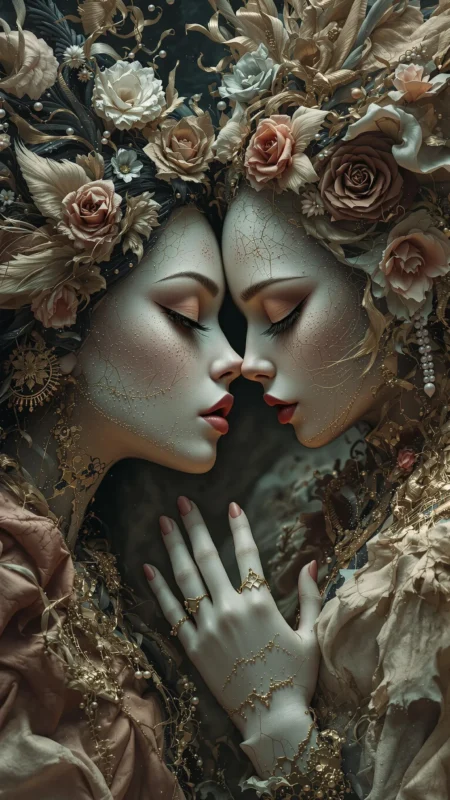
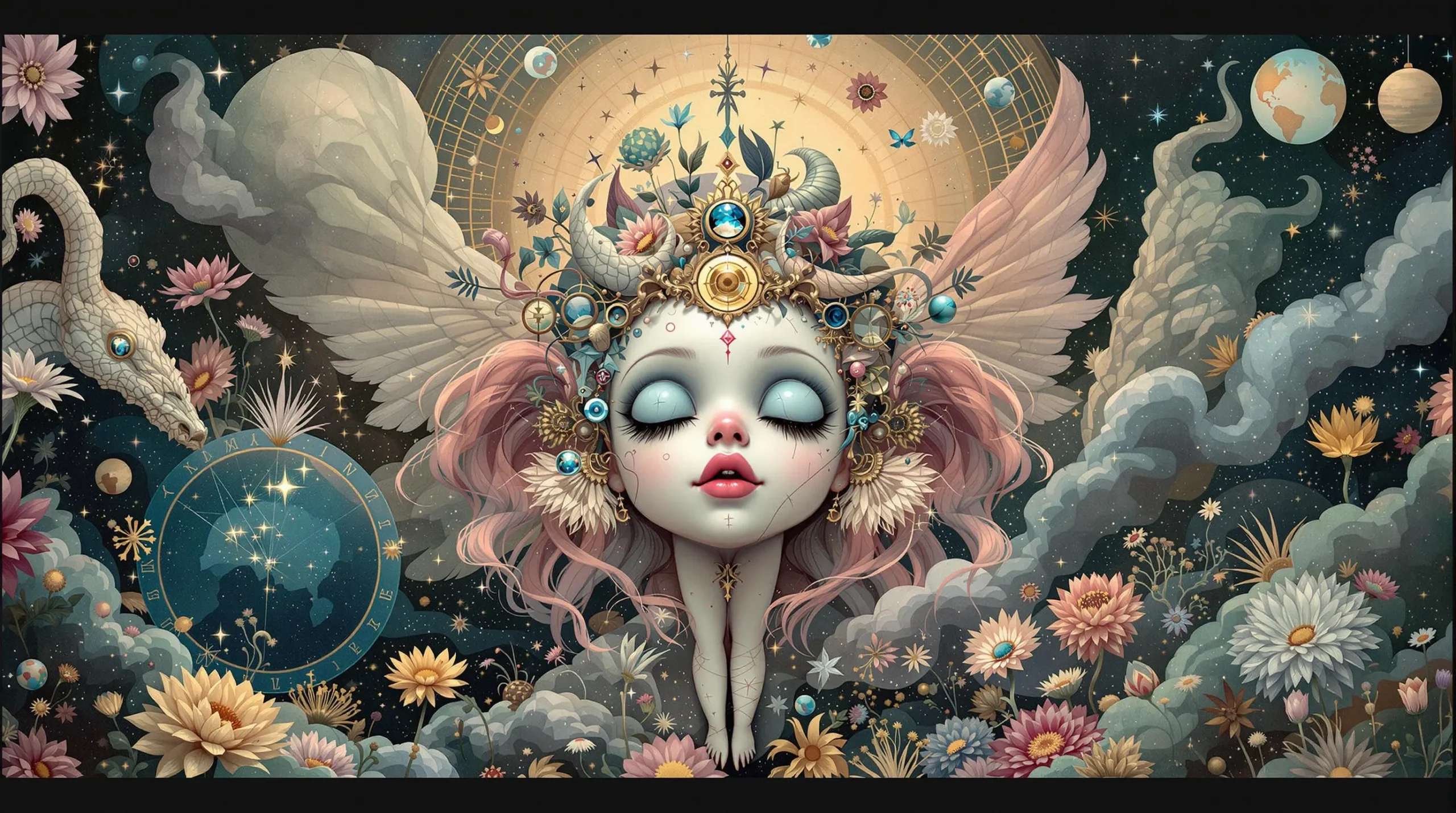
Fragile, resilient, ornamental, silent, nostalgic, haunted, delicate, repaired, passive, enduring

  • My cracks are not a record of my ruin: they are the map of where the light gets in.

If Broken Doll is part of your personal mythology, you may...

Believe

  • You may believe that your damage is a form of decoration, a unique filigree that sets you apart from the plain and unbroken.
  • You may believe that stillness is the highest form of safety, and that to move is to invite chaos and risk shattering.
  • You may believe that your primary purpose is to be an object of beauty or contemplation for another, and that your worth is reflected in their gaze.

Fear

  • You may fear being discarded, replaced by a newer, shinier, unbroken model, and left to gather dust in a forgotten attic.
  • You may fear that any authentic expression of strong emotion—anger, passion, grief—will be the tremor that causes you to shatter into a thousand irreparable pieces.
  • You may fear being handled carelessly, that someone will fail to see your fragility and cause you harm through simple negligence.

Strength

  • You may possess a profound capacity for empathy, especially for the overlooked, the damaged, and the silent, for you speak their language.
  • You may embody an unconventional and captivating beauty, one that tells a deep story and defies the sterile aesthetic of mass-produced perfection.
  • You may have a quiet, enduring resilience, the unexpected strength of something that has already faced the worst and has learned how to hold itself together.

Weakness

  • You may have a pronounced tendency toward passivity, waiting for external forces to define your reality rather than creating it yourself.
  • You may be uniquely vulnerable to being defined, objectified, or controlled by others, mistaking possession for love.
  • You may risk romanticizing your own tragedy, becoming stuck in the aesthetic of pain rather than moving through it toward integrated strength.

The Symbolism & Meaning of Broken Doll

The Broken Doll archetype may speak to a profound narrative of innocence interrupted. It is the story of an object created for joy, for play, for admiration, which has met with a force greater than itself. Its initial state of perfection was perhaps a performance, a flawless porcelain skin masking a hollow interior. The break, then, is not merely an accident but a moment of truth, shattering the facade and revealing the delicate reality beneath. In a personal mythology, this could represent a pivotal childhood event or a disillusionment in adulthood that forever altered one's sense of self, marking a clear 'before' and 'after' in the timeline of the soul.

Furthermore, the archetype explores the complex territory of value and worth. Is the doll less valuable now that it is broken? To a child, perhaps yes. To a collector, its value may have increased, its story deepening its allure. This duality may inform a person’s own sense of worth. They might grapple with feeling 'used' or 'discarded' while simultaneously suspecting that their experiences, their 'damage,' have imbued them with a depth and wisdom that unblemished perfection could never possess. The doll becomes a symbol of wabi-sabi: the Japanese aesthetic centered on the acceptance of transience and imperfection, where the chips and cracks are not flaws but testaments to a life lived.

Ultimately, the Broken Doll could be an emblem of quiet, stubborn resilience. It does not rage or fight in the manner of a Warrior. It endures. It sits with its wounds. Its power is not in action but in persistence, in the simple, profound fact of its continued existence. For someone whose personal myth involves this archetype, strength may not be about overt power but about the capacity to hold oneself together, to find a strange new beauty in the repair, and to continue to bear witness to the world from a quiet corner, forever changed but not entirely erased.


Broken Doll Relationships With Other Archetypes

The Caregiver

The relationship with the Caregiver is perhaps the most defining and perilous. The Caregiver sees the doll’s patent brokenness and feels an immediate, powerful urge to fix, mend, and protect it. This can be a source of profound comfort and healing. Yet, it can also create a gilded cage. The Caregiver’s identity may become contingent on the doll remaining fragile, while the doll’s sense of self may become reliant on being cared for. The true challenge in this dynamic is for the Caregiver to offer support that fosters agency rather than dependence, and for the Broken Doll to learn that it can exist, and even thrive, outside the careful hands of its protector.

The Artisan

Where the Caregiver seeks to soothe, the Artisan seeks to transform. The Artisan archetype sees the Broken Doll not as a tragedy to be mourned but as a medium full of potential. The Artisan is the force that might perform kintsugi, filling the cracks with gold not to hide them, but to illuminate them as a beautiful, integral part of the object’s history. In a personal myth, encountering an 'Artisan'—be it a person, a creative practice, or a spiritual path—could signify a turning point where one’s wounds are reframed as sources of unique beauty and strength, integrating the damage into a new and more magnificent whole.

The Trickster

The Trickster may well be the force that broke the doll in the first place, representing the chaotic, unpredictable event that shattered a former reality. The Trickster’s energy is anathema to the doll's stillness and silence. It might mock the doll’s passive beauty, prod at its fragile exterior, or gleefully rearrange its carefully curated environment. While terrifying, this relationship could be catalytic. The Trickster’s provocations may force the doll out of its static state, shattering not just its body but its complacency, and paradoxically creating an opening for movement, change, and the development of a voice where there was once only silence.

Using Broken Doll in Every Day Life

Navigating Healing

One might use the archetype to reframe a journey of recovery. Instead of seeking to return to a pristine, pre-trauma state, an impossible goal, one could embrace the path of the doll. This involves acknowledging the break, not as an end, but as a beginning. The focus shifts to the process of repair: the careful stitching, the golden joinery of kintsugi, the quiet integration of the damage into a new, more complex, and ultimately more interesting identity. It becomes a story not of being shattered, but of being artfully reassembled.

Reclaiming One’s Aesthetic

The Broken Doll archetype could serve as a powerful counter-narrative to societal pressures for flawless perfection. One may learn to see their own scars, quirks, and perceived imperfections not as flaws to be hidden, but as unique features that tell a story. Like a collector who values a chipped porcelain figure over its mass-produced counterpart, you may begin to appreciate the character and history etched into your own being. It is an invitation to curate a personal aesthetic based on authenticity rather than conformity.

Cultivating Agency

At its core, the doll is an object, acted upon by others. Recognizing this archetype in one's mythos could be the first step toward reclaiming agency. The story prompts a crucial question: am I the doll on the shelf, waiting to be picked up or put down, or am I the one who decides where I sit? This may inspire a conscious shift from a passive role to an active one, learning to set boundaries, to speak even without a voice box, and to move on one's own terms, cracks and all.

Broken Doll is Known For

The Aesthetic of Damage

A haunting, specific beauty found not in perfection but in the visible history of its wounds, chips, and cracks. It is the visual poetry of survival.

Perceived Fragility

An aura of vulnerability and delicateness that suggests it could be easily harmed, demanding careful handling and evoking a protective instinct in others.

The Silent Witness

The sense that it has observed countless scenes, holding the secrets and emotional weight of its history without the ability to speak of it. It is a vessel for unspoken stories.

How Broken Doll Might Affect Your Personal Mythology

How Broken Doll Might Affect Your Mythos

When the Broken Doll is a central figure in one's personal mythology, the entire life story may be narrated through a lens of fragility and survival. The core plot is often not one of conquest or discovery, but of endurance. The narrative arc might begin in a lost, idyllic past of wholeness, move through a catastrophic 'breaking point,' and then detail the long, quiet aftermath of living with the pieces. Major life events are interpreted not by what was gained, but by what was lost or what was miraculously held together. The personal mythos becomes a collection of exquisite fragments rather than a seamless epic, its meaning found in the spaces between the shards and the delicate threads of repair.

This archetype shapes the very genre of the life story. It may feel less like an adventure and more like a museum piece, a curated history of damage. The protagonist's role shifts from an active hero to a silent witness, one who has seen too much and now exists in a state of heightened observation. The central conflict of the mythos becomes internal: the struggle to integrate the broken parts of the self without falling apart completely. Victory is not a vanquished dragon, but a quiet morning where one can look in the mirror and see the cracks not as ruin, but as the intricate, beautiful map of a life that has been lived.

How Broken Doll Might Affect Your Sense of Self

One's self-perception might be filtered through a constant awareness of inherent fragility. You may see yourself as something precious yet precarious, to be handled with extreme care by yourself and others. This could lead to a highly curated self-presentation, an exterior poise that, like porcelain, feels cool, smooth, and perfect, but also brittle and easily shattered. There may be a deep-seated belief that your primary worth is aesthetic, tied to being seen as beautiful, tragic, or captivating in your stillness. This creates a distance from the raw, messy, and unpredictable parts of the self, which are deemed too dangerous to express.

Alternatively, embracing this archetype could foster a unique and profound form of self-acceptance. Instead of striving for an impossible, inhuman flawlessness, one may come to cherish the very imperfections that tell their story. The 'broken' parts of the self—the trauma, the grief, the scars—are no longer seen as shameful secrets but as integral components of a complex and beautiful whole. This perspective allows for a gentle self-compassion, a quiet strength born not of invulnerability, but of the intimate knowledge of one's own delicate and resilient nature. The self is not a fortress; it is a lovingly repaired vessel.

How Broken Doll Might Affect Your Beliefs About The World

The world, through the eyes of the Broken Doll archetype, may appear as a careless, chaotic place, full of clumsy giants who can shatter precious things without a second thought. There may be a pervasive sense of ambient danger, a feeling that one must remain very still and quiet to avoid being noticed and, consequently, harmed. This can foster a worldview colored by a gentle pessimism or a nostalgic longing for a safer, more innocent time. People and systems may be judged by their perceived capacity for gentleness or destruction. The world is a gallery, and one must be wary of the patrons who do not know how to behave.

Conversely, this archetype might cultivate a worldview that finds profound meaning in endurance and history. The new, the shiny, and the perfect may seem shallow or untrustworthy. Instead, value is placed on things that have survived: the antique chair with its nicks and scratches, the old book with its softened spine, the person whose eyes betray a deep and complicated past. The world becomes a vast collection of survivors, and beauty is found not in pristine surfaces but in the evidence of resilience. It is a philosophy of seeing the soul in things, a preference for the story over the sales pitch.

How Broken Doll Might Affect Your Relationships

In relationships, one might unconsciously seek to replicate the doll's dynamic. This can manifest as a tendency to attract partners who are either 'Caregivers' or 'Breakers.' A person may enter relationships from a position of perceived neediness, hoping a partner will provide the safety and careful handling they crave. This can create a fragile dependency where one's emotional stability rests entirely in the hands of another. The fear of being 'played with' and then discarded when a newer toy comes along could be a constant, humming anxiety beneath the surface of even the most stable connections.

There might also be a profound difficulty in expressing authentic needs and emotions, fearing that any strong display will 'crack' the delicate facade and repel the other person. Intimacy could be performative, a beautiful but static tableau rather than a dynamic, messy dance. True connection may only feel possible with those who demonstrate an ability to see and appreciate the 'cracks' without feeling the compulsive need to either fix or exploit them. The journey in relationships is to move from being a beautiful object in someone else's story to being a co-author of a shared narrative.

How Broken Doll Might Affect Your Role in Life

The perceived role in life, within the family, or in a community may be that of the beautiful, tragic object. One might be designated as 'the sensitive one,' 'the fragile one,' a person for whom allowances must be made and about whom others whisper with concern. This role can feel safe and strangely powerful; it exempts one from certain harsh realities and demands a certain kind of attention. To be the Broken Doll is to have a defined, if limiting, place. It is the role of the observer, the silent aesthetic centerpiece, the one who reminds others of the existence of pain and beauty.

However, this role is ultimately a passive one. The mythic task for someone embodying this archetype is to evolve beyond it. This involves the terrifying and exhilarating process of stepping off the shelf. It is about discovering that one's legs, though perhaps cracked, can still walk; that one's voice, though perhaps quiet, can still speak. The evolution is from being the subject of the sentence to the verb, from being the artifact in the museum to being the curator of one's own exhibition. It means accepting that agency might bring new risks of being broken, but that stillness is its own form of death.

Dream Interpretation of Broken Doll

In a positive context, dreaming of a Broken Doll may signify a powerful process of integration and healing. To dream of finding the lost pieces of a doll and carefully reassembling them could reflect a conscious effort to reclaim fragmented parts of one's psyche. Dreaming of a doll whose cracks are filled with gold or light, in the style of kintsugi, suggests a profound shift in perspective: the dreamer is beginning to see their past traumas not as sources of shame, but as sources of beauty, wisdom, and inner light. Seeing a once-broken doll being lovingly displayed or played with gently may symbolize a burgeoning sense of self-worth and the ability to trust in safe, nurturing relationships.

In a negative context, such dreams can tap into deep-seated fears of powerlessness and devaluation. Dreaming of a doll being violently shattered or thrown away could represent a recent emotional injury, a re-triggering of old trauma, or a fear of being discarded by a loved one. To see a doll with missing eyes or limbs might speak to a feeling of being unseen or incapacitated in one's waking life. If the dreamer is the one breaking the doll, it could signify self-sabotage or anger at their own perceived fragility. A dream of being surrounded by identical, unbroken dolls could highlight feelings of inadequacy and the fear of being replaced.

How Broken Doll Archetype Might Affect Your Needs

How Broken Doll Might Affect Your Physiological Needs

The mythology of the Broken Doll may translate into a heightened physiological sensitivity. The body itself might be experienced as a fragile object, leading to a profound need for controlled, serene environments. Loud noises, chaotic situations, or harsh lighting could feel like genuine physical assaults, causing the nervous system to retreat into a state of freeze or shutdown. This is not mere preference but a perceived necessity for survival, as if the porcelain self could literally crack under excessive stimulus. The fundamental need for rest and homeostasis becomes a central life priority, dictating social engagements, work environments, and daily routines.

This can also manifest as a deep disconnect from the body’s more primal urges and signals, a dissociation. The body is not a source of power or pleasure, but a delicate vessel to be managed and protected. There could be a tendency toward physical stillness, a reluctance to engage in strenuous activity for fear of 'breaking' something. Alternatively, it might lead to hypochondria, where every minor physical sensation is interpreted as a sign of imminent collapse. The core physiological need is for a sanctuary, a quiet shelf where the body can remain undisturbed and preserved.

How Broken Doll Might Affect Your Ideas of Belonging

The need for belongingness and love is filtered through the doll's core dilemma: how can an object truly belong? Belonging may be pursued by becoming what others desire, a perfect, pleasing, and silent companion. One might adapt their personality, style, and opinions to fit seamlessly into a group or a relationship, hoping that by being a perfect decorative object, they will not be cast out. This strategy, however, often leads to a profound sense of loneliness, as the connection is to a false self, a porcelain shell.

True belonging may feel terrifyingly elusive. The fear is that if others see the cracks, the hollow interior, they will be repulsed. Therefore, one might seek belonging only among other 'broken' things, finding solace in communities of the wounded, the artistic, and the misunderstood. In this space, the scars are not hidden but shared, becoming a language of connection. Love may be perceived as a dangerous force, capable of both cherishing and shattering. The deepest desire is for a love that does not try to 'fix' the cracks, but knows how to hold the entire, complicated vessel with reverence and care.

How Broken Doll Might Affect Your Feelings of Safety

For one whose mythos contains the Broken Doll, the need for safety is paramount and perpetually precarious. Safety is not defined by the presence of protection, but by the absence of threat. It is a state of absolute stillness. This may lead to the creation of elaborate 'display cases' in one's life: highly controlled routines, predictable relationships, and environments that change as little as possible. The fear is that any unexpected variable, any sudden movement, could be the one that causes the final, irreparable shatter. Safety is equated with stasis.

This intense need for safety can paradoxically create a more dangerous world. By avoiding all risk, one also avoids opportunities for growth, resilience-building, and authentic connection. The fortress built to protect the doll becomes a prison that keeps life out. Emotional safety is particularly fraught; vulnerability might feel like a life-threatening risk. Trust is given sparingly, if at all, and is contingent on the other person's ability to demonstrate almost superhuman gentleness and predictability. The underlying belief is that the world is fundamentally unsafe for beautiful, delicate things.

How Broken Doll Might Affect Your Views of Esteem

Esteem, for one with this archetype, may be a fragile, externalized construct. Self-worth is not inherent but is 'bestowed' by an outside observer. It is contingent on being perceived as beautiful, precious, unique, or tragically alluring. One's value is measured by the quality of the shelf one is placed upon. This leads to a constant, quiet performance, an exhausting effort to maintain the aesthetic that garners approval. A critical word, a moment of being overlooked, or the arrival of a 'newer model' can precipitate a catastrophic collapse of self-esteem.

The profound journey for someone with this archetype is to internalize their sense of worth, to pry it from the hands of the audience. This requires a radical re-evaluation of what constitutes value. Esteem begins to grow when it is rooted not in flawlessness, but in survival. It is the recognition that the doll's story, its very brokenness, is the source of its unique character and depth. The shift is from 'I am valuable because you see me as beautiful' to 'I am valuable because I have endured, and my story is etched into my very form.'

Shadow of Broken Doll

When the shadow of the Broken Doll takes hold, its fragility curdles into a tool of manipulation. The performance of brokenness becomes a strategy for controlling others, evoking guilt and a sense of infinite obligation in those around them. This shadow version weaponizes its wounds, making its pain the centerpiece of every room and every relationship, subtly demanding that the world stop and revolve around its careful preservation. It does not seek healing but rather a permanent audience for its tragedy, ensuring it remains the perpetual victim, a role that absolves it of all responsibility for its own life.

In its other shadow form, the archetype can become a brittle, empty perfectionism. Terrified of any further damage, the person becomes a hollow shell, all polished surface with no life or warmth within. They may reject all attempts at intimacy, seeing connection as nothing more than a risk of being chipped or dirtied. This creates a profound isolation, a doll left in its original box, pristine but unloved and untouched by life. The shadow is the refusal to live for fear of breaking, which is its own kind of death, a sterile existence on a lonely shelf.

Pros & Cons of Broken Doll in Your Mythology

Pros

  • It fosters a deep and rare appreciation for the beauty of imperfection, allowing one to find grace and meaning in the flaws of the self, others, and the world (wabi-sabi).
  • It can cultivate a gentle, compassionate, and non-judgmental approach to life, born from an intimate understanding of pain and fragility.
  • It may be a catalyst for profound artistic and emotional expression, transforming personal history into a source of unique, resonant creative work.

Cons

  • It can encourage a pervasive victim mentality, a sense of powerlessness where one feels life is something that happens to them, not something they participate in.
  • It may lead one to unconsciously seek out and remain in relationships that replicate the unhealthy dynamic of being a passive object to be either obsessively 'fixed' or carelessly 'broken.'
  • It carries the risk of glorifying or becoming aesthetically attached to one's own damage, which can stall the necessary process of healing and integration into a story of growth.