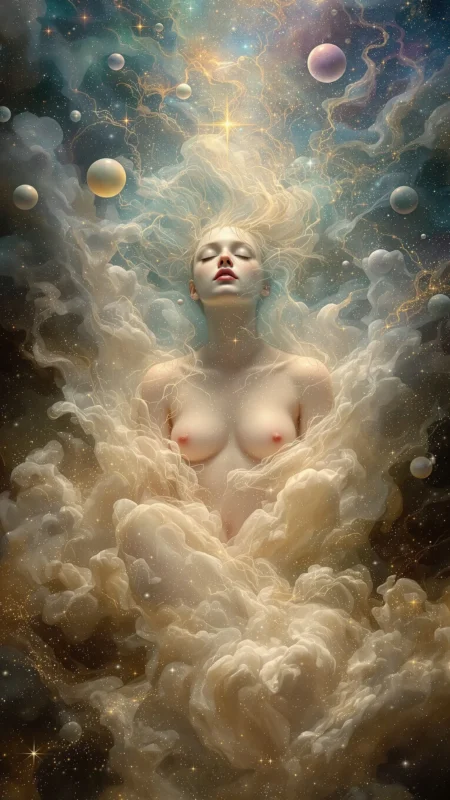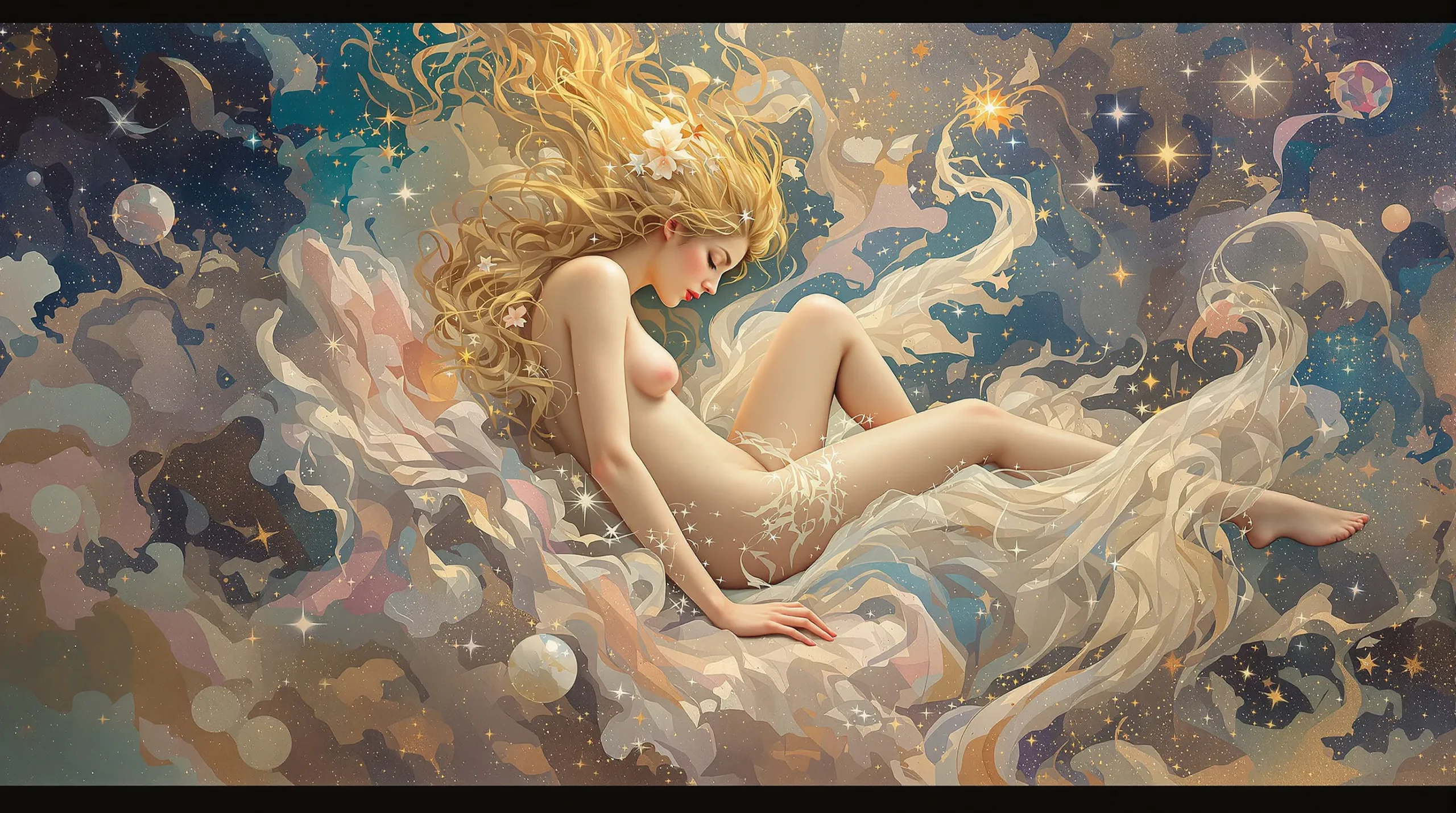


Birth

Archetype Meaning & Symbolism

Initiation, Potential, Vulnerability, Genesis, Creation, Unfolding, Possibility, Rawness, Novice, Emergence

  • Every ending is but a contraction: a pressure before the new world's first breath.

If Birth is part of your personal mythology, you may…

Believe

  • Every moment holds the potential for a new start; the past does not have to dictate the future.

    The most profound growth comes from the most difficult labor; struggle is the precursor to transformation.

    Nothing is ever truly finished; it is only gestating into its next form.

Fear

  • Stagnation: the feeling of being stuck, inert, or spiritually stillborn.

    The pain and messiness that inevitably accompany any true beginning.

    That what is born will be flawed, unwanted, or unable to survive in the world.

Strength

  • An endless well of optimism and the ability to see potential in any situation, no matter how bleak.

    Profound resilience; the capacity to begin again with genuine hope after any failure or ending.

    A natural talent for initiating projects, sparking ideas, and inspiring others to embrace a fresh start.

Weakness

  • A tendency to abandon projects or relationships once the initial excitement of their ‘birth’ has faded.

    A potential naivete; underestimating the long-term work and commitment required to sustain what has been started.

    Difficulty with endings, preferring to leap to the next beginning without properly mourning or processing what has passed.

The Symbolism & Meaning of Birth

In your personal mythology, Birth may not be a singular event relegated to your past, but a recurring central theme. It is the archetype of the clean slate, the new chapter, the moment the universe seems to hold its breath as you step into a new version of yourself. This could manifest as a pattern of reinvention: moving to new cities, changing careers, or undergoing profound shifts in perspective. Your life story might not be a linear epic, but a collection of genesis stories, each with its own creation myth. You may feel a cosmic pull towards the energy of beginnings, finding your greatest vitality not in the mastery of a skill, but in the awkward, thrilling first steps of learning it.

The Birth archetype also insists on acknowledging the mess and the miracle. It is not a sterile, intellectual reset but a visceral, often painful, emergence. To have Birth in your mythos is to understand that new life, in any form, requires labor. There may be a subconscious understanding that true transformation is preceded by a period of struggle, of feeling confined, of pressure that becomes unbearable right before the breakthrough. You might, therefore, have a higher tolerance for the chaos of creation, seeing the disarray of a new project or the emotional turmoil of a new relationship not as a bad omen, but as a sign that something real and vital is coming into being.

This archetype could also connect you to a profound sense of cyclical time. While cultures often emphasize linear progress, the Birth archetype roots your story in the rhythm of seasons, of death and rebirth. You may see endings not as finalities, but as the necessary clearing of ground for new seeds to sprout. This perspective might grant you a peculiar form of resilience. A devastating loss, a failed company, a broken heart: these are not the end of your myth, but perhaps the winter that precedes a new spring, a new birth, a new chance to begin the story all over again, wiser from the journey that came before.


Birth Relationships With Other Archetypes

The Death Archetype

Birth and Death are not opposites but inseparable partners in the cycle of existence. In a personal mythos, they are the two poles that generate the energy of your narrative. Death is the midwife to Birth, clearing the space, ending the chapter, and creating the sacred emptiness from which the new can emerge. A strong connection to the Birth archetype almost necessitates a respectful, if complex, relationship with Death. You may find that your greatest moments of personal rebirth are preceded by a significant “death”: the end of a relationship, the loss of an identity, or the shedding of a long-held belief. One cannot truly begin anew without the courage to let something else end completely.

The Innocent Archetype

The Innocent is the character that emerges from the event of Birth. Birth is the portal; the Innocent is the traveler who steps through it, wide-eyed and full of unblemished trust. If the Birth archetype is strong in your mythos, you might have a lifelong connection to the Innocent’s perspective: a recurring ability to see the world with fresh eyes, to maintain a core of optimism, and to believe in the possibility of paradise. However, this also means you may have to perpetually navigate the Innocent’s journey of moving from naive trust to earned wisdom, a cycle of awakening that repeats with every new “birth” you experience.

The Chaos Archetype

Birth is the ordering principle that emerges from the primordial soup of Chaos. Chaos is the unlimited, unformed potential of the universe: the cosmic womb. Your personal myth might involve a dance with Chaos, a comfort with uncertainty and a trust that from the messiest, most unpredictable moments of life, a new and beautiful order can be born. You may not fear the void; you may see it as a canvas. This relationship suggests a creative process where you might intentionally invite a degree of disorder into your life, knowing that it is the raw material from which you will birth your next creation, your next self.

Using Birth in Every Day Life

Navigating Career Transitions

When a career path abruptly ends, the Birth archetype reframes the void not as a failure, but as a gestation. The period of uncertainty could be seen as a necessary womb, a quiet, dark space where a new professional identity is forming. Instead of desperately grasping for the familiar, you might consciously nurture this nascent self, gathering new skills as nutrients and allowing ideas to gestate until one is ready to be born into the world as a new venture or role.

Reimagining Creative Blocks

A creative block, viewed through the lens of Birth, is not a barren emptiness but a fallow period before creation. It may be that the idea is not yet viable, that it needs more time to develop before it can survive the harsh light of execution. This archetype encourages patience: to treat the creative self with the care one would an expectant mother, providing rest, nourishment, and trust in the process, knowing that the labor of creation cannot be artificially induced without consequence.

Healing from Past Selves

Personal growth can feel like a series of violent departures from who we once were. The Birth archetype offers a gentler, more cyclical narrative. You may learn to see the shedding of an old identity not as a death, but as a successful delivery. The pain of letting go becomes labor, and the past self is the afterbirth: essential for the growth of the new, but not meant to be carried forward. This allows for gratitude for what was, and a full, untangled embrace of who you are becoming.

Birth is Known For

The Threshold Crossing

It represents the profound moment of transition from one state of being to another

from non-existence to existence, from potential to actuality, from one world to the next. It is the original, irreversible journey.

Radical Vulnerability

Birth is synonymous with a state of complete openness and helplessness. The newborn entity, be it a person, an idea, or a project, is entirely dependent on its environment for protection, nourishment, and survival.

Untapped Potential

Within the moment of Birth lies the seed of everything that could be. It is a point of infinite possibility, a concentration of future narratives before a single choice has been made or a single path has been taken.

How Birth Might Affect Your Personal Mythology

How Birth Might Affect Your Mythos

When the Birth archetype is a cornerstone of your personal mythos, your life story ceases to be a linear progression from A to B. Instead, it becomes a spiral, a series of concentric circles moving ever outward from new centers of being. Your narrative is likely punctuated by distinct, dramatic beginnings that redefine the entire plot. You might talk about your life in terms of “before” and “after” a specific event: before the move to the coast, after you discovered painting, before you met a life-altering person. These aren’t just milestones; they are genesis events, points where the old world and the old self were shed, and a new one was born.

This may also mean that your personal myth is one of constant potential rather than established identity. The central theme of your story might not be “who I am” but “who I am becoming.” This creates a dynamic, forward-looking narrative, but it can also feel unstable, as if the ground is always shifting. You might be the hero who is always setting out on a new journey, the creator who is always starting a new project. The climax of your story is never a final victory, but rather the powerful, messy, and triumphant act of beginning again.

How Birth Might Affect Your Sense of Self

Your sense of self may be fluid, adaptable, and perpetually in a state of becoming. You might not identify strongly with a fixed personality, but rather see yourself as a collection of possibilities, a vessel for what is to come. This can be liberating, granting you the freedom to reinvent yourself without feeling like a fraud. You could be someone who feels most alive when learning something new, when you are a novice, because in that state of unknowing, your potential feels limitless. The feeling of being “born” into a new skill, a new community, or a new way of thinking is perhaps your most authentic state.

Conversely, this could lead to a persistent feeling of being unfinished or unformed. While others seem to build a solid, unchanging identity, you might feel like you are always at the foundation stage. This can manifest as a deep-seated restlessness or an inability to settle. You may question your own substance, wondering if there is a core self beneath the many births or if you are simply the sum of your new beginnings. The challenge for your self-perception is to see this fluidity not as a lack of character, but as your defining characteristic: a dynamic and creative essence.

How Birth Might Affect Your Beliefs About The World

A worldview informed by the Birth archetype is one of profound and relentless optimism. You may see the world not as a broken artifact to be mourned, but as a cosmic nursery, constantly creating, experimenting, and renewing itself. Every crisis, from a global pandemic to a political upheaval, might hold for you the seed of a new and better system waiting to be born. You may be drawn to stories of revolution, renaissance, and renewal, seeing them as evidence of the world’s fundamental creative impulse. This is a perspective that finds hope in the darkest of times, believing that every ending is simply the world contracting before it expands into something new.

This lens may also cause you to be impatient with stasis, tradition, and institutions that resist change. You could view anything that is old and unchanging with a degree of suspicion, seeing it as something that is blocking a necessary birth. Your philosophy might be that life is motion, and that anything which ceases to grow and change is, in essence, dead. This can make you a powerful agent of progress, but it might also make it difficult for you to appreciate the wisdom of endurance, the value of tradition, and the quiet strength of things that simply last.

How Birth Might Affect Your Relationships

In relationships, you may be drawn to the incipience of it all: the first conversation, the thrill of discovery, the creation of a shared world from two separate lives. The “honeymoon phase” is not just a phase to you; it is the essence of connection, the moment a relationship is born. You might be exceptionally skilled at beginning relationships, at making others feel seen and full of potential. You could have a pattern of friendships and romances that are intense and transformative at the outset, as you mid-wife a new dynamic into existence.

The challenge, then, may lie in the long, steady work of sustaining what has been born. When the initial thrill of creation fades and is replaced by the quiet rhythms of maintenance and compromise, you might feel a sense of loss or restlessness. You could be tempted to either provoke a dramatic “rebirth” within the relationship through conflict and change, or to move on in search of a new beginning. Your lesson in relationships may be to learn that a mature connection has its own seasons, and that the quiet autumn and deep winter are as vital as the explosive spring.

How Birth Might Affect Your Role in Life

You may perceive your role in life as that of an initiator, a catalyst, or a midwife. You are the one who gets things started. In a group, you are the person with the initial vision, the one who can see the finished product in the unformed clay and inspire others to begin the work. You might be a serial entrepreneur, an artist who works in many different mediums, or the friend everyone turns to when they need help starting a new chapter in their lives. Your purpose feels most clear when you are on the threshold of something new, guiding it into existence.

This can mean you are less comfortable in the role of a manager, a sustainer, or a finisher. The meticulous work of follow-through, maintenance, and administration may feel draining to you, a distraction from the next great beginning that is calling your name. Part of your life’s journey could be to either partner with those who excel at this long-term stewardship or to cultivate that skill within yourself. Your role is undoubtedly to bring new energy into the world, but your ultimate impact may depend on learning how to build a cradle for what you have birthed.

Dream Interpretation of Birth

In a positive context, dreaming of birth—whether your own, someone else’s, or even an animal’s—is a potent symbol of your psyche’s creative power. It may signal that a new part of your personality is emerging into consciousness. It could represent the imminent arrival of a long-gestating project, a new idea finally taking form, or the beginning of a profound new phase of your life. The feeling in the dream is key: if it is one of wonder, relief, or joy, it suggests you are ready for this new beginning and are aligned with your own growth. The dream is your subconscious affirming that you are on the right path of renewal and creation.

In a negative context, a dream of birth can be fraught with anxiety. A difficult or painful birth in a dream might symbolize a fear of a new responsibility you feel unprepared for. It could point to a creative project that is being forced into existence before its time, or a personal change that feels unnatural and traumatic. Dreaming of a stillborn child or a monstrous birth can be particularly disturbing, perhaps reflecting a deep fear that your creative efforts will fail, that what you are trying to bring into the world is flawed, or that a part of your own potential is dying before it has a chance to live. These dreams may be a warning to examine the new beginnings in your life and assess whether they are truly healthy and happening at the right time.

How Birth Archetype Might Affect Your Needs

How Birth Might Affect Your Physiological Needs

Your core physiological needs—for air, food, water, rest—may be experienced not just as maintenance but as a form of sacred grounding. The Birth archetype could tie you viscerally to the body’s fundamental creative processes. Breathing might feel like a constant renewal, a tiny rebirth with every inhalation. Eating could be a conscious act of gathering raw materials for the self you are building. There may be a deep, intuitive understanding that your physical vessel is the instrument of all your new beginnings, and a corresponding need to protect its vitality and honor its cycles of energy and exhaustion.

This intense connection can also manifest as a heightened sensitivity or anxiety about the body’s fragility. Just as a newborn is vulnerable, you might feel a profound sense of your own physical precariousness. Illness or injury could be experienced not just as a setback, but as a deep existential threat to your creative potential. You may have a primal need for physical comfort and gentleness, seeking out environments, foods, and practices that make your body feel safe enough to continue its constant work of renewal and becoming.

How Birth Might Affect Your Ideas of Belonging

Your need for love and belonging may be intrinsically linked to the experience of being “birthed” into a community. You don’t just join a group; you are initiated into it. You might seek relationships and friendships that feel like a homecoming, a discovery of the family or tribe you were always meant to have. The feeling of being accepted and welcomed as a new member, of being seen and nurtured in your emergent state, could be the most profound experience of love for you. You may, in turn, be very good at welcoming others, at creating an inclusive space where people feel they can be their new, unproven selves.

This can also create a pattern of perpetually seeking initiation. You may feel a deep sense of belonging at the beginning of a relationship or upon joining a new group, only to have the feeling fade as you become an established member. The thrill is in the becoming, not the being. This could lead to a series of intense but ultimately transient connections, as you move from one welcoming ceremony to the next, always searching for that powerful, primal feeling of being born into a human connection.

How Birth Might Affect Your Feelings of Safety

The need for safety, when viewed through the Birth archetype, could be defined as the search for a secure “womb” for your emergent self and projects. This isn’t just about physical safety; it’s about creating an emotional and psychic container where new things can gestate without threat. You might find yourself meticulously building nests: a stable home life, a predictable routine, or a financial cushion. This isn’t necessarily about avoiding risk, but about building a strong enough base from which you can afford to take the risk of bringing something new and vulnerable into the world.

Alternatively, the archetype’s shadow side could manifest as a deep-seated fear of exposure. The vulnerability inherent in any new beginning might lead to a kind of stage fright on the level of life itself. You may have brilliant ideas that never leave your journal, or a desire for a new life that you never act upon, because the world feels too harsh a place for something so new and unformed. Your safety-seeking might become a form of self-imprisonment, an overly protective womb that never allows for the actual birth to occur, keeping potential locked away in the name of keeping it safe.

How Birth Might Affect Your Views of Esteem

Esteem, for you, is likely generated by the act of creation. Your sense of self-worth may be highest not when you have achieved something, but when you are in the process of starting it. The blank page, the uncarved block of stone, the first day at a new job—these are the arenas where you prove your value to yourself. You might feel a surge of confidence and competence when you are generating ideas, inspiring a team, or taking the first bold steps of a new venture. Your esteem is tied to your potential and your courage to act on it.

The challenge to your esteem arises in the long middle. During periods of quiet maintenance, slow progress, or even rest, you might feel your self-worth plummet. If you are not actively giving birth to something, you may feel useless or stagnant. This can create a pressure-cooker existence where you feel you must always be producing, always be starting something new, to feel good about yourself. A crucial part of your journey may be learning to value yourself during the gestation periods, recognizing that the quiet, unseen work of development is just as worthy of respect as the dramatic moment of birth itself.

Shadow of Birth

When the Birth archetype falls into shadow, it can manifest as a pathological refusal to mature, a ‘Peter Pan’ syndrome where one is addicted to the limitless potential of beginnings and pathologically avoids the responsibility and compromise of follow-through. This individual might leave a trail of half-finished projects, abandoned relationships, and broken commitments, always chasing the high of the next blank slate. They are a master of the first act, but flee the theatre before the second begins. Their mythos becomes a tragic library of brilliant opening chapters with no middle and no end, their potential endlessly born but never raised to fruition.

The darker shadow, however, is the ‘Forced Birth.’ This is the aspect of the archetype that becomes tyrannical, impatient, and destructive in its creative impulse. It tears things down not to make space for natural renewal, but simply to satisfy its own craving for a new start. It might force ideas into the world before they are ready, leading to their swift collapse. In relationships, it might provoke needless drama to feel the ‘rebirth’ of reconciliation. This shadow aspect lacks reverence for the natural timing of gestation; it is the creator as destroyer, aborting one reality prematurely to rush to the next, leaving a wake of scarred, unfinished worlds.

Pros & Cons of Birth in Your Mythology

Pros

  • You are a font of creativity and new ideas, constantly renewing your own life and the environment around you.

    You possess a profound hopefulness that can weather almost any storm, seeing every dawn as a new world.

    You are adaptable and unfazed by change, viewing it as a natural and necessary rhythm of life.

Cons

  • You may struggle with long-term commitment and follow-through, finding the work of maintenance less thrilling than the act of creation.

    Your constant quest for novelty and new beginnings can be unsettling or exhausting for those in your life who crave stability and routine.

    You might be prone to repeating the same initial mistakes in different contexts, as you are always starting over rather than building upon an established foundation of experience.