 Believe
 Fear
Fear Strength
 Weakness
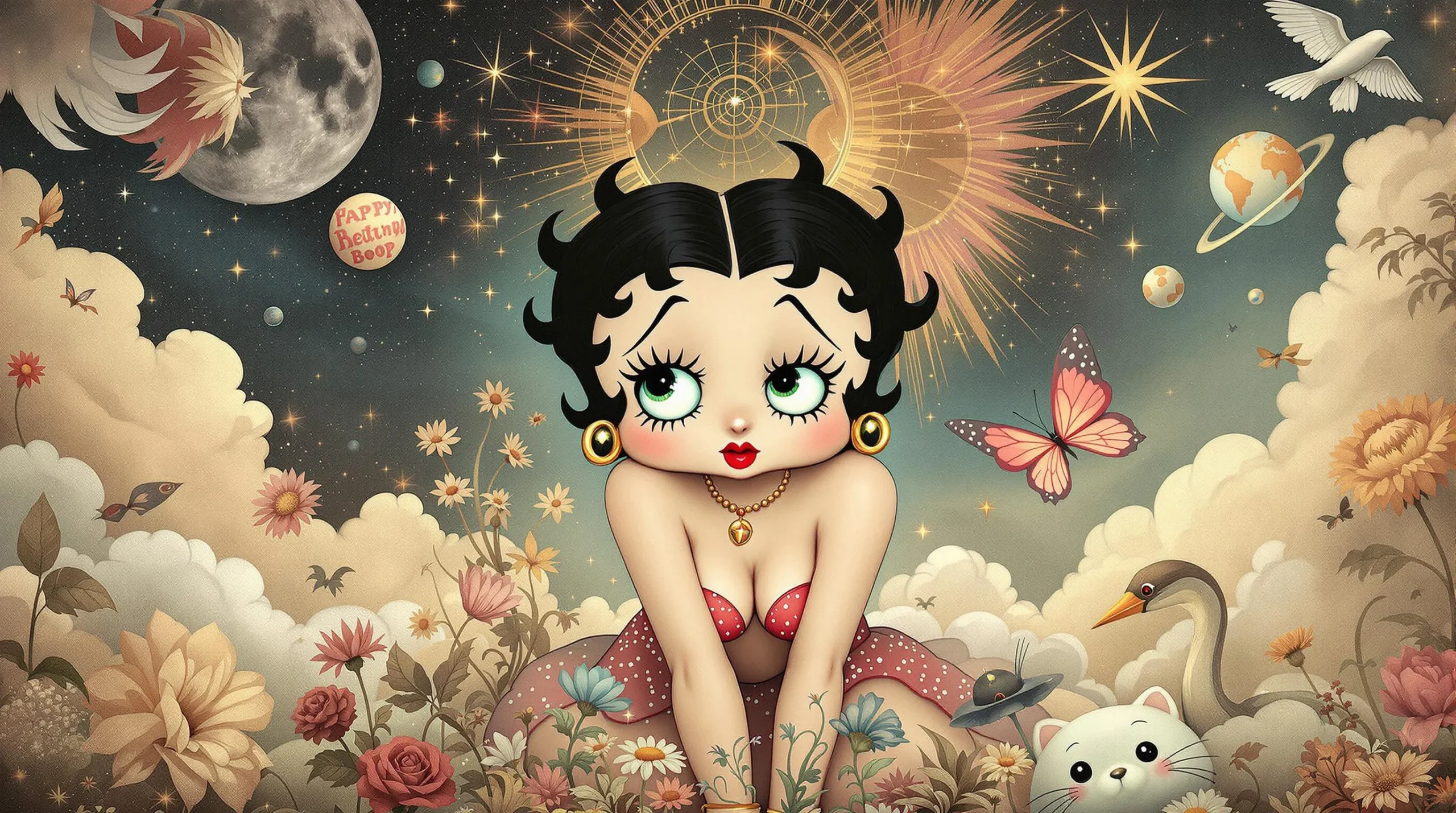
The Betty Boop archetype is a study in survival through radical softness. She exists in a world that is perpetually menacing, a surrealist vaudeville of leering villains and collapsing realities, yet she is never truly broken. Her power is not in her strength, but in her elasticity: her ability to bend, sway, and sing in the face of the grotesque. For personal mythology, she may represent the part of the self that witnessed darkness but chose to reflect light, a kind of defiant innocence that is not the absence of knowledge but a conscious choice in spite of it. She is the flickering candle in a haunted house, a small, warm thing that proves life persists.
Her symbolism is also deeply entwined with the performance of femininity. Betty Boop is perpetually underestimated, her baby-talk voice and curvaceous form coding her as a simple plaything. Yet within that assumption lies her freedom. She could be a map for navigating a world that objectifies: using the performance to mask a cunning intelligence and a deep well of resilience. She suggests that what others perceive as your weakness may be the very source of your unique power. Her sensuality is not for consumption, but a personal weather system, an aura of joyful self-possession that mesmerizes and often confuses those who would seek to control her.
Ultimately, Betty Boop is a totem of creative endurance. She is a jazz note held against the drone of despair. In a mythos, she may symbolize the importance of art, of music, of dance, as fundamental survival tools. She does not solve her problems through logic or force, but by improvising a new song, by dancing with the monster until it becomes a partner, by transforming the scenery of her own nightmare into a stage. She teaches that the most profound response to an illogical world is not a better argument, but a better rhythm.