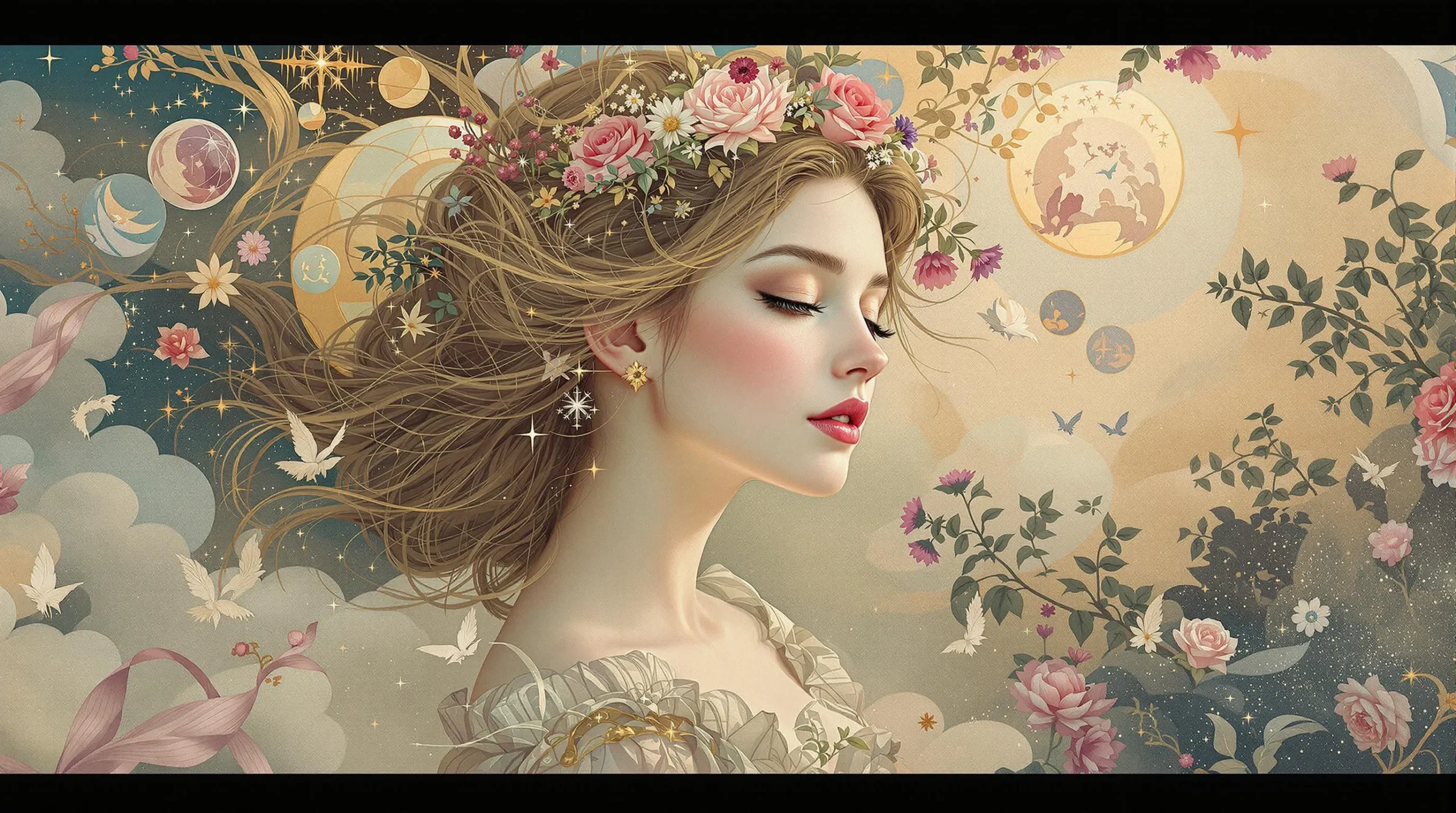


Belle

Archetype Meaning & Symbolism

Intelligent, curious, bookish, kind, stubborn, nonconformist, brave, empathetic, imaginative, restless

  • I want adventure in the great wide somewhere. I want it more than I can tell.

If Belle is part of your personal mythology, you may...

Believe

  • You may believe that true value is always hidden beneath a deceptive surface, and that it is your purpose to look for it.
  • You may believe that a rich inner life is the greatest treasure one can possess, a portable sanctuary against a mundane or hostile world.
  • You may believe that conformity is a kind of living death, and that true integrity lies in honoring your own peculiar, bookish soul.

Fear

  • You may fear a life of unthinking provincialism, a future defined by safe, practical choices that starve the soul.
  • You may fear that your intellectual passions will forever isolate you, that you will never find someone who understands the language of your heart.
  • You may fear being trapped: by a person, a place, or a set of expectations that leave no room for adventure or growth.

Strength

  • You may possess an uncanny ability to perceive depth, potential, and beauty where others see only monstrosity or strangeness.
  • You may have a profound self-sufficiency rooted in a vibrant and well-tended inner world, which makes you resilient in the face of solitude or external chaos.
  • You may wield an unwavering kindness and empathy as your primary tools, allowing you to disarm hostility and transform situations through understanding.

Weakness

  • You may have a tendency to become lost in the world of ideas, overlooking practical realities or physical dangers.
  • You may exhibit a form of intellectual snobbery, growing impatient or dismissive of those who do not share your curiosity or depth.
  • You may be vulnerable to a savior complex, repeatedly drawn to difficult, “beastly” people you feel a need to fix, sometimes to your own detriment.

The Symbolism & Meaning of Belle

In the personal mythology of the modern soul, Belle is the patron saint of the misunderstood intellectual, the quiet nonconformist. She represents the profound truth that one’s immediate surroundings do not have to define the boundaries of one’s world. Her provincial town is a metaphor for any limiting circumstance: a dead-end job, a restrictive family, a culture of anti-intellectualism. The books she carries are not just paper and ink; they are portable worlds, keys to unseen doors, a declaration that she is a citizen of a republic of ideas far grander than her physical address. To have Belle in your mythos is to believe that the mind is its own place, a castle more ornate and more defensible than any stone fortress.

Her journey symbolizes the transformative alchemy of empathy. She does not defeat the monster; she understands it. This is a crucial distinction. Her power is not in a sword, but in her gaze, which insists on seeing the person within the beast. This suggests a mythology where salvation comes not from vanquishing our demons, but from dining with them, teaching them to read, and finding the cursed prince within. The yellow ballgown is not merely a pretty dress; it could be seen as the color of intellect and optimism, a sunburst of enlightenment in the gloom of a cursed castle, a symbol that one’s inner light can indeed re-enchant a fallen world.

Furthermore, Belle represents a specific kind of courage: the courage to be kind in the face of the grotesque, and the courage to say no. Her rejection of Gaston is not just a romantic choice; it is a profound philosophical statement. She refuses the handsome, popular, and socially sanctioned option because it is hollow. It is a testament to the belief that a life of intellectual and emotional integrity is worth more than comfort and acclaim. She models a quiet, unyielding integrity, a strength that is rooted not in aggression but in a steadfast sense of self. She teaches that the most profound adventures are often internal, and the bravest acts are those that honor the truth of one's own heart.


Belle Relationships With Other Archetypes

The Beast

The Beast may represent the unquarried stone to the Belle’s finished sculpture, a wild landscape against which her cultivated grace achieves its most poignant definition. Theirs is not merely a relationship of opposites, but perhaps one of mutual completion, a strange and quiet alchemy. Where others see the Belle as a flawless object, a prize to be polished and displayed, the Beast could be the only one to perceive the tectonic anxieties beneath her serene surface. His gaze is not one of admiration but of recognition. In turn, her presence in his world might be the first note of a forgotten music, a light that does not seek to banish his shadows but to prove that even in darkness, things of great beauty can exist without being consumed.

The Ballroom

One might say the Ballroom is the Belle’s native ecosystem, the grand, gilded stage where her particular radiance finds its apotheosis. It is a constellation where she is the fixed star, a human sea where she moves as the undisputed pearl. Yet, this symbiotic relationship is precarious. The Ballroom offers a throne of adoration but demands a performance of flawless, unchanging beauty. Its polished floors reflect a curated version of herself, and its suffocating perfume of whispers and expectation could become a kind of beautiful prison. The Belle may draw her power from this space, but she is also bound by its architecture, her movements circumscribed by the dance, her identity contingent on the gaze of the crowd. It is a stage that could, without warning, transform into a gilded cage.

The Mirror

The Mirror is perhaps the Belle’s most intimate confidant and her most merciless historian. It is a silent, silvered oracle, the first to confirm her ascension and the first to chart the heartbreaking cartography of time upon her face. This relationship is a quiet, daily ritual, a dialogue conducted without words. The Mirror bestows upon her the currency of her realm—her beauty—but it may also be the very thing that starves her. It reflects the surface, the exquisite mask, and in its relentless honesty, it could force upon her the profound and terrifying question of what, if anything, exists when the reflection is no longer enough. The Mirror is a pool of still water that shows the sky perfectly, but reveals nothing of the world teeming just beneath the surface.

Using Belle in Every Day Life

Navigating Social Expectations

When faced with pressure to conform to a role that feels inauthentic, the Belle archetype provides a script for quiet rebellion. It is not about loud protest, but about the persistent, gentle act of choosing the book over the crowd, the meaningful conversation over the vapid pleasantry. You might use this mythos to decline a promotion that leads you away from your passion, or to maintain a friendship that your social circle deems odd, understanding that your personal story is not written by committee.

Finding Beauty in the Unconventional

This archetype is a powerful lens for reappraisal. When confronting a difficult project, a challenging person, or an unappealing environment, the Belle mythos encourages you to look for the enchanted castle within the beastly exterior. It is the practice of asking: What is the hidden library here? What is the secret, tender heart beneath this gruff facade? This could manifest as championing an unpopular idea at work or finding profound beauty in a landscape others have dismissed as barren.

Cultivating an Inner World

In moments of loneliness or external chaos, the Belle archetype models the creation of a sanctuary within the self. Her books are a literal representation of a vast, portable inner world. To enact this is to consciously curate your mind as you would a library, filling it with knowledge, art, and ideas that provide solace and strength. This becomes a practice of radical self-reliance, where your well-being is not contingent on external validation but on the richness of your own inner landscape.

Belle is Known For

Her Love of Reading

A defining characteristic that sets her apart from the villagers, symbolizing her intellectual curiosity, her desire for escape, and the vastness of her inner world.

Her Relationship with the Beast:

The core narrative of looking past a monstrous exterior to discover a hidden, wounded heart, representing the transformative power of empathy and kindness.

Rejecting Gaston:

A pivotal act of self-definition, where she refuses a socially advantageous but soulless future, prioritizing her own values and intellectual freedom over security and acceptance.

How Belle Might Affect Your Personal Mythology

How Belle Might Affect Your Mythos

When Belle is a resident of your personal mythos, your life story may be plotted as a narrative of escape and discovery. The central theme is often “There must be more than this provincial life.” Your personal history might be framed as a series of departures from the metaphorical small town: leaving behind limiting beliefs, outgrowing social circles, or trading a secure but unfulfilling career for the “great wide somewhere” of the unknown. Your defining moments may be instances where you, like Belle, chose the library over the tavern, the complex truth over the simple narrative. The ‘Beast’ in your story need not be a person; it could be a difficult subject you chose to master, a daunting creative project you undertook, or a part of yourself you learned to love.

This mythos shapes your perception of conflict and resolution. Problems are not obstacles to be bulldozed, but enchanted castles to be explored, puzzles to be understood. The narrative arc bends towards transformation through empathy. The climax of your story is not a battle, but a dance: a moment of connection where you see past the monstrous exterior of a situation or person and connect with its hidden, princely potential. Your personal legend may become one of the “tamer of beasts,” the one who brings light not by fighting the darkness, but by lighting a candle within it, proving that kindness is the most potent form of magic.

How Belle Might Affect Your Sense of Self

To see oneself through the lens of the Belle archetype is to cultivate an identity rooted in the mind. Your sense of self-worth may be deeply entwined with your intellectual curiosity, your imagination, and your capacity for empathy. You might see yourself as a librarian of your own soul, carefully curating the stories, ideas, and values that constitute your being. This can lead to a profound sense of self-sufficiency; your happiness is not a fragile thing dependent on the whims of others, but a well-built fortress of inner richness. You are never truly alone when you have a thousand worlds to explore in your own mind.

However, this self-perception may also carry a shadow of gentle alienation. Like Belle, you might feel perpetually out of step with your surroundings, an odd bird whose passions are considered peculiar by the mainstream. This can foster a quiet, persistent loneliness, a feeling of being an expatriate in your own life. Your identity as a “reader” can sometimes make you a spectator, observing life from the pages of a book rather than fully participating. The challenge in this mythos is to bridge the gap between the rich inner world and the tangible outer one, to be not just the reader of the story but also its active, engaged protagonist.

How Belle Might Affect Your Beliefs About The World

A worldview informed by Belle is one that consistently looks for chapters hidden beneath the cover. The world is not taken at face value; it is seen as a text to be interpreted, full of symbolism, foreshadowing, and hidden meanings. You may operate with the fundamental assumption that surfaces are deceptive and that true value is almost always concealed. This perspective fosters a deep appreciation for nuance and complexity, and a corresponding skepticism towards simplistic, black-and-white judgments. It is a worldview that finds magic not in grand, supernatural events, but in the subtle transformation of a person’s heart or the discovery of a new idea.

This can also cultivate a critical stance toward populism and mob mentality. The “townspeople” in Belle’s story represent the dangers of unthinking conformity and the swift, brutal judgment of the crowd. A Belle-inflected worldview might be inherently suspicious of anything that receives unanimous, uncritical praise. It champions the individual voice against the roar of the mob. The world may seem divided not between good and evil, but between the curious and the complacent, those who read the book and those who try to burn it. This can sometimes lead to a cynical view of society, but it is a cynicism born from a deep love for the truths that society often overlooks.

How Belle Might Affect Your Relationships

In relationships, the Belle archetype compels a search for a meeting of the minds. The ideal connection is a shared library, a place where two people can exchange ideas, stories, and perspectives. You may find yourself drawn to partners who offer a new book to read, a new world to discover. The physical appearance, social status, or wealth of a potential partner might be secondary to the question: “Can we have a meaningful conversation?” This leads to relationships of profound depth and intellectual intimacy, where love is built on the foundation of being truly seen and understood for one’s inner self.

Conversely, this archetype may predispose you to being drawn to “beastly” partners. You may find yourself attracted to fixer-uppers, individuals who seem rough, misunderstood, or emotionally wounded, believing your empathy can unlock their hidden princely nature. This is the mythos’s romantic peril: the risk of becoming a caretaker rather than a partner, mistaking a project for a soulmate. There is a fine line between seeing the good in someone and projecting a fantasy onto them. The challenge is to love the person, beast and all, without taking on the sole responsibility for their transformation, remembering that even in the fairy tale, the Beast had to choose to change himself.

How Belle Might Affect Your Role in Life

If Belle is your archetypal guide, you may perceive your role in life as that of the gentle revolutionary, the quiet catalyst. You are not the monarch on the throne or the general on the battlefield. You are the one who brings a new book into a closed-off castle, an idea that subtly reorients the entire world of those it touches. Your function is to plant seeds of curiosity and empathy. You may feel your purpose is to challenge the status quo not through confrontation, but through the persistent, unwavering embodiment of a different set of values: thoughtfulness over thoughtlessness, kindness over cruelty, depth over superficiality.

This role is also that of the keeper of stories and the guardian of nuance. In a family, a community, or a workplace, you may be the one who remembers the history, who understands the complexities of a situation, and who advocates for the unconventional perspective. You are the defender of the “beast,” the one who stands in front of the mob and says, “He’s not a monster.” Your role is to complicate the narrative, to resist easy answers, and to hold space for the beautiful, the strange, and the misunderstood. It is a role of quiet influence, where power is wielded not as a weapon, but as a light.

Dream Interpretation of Belle

To dream of Belle in a positive context is often a message from the psyche to awaken your own curiosity and intellect. Seeing her happily reading in a library or exploring the castle may signify that you are entering a period of profound learning and self-discovery. The dream could be an encouragement to look past the intimidating or “beastly” surface of a new project, relationship, or challenge to find its hidden beauty and potential. Belle appearing in your dream may be an invitation to step into your own “great wide somewhere,” to embrace adventure and seek a life more aligned with your soul’s deepest longings. She is a symbol of your own capacity for empathy and your ability to transform your world through understanding.

In a negative context, a dream of Belle can signal feelings of being trapped, isolated, and misunderstood. If you dream of her being confined to the village, mocked by the townspeople, or imprisoned in a terrifying, dark version of the Beast’s castle, it may reflect your own sense of being stuck in a “provincial” life that suffocates your intellectual or emotional needs. A distressed Belle could represent the part of you that yearns for more but fears stepping out of line. It might be a warning that a relationship or situation you once saw as a romantic castle has become a gilded cage, and that your empathy is being exploited rather than honored.

How Belle Archetype Might Affect Your Needs

How Belle Might Affect Your Physiological Needs

When Belle informs your personal mythology, your physiological needs may be viewed through a lens of intellectual romanticism. The basic requirements for survival: food, water, shelter, are often seen as a simple, almost rustic foundation upon which the life of the mind is built. You may believe that all one truly needs is a loaf of bread, a wedge of cheese, and a book of poetry. There can be a certain asceticism, a belief that over-attending to the body's comforts distracts from the more important pursuits of knowledge and imagination. The body is the vessel, but the cargo is the soul, and the cargo is what matters.

This perspective could lead to a healthy simplicity, a freedom from the tyranny of materialism. However, it may also manifest as a neglect of the body's legitimate needs and signals. You might be prone to skipping meals because you're lost in a project, or ignoring physical exhaustion in the pursuit of an intellectual goal. The Belle mythos can sometimes create a false dichotomy between the mind and the body, privileging one so heavily that the other atrophies. The physiological self may be treated as a patient, enduring servant to the mind's grand adventures, rather than an equal partner in the journey of life.

How Belle Might Affect Your Ideas of Belonging

Belongingness, within the Belle mythos, is a matter of profound, selective connection rather than broad social acceptance. There is an inherent acceptance that one will likely not belong with the “townspeople.” The desire is not to be liked by everyone, but to be truly understood by a kindred spirit. Love and friendship are quests for a partner in dialogue, someone who can read the same books, both literally and metaphorically. This leads to the formation of incredibly strong, intimate bonds that are fortified by a shared sense of being “other” together. Belonging is finding the one other person in the world who speaks your secret language.

This pursuit of deep connection can, however, lead to intense periods of loneliness. The standards for belonging are so high, centered on intellectual and emotional resonance, that many potential relationships may be dismissed as superficial. There's a risk of feeling like an island, waiting for a ship that may never arrive. The Belle archetype may struggle with casual social interactions, feeling impatient or bored. The love that is found is transformative, like the breaking of a curse, but the path to finding it can be a solitary one, marked by a persistent ache of not quite fitting in anywhere.

How Belle Might Affect Your Feelings of Safety

For a person with the Belle archetype, safety is primarily an intellectual and emotional construct. True security is not found in the muscular protection of a Gaston or the conformity of the village mob. It is found in a well-stocked mind, in self-reliance, and in the ability to understand the world. The library is the ultimate safe house, a fortress of knowledge that can defend against ignorance and despair. Safety is the freedom to think your own thoughts and live by your own values without fear of ostracization. This creates a resilient individual who is not easily swayed by threats or peer pressure.

However, this emphasis on intellectual safety can sometimes create a blind spot for physical or practical danger. There may be a naive belief that reason and kindness can conquer all forms of monstrosity, which is not always the case. By rejecting the brutish but protective strength of Gaston, the Belle archetype may sometimes underestimate the reality of brute force in the world. The safety of the castle is contingent on the Beast's capacity for change; this mythology can lead one to place trust in risky situations or people, betting on a transformation that may never come, and mistaking a dangerous predator for a cursed prince.

How Belle Might Affect Your Views of Esteem

Esteem, for one who identifies with Belle, is built from the inside out. It is not contingent on popular opinion, physical appearance, or material wealth. Self-worth is derived from intellectual competence, moral integrity, and the courage of one's convictions. The validation of the crowd is not only irrelevant; it could be seen as a negative indicator. To be praised by the “Gastons” of the world would be a sign that you have compromised your principles. Esteem is nurtured by every new book read, every complex idea grasped, and every act of kindness performed in the face of fear.

The highest form of self-actualization, according to this mythos, is the pursuit of “adventure in the great wide somewhere.” This isn't just about travel; it's about intellectual and spiritual expansion. The need for esteem is fulfilled by the freedom to grow, to learn, and to become more than your prescribed role. This can create a highly principled and self-assured individual. Yet, it can also lead to a fragile esteem if the intellectual identity is threatened, or a secret yearning for the simple, uncomplicated approval that the mythos outwardly scorns.

Shadow of Belle

When the Belle archetype falls into shadow, her intellectual curiosity curdles into elitist snobbery. She is no longer simply misunderstood; she is disdainful. The “provincial” minds of the townspeople are not just simple, they are contemptible. She may use her intelligence not as a light, but as a weapon to belittle others, reinforcing her own isolation under the guise of intellectual superiority. Her desire for “more” becomes a chronic dissatisfaction, a restless ghost that can never appreciate the present moment. She is always looking for an exit, unable to find the enchanted castle because she is too busy criticizing the architecture of her current reality.

Furthermore, the shadow Belle’s empathy becomes a profound weakness, a self-abnegating martyrdom. Her desire to see the prince within the beast becomes a stubborn refusal to see the beast for what it is. She may become an enabler, pouring her kindness and energy into a person or situation that is genuinely toxic, mistaking abuse for a cry for help. In this shadow form, the castle is not a place of transformation but a prison of her own making, where she sacrifices her own needs, dreams, and safety on the altar of a romantic fantasy, endlessly trying to teach a monster to read when it only wants to tear the pages out of the book.

Pros & Cons of Belle in Your Mythology

Pros

  • You possess a powerful resilience that comes from a well-tended inner landscape, allowing you to weather storms of loneliness or external disapproval.
  • You are capable of forming deep, meaningful, and transformative bonds based on true intellectual and emotional connection.
  • Your innate curiosity opens doors to worlds, ideas, and people that others miss entirely, leading to a life of richness and constant discovery.

Cons

  • You may experience profound and persistent loneliness, feeling perpetually out of step with the world around you.
  • Your idealistic belief in the hidden good within people can make you vulnerable to manipulation or exploitation by those who are truly monstrous.
  • You might struggle to appreciate the simple, uncomplicated joys of the “provincial” life, as you are always searching for something more, something deeper.