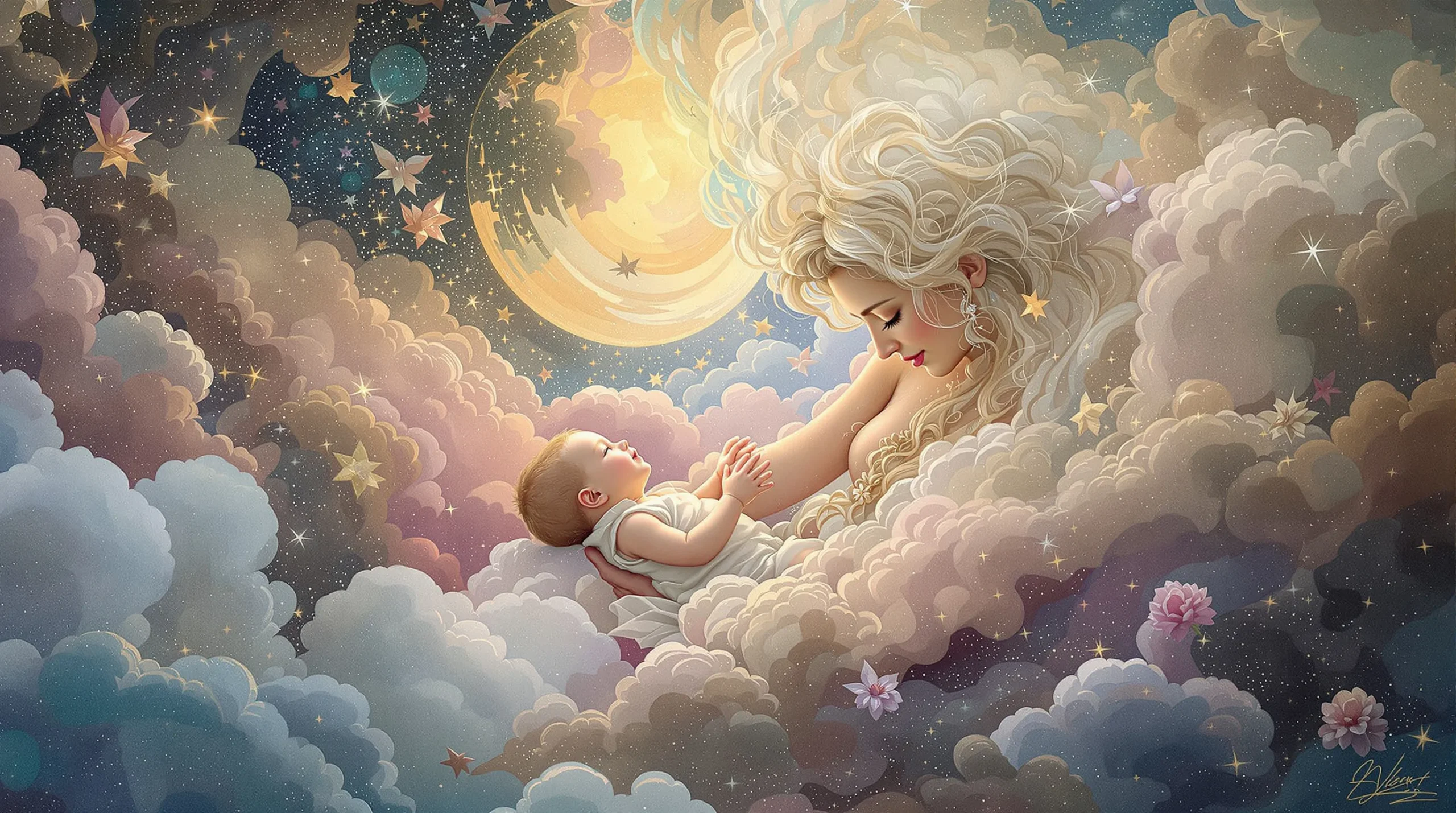


Becoming a Grandparent

Archetype Meaning & Symbolism

Legacy, wisdom, playfulness, surrender, historian, doting, connector, unconditional, reflective, anxious

  • You spend half your life writing your story, only to discover the best chapter is the one someone else begins after you think yours is finished.

If Becoming a Grandparent is part of your personal mythology, you may...

Believe

  • My real legacy is not in what I build or earn, but in the love and stories I pass down.

    Time is not a line, but a circle, and I am privileged to see it turn.

    Joy is not something to be pursued; it is something to be held in your arms.

Fear

  • That I will not have enough time with them.

    That I might become a burden or interfere in my children's lives.

    That the world we are leaving them is irreparably damaged.

Strength

  • A long-term perspective that puts petty squabbles and daily anxieties in their place.

    A profound capacity for unconditional love, freed from the burdens of parental discipline.

    The ability to be fully present and find immense joy in the smallest of moments.

Weakness

  • A tendency to worry excessively about the grandchild's safety and future.

    Difficulty in respecting the boundaries set by the parents, believing you know best.

    Viewing the grandchild as a way to 'fix' the perceived mistakes you made with your own children.

The Symbolism & Meaning of Becoming a Grandparent

The emergence of the Becoming a Grandparent archetype in one's personal mythos may signify a profound temporal shift, a folding of time. Suddenly, you are not just living in the present; you inhabit three temporal spaces at once. You are a curator of the past, holding the stories of your parents and their parents. You are a witness to the future, gazing into the eyes of a person who will likely see a world you can only imagine. And your present is re-contextualized as the vital, connective tissue between these two epochs. This is not merely growing older: it is becoming an anchor point in the timeline of a family, a place where history and destiny meet for a quiet conversation.

This archetype may also symbolize a release from the ego's primary narrative. For decades, the story was about you: your struggles, your triumphs, your becoming. Now, the mythos widens to include a new protagonist. You might find your role shifting from the hero on a quest to the wise guide who offers the hero a map, a bit of magic, or simply a safe place to rest. This decentering can be profoundly liberating. The pressure to achieve, to strive, to prove oneself, may dissolve, replaced by a quieter, more profound purpose: to simply be, to love, and to bear witness. It's the moment the story becomes less about what you have done and more about what you have passed on.

Furthermore, this transition could represent the harvest of a life's emotional labor. It is the culmination of all the love you have given and received, now blooming in an unexpected and powerful form. A grandchild's love is a unique vintage: it is not earned through parental duty but given freely, a pure reflection of connection. In your personal mythology, this may feel like a form of grace, a reward you didn't know you were working toward. It suggests that the true legacy of a life is not a monument of stone but a chain of affection, passed hand to tiny hand down through the years.


Becoming a Grandparent Relationships With Other Archetypes

The Child:

The relationship with The Child archetype is one of renewal and reflection. The grandchild represents not only The Child in its purest form but also resurrects the memory of your own inner child and the child that your own children once were. In the presence of a grandchild, the Grandparent archetype is granted a unique license to re-engage with play, wonder, and simplicity. It is a symbiotic relationship: the Grandparent provides a safe space for The Child to explore, and The Child provides the Grandparent a portal back to a state of being that was long thought lost to the responsibilities of adulthood.

The Sage:

The Grandparent archetype could be seen as The Sage in its domestic form. While The Sage's wisdom is often abstract, philosophical, and directed at the world, the Grandparent's wisdom is practical, narrative, and directed at the family. It is wisdom not found in ancient texts but in lived experience: how to soothe a fever, how to bake a particular bread, the story behind a faded photograph. The Grandparent does not lecture from a mountaintop but whispers secrets from a rocking chair, transforming everyday life into a series of quiet, profound lessons.

The Trickster:

There exists a subtle, playful dance with The Trickster. The Grandparent is often the one who gleefully breaks the parents' rules, offering a cookie before dinner or allowing a later bedtime. In this, they are a gentle trickster, momentarily upending the established order for the sake of joy and conspiracy with the grandchild. This alliance can be a source of mild friction but also a crucial lesson for the child: that rules are important, but so are moments of delightful, loving rebellion. It introduces nuance and a bit of anarchic joy into the family structure.

Using Becoming a Grandparent in Every Day Life

Navigating Career Transitions:

When facing the end of a long career, the archetype of Becoming a Grandparent may offer a new narrative framework. Instead of seeing it as an ending, you might view it as the transition from being the primary author of your own story to becoming the revered librarian for another's. Your purpose shifts from accumulating personal achievements to curating and sharing the wisdom of your lived experience. This perspective can transform a potential crisis of identity into a graceful assumption of a new, vital role.

Healing Old Family Wounds:

The arrival of a grandchild can create a liminal space where old hurts may be addressed. In this archetype, you are no longer just a parent with a history of conflicts, but a link in a longer chain. This elevated perspective might allow you to approach your own children with a newfound empathy, seeing them not just as your child but as a fellow parent. The focus shifts from re-litigating the past to collaborating on building a healthy future, offering a rare opportunity for grace and reconciliation.

Confronting Existential Dread:

This archetype serves as a powerful counter-narrative to the fear of mortality. By holding a new life that carries your lineage, the finality of your own existence may soften. Your personal mythos expands beyond your own lifespan. The focus moves from the fear of your light going out to the quiet joy of seeing a new candle lit from your flame, ensuring the story continues. It is a tangible, breathing argument against oblivion.

Becoming a Grandparent is Known For

Bridge Between Generations

Serving as the living conduit between the ancestral past and the unfolding future, connecting a child to the stories, traditions, and memories of those who came before.

Unconditional Indulgence:

Often characterized by a love freed from the daily obligations of discipline and structure, allowing for a unique relationship built on play, comfort, and unqualified affection.

Keeper of Stories:

Acting as the family's oral historian, the archivist of anecdotes and legends, whose memories give a new generation a sense of place, identity, and narrative depth.

How Becoming a Grandparent Might Affect Your Personal Mythology

How Becoming a Grandparent Might Affect Your Mythos

The arrival of this archetype fundamentally alters the narrative structure of your personal mythos. For most of your life, the story was likely linear, a progression from youth to maturity, focused on your own character arc. Becoming a grandparent introduces a cyclical element. You see the beginnings of life again, but this time from the other end of the spectrum. Your mythos ceases to be a straight line moving toward a conclusion and becomes a spiral, circling back on itself, echoing past events while creating new ones. You are no longer just the protagonist; you are now part of the foundational lore for a new hero's journey, a character in their origin story. This shift can transform a sense of impending finality into a sense of profound continuity.

This also reframes the central conflicts and themes of your life story. Past struggles—career setbacks, personal heartbreaks, periods of doubt—may be re-interpreted not as failures but as necessary chapters that led to this moment. They become the rich, complex backstory that informs your wisdom. Your mythos gains a sense of destiny, a feeling that every twist and turn was, perhaps, leading you to the quiet wisdom of the rocking chair. The narrative emphasis may move from 'What I achieved' to 'What I learned,' and ultimately, to 'What I can pass on.' Your life story becomes less of an autobiography and more of a legacy.

How Becoming a Grandparent Might Affect Your Sense of Self

Your perception of self may undergo a gentle earthquake. The identity markers that once seemed so solid—your profession, your ambitions, your social roles—might begin to feel less significant. In their place, a more elemental identity emerges: you are a link, a source, a beginning. Holding a grandchild can be like looking into a living mirror that reflects not your current face, but the ghost of your own younger self and the faces of your ancestors. This experience can dissolve the sharp edges of the ego, fostering a sense of self that is more expansive, more connected to the flow of life, and less defined by individual accomplishment.

This shift can also initiate a profound internal reconciliation. You may find yourself extending a new grace to the person you once were. The parent you were, with all your perceived flaws and mistakes, is redeemed by the successful raising of a child who is now, themselves, a parent. The archetype allows you to see your life's work as a success, not measured by external standards, but by the simple, undeniable fact of this new life. It can quiet the inner critic and replace it with a gentle, humming sense of peace, a feeling of having fulfilled a deep, unspoken biological and spiritual contract.

How Becoming a Grandparent Might Affect Your Beliefs About The World

Your view of the world may acquire a new depth of field. Issues that once seemed abstract or distant—climate change, political instability, the long-term health of society—suddenly become personal and urgent. You are no longer just a temporary resident of the world; you are a stakeholder in a future you will not fully see. This can cultivate a fierce, protective instinct not just for your family, but for the world they will inherit. Your timeline for caring expands dramatically, from the next few years to the next seventy or eighty. This may radicalize your sense of responsibility, transforming passive concern into active engagement.

Simultaneously, you might develop a longer, more patient view of human progress and folly. Having witnessed several generations, you may become more attuned to the cyclical nature of history and culture. The frantic urgency of the daily news cycle might seem less overwhelming when viewed from a perspective that measures time in generations rather than hours. This is not apathy, but a form of wisdom: an understanding that change is slow, that societies evolve in fits and starts, and that the most enduring forces are not power or wealth, but love, resilience, and the continuation of life itself.

How Becoming a Grandparent Might Affect Your Relationships

The relationship with your own child is irrevocably transformed. You see them in a new light, as a peer in the mysterious and demanding fraternity of parenthood. A new level of respect and empathy may emerge as you watch them navigate the same challenges you once faced. The old dynamic of parent-and-child is overlaid with a new, more complex one: grandparent-and-parent. This requires a delicate negotiation of boundaries, a dance of when to offer advice and when to remain silent. If navigated successfully, it can be the most profound and mature stage of your relationship, built on shared experience and mutual respect.

The bond formed with a grandchild is entirely unique, a relationship often described as love without the anxiety of responsibility. It is a connection that may be purer, less freighted with the expectations and conflicts inherent in parenting. This relationship becomes a sanctuary, a space for unconditional affection and play. For the grandchild, you are a haven of comfort and a source of stories. For you, the grandchild is a source of unadulterated joy and a connection to wonder. This new, powerful axis of love can realign the entire family system, creating new alliances and softening old tensions.

How Becoming a Grandparent Might Affect Your Role in Life

Your primary role may undergo a graceful shift from active to passive, from doing to being. The role of a parent is one of constant action: providing, teaching, correcting, managing. The role of the grandparent is often one of presence. Your value lies not in what you do for the grandchild, but in who you are for them: a steady, loving presence, a living repository of family history, a safe harbor. This transition can be challenging if your self-worth has been tied to action and control, but it can also be a profound relief. It is an invitation to embrace a quieter, more contemplative way of contributing.

You may also find yourself adopting the role of the 'Keeper of the Gate.' You are the gatekeeper to the family's past, deciding which stories, traditions, and values are carried forward into the future. This is a role of immense, albeit subtle, power. Through the songs you sing, the recipes you share, and the memories you recount, you are actively curating the culture of your family. It is a shift from being the builder of the house to being the spirit that inhabits it, giving it warmth, character, and a sense of history. This role provides a deep sense of purpose that is independent of any professional or public identity.

Dream Interpretation of Becoming a Grandparent

In a positive context, dreaming of becoming a grandparent, or of holding a baby that you know to be your grandchild, can symbolize a profound integration of your life's journey. It may represent the birth of a new sense of purpose, a feeling of connection to the future, and an acceptance of your own legacy. Such a dream might suggest that you are entering a phase of wisdom and contentment, where the frantic striving of your ego is giving way to a more peaceful, generative state of being. The dream is an affirmation from the subconscious that your life has borne fruit and that your story will continue.

Conversely, a dream with a negative charge—perhaps you cannot find the grandchild, or they are in peril and you are powerless to help—may tap into deep-seated fears of irrelevance, mortality, and loss of control. It could symbolize anxiety about the state of the world you are leaving behind, or a fear that your wisdom and experience will be ignored or forgotten. This kind of dream might also reflect unresolved issues in your relationship with your own children, projecting the fear of parental failure onto the next generation. It is a subconscious expression of the vulnerability that comes with loving something so deeply while knowing you cannot always protect it.

How Becoming a Grandparent Archetype Might Affect Your Needs

How Becoming a Grandparent Might Affect Your Physiological Needs

The emergence of this archetype may correspond with a physiological call for a change of pace. The frenetic energy required for building a career and raising children could give way to a deeper need for rest, slowness, and presence. Holding a sleeping infant might be a biological imperative to lower your own heart rate, to breathe more deeply, to simply be still. This is not about decline, but about attunement. Your body, in a sense, may be recalibrating its rhythms to match this new role, prioritizing the calm, steady energy required for nurturing over the high-output demands of your earlier life mythos.

Furthermore, this archetype can trigger a renewed focus on one's own health and longevity, framed as a mythological quest. The goal is no longer just to live longer for oneself, but to be present and healthy for another. Every walk taken, every healthy meal chosen, could be seen as an offering, an act of devotion to the future. This provides a powerful, tangible motivation to care for the physical self, transforming the mundane tasks of self-care into sacred rituals performed in service of the sacred bond with the grandchild.

How Becoming a Grandparent Might Affect Your Ideas of Belonging

Becoming a grandparent may be the most powerful antidote to loneliness and alienation ever devised. It solidifies your place in the great chain of being with undeniable, physical proof. You are no longer an individual navigating the world, but a vital, irreplaceable link connecting the ancestors to the future. This creates a sense of belonging that is bone-deep, a feeling of being woven into the fabric of time itself. It is the ultimate confirmation that your life is part of a larger story, a larger tribe. Any feelings of being adrift can be instantly grounded by the simple act of holding your grandchild's hand.

This archetype also deepens and complicates the sense of belonging within the immediate family. It creates a new, exclusive club: the 'grandparents club.' This can forge a more profound bond with your own partner, as you share this unique new identity. It also creates a new triad of connection between you, your child, and your grandchild. This network of love and belonging is a powerful force, creating a web of mutual support and shared identity that strengthens the entire family unit. It is the feeling of a circle finally, and perfectly, being closed, only to find it has become the first loop in a new, expanding spiral.

How Becoming a Grandparent Might Affect Your Feelings of Safety

Your need for safety may expand beyond the self to encompass a future generation. This is not just about locking the doors at night; it is a profound, almost primal, reordering of priorities around the concept of creating a safe world. You might find yourself suddenly concerned with the long-term stability of financial markets, the ecological health of the planet, or the political climate, all viewed through the lens of how they will impact this small, vulnerable person. Your personal mythology now includes the chapter titled 'Guardian of the Future,' and this role demands that you consider threats on a much grander and longer-term scale.

This archetype could also redefine your relationship with personal risk. The impulse to engage in risky behaviors, whether physical or financial, may be tempered by a powerful new deterrent: the desire to remain a stable, reliable presence in your grandchild's life. Conversely, you might find yourself willing to take different kinds of risks, such as speaking out against injustice or becoming more politically active, because the safety you seek to ensure is no longer just your own. The need for safety transforms from a personal, self-preservation instinct into a broader, legacy-oriented drive to protect and preserve.

How Becoming a Grandparent Might Affect Your Views of Esteem

Your sources of esteem may undergo a fundamental shift. The validation that once came from external sources—a job title, a salary, public recognition—can pale in comparison to the profound sense of value reflected in a grandchild's eyes. This is esteem derived not from what you do, but from who you are. The sound of a small voice calling your name can feel more significant than any award or promotion. This archetype offers a path to self-worth that is immune to the fluctuations of the outside world, grounded in the unshakable foundation of familial love.

This can be particularly crucial as one navigates the potential esteem-challenges of aging or retirement. When society's traditional markers of value begin to fade, the Grandparent archetype provides a new and deeply meaningful role. It is a powerful assertion that your worth is not diminished but transformed. You are not 'retired' or 'out of the game'; you have been promoted to a position of ultimate honor within the family. This role reinforces the idea that your greatest contribution may not be the work you did in the world, but the love you are now cultivating within your own lineage.

Shadow of Becoming a Grandparent

The shadow of the Grandparent archetype may manifest as a desperate grasp for control, a refusal to accept the shift from a primary to a secondary role. This can lead to meddling, criticism of your own child's parenting style, and a constant overstepping of boundaries. Here, love curdles into interference. The desire to protect becomes a suffocating anxiety projected onto the family, creating tension and resentment. In this shadow form, the grandparent isn't a wise elder but a benevolent tyrant, using gifts and affection as tools of manipulation to ensure their way is followed. They may see the grandchild not as an individual, but as a last chance to get things 'right,' a vessel for their own unfulfilled ambitions.

Another shadow aspect is abdication or emotional distance. This can stem from a fear of the immense vulnerability that comes with such deep love, or from an unresolved conflict with one's own children. The grandparent who remains aloof, who sees the grandchild as an obligation rather than a joy, is also dwelling in shadow. This absence can create its own kind of wound, a missing piece in the family's mythological landscape. It is the silence where a story should be, the empty chair at the heart of the home. It represents a refusal of the gift of continuity, a turning away from one of life's most profound and healing archetypal invitations.

Pros & Cons of Becoming a Grandparent in Your Mythology

Pros

  • It provides a powerful sense of purpose and connection that can mitigate feelings of irrelevance in later life.

    It offers the pure joy of experiencing childhood again—the wonder, the play, the simplicity—without the immense pressure and responsibility of being the primary caregiver.

    It creates an opportunity to heal old family dynamics and forge a new, more mature relationship with your own children.

Cons

  • It opens you up to a new and profound level of vulnerability and fear for another's well-being.

    It forces a stark confrontation with your own aging and mortality as you witness the beginning of a new life cycle.

    It requires navigating complex, and often delicate, interpersonal dynamics with your adult children and their partners regarding parenting philosophies and boundaries.