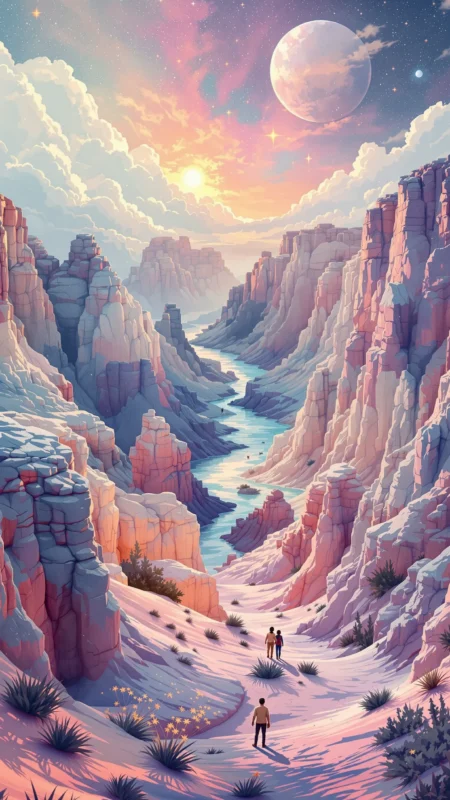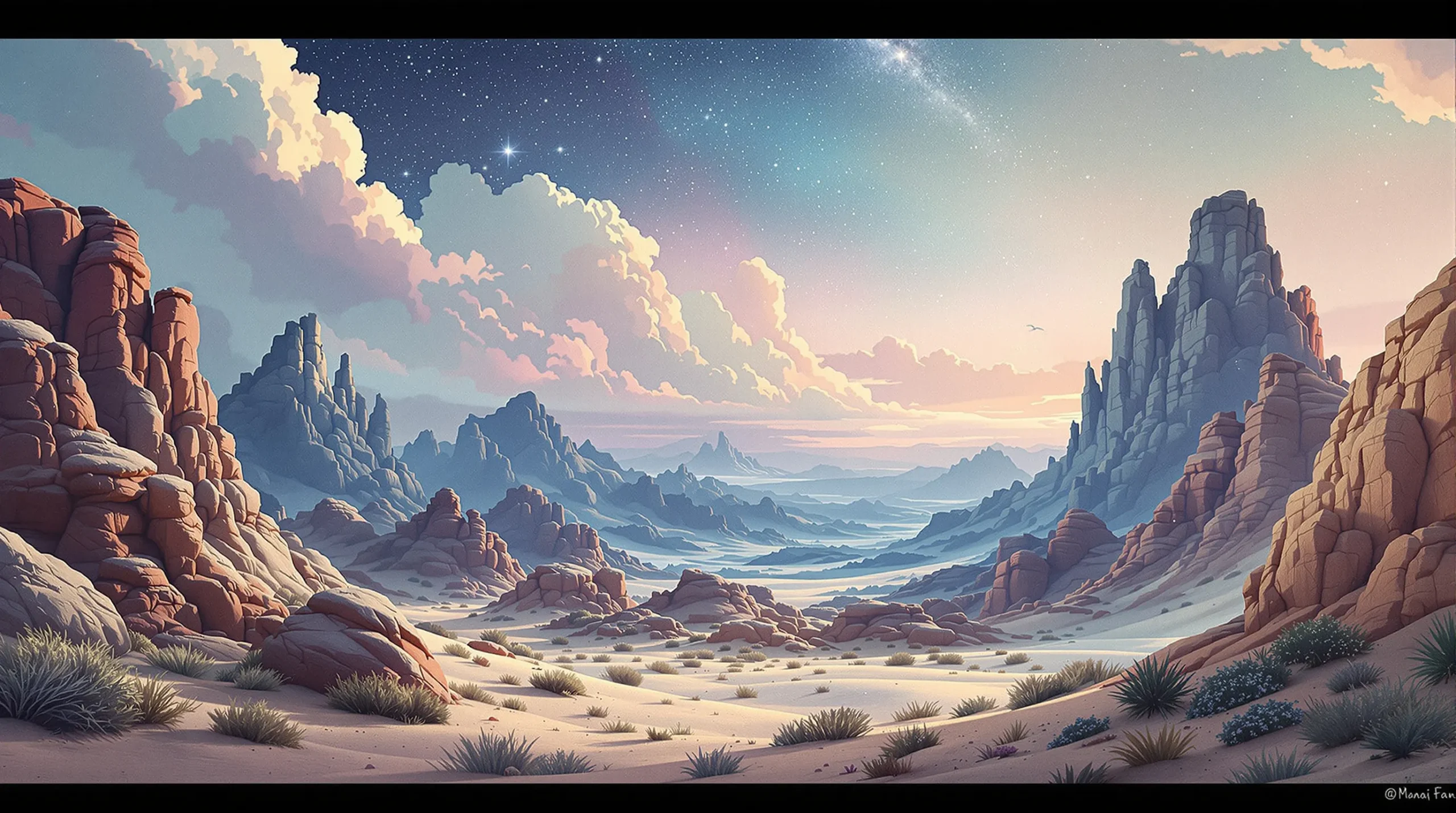


Badlands

Archetype Meaning & Symbolism

stark, resilient, exposed, unforgiving, honest, ancient, weathered, sculpted, marginal, isolating

  • What is stripped away is what was never truly yours. Stand in what remains.

If Badlands is part of your personal mythology, you may...

Believe

  • That truth is found in what is stripped away, not in what is added.

    That true beauty has a harsh, uncompromising quality, and is more often found in structure than in ornament.

    That survival itself is a sacred act, and endurance is a higher virtue than achievement.

Fear

  • A secret terror of softness and comfort, believing them to be precursors to weakness and decay.

    The fear of being buried by the superficial demands of society, of losing touch with what is real and essential.

    The ultimate dread of absolute, final solitude, of being the last living thing in a silent, empty landscape.

Strength

  • Unflinching resilience: an almost supernatural ability to withstand emotional, spiritual, or physical hardship.

    Radical honesty: a commitment to seeing and speaking the truth, no matter how uncomfortable it may be for yourself or others.

    Profound self-reliance: a deep, unshakable knowledge that you can depend on yourself to navigate nearly any crisis.

Weakness

  • A stubborn inability to accept help or admit vulnerability, viewing it as a personal failure.

    A tendency toward willful isolation, pushing away potential connections to maintain a sense of stark independence.

    A cynical or fatalistic outlook that can dismiss joy, ease, and simple happiness as naive illusions.

The Symbolism & Meaning of Badlands

In personal mythology, the Badlands archetype may represent a state of being rather than a physical place: a period of life stripped of its usual comforts and foliage. It is the landscape of the soul after a great fire, the emotional terrain following a profound loss, or the mental space of deep, existential questioning. To have the Badlands as part of your mythos is to carry an internal landscape defined by what it lacks. Yet, this lack is not a void. It is a space of profound clarity, where the architecture of the self is visible, no longer hidden by the lush, confusing greenery of social expectation or youthful illusion. It is a symbol of endurance, a testament to the beauty that can only be seen when everything non-essential has been weathered away.

This archetype perhaps speaks to a comfort with stark realities. It rejects the gospel of constant growth and acquisition, suggesting instead a wisdom found in scarcity. The Badlands mythos values the gnarled, persistent juniper over the sprawling, thirsty willow. It suggests that strength is not about outward abundance but about deep roots and the ability to thrive on less. Symbolically, it is the confrontation with one's own mortality, one's own limits, and finding a severe, unadorned grace in that confrontation. It is the repository of ancient memory, the fossils of past selves that inform the present landscape.

The Badlands could also symbolize a necessary isolation. It is a realm one often walks alone, a pilgrimage into the unforgiving honesty of the self. Here, distractions die of thirst. The only sounds are the wind and one's own breathing. For those who carry this archetype, solitude may not be a curse but a crucible. It is in this vast, silent space that they can finally hear their own deepest truths, uncolored by the noise of the world. It is the landscape of the Stoic, the hermit, the truth-seeker, a place that promises nothing but the unvarnished reality of what is.


Badlands Relationships With Other Archetypes

The River

The River is the relentless sculptor of the Badlands. It is the active, fluid force of time, grief, or circumstance that carves and shapes the static, patient land. In one's personal mythos, this relationship might represent how your core identity (Badlands) has been defined not by your own will, but by a powerful, persistent force beyond your control: a formative relationship, a cultural current, a deep-seated loss. The Badlands does not fight the River. It yields, allowing itself to be carved into something new and profound, its history written in the canyons and gullies left in the River's wake.

The Oasis

The Oasis is the Badlands' secret heart, a shocking, vibrant anomaly in the stark expanse. It is the unexpected pocket of grace in a period of hardship, the moment of pure, unbidden love in a life defined by self-reliance. For the individual whose inner world is the Badlands, the Oasis archetype may represent a cherished, protected inner wellspring: a specific creative talent, a single profound friendship, or a spiritual belief that nourishes them. It is a reminder that even in the most unforgiving landscapes, life and hope persist in concentrated, precious forms, its beauty amplified by the surrounding desolation.

The Vulture

The Vulture is the unsentimental custodian of the Badlands, thriving on what has ended. This archetype works in partnership with the Badlands' harsh reality, symbolizing the capacity to find sustenance and meaning in decay and loss. When a project fails, a dream dies, or an identity is shed, the Vulture archetype within one's mythos allows for the recycling of that experience. It is the wisdom that picks the bones of failure clean, finding the essential lessons and integrating them. It is not a predator but a pragmatist, embodying the truth that every ending provides the necessary material for a new form of survival.

Using Badlands in Every Day Life

Navigating a Professional Setback

When a career path crumbles, the Badlands archetype offers a map not for rebuilding, but for seeing what stands in the rubble. It suggests you view the loss of a title or a project as a geological event: a slow, necessary erosion that removes the soft sandstone of public approval to reveal the granite of your actual skills and passions. This is not about bouncing back. It is about standing in the new, starker landscape of your professional life and recognizing the formidable, weathered structure that is left.

Ending a Defining Relationship

The dissolution of a long-term partnership can feel like a desolate, featureless plain. The Badlands archetype invites you not to flee this emptiness but to inhabit it. It encourages a period of radical self-reliance, of learning the rhythm of your own heart without the echo of another's. You may learn that emotional sustenance, like water in the desert, is more precious for its scarcity and must be found within. It's a mythology of survival that transforms heartbreak from a void into a vast, quiet space for self-discovery.

Confronting Creative Exhaustion

For the artist or creator facing a block, the Badlands proposes a radical act: subtraction. Instead of adding more ideas, more color, more notes, you may strip the project down to its skeletal form. This archetype asks: what is the single, essential bone of this idea? By embracing the aesthetic of erosion, you could find that the most powerful expression lies not in complexity but in the stark, unadorned truth of a single line, a single chord, a single, perfectly chosen word.

Badlands is Known For

Erosion as Revelation

The Badlands is known for its constant, slow-motion act of being stripped bare by wind and water. This symbolizes a process where life’s hardships and the passage of time remove superficialities

ego, pretense, and false securities, revealing a person’s core character and unshakeable truths.

Extreme Conditions

Scorching heat, bitter cold, sudden floods. The landscape is a testament to survival in an environment of extremes. It represents the capacity to endure volatile emotional or situational climates, developing a resilience that is forged in adversity, not comfort.

Buried Histories

These landscapes are often rich with fossils, the preserved remains of ancient life. This suggests that within the most barren periods of one's own life, deep and significant truths about one’s personal history, ancestry, and fundamental nature lie just beneath the surface, waiting to be uncovered.

How Badlands Might Affect Your Personal Mythology

How Badlands Might Affect Your Mythos

When the Badlands shapes your personal mythos, your life story may not follow a narrative of ascent, of climbing mountains to achieve victory. Instead, it might be a story of descent and endurance. The key moments, the narrative turning points, are not marked by what you gained, but by what you survived losing. Your mythos becomes a testament to resilience, where the protagonist is defined by their ability to withstand the long drought and the flash flood. The story's central theme may be the search for truth in a world of illusions, a journey that requires stripping away layers of self and society to reach an authentic core. Your personal legend is written not in triumphs, but in the beautiful, weathered lines of survival etched into your soul.

This narrative may also be one of profound, sometimes isolating, uniqueness. You are the character who walks a different path, one that others may find barren or intimidating. The epic moments in your story might be quiet, internal revelations: discovering a fossil of a long-forgotten childhood dream, or watching the sunset paint the canyons of your solitude with meaning. Your mythos is not about conquering the world, but about learning to belong to an uncompromising inner landscape. It’s a story that finds its power not in the heroic charge, but in the quiet, unyielding act of standing your ground when everything else has been blown away.

How Badlands Might Affect Your Sense of Self

Your view of self may be one of a survivor, weathered and fundamentally self-reliant. You might perceive your own character as a kind of bedrock, tested by the elements and proven to be durable. This could instill a deep, quiet confidence, a sense that you have been stripped of all pretense and know exactly who you are at your core. The superficial judgments of others may feel like dust in the wind, irrelevant to the geological reality of your being. You might see your own flaws and scars not as imperfections, but as the very canyons and crags that give you character and depth.

However, this self-perception could also lead to a feeling of being difficult terrain for others to navigate. You may see yourself as harsh, unadorned, and perhaps too honest for a world that prefers gentler landscapes. There could be a loneliness in this self-view, a sense of being a remote and formidable place that few will venture to explore deeply. You might struggle with softness in yourself, viewing vulnerability as a kind of soft sandstone, susceptible to erosion, rather than a necessary part of the ecosystem of the self.

How Badlands Might Affect Your Beliefs About The World

To see the world through the lens of the Badlands is to possess a kind of geological gaze, one that looks past the fleeting seasons of human drama to the underlying structures of reality. You may view society's obsessions with growth, comfort, and constant stimulation as a thin layer of topsoil, easily washed away by the first real storm. Your worldview might prioritize what is essential, durable, and authentic. You could find more meaning in a silent desert vista than in a bustling city, more truth in a resilient weed than in a cultivated garden. This is a perspective that is not cynical, but radically realistic.

This worldview could also foster a profound patience. The Badlands were not carved in a day, and you may understand that true change, both in the world and in people, is a slow, erosive process. You might be less susceptible to the frantic urgency of modern life, possessing a longer sense of time. This perspective values endurance over speed, substance over flash. It is a worldview that finds its spiritual center in the vast, silent, and uncompromising honesty of the natural world, seeing the human world as a temporary and often illusory overlay.

How Badlands Might Affect Your Relationships

In relationships, the Badlands archetype may foster a need for profound authenticity above all else. You likely have little patience for social games, polite fictions, or relationships built on convenience. You seek connections that can withstand the harsh light of truth and the long silences of introspection. A partnership, for you, is not a decorative garden but a shared ecosystem where two resilient beings can survive and even thrive in a challenging environment. You may not offer easy comfort, but you offer an unshakeable, bedrock loyalty to those who prove they can navigate your terrain.

This can make forming relationships challenging. Your stark honesty and self-reliance might be intimidating to those accustomed to more verdant emotional landscapes. You might inadvertently push people away, creating a protective barrier of solitude around you. The few relationships that take root, however, are likely to be incredibly deep and resilient. They are not based on what you can do for each other, but on a shared understanding of what it means to endure. Love, in your mythos, is two people finding shelter in the lee of each other’s strength, watching the storm pass together.

How Badlands Might Affect Your Role in Life

Your perceived role in life may be that of the Witness or the Keeper of stark truths. You are not the person who provides easy answers or comforting platitudes, but the one who stands firm in reality, reminding others of what is essential and what is illusory. In a group, you might be the anchor, the one who remains calm and pragmatic when chaos erupts. Your role is not to lead the charge, but to ensure the foundations are solid. People may seek you out not for sympathy, but for a clear-eyed assessment of a difficult situation.

This can also cast you in the role of the outsider or the hermit. Your detachment from societal norms and your comfort with solitude can set you apart. You might be seen as the quiet, watchful presence at the edge of the community, possessing a wisdom that is both respected and slightly feared. Your purpose, as you may see it, is not to participate in the noise, but to preserve a space of silence and clarity, to hold a standard of authenticity that the world has largely forgotten. You are the living reminder that survival is its own form of success.

Dream Interpretation of Badlands

In a positive context, to dream of the Badlands might signify a profound breakthrough in self-knowledge. Wandering through sun-drenched canyons and discovering a beautiful fossil could represent the unearthing of a deep, ancient part of your own psyche, a core strength or talent you had forgotten. Seeing a vibrant desert bloom against the dry earth may symbolize the emergence of hope, creativity, or love in a period of your life that has felt barren. The dream could be your subconscious celebrating a successful stripping away of ego and illusion, leaving you with a sense of clarity, peace, and awe at the stark beauty of your own essential self.

Conversely, a negative dream of the Badlands could evoke feelings of desolation, hopelessness, and exposure. Being lost without water under a blazing sun might symbolize a state of emotional or spiritual drought, a feeling that you are utterly depleted and without support. Being trapped in a narrow, crumbling canyon during a flash flood could represent a fear of being overwhelmed by powerful emotions or circumstances that you feel helpless to escape. Such a dream may be a warning from your psyche that your commitment to self-reliance has become a dangerous isolation, or that you are stuck in a life situation that offers no nourishment or possibility for growth.

How Badlands Archetype Might Affect Your Needs

How Badlands Might Affect Your Physiological Needs

When the Badlands is part of your mythos, your relationship with your physiological needs may become elemental and direct. You could feel a profound connection to the body's most basic requirements: water, food, shelter from the elements. Comfort might be viewed with suspicion, as something that dulls the senses and weakens the spirit. You may find a quiet satisfaction in a simple meal, the feeling of sun on your skin, or the deep relief of shade. Your body is not a temple to be decorated, but a resilient tool for survival, and you listen to its signals with a pragmatist's ear.

This can manifest as a form of asceticism, a preference for a minimalist lifestyle that keeps you unburdened and mobile. You might feel that your body holds the memory of every hardship, that your resilience is a physical, cellular reality. You may be highly attuned to the environment, noticing subtle shifts in the wind or the angle of the light, your senses sharpened by a life lived on the essentials. Your physical health is not about peak performance, but about endurance: the ability to keep walking, to keep breathing, to persist through any condition.

How Badlands Might Affect Your Ideas of Belonging

A sense of belonging, for the Badlands soul, is often found in solitude or with a very select few. You may feel a deeper kinship with the land, the sky, and the ancient, silent rocks than with most social groups. Crowds and parties can feel profoundly alienating, a cacophony of superficial noise. Belonging is not about being liked or accepted by many, but about being deeply understood by one or two others who speak the same language of silence and endurance. You find your tribe among other survivors, those whose souls also bear the marks of erosion.

Love and intimacy may be approached with caution, as you understand the potential for emotional flash floods. When you do commit, however, it is with the steadfastness of bedrock. You may not be demonstrative with affection, but you show love through acts of unwavering loyalty and shared survival. Connection is about finding another person who is not looking for a garden to rest in, but a formidable landscape to explore and respect. It is about two solitudes acknowledging and standing by each other, creating a shared shelter against the storm.

How Badlands Might Affect Your Feelings of Safety

Safety, in the Badlands mythos, is not found in accumulation but in divestment. It is not about building higher walls or acquiring more resources, but about knowing how to live with less. True security comes from an unshakeable self-reliance and the knowledge that you can survive even when external support systems fail. You may feel most secure when you are unencumbered, carrying only what is necessary, your skills for survival honed and ready. Conventional safety nets like insurance, steady jobs, or social approval can feel like traps, dependencies that ultimately make you more vulnerable.

This perspective redefines safety as an internal state, a form of radical competence. You might actively seek out controlled challenges to test your resilience, to remind yourself that you can withstand pressure. Your safe space is not a comfortable home, but the vast, open landscape of your own capabilities. The paradox is that by embracing a degree of constant, low-level exposure to risk, you may feel fundamentally safer than those who live in heavily fortified but untested comfort.

How Badlands Might Affect Your Views of Esteem

Self-esteem, within the Badlands archetype, is geological. It is built layer by layer, through pressure and time. It is not derived from compliments, awards, or external validation, which are seen as fleeting as the morning mist. Your self-worth comes from the quiet, internal knowledge of what you have endured. It is the pride of the lone, weathered butte that has withstood millennia of wind and rain. This creates a powerful, self-contained esteem that is not easily shaken by the opinions of others or by failure.

This can, however, make it difficult to accept praise or celebrate your own successes. Achievements that society values might seem insignificant compared to the internal battles you have won. You might hold yourself to an unforgiving standard, believing that your worth must be constantly proven through new tests of endurance. The challenge is to learn that esteem can also come from moments of peace and thriving, not just from survival. It is learning to appreciate the beauty of the desert flower, not just the hardness of the rock.

Shadow of Badlands

The shadow of the Badlands emerges when endurance curdles into self-punishment. In its extreme form, this archetype creates a desolate inner prison. The individual may compulsively reject all forms of comfort, pleasure, and human connection, believing that only through constant hardship can they remain authentic. Resilience becomes brittle rigidity, and honesty becomes a cruel weapon used against the self and others. They become a ghost haunting their own barren landscape, starving their soul in the name of strength, mistaking self-flagellation for spiritual discipline. The search for truth devolves into a nihilistic belief that there is no truth to be found, only endless, meaningless erosion.

Conversely, the shadow can manifest as a desperate flight from this inner landscape. Terrified of the starkness within, a person might construct a life of frantic accumulation and superficiality. They may cling to meaningless social rituals, noisy distractions, and relationships devoid of substance, all to avoid the terrifying silence of their own inner Badlands. This creates a fragile, hollow existence that is utterly dependent on external validation. The slightest hardship, the first breath of honest wind, threatens to shatter their carefully constructed illusion, revealing the barren terror they have spent a lifetime trying to pave over.

Pros & Cons of Badlands in Your Mythology

Pros

  • You develop an unshakable core of self-knowledge and resilience that allows you to navigate life's greatest challenges with a rare grace.

    You possess a profound appreciation for the simple, essential, and authentic aspects of life, finding beauty where others see only emptiness.

    You are unafraid of hard truths, which grants you a clarity of vision that can cut through confusion and pretense.

Cons

  • Your fierce independence and suspicion of comfort might prevent you from accepting or asking for help when you truly need it.

    You may find it difficult to engage in the lighter, more superficial aspects of social life, leading to feelings of alienation and loneliness.

    You can become overly cynical, developing a hard shell that dismisses the genuine joy, ease, and spontaneous happiness of others as naive or illusory.