Believe
 Fear
Fear Strength
 Weakness
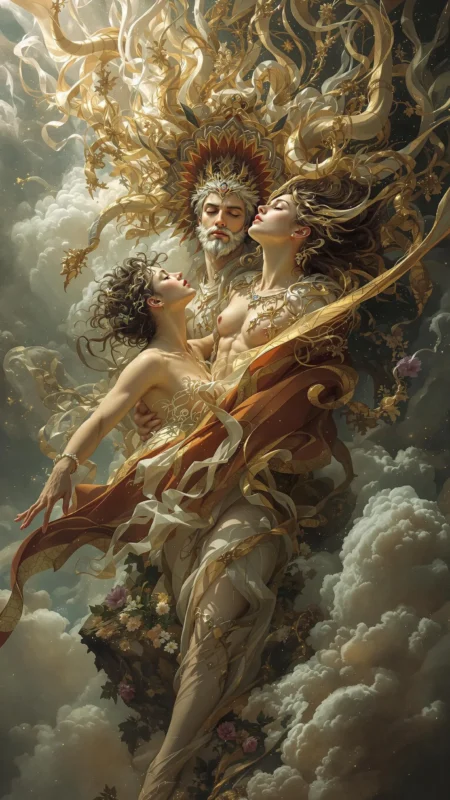
To find Bacchus in one’s personal mythology is to court the god of the threshold, the one who dissolves the boundaries we so carefully erect: between sanity and madness, civilization and the wild, the self and the other. He is the divine justification for the irrational, the patron saint of the necessary rupture. His arrival in the personal narrative is rarely quiet. It is the sudden urge to quit the sensible job, the inexplicable pull toward a chaotic new art form, the moment you look in the mirror and no longer recognize the carefully constructed person staring back. His symbolism is not about simple hedonism, but about the crushing of the grape to make wine: a transformation through pressure and destruction that yields an intoxicating, divine spirit. He reminds us that some truths are not accessible through reason, but must be danced, sung, or wept into being.
He is the god who comes from the East, the eternal outsider who challenges the established order. In a personal myth, his presence may signal a period where the familiar structures of life have become a prison, where routine has calcified into spiritual death. Bacchus represents the vital, chaotic energy required for new growth. He is the earthquake that topples the brittle tower, revealing the hidden spring beneath. He embodies the uncomfortable wisdom that a clearing must be made, often violently, before anything new can be planted. His meaning is found in the paradox of freedom through surrender, of clarity through intoxication, and of wholeness through the temporary, ecstatic loss of self.
The symbols associated with Bacchus: the ivy, the serpent, the phallus, the big cat: all speak to a vitality that is untamed, cyclical, and unashamedly alive. The vine grows where it will, a metaphor for a life force that defies rigid planning. In a personal myth, this may translate to a life path that feels more like a meandering vine than a straight road. It is a path that embraces contradiction, that finds the sacred in the body, and that understands that the liberation of the spirit is not a silent, meditative affair, but a noisy, messy, and deeply communal dance.