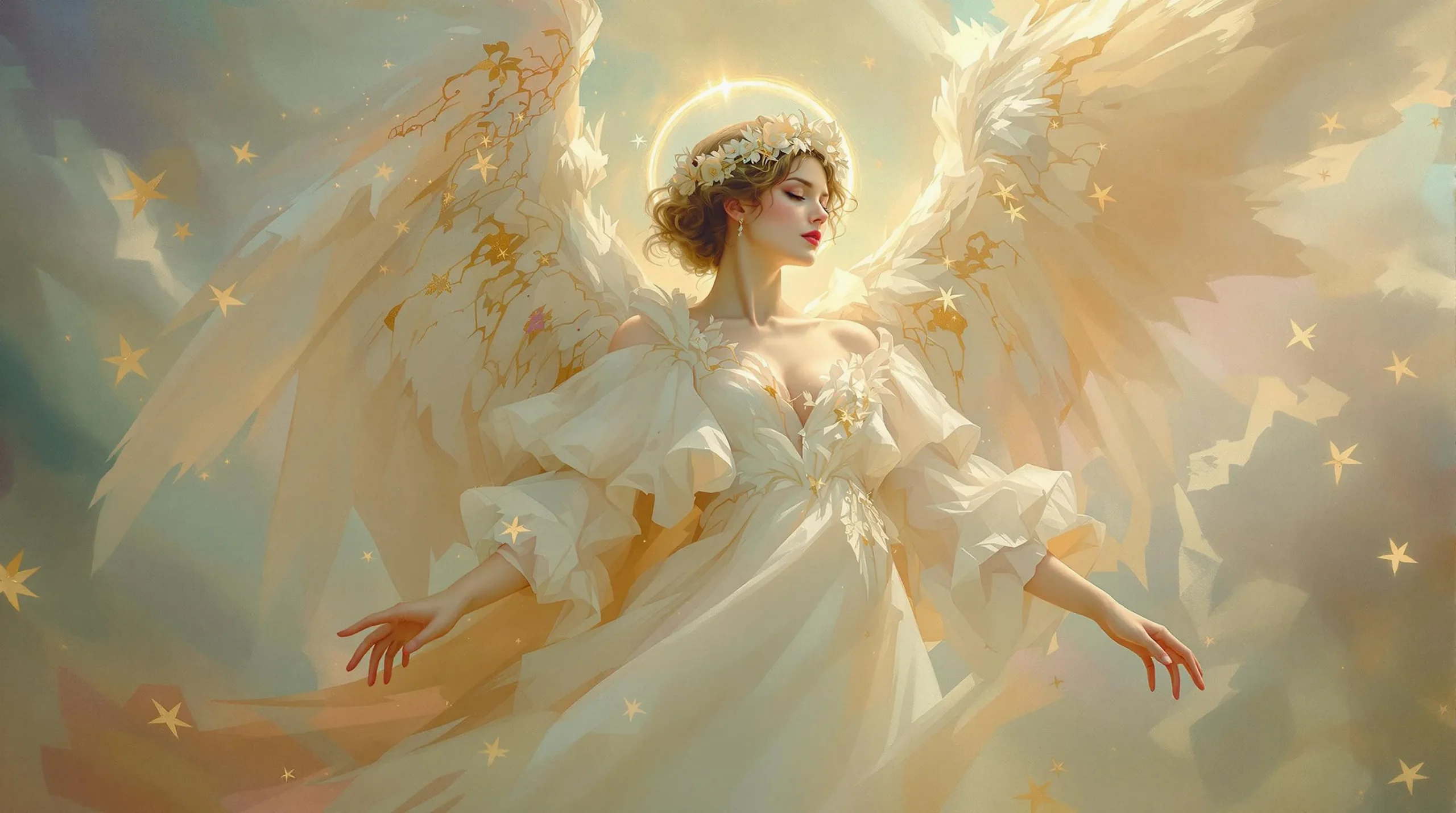


Angel

Archetype Meaning & Symbolism

Ethereal, Messenger, Guardian, Dutiful, Unseen, Incorruptible, Burdened, Unyielding, Aloof, Sacrificial

  • Listen not for my voice, but for the echo of your own highest truth. I am merely the space in which it reverberates.

If Angel is part of your personal mythology, you may...

Believe

  • You may believe that every person carries a divine spark, and your role is to help them see it in themselves.

  • You may believe that true strength is expressed not through power, but through unwavering gentleness.

  • You may believe that the most important events in life are the silent, unseen moments of choice between selfishness and service.

Fear

  • You may fear that your capacity for anger or desire makes you secretly corrupt and unworthy of your role.

  • You may fear that you will one day face a crisis so large that your faith or goodness will shatter completely.

  • You may fear being 'found out'—that people will discover you are not as wise, pure, or selfless as they believe you to be.

Strength

  • You possess a deep well of compassion that allows you to connect with the suffering of others without being consumed by it.

  • You have an intuitive moral clarity that can cut through complexity and confusion, providing a reliable guide for yourself and others.

  • Your calm and steady presence can act as an anchor for people, creating a space of peace in the midst of chaos.

Weakness

  • You have a tendency to spiritualize or bypass difficult emotions, your own and others', seeking a higher perspective when what is needed is engagement with the messy truth.

  • You may struggle to receive help, believing that your role is solely to give, which fosters dependency and prevents true reciprocity.

  • You can be naive about the darker aspects of human nature, your belief in the good sometimes blinding you to genuine malice or manipulation.

The Symbolism & Meaning of Angel

In the modern personal mythos, the Angel archetype has perhaps untethered itself from specific religious dogma to become a symbol of the higher self, or the voice of our deepest conscience. To have the Angel as a key figure in your inner landscape suggests a life structured around a mission or a message. You may feel you are a courier for a truth—be it justice, compassion, or a specific creative vision—that is not entirely your own. The weight of this role is significant: the message must be delivered cleanly, without the stain of your own ego. This can lead to a life of immense purpose, but also a life of careful, almost anxious, self-monitoring, where every action is weighed against its capacity to honor or betray the message you carry.

The guardian aspect of the Angel is one of silent, unwavering vigilance. It is the part of the self that stands sentinel at the gates of your own spirit, protecting your core integrity from the corrosive effects of cynicism or despair. When this archetype is active, you may find yourself creating boundaries, not with anger or aggression, but with a quiet, unbreachable firmness. You may also be called to act as a guardian for others, not by solving their problems, but by holding a space of profound safety for them. This role is often lonely. The watchman on the wall stands apart, seeing things others do not, feeling a responsibility that can be isolating in its sheer weight.

Ultimately, the Angel may be a symbol of a painful, beautiful ideal. It represents a potential for goodness and purity that feels both innate and impossibly distant. To be touched by this archetype is to be haunted by what you could be. This can be a profound motivator for growth, pushing you toward your best self. But it can also be a source of constant, low-grade self-flagellation. The Angel represents a form of perfection, and living with that ideal can feel like standing next to a statue of yourself carved from marble: beautiful, flawless, and utterly, inhumanly cold.


Angel Relationships With Other Archetypes

The Demon

The Angel’s relationship with The Demon archetype is less a simple battle of good versus evil and more a complex, symbiotic dance of definition. The Angel may not exist to annihilate The Demon, but to define itself against it. The Demon represents the earthbound, the chaotic, the instinctual, and the wounded parts of the psyche. The Angel, in turn, represents the ethereal, the ordered, and the idealized. Within a personal mythos, the presence of one often invokes the other. Your angelic impulse to create order might be a direct response to a deep-seated fear of your own inner chaos. This relationship teaches that light is not the absence of darkness, but something that requires darkness to be seen at all.

The Martyr

The Martyr is a shadow cousin to the Angel, and the line between them is perilously thin. Both archetypes are defined by sacrifice. However, the Angel’s sacrifice is ideally offered from a place of spiritual abundance and duty, intended to elevate or protect. The Martyr’s sacrifice, in contrast, often comes from a place of deep lack and is performed to prove a point, to generate guilt, or to validate one's own suffering. When the Angel archetype is not integrated well, it can collapse into The Martyr. The feeling of being burdened can transform into a performance of that burden, and the silent duty can become a loud proclamation of self-denial, a purity that subtly demands an audience.

The Sage

If the Angel is the messenger, The Sage is the translator. The Angel delivers the raw data of the divine: the flash of insight, the wordless emotional truth, the sudden intuitive leap. It is pure, potent, but often incomprehensible in its raw form. The Sage archetype takes this celestial download and integrates it into the human world. The Sage provides context, wisdom, and practical application. An Angel might deliver the feeling that “all is one,” but The Sage explains how to live that truth in traffic, at the dinner table, and in moments of conflict. In a personal mythology, a strong Angel archetype needs a well-developed Sage to avoid becoming ungrounded, abstract, and ultimately useless to the life being lived.

Using Angel in Every Day Life

Navigating Moral Quandaries

When faced with a decision where the lines between right and wrong feel blurred and compromised, you might access the Angel archetype as an internal, incorruptible compass. This is not about consulting a list of rules, but about finding a still, quiet place within yourself. It is about asking not 'what is advantageous?' but 'what is true?' The Angel within doesn't offer easy answers; it offers a resonance, a feeling of alignment with a principle that exists beyond personal gain, helping you act from a place of integrity even when it is the harder path.

Supporting a Loved One in Crisis

To embody the Angel for someone in turmoil is to offer protective presence without invasive action. It may mean sitting in silence with a grieving friend, your quiet companionship a bulwark against their despair. It's about being a guardian of their psychic space, not a director of their healing. The Angel archetype suggests that sometimes the most powerful support is not advice or solutions, but the creation of a safe, judgment-free space where another person can simply be with their own pain, knowing they are not alone. It's the difference between fixing them and holding them.

Accessing Creative Inspiration

For an artist, writer, or creator, the Angel can be a powerful metaphor for the muse or the channel. When inspiration feels distant, invoking this archetype can be a practice of surrender. It involves quieting the ego and becoming a messenger for an idea that feels as if it arrives from elsewhere. You become the vessel, not the source. This might shift the creative process from one of strenuous effort to one of faithful transcription, allowing for work that feels more profound, intuitive, and less encumbered by the artist's personal anxieties.

Angel is Known For

Delivering Messages

The Angel is perhaps most known for being a conduit of information, a divine courier. In a personal mythos, this may not be about receiving stone tablets from a mountaintop, but about being receptive to flashes of insight, sudden realizations, and the quiet whispers of intuition that seem to arrive fully formed. It is the archetype of the epiphany.

Providing Protection

This archetype carries a profound sense of guardianship. It may manifest as an internal feeling of being watched over or as an impulse to shield the vulnerable. This protection is less about physical shields and more about psychic integrity

a force that guards against cynicism, despair, and moral compromise.

Representing an Ideal

The Angel stands as a symbol of purity, unconditional love, and selfless service. It is a benchmark for our better natures. In a personal story, this may function as a North Star, an ideal to strive for, but one whose light can also cast long shadows, highlighting our own perceived flaws and imperfections.

How Angel Might Affect Your Personal Mythology

How Angel Might Affect Your Mythos

When the Angel archetype shapes your personal mythos, your life story may cease to be a straightforward quest for personal happiness or achievement. Instead, it becomes a narrative of service, a chronicle of a mission. You might see the major events of your life not as things that happened *to* you, but as assignments given *for* you. A difficult childhood could be reframed as training for empathy; a career setback might be seen as a course correction from a higher power, pushing you toward your true calling. Your mythos is not about a hero slaying dragons, but about a messenger protecting a fragile flame through a dark wood. It is a story whose meaning is found not in the destination, but in the faithful execution of the journey itself.

This narrative arc can also cast you as a permanent outsider. Your personal myth might be one of a celestial being on a temporary earthly assignment, forever looking in on the messy, beautiful chaos of human life without ever feeling fully part of it. This creates a story of profound loneliness, a search for a 'home' that isn't a place on a map but a state of being, a return to a sense of grace or belonging that feels perpetually just out of reach. Your mythos may be defined by a sense of otherness, separated from the rest of the world by a responsibility that no one else can see or understand.

How Angel Might Affect Your Sense of Self

To internalize the Angel archetype is to see yourself as a conduit before seeing yourself as a person. Your identity may be deeply entwined with a purpose that feels larger than your own life. This can grant a powerful sense of meaning and direction, but it can also lead to a dangerous disassociation from your own humanity. Your personal desires, your 'selfish' needs for rest, play, and uncomplicated joy, might be viewed with suspicion, as potential contaminants to your higher purpose. Your sense of self may become hollowed out, a beautiful vessel valued for what it contains rather than for what it is.

There might be a constant, low-humming awareness of being 'on call.' Your self-worth could become conditional, tethered to your performance as a helper, guardian, or moral exemplar. A successful day is one in which you have eased someone's burden or upheld an ideal. An unsuccessful day is one where you displayed impatience, felt envy, or simply tended to your own needs first. This forges a self-concept under immense pressure, leaving little room for the grace of mediocrity, the learning that comes from error, or the simple peace of not needing to be anything to anyone.

How Angel Might Affect Your Beliefs About The World

With the Angel as part of your mythos, your worldview may be one of enchanted significance. The world is not a random collection of matter and events; it is a text, rich with symbolism and subtle messages. A chance encounter, a line from a song, the particular way the light falls—all could be interpreted as signs, a continuous dialogue between the seen and the unseen. This perspective imbues life with a layer of magic and depth, transforming the mundane into the meaningful and suggesting that a benevolent, ordering intelligence is at play just beneath the surface of reality.

Conversely, this same sensitivity can foster a worldview colored by a profound and persistent sorrow. When you perceive the world’s potential for grace, its actual state of violence, greed, and discord becomes almost unbearable. You might feel a constant ache for a world that is more just, more kind, a kind of divine homesickness for a reality that exists only as an ideal. This can lead to a feeling of being at odds with the world as it is, a gentle but pervasive sense of disappointment in humanity's failure to live up to its own angelic potential.

How Angel Might Affect Your Relationships

In your relationships, the Angel archetype may automatically cast you in the role of confidante, moral arbiter, and emotional caretaker. People may be drawn to your perceived calm and integrity, seeking you out as a port in their personal storms. This can lead to relationships of great depth and meaning, where you provide genuine solace and guidance. However, these bonds may be subtly conditional, predicated on your ability to remain on the pedestal where others have placed you. The relationship is with the office you hold, not necessarily with the person who is tired of holding it.

This can lead to a unique and painful form of solitude. You may become the keeper of everyone else's secrets while feeling you have no safe harbor for your own. Vulnerability can feel like a dereliction of duty. True intimacy requires a mutual exchange of strength and weakness, but the Angel dynamic is often one-way. You may be surrounded by people who love you, but it is a love directed at your light, your utility, your unwavering presence. This can leave you yearning for a connection where you are not needed, but simply wanted, for all your un-angelic complexity.

How Angel Might Affect Your Role in Life

Whether you choose it or are conscripted into it, the Angel archetype often assigns you the role of the conscience within any given group. In your family, you may be the peacemaker. At work, you might be the one who speaks up for ethical principles, even when it's unpopular. Among friends, you could be the anchor of stability, the one everyone assumes will do the 'right thing.' This role is less a conscious decision than a magnetic pull; your perceived nature draws these expectations to you, and fulfilling them becomes a core part of your identity within that social ecosystem.

The weight of this role can feel like a cage made of light. It restricts your range of acceptable human expression. To show authentic anger, to act out of pure self-interest, or to admit to being lost and confused can provoke shock and disappointment in those who rely on your angelic stability. Their reaction reinforces the boundaries of the role. This can lead to a deep, private longing to abdicate, to be relieved of your post, to be allowed the freedom to be messy, wrong, and gloriously, imperfectly human.

Dream Interpretation of Angel

In a positive dreamscape, the appearance of an Angel may symbolize the successful integration of your highest self or a profound moment of self-acceptance. The Angel in this context is not an external entity but a reflection of your own innate wisdom and purity of intent. It could arrive to signify that you are on the correct path, or to deliver a message of comfort from your own subconscious, affirming that you possess the inner resources to navigate whatever challenges you face. Seeing a radiant Angel in a dream could be a sign to trust your intuition, to act on your noblest impulses, and to recognize the divine spark within yourself.

In a more troubling dream, an Angel can be a figure of judgment or an embodiment of an oppressive, unattainable ideal. A stern or weeping Angel might represent your own conscience, reflecting a deep-seated fear that you have transgressed your own moral code. It can symbolize the crushing weight of perfectionism, the part of you that constantly finds your human self wanting. An Angel that attacks you or cages you in light could represent a 'spiritual bypass,' where a focus on lofty ideals is preventing you from dealing with messy, necessary, earth-bound emotions and problems. It is a warning that your purity has become a prison.

How Angel Archetype Might Affect Your Needs

How Angel Might Affect Your Physiological Needs

The Angel archetype, with its focus on the spiritual and ethereal, may foster a subtle or even overt neglect of the body's fundamental needs. Food, sleep, and physical comfort can be viewed as worldly distractions from a higher calling or mission. You might treat your body less like a home to be tended and more like a vehicle to be used, its signals for fuel and rest often overridden by a sense of duty. This can lead to patterns of self-denial—skipping meals to help someone, pushing through exhaustion to finish a task—that are framed not as neglect, but as virtuous sacrifice.

This disconnection can manifest as a quiet disdain for the body's inherent messiness and its appetites. There may be an unconscious belief that the spirit is pure and the flesh is base, creating a tension between your physical self and your idealized identity. You might seek to transcend the body's limitations, viewing pain or hunger as weaknesses to be overcome through willpower rather than as important information to be heeded. The ultimate goal becomes a kind of weightlessness, a disembodied existence that is at odds with the fundamental reality of being a physical creature.

How Angel Might Affect Your Ideas of Belonging

The Angel archetype creates a paradox of belonging. You might be the beloved, central pillar of a community, the person everyone turns to, the heart of the family. You belong *to* everyone. And yet, this can foster a profound feeling of not belonging *with* anyone. Your role as guardian or guide can create an invisible barrier, a subtle otherness that prevents you from ever truly joining the flock you so carefully protect. You are loved, but from a respectful distance, like a beautiful monument that everyone admires but no one touches.

Intimacy becomes a complex negotiation. True closeness requires a mutual vulnerability that the Angel role often precludes. How can you lay down your burdens with someone who sees you as their rock? Love from others may feel more like reverence, a form of worship directed at the ideal you represent. This can be intensely isolating, creating a deep yearning for a connection where you are seen and accepted in your totality: wings, scars, and all. You might crave a love that does not need your light, but simply enjoys your presence.

How Angel Might Affect Your Feelings of Safety

A person whose mythos includes the Angel may possess a profound, almost unshakeable sense of security. This safety is not rooted in physical locks or financial stability, but in a deep-seated faith that they are operating under the protection of a higher purpose. It's a belief that, regardless of what worldly harm may occur, their ultimate essence is safe because their actions are aligned with a greater good. This can foster a remarkable fearlessness, allowing them to bring a calming presence to chaotic situations or to speak truth to power without fear of personal consequence.

However, this sense of safety can be dangerously conditional. It may be contingent upon maintaining a state of grace or moral purity. A perceived failure—an act of selfishness, a loss of temper, a moment of weakness—could trigger an existential panic, a feeling of having forfeited one's divine protection. The fear is not of the external threat itself, but of being 'cast out,' left exposed and vulnerable because you are no longer 'good enough' to merit protection. Safety, in this framework, ceases to be an inherent right and becomes a wage paid for virtuous behavior.

How Angel Might Affect Your Views of Esteem

For one who embodies the Angel, self-esteem is often outsourced. It is not generated from within through self-love, but derived from the successful execution of one's duty to others. Your sense of worth is directly proportional to your helpfulness. You feel valuable when you have successfully mediated a conflict, offered the perfect piece of advice, or provided comfort to someone in pain. Esteem is the quiet satisfaction of a mission accomplished, a sense that you have lived up to the purity of your role.

This foundation for esteem is incredibly fragile, as it is entirely dependent on external factors and the constant performance of virtue. A day when your help is not needed, or worse, is rejected, can trigger a crisis of worth. If your advice proves wrong, or if you fail to live up to the impossibly high standards of your role, the resulting shame is not just about a failed action, but a fundamental failure of being. The respect you earn is for the symbol you uphold, leaving the actual person feeling unseen and conditionally valued.

Shadow of Angel

The primary shadow of the Angel is The Inquisitor. When the burden of upholding an impossible purity becomes too great, or when the Angel's guidance is rejected, its light can curdle into a sanctimonious fire. The desire to help transforms into a compulsion to control; the possession of a higher truth becomes a justification for judging those who fall short. This shadow Angel uses its moral authority as a weapon, wrapping its pronouncements in the language of love and concern while delivering sharp cuts of condemnation. It is the helper who subtly creates dependency to ensure their own importance, the guardian who builds a beautiful prison of safety, all while remaining convinced of its own unimpeachable righteousness.

Another dark facet is a crippling passivity, a helplessness disguised as holiness. This shadow Angel waits for a divine sign that never comes, using faith as an excuse for inaction in the face of injustice. It is a 'spiritual bypass' made manifest, where one hovers above the gritty, complicated struggles of life, offering platitudes from a safe distance instead of getting their hands dirty. This Angel polishes its own halo while the world burns, mistaking its detachment for enlightenment. Its primary sin is not one of commission, but of omission: the good it fails to do because it is too preoccupied with the performance of being good.

Pros & Cons of Angel in Your Mythology

Pros

  • Having the Angel in your mythos provides a powerful sense of purpose and integrity, making life feel meaningful and directed.

  • You can be a genuine source of comfort, wisdom, and stability for those in your life, forging deep and significant bonds through compassionate service.

  • Your embodiment of this archetype can inspire others, subtly encouraging them to connect with their own higher ideals and better natures.

Cons

  • You may feel perpetually burdened by the weight of your own and others' expectations, leading to exhaustion and burnout.

  • You can suffer from a profound sense of loneliness, feeling that you are loved for the role you play rather than the complex person you are.

  • There is a significant risk of self-neglect, as your focus on serving others can lead you to ignore your own fundamental human needs, desires, and flaws.