Believe
 Fear
Fear Strength
 Weakness
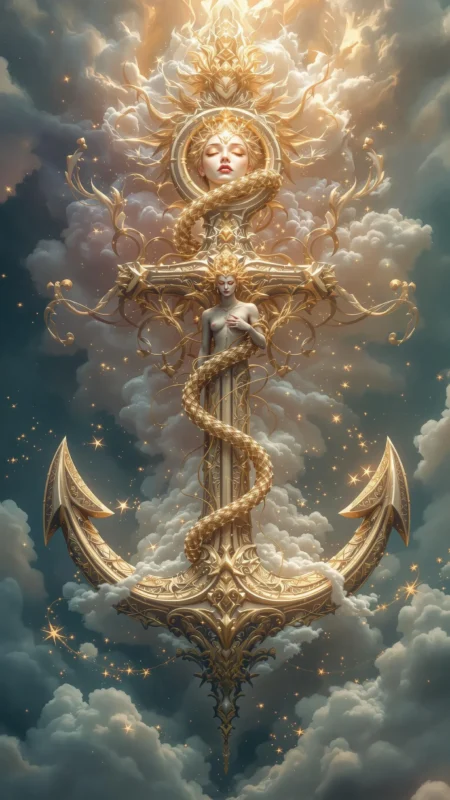
In the frantic currents of modern life, where fluidity is often praised above all, the Anchor emerges as a symbol of radical commitment. It stands for the decision to be steadfast, not out of fear, but out of conviction. Your personal mythology may feature the Anchor as the quiet hero of your story: the set of principles you refuse to compromise, the lifelong friendship that grounds your identity, the home that is a sanctuary against the world's chaos. It suggests that meaning isn’t always found in the journey, but sometimes in the profound act of choosing a place to moor your soul, a place to hold steady while the rest of the world drifts by.
The Anchor is also a conduit to the unseen depths. It plunges through the surface of things, the conscious and visible world, to find purchase in the hidden mud and rock of the subconscious, of history, of fundamental truth. To have the Anchor in your mythos might mean you place immense trust in your intuition, in the foundational beliefs that lie beneath the surface of your daily thoughts. You may feel that your stability comes not from what you can see and control, but from your connection to a deep, invisible source of strength: your heritage, your core values, your unbreakable sense of self.
Yet, this archetype carries a potent duality. The same anchor that provides security in a storm can become a dead weight in a calm sea, preventing the ship from exploring new horizons. In a personal narrative, this represents the perilous line between being rooted and being stuck. Your greatest strength—your stability—could become your greatest weakness if it makes you refuse a necessary voyage. The story of the Anchor is therefore often a story of discernment: learning the wisdom of when to drop the anchor and hold fast, and the courage of when to weigh it and set sail into the unknown.