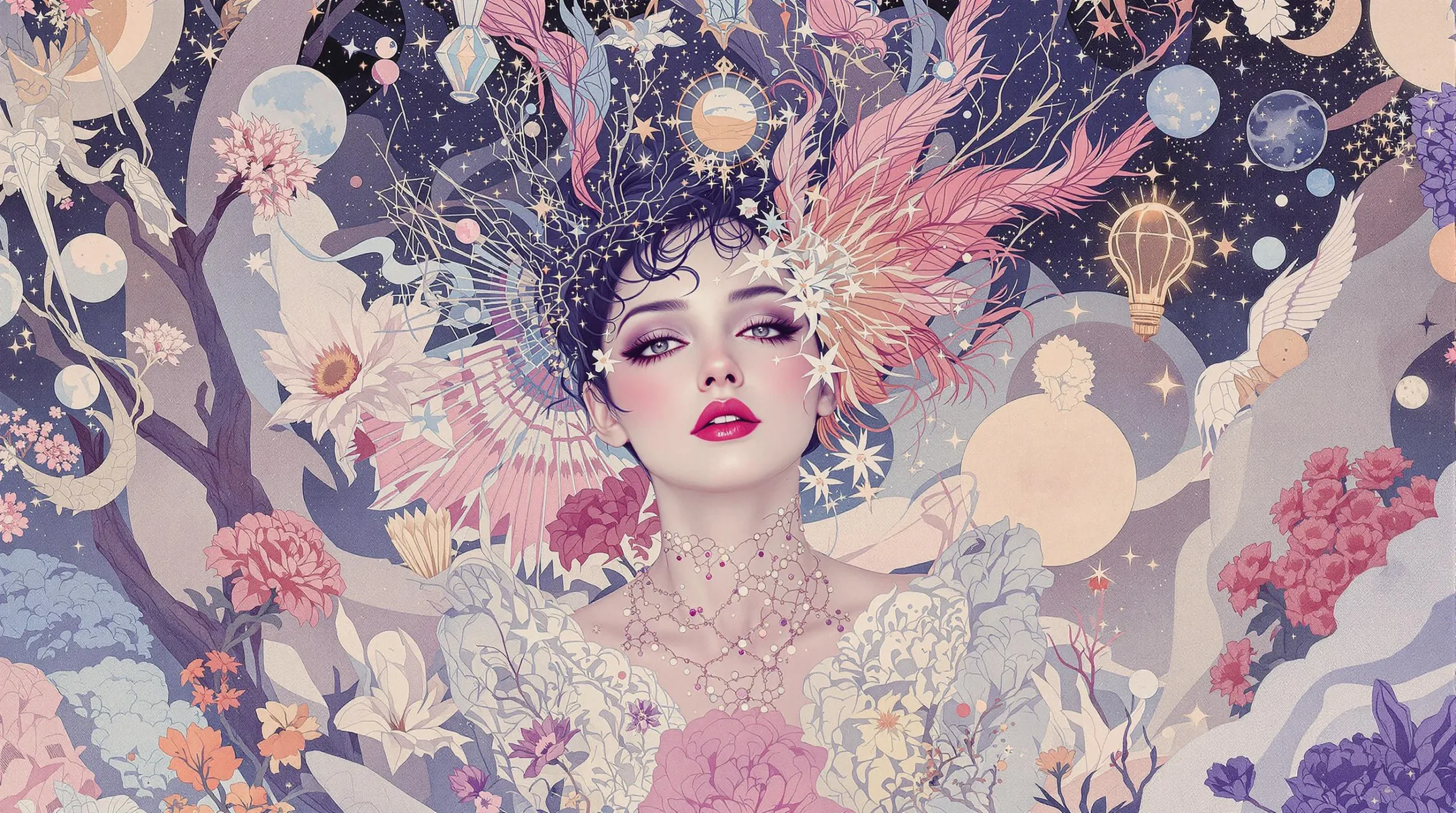


Alice Cullen

Archetype Meaning & Symbolism

Precognitive, effervescent, stylish, loyal, optimistic, manipulative, graceful, strategic, celebratory, whimsical

  • I see the course people are on, while they're on it. If they change their minds, the vision changes.

If Alice Cullen is part of your personal mythology, you may...

Believe

  • The future is not a rigid path to be walked, but a shimmering landscape of possibilities to be chosen from.
  • Joy is not a feeling that arrives by chance; it is a deliberate practice, something to be designed, cultivated, and celebrated.
  • The people you are meant to belong with are already out there, waiting for you; connection is a matter of recognition and destiny.

Fear

  • That there are critical blind spots in your vision, that a catastrophic event could occur simply because you failed to see it coming.
  • That your efforts to orchestrate happiness are perceived by others as controlling, manipulative, or frivolous.
  • Losing the chosen family you have so carefully assembled, as your identity and sense of safety are woven into the fabric of your tribe.

Strength

  • An unparalleled ability to strategize and plan, turning hopeful visions into concrete, beautiful realities.
  • A resilient, infectious optimism that can serve as a beacon of light and motivation for an entire community.
  • A profound and fierce loyalty that allows you to build unshakable bonds and a deeply devoted chosen family.

Weakness

  • A tendency toward well-intentioned manipulation, subtly guiding others to ensure your preferred vision of the future comes to pass.
  • A difficulty residing fully in the present moment, as your mind is perpetually occupied with planning and anticipating what comes next.
  • A potential for co-dependent dynamics, feeling a need to soothe or 'fix' the pain of others in order to feel secure and purposeful yourself.

The Symbolism & Meaning of Alice Cullen

To have Alice Cullen as a fixture in one's personal mythology is to internalize the role of the Joyful Architect. She symbolizes the transformation of passive intuition into active strategy. Her precognition is not a burden of knowledge, but a creative tool, like a set of blueprints for a cathedral of happiness. She represents the belief that the future is not something that happens to you, but something you build, choice by choice. In a world that often feels chaotic and fated, she is the patron saint of agency, suggesting that with enough foresight, grace, and a touch of well-intentioned manipulation, a better reality is always within reach.

The archetype also speaks to a uniquely modern form of self-creation. With no memory of her human life, Alice is a tabula rasa, a self built entirely from future aspirations rather than past grievances. She chose her name, her family, and her entire mode of being. This could symbolize a deep-seated belief in the power of radical self-reinvention. Her mythos suggests you are not defined by your origins, your traumas, or the story you were born into. You are defined by the family you choose, the loyalties you forge, and the beautiful life you insist on designing for yourself and your loved ones.

Furthermore, Alice embodies the idea of aesthetics as a moral imperative. Her impeccable style, her love for parties and decoration: these are not frivolous pursuits. They are acts of imposing beautiful, joyful order on a world that can be ugly and violent. For her, beauty is a form of defense and an expression of hope. Choosing the right dress or planning the perfect wedding is a way of declaring that celebration is more powerful than despair. Her presence in one's mythos may signal a belief that curating beauty in one's immediate environment is a sacred act, a way of making a small corner of the world reflect a celestial, more perfect order.


Alice Cullen Relationships With Other Archetypes

The Cassandra

Where Cassandra is the cracked mirror reflecting a single, inevitable tragedy, the Alice Cullen archetype may be a crystal ball swirling with a thousand glittering possibilities. Both could be seen as figures burdened by foresight, yet one is shackled to a future that is, while the other dances with futures that might be. The truth of Cassandra is a leaden weight, a prophecy that sinks all hope before the ship has even left the harbor. The visions of an Alice, however, are perhaps a form of liberation, a map of escape routes from a fate that has not yet hardened into fact. Her gift may not be just sight, but navigation; not a declaration of the end, but a whispered suggestion of a different beginning. Cassandra, it seems, speaks to the unlistening void; Alice Cullen speaks to the power of a single choice.

The Labyrinth

The Labyrinth could be considered a puzzle of stone and shadow, a singular, convoluted path designed to disorient and ensnare. The Alice Cullen archetype, then, may exist as its living cartographer, or perhaps its antithesis. While the Labyrinth is a fixed problem with one correct route, her mind is a maze of a different sort—one made of shimmering, transient corridors of probability. She does not walk a pre-carved path so much as she perceives the infinite ways a path could be hewn from the raw stone of the present moment. She is, in a sense, the thread of Ariadne, but a thread that constantly splits and braids, offering not one escape but a multitude, each leading to a different world outside the walls. Her relationship with the Labyrinth is one of potential mastery, not of certain entrapment; she sees the maze not as it is, but for all the ways it could be surmounted.

The Chess Master

The Chess Master sees the future as a series of logical consequences, a cascade of if-then statements played out on a board of sixty-four squares. It is a world of calculated sacrifices and rigid rules, a battle of intellects. The Alice Cullen archetype, by contrast, may engage with the future not as a sequence of moves, but as a symphony of feelings, a felt-sense of what’s to come. Her prescience is perhaps less a formula and more a weather pattern, sensing the atmospheric pressure of a looming decision or the emotional temperature of a future conversation. Where the Chess Master seeks to corner a king into a logical dead-end, this archetype could be said to steer the emotional current toward a sunnier shore. It is the difference, perhaps, between a flowchart and a poem; between a game that can be decisively won and a life that must be beautifully lived.

Using Alice Cullen in Every Day Life

Navigating Career Crossroads:

When faced with a professional fork in the road, the Alice archetype encourages not a pro-and-con list, but a visualization. It is the practice of seeing the branching futures not as anxieties but as invitations. You may find yourself mapping out the emotional texture of each potential job: the quality of light in the office, the rhythm of the coffee breaks, the feeling of the successes. The choice then becomes less about logic and more about stepping onto the path that has the most resonant, joyful shimmer.

Cultivating Joy in Relationships:

This archetype could manifest as the deliberate creation of tradition and celebration. You may be the friend who insists on throwing a surprise party, not out of obligation, but from a vision of the collective delight it will spark. It’s about seeing the potential for a memory and then reverse-engineering the steps to create it. Love and friendship are nurtured through these curated moments, turning a simple bond into a shared history rich with landmarks of manufactured joy.

Overcoming a Difficult Past:

Alice's own forgotten human past offers a powerful template for personal mythology. To embody her is to accept that the self need not be an archeological dig of past traumas. It could mean declaring a gentle amnesty on who you once were. Your identity becomes a forward-facing project, built not from the rubble of memory but from the blueprint of a future you actively, joyfully choose. The past is not erased: it is simply rendered irrelevant by the brilliance of what's to come.

Alice Cullen is Known For

Precognitive Visions

Her signature ability is not to see a fixed fate, but to witness the subjective, shifting futures born from people's decisions, allowing her to act as a strategic guide.

Effervescent Optimism

A relentless, almost supernatural buoyancy and cheerfulness that serves as the emotional center and motivating force for her chosen family.

Strategic Grace

The seamless fusion of physical elegance and social cunning, allowing her to orchestrate events and people with a light, almost unnoticeable touch to achieve her desired, often positive, outcomes.

How Alice Cullen Might Affect Your Personal Mythology

How Alice Cullen Might Affect Your Mythos

When the Alice Cullen archetype integrates into a personal mythos, the narrative of life may subtly shift from one of reaction to one of orchestration. Your life story ceases to be a sequence of events that happen to you; it becomes a carefully plotted novel where you are the prescient author, seeding future chapters with deliberate choices. Obstacles are no longer tragic twists of fate but foreseen challenges to be gracefully danced around. The central theme of your mythos could become one of proactive creation, where your primary quest is not to find meaning, but to actively build it from moments of curated joy and strategic kindness.

Your personal mythology might also become deeply centered on the concept of the chosen family. The story of your life may be less about the family you were born into and more about the gravitational pull of souls you were destined to find. Relationships are imbued with a sense of fated connection, as if you were waiting for these specific people all along. The epic moments of your life are not solitary achievements but collective celebrations: the parties, the shared victories, the moments where the tribe you assembled stands together against a threat, their unity a testament to your vision.

How Alice Cullen Might Affect Your Sense of Self

To see the self through the lens of Alice Cullen is perhaps to view oneself as a vessel of shimmering possibilities. You are not a fixed entity but a constant state of becoming, defined by the futures you can envision. Self-worth may become intrinsically linked to your ability to be a source of light and a strategic asset to your circle. You might find a deep sense of purpose in being the one who can see the path forward, the one whose optimism is not naive but informed by a vision of success. The self is a prism, refracting the raw data of the world into a rainbow of hopeful outcomes.

This archetype could also grant a profound sense of peace with one's past. The parts of your history that are painful, confusing, or simply forgotten may lose their power. If the self is defined by its forward momentum and its capacity for future joy, then the past becomes little more than a blurry photograph of a stranger. You may feel a sense of being reborn, not through trauma or spiritual cataclysm, but through a simple, elegant choice to focus on what you are building instead of what you have escaped. You are not the sum of your history; you are the architect of your destiny.

How Alice Cullen Might Affect Your Beliefs About The World

With Alice as a guide, one's worldview may crystallize around the idea that reality is malleable. The world is not a fixed stage but a dynamic web of interconnected choices. Chaos is not a force to be feared but a field of potential, an unwritten score waiting for a conductor. This perspective could dismantle feelings of powerlessness in the face of large, impersonal forces. Instead, you might see the world as a grand, intricate dance where your every step, every decision, sends ripples that alter the entire performance. Fate is not a script written in stone but a weather forecast that changes with every shift in the wind.

This worldview could also foster a heightened sensitivity to the sacred power of celebration and beauty. Social gatherings, aesthetic choices, and acts of gift-giving are elevated from social niceties to essential rituals. They are the tools one uses to actively shape reality, to insist on joy in the face of entropy. A well-planned party becomes a political act, a declaration that connection and delight are non-negotiable. The world is a canvas, and it is your profound responsibility to fill it with as much light, color, and laughter as possible.

How Alice Cullen Might Affect Your Relationships

In relationships, the Alice archetype might position you as the social and emotional choreographer. You may feel a deep-seated impulse to orchestrate the happiness of your loved ones, planning the gatherings, mediating the conflicts, and offering visions of a harmonious future. Love and friendship are not passive states of being but active, creative projects. This role can be a beautiful one: you are the weaver of the social fabric, the one who ensures the tapestry of your chosen family is vibrant and strong. You show your love through foresight and tireless effort.

There may also be a powerful draw toward relationships with a healing dynamic, echoing her bond with the tormented Jasper. You might find yourself attracted to partners or friends who are struggling with their own darkness, feeling that your optimism and foresight can provide the light they need to find peace. This is not a simple savior complex, but a deeper belief that you can see the calm, happy person they are capable of becoming. Your role in the relationship is to hold that vision for them, to be their unwavering beacon of hope, gently guiding them away from their own stormy seas.

How Alice Cullen Might Affect Your Role in Life

Adopting the Alice archetype may mean you assume the role of the Strategic Oracle within your social and professional spheres. People may turn to you not for prophecies of doom, but for a roadmap to success. You are the one who can see the pitfalls in a project three months out, who intuits the emotional undercurrents of a meeting, who can chart a course through complex social dynamics. Your perceived role is not to simply predict the future, but to consult on how to best shape it, making you an invaluable counselor and guide.

Beyond the strategic, you might also be seen as the Master of Ceremonies for your tribe. Your role is to be the keeper of the flame of joy, the one who insists on marking milestones, celebrating victories, and creating rituals that bind the group together. You understand that belonging is not an abstract concept but something built through shared experience. Your function is to create the physical and emotional spaces where those experiences can happen, ensuring that the story of your people is filled with moments of light.

Dream Interpretation of Alice Cullen

To dream of a joyful, dancing Alice Cullen could be a powerful affirmation from your subconscious. It may signify that your own intuition is sharpening, that you are beginning to see the pathways to a desired future with clarity and confidence. Her appearance could suggest that a plan you've set in motion is on the right course, and that you should trust your vision. She is a symbol of attainable hope, a sign that the future you are dreaming of is, in fact, waiting for you to arrive.

Conversely, dreaming of a distressed, silent, or absent Alice could reflect a profound anxiety about the future. It might symbolize a feeling of being blind, of losing your intuitive compass. You may fear that you've made a wrong turn and can no longer see the consequences, or that the future is a terrifying, blank void. Such a dream could point to a paralysis of will, a state where the fear of making the wrong choice prevents you from making any choice at all, leaving you stranded in a static, uncertain present.

How Alice Cullen Archetype Might Affect Your Needs

How Alice Cullen Might Affect Your Physiological Needs

When the Alice archetype informs your mythos, basic physiological needs may be viewed through a lens of aestheticism. The need for food is met not just with sustenance, but with a beautifully arranged meal. The need for shelter is fulfilled not just by a roof, but by a perfectly curated and decorated home. Survival itself becomes an art form, an exercise in making the mundane beautiful. There could be a belief that tending to the body's needs with style and grace is a way of honoring life itself, transforming biological necessity into a continuous act of creation.

However, this perspective might create a subtle rift between the self and the raw, messy truths of biology. There can be an underlying impulse to transcend the body's vulnerabilities through sheer force of style and planning. This could foster a discomfort with illness, aging, or any bodily function that resists elegant curation. The physiological becomes something to be managed and perfected, and a failure to do so can feel like an aesthetic and moral failing, a crack in the porcelain facade of a perfectly controlled existence.

How Alice Cullen Might Affect Your Ideas of Belonging

Within the Alice mythos, belonging is not a passive state you fall into; it is an intricate structure you design and build. You may feel compelled to be the architect of your own tribe, seeing the potential for connection and then meticulously planning the experiences that will forge it into a family. Belonging is cemented through shared rituals you create: the annual holiday party, the weekly dinner, the thoughtful, intuitive gifts. You are the effervescent glue, and you believe that a chosen family, bound by loyalty and shared joy, is the most sacred bond of all.

Furthermore, this archetype promotes a belief in fated connections. Belonging is also about recognizing the people who were always meant to be in your orbit, just as Alice knew she was waiting for Jasper. This imbues your relationships with a sense of destiny and profound meaning. You may feel you don't just find friends; you recognize fellow souls. This perspective makes the act of loving and being loved feel like fulfilling a prophecy, a beautiful vision you've held all along finally clicking into place.

How Alice Cullen Might Affect Your Feelings of Safety

From the perspective of the Alice archetype, safety is a product of superior foresight. Security is not a wall to hide behind, but a perfectly choreographed dance around potential danger. By seeing the metaphorical tripwires and social landmines ahead of time, you can navigate life with a preternatural grace, avoiding harm before it even materializes. Safety is achieved through proactive strategy: anticipating the argument, sidestepping the bad investment, seeing the threat on the horizon and changing course long before it arrives. It is a state of perpetual, elegant vigilance.

This reliance on seeing the future to feel safe, however, can be a source of profound anxiety. Safety becomes a fragile construct, wholly dependent on your ability to see clearly and act correctly. A blind spot, an unpredictable event, or a decision made by another that upends your vision can feel catastrophic, stripping away your defenses and leaving you feeling utterly exposed. The need to constantly scan the future for threats can be exhausting, and the fear of missing something could become a quiet, persistent hum of terror beneath the surface of your optimism.

How Alice Cullen Might Affect Your Views of Esteem

When Alice is part of your mythos, self-esteem may be deeply intertwined with your utility and your gift for foresight. You feel most valuable when you are successfully orchestrating positive outcomes for others. Your worth is measured in the flawless execution of a plan, the joy you see on a friend's face at a surprise you arranged, the gratitude of someone you guided away from a misstep. Esteem is earned through your role as the joyful strategist and protector of your circle. Being helpful isn't a chore; it is the very core of your identity and the source of your pride.

This can, however, make your self-worth dangerously contingent on external validation and the success of your visions. If a plan fails, if your advice is ignored, or if your efforts to cheer someone up fall flat, it may not feel like a simple setback but a deep invalidation of your core self. Your esteem can become a fragile thing, rising and falling with the happiness of those around you and the accuracy of your predictions. This creates a constant pressure to perform your role perfectly, lest your sense of self begin to crumble.

Shadow of Alice Cullen

The shadow of the Alice archetype emerges when foresight curdles into tyranny. In this dark reflection, the Joyful Architect becomes the Master Manipulator, where well-intentioned guidance becomes a coercive force for control. People are no longer loved ones to be helped but chess pieces to be positioned for a 'perfect' outcome that exists only in the architect's mind, robbing them of their own agency and messy, beautiful humanity. The effervescence sours into a demanding, tyrannical cheerfulness that suffocates genuine emotion. Joy is no longer a gift but a mandate, and any deviation from the plan is met with frustration and subtle punishment.

Another facet of the shadow is a profound and brittle denial of darkness. The obsession with creating a beautiful, happy future can lead to a complete inability to sit with present-day pain, whether it is one's own or another's. Unavoidable suffering, grief, and failure are not processed but are frantically papered over with forced optimism and distracting plans. This creates a fragile, hollow reality that cannot withstand contact with authentic tragedy. The shadow of Alice is terrified of the messy, uncontrollable nature of life, and in its attempt to build a perfect world, it risks becoming detached from reality itself.

Pros & Cons of Alice Cullen in Your Mythology

Pros

  • You are a source of genuine hope and strategic guidance for your community, capable of seeing and creating a better path forward for everyone.
  • Your life is imbued with a sense of intentionality and beauty, as you actively curate your experiences, relationships, and surroundings to reflect your highest ideals.
  • You build incredibly powerful, loyal bonds by being the architect of shared joy, the keeper of traditions, and a fierce, forward-thinking protector of your chosen family.

Cons

  • You may struggle intensely with spontaneity and can be thrown into deep anxiety and frustration when carefully laid plans inevitably go awry.
  • Others might sometimes perceive your proactive help as intrusive or controlling, chafing against the feeling that their lives are being subtly orchestrated, however good your intentions.
  • Your self-worth can become dangerously dependent on the success of your plans and the happiness of others, leading to a risk of burnout, chronic anxiety, and a feeling of failure when things are outside your control.