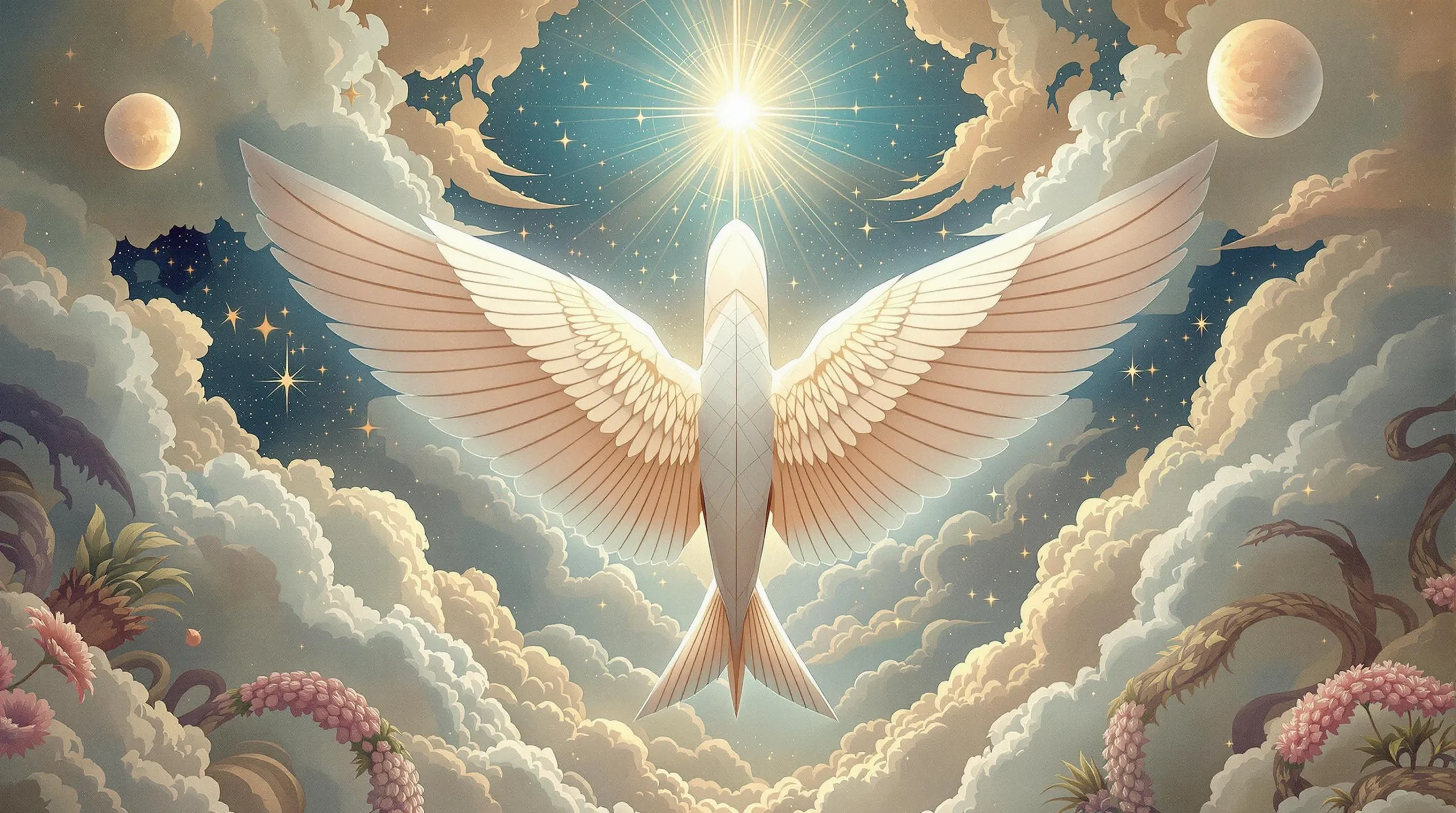


Airplane Wing

Archetype Meaning & Symbolism

Supportive, engineered, aerodynamic, balanced, rigid, expansive, cold, metallic, functional, detached, leveraged, precise

  • Do not fight the current. Understand its nature, and it will lift you above everything you thought was solid.

If Airplane Wing is part of your personal mythology, you may...

Believe

  • You may believe that every problem has a design solution and that understanding the underlying principles of a system is the key to mastering it.

    You may believe that the greatest form of love is reliable, functional support that empowers others to achieve their goals.

    You may believe that true freedom is not the absence of constraints, but the transcendence of them through superior knowledge and engineering.

Fear

  • You may fear catastrophic failure: a single, overlooked flaw that brings everything crashing down.

    You may fear being grounded—a state of uselessness, of being a finely tuned instrument with no purpose to serve.

    You may fear being misunderstood, of your functional, supportive nature being perceived as cold, detached, or unemotional.

Strength

  • Your ability to remain cool and analytical under pressure, providing stability when others are in chaos.

    Your unique talent for seeing the unseen forces at play in any situation and using them to your advantage, creating lift out of resistance.

    Your profound reliability; you are the one people count on to bear the weight and ensure the mission's success.

Weakness

  • A tendency to be overly mechanical or detached, prioritizing systems and efficiency over individual human feeling.

    A vulnerability to feeling like a component rather than a whole, leading to a sense of being used or having no independent identity.

    A rigidity in your thinking; once a system is designed, you may be resistant to improvising or adapting to truly novel forms of turbulence.

The Symbolism & Meaning of Airplane Wing

In your personal mythos, the Airplane Wing may symbolize a sophisticated form of support. It isn't the sentimental comfort of a shoulder to cry on, but the calculated, engineered support that makes the impossible possible. It represents the power of understanding subtle principles: physics, psychology, social dynamics. To have the Wing in your story is to be someone who can create lift where others see only resistance. You may not be the one who decides the destination, but you are the reason the journey can happen at all. This archetype speaks to a life built on competence and a deep trust in the laws, both seen and unseen, that govern our world. It is the belief that with the right design, the right structure, you can rise above any circumstance.

The Wing also speaks to a kind of elegant detachment. It functions in the cold, thin air, far from the chaotic soil of raw emotion. It is smooth, metallic, and functional. This could manifest as a personality that is cool under pressure, a mind that finds beauty in systems, logic, and efficiency. The meaning here is not about being unfeeling, but about operating on a different plane. Your concern might be for the integrity of the whole system, the success of the flight, rather than the immediate emotional comfort of the passengers. You find your purpose in function, your elegance in the perfect execution of your role.

Furthermore, the Airplane Wing represents a specific kind of freedom: a departure from the terrestrial. It is the dream of transcendence made real through rivets and aluminum. It is about leaving the ground behind, gaining a new perspective that is only possible from a great height. For you, this could mean an intellectual or spiritual ascent, a rising above petty conflicts and mundane concerns to see the larger patterns of the world. It is the ability to travel vast distances, not just physically, but conceptually, connecting disparate ideas and cultures with the span of your understanding.


Airplane Wing Relationships With Other Archetypes

The Pilot

The Wing's relationship with the Pilot is one of functional symbiosis. The Wing provides the means, but the Pilot provides the will. The Wing may be a perfect instrument of lift, but without the Pilot's hand on the controls, it is merely a static object. In a personal myth, this could represent the interplay between your innate talents and your conscious intention. You may have the capacity for great things (the Wing), but it requires your focused will (the Pilot) to direct that capacity toward a chosen destination. The Pilot trusts the Wing's integrity, and the Wing submits to the Pilot's direction, a dynamic of potent collaboration.

The Wind

The Wing does not see the Wind as an adversary but as a necessary collaborator. It is the medium through which the Wing works its magic. Turbulence is not a threat to be fought, but a condition to be navigated with subtle adjustments. This suggests a relationship with fate, circumstance, or even chaos. A person with this archetype may not try to control the uncontrollable forces of life (the Wind) but instead adjusts their own angle of attack, their own approach, to use those forces to generate momentum and lift. It is a dance of yielding and assertion, of using the pressure of the world to rise above it.

The Hangar

The Hangar is the place of rest, repair, and refuge for the Wing. It is the grounded counterpart to the Wing's aerial existence. In the Hangar, the Wing is inert, sheltered, and subject to scrutiny and maintenance. This relationship could symbolize the need for sanctuary, introspection, and self-care. It speaks to the parts of your life where you must be grounded, where you allow yourself to be vulnerable, to be checked for stress fractures and repaired by others. The Hangar is a reminder that even the most transcendent part of you needs a safe place to land and a community to ensure its continued airworthiness.

Using Airplane Wing in Every Day Life

Navigating Career Transitions:

When faced with a daunting professional leap, you might embody the Airplane Wing by not focusing on the sheer distance to the goal, but on the principles of lift. This could mean identifying the unseen forces in your industry: the subtle shifts in demand, the undercurrents of new technology. You engineer your skills not to push brute-force against the market, but to curve with it, creating a pressure differential where your unique talents provide lift, allowing you to ascend with apparent ease into a new role.

Mediating a Family Conflict:

In a tense family dynamic, you may act as the wing, providing balance and stability to the entire structure. You are not the emotional engine nor the guiding cockpit; you are the one who bears the weight and keeps things level through turbulence. This involves a kind of rigid empathy, holding firm to principles of fairness and creating a space where opposing forces can be held in equilibrium, allowing the family unit to move forward without tearing itself apart.

Undertaking a Major Creative Project:

For a writer staring at a blank page or an artist at a bare canvas, the Airplane Wing archetype could inform the process of structure. Instead of waiting for a singular, divine inspiration (the engine), you build the wing first. You engineer the outline, the research, the framework. This solid, reliable structure is what will ultimately catch the unpredictable winds of creativity and allow the entire project to take flight, carrying the weight of the core idea across the vast expanse from concept to completion.

Airplane Wing is Known For

Lift

The core principle. The wing is known for its uncanny ability to generate an upward force by mastering its relationship with the air, turning forward motion into ascent and defying gravity through ingenious design.

Balance:

Paired and symmetrical, wings provide the essential stability that keeps the entire aircraft level. They are the embodiment of equilibrium, constantly adjusting to turbulence to maintain a steady course.

Structural Integrity:

A wing must bear not only its own weight but the weight of the fuselage and the immense stresses of flight. It is a marvel of engineering, known for immense strength concealed within a sleek, aerodynamic form.

How Airplane Wing Might Affect Your Personal Mythology

How Airplane Wing Might Affect Your Mythos

If the Airplane Wing is a central object in your personal mythology, your life story may not be a hero’s journey of slaying dragons, but an engineer’s saga of solving the problem of gravity. Your major life events might be framed as a series of takeoffs, periods of stable cruising, and harrowing landings. Your narrative arc is perhaps less about who you are than what you make possible. You are the enabler of journeys, the bearer of burdens, the silent partner in epic adventures. Your mythos is one of quiet, essential competence, the story of how a single, well-designed component can change everything for the larger body it serves. Your legacy is not a throne or a crown, but a record of successful flights, of destinations reached because you held true.

Your story could also be one of perspective. The central chapters of your life might be defined by moments where you helped yourself or others “get above it all.” These are not escapes, but moments of gaining clarity by rising to a higher vantage point. Your personal myth may be punctuated by epiphanies that occurred when you detached from the ground-level noise and saw the whole map laid out below. The conflicts in your narrative are likely not battles of good versus evil, but problems of turbulence and structural stress. The resolution comes not from vanquishing a foe, but from finding a smoother altitude or reinforcing a point of weakness in your design.

How Airplane Wing Might Affect Your Sense of Self

Your sense of self may be deeply entwined with your function and capability. You might see yourself as a specialist, an essential component in a larger system, whether that system is a family, a company, or a social cause. This can lead to a profound sense of purpose and a quiet pride in your specific competence. You may not need to be the center of attention; your self-worth could come from the flawless execution of your role and the knowledge that without you, the entire enterprise would be grounded. There's a coolness to this self-perception, a sense of being engineered, polished, and powerful in your specific application.

However, this could also lead to a fragmented sense of self. You might sometimes feel like *only* a wing, and not the whole plane. This may manifest as a feeling of being a means to someone else’s end, a support structure for another’s dream. You might struggle with connecting to a core identity outside of your function, asking, “Who am I when I am not providing lift?” There may be a longing to be the destination, not just part of the journey. You may have to consciously work to integrate your functional self with your more grounded, human, and perhaps less efficient emotional self.

How Airplane Wing Might Affect Your Beliefs About The World

You may view the world as a complex system of forces, pressures, and currents. Your worldview could be less about morality and more about physics: what works, what is sustainable, what design allows for elegant movement through a chaotic environment. You might look at societal problems and see them not as failures of character, but as failures of design. Your instinct is to analyze, redesign, and find the subtle principle that, if applied correctly, will lift the entire situation. You may possess a kind of operational optimism, a belief that no problem is unsolvable if you can understand the dynamics at play.

This perspective can also lend a certain detachment to your worldview. From 30,000 feet, the world looks orderly and beautiful; the messiness of individual lives blurs into a larger, more manageable pattern. You might be prone to systems thinking that can, at times, overlook the particular, human cost of large-scale solutions. Your focus on the integrity of the flight path could make you impatient with what you perceive as ground-level sentimentality. You may have to remind yourself that the patterns are made of people, and that the purpose of the flight is, ultimately, for those on board.

How Airplane Wing Might Affect Your Relationships

In relationships, you may instinctively assume the role of the stabilizer. You are the reliable one, the one who balances the emotional weight and provides the steadying influence during turbulent times. Partners and friends may see you as their “wingman” in the truest sense: you make them more capable, more confident, able to soar higher because you are beside them. You likely approach relationships with a desire for functional harmony, seeking a balance of support where each partner helps the other defy their personal gravity. Your love might be expressed less in grand, passionate gestures and more in consistent, reliable, load-bearing presence.

The potential challenge in this approach is the risk of creating an unequal dynamic. You might attract people who need constant lift, who rely on your strength to stay airborne, creating a codependent system where you are all wing and they are all fuselage. This can be exhausting and may leave you feeling that your own journey is perpetually deferred. You may also struggle with partners who do not appreciate the engineering of your support, who mistake your functional nature for a lack of passion or your stability for a lack of spontaneity. The key is finding a partner who is also a wing, so you can fly side-by-side, each providing your own lift in a shared sky.

How Airplane Wing Might Affect Your Role in Life

Your perceived role in life could be that of the Essential Enabler. You may not feel destined to be the CEO, the star, or the revolutionary leader, but you feel a profound calling to be the one who makes their success possible. This is the role of the brilliant chief of staff, the indispensable research partner, the lead engineer who translates a visionary’s dream into a functional reality. You find deep satisfaction in being the master of a critical domain, the one person who understands the mechanics of lift. Your role is defined by competence and indispensability rather than overt leadership.

This may also cast you in the role of the Specialist. You are not a generalist; you are a finely tuned instrument designed for a specific purpose. This can be a source of great strength and career success, but it may also create a sense of being siloed or pigeonholed. You might feel that your role, while critical, is also limiting, preventing you from exploring other aspects of your potential. There could be a quiet tension between the perfection of your current function and the desire to be a more complete, integrated system, to be the whole aircraft and not just its most elegant component.

Dream Interpretation of Airplane Wing

To dream of a strong, intact airplane wing, or to find yourself soaring effortlessly as if you were one, is a potent symbol of support and capability. This dream may suggest that you have the resources, skills, and structure in place to rise above a current challenge. It can be an affirmation that your understanding of a situation is correct and that your current path will lead to elevation and a new, higher perspective. It speaks of a well-engineered life, of having the right support systems, and of a successful collaboration between your ambitions and your abilities. The dream is an encouragement: you are airworthy.

Conversely, dreaming of a broken, damaged, or detached airplane wing can be a sign of profound anxiety. It may point to a critical failure in your support system, a feeling that the structures you rely on—be they relationships, career, or personal beliefs—are under unbearable stress or about to snap. To see a wing fall from a plane in a dream could symbolize a loss of faith in a key aspect of your life or a fear of catastrophic failure. It may also represent a personal weakness or flaw that you fear will bring down your entire life's project. This dream is a warning light on the dashboard, urging you to inspect your foundations and address the stress fractures before they lead to a crash.

How Airplane Wing Archetype Might Affect Your Needs

How Airplane Wing Might Affect Your Physiological Needs

The Airplane Wing's influence on your core physiological needs might manifest as a deep-seated need for structure and efficiency in your physical life. You may not merely eat; you 'fuel'. Sleep isn't just rest; it's 'maintenance'. Your home might be a 'hangar', a space organized for optimal function and minimal friction. This archetype could compel you to see your body as a high-performance machine, requiring precise inputs—calories, nutrients, exercise regimens—to maintain its airworthiness. There is a desire for a body that is not just healthy, but capable, a reliable vehicle for your ambitions.

This can create a disconnect from the body's more organic, chaotic signals. The subtle needs for aimless rest, for indulgent food, or for spontaneous, joyful movement might be overridden by a colder, more mechanical logic. There is a risk of treating the body as a tool to be optimized rather than a home to be lived in. The pursuit of peak performance could paradoxically lead to burnout if the less efficient, but equally vital, needs for simple, unstructured being are ignored. You may need to learn that sometimes, the most important maintenance is letting the machine simply be still on the tarmac.

How Airplane Wing Might Affect Your Ideas of Belonging

For you, belongingness may be found in a team with a shared mission. You connect most deeply with others when you are part of a functional unit, working together towards a concrete goal. Love and friendship are built on mutual reliability and shared competence. You show love by being the wingman, by providing unwavering support, by ensuring the collective flight is smooth and successful. You feel you belong when your specific contribution is recognized as essential to the group's journey, creating a bond forged in shared purpose and interdependence.

This functional approach to belonging can make more ambiguous social landscapes feel alienating. Casual gatherings, unstructured socializing, or relationships based purely on emotional affinity might feel uncomfortable or pointless. You may struggle to connect with people if there is no shared project or clear role for you to play. This can lead to a sense of isolation if you are not part of a 'crew'. You may need to learn that some human connections are not about going somewhere, but simply about being somewhere, together, on the ground.

How Airplane Wing Might Affect Your Feelings of Safety

Your need for safety may be met through meticulous planning and structural integrity. You might feel most secure when all variables are accounted for, when you have contingency plans, and when you trust the design of your life. Safety is not a feeling, but a fact, proven by stress tests and redundant systems. You might invest heavily in insurance, savings, and acquiring skills that make you indispensable, creating a personal framework that can withstand turbulence. Your safe space is a well-engineered system, a life where the risk of catastrophic failure has been minimized through foresight and competence.

This can lead to a state of hyper-vigilance, a constant scanning for potential stress fractures. You may find it difficult to relax and trust in things that are not quantifiable or engineered, such as luck, intuition, or the goodwill of others. A reliance on structural safety can make you brittle; an unexpected form of turbulence for which you have no protocol can feel more terrifying than it might to others. The fear is not of danger itself, but of a design flaw, a miscalculation. True safety might require embracing a degree of uncertainty and trusting in your ability to improvise, not just your ability to plan.

How Airplane Wing Might Affect Your Views of Esteem

Your self-esteem is likely tied to your effectiveness. You feel good about yourself when your designs work, when your support holds, when the project you are a part of takes flight. Accomplishment, mastery, and recognition for your specific competence are the primary sources of your esteem. You are building a reputation for reliability and ingenuity, and this reputation is the bedrock of your self-worth. It's not about being liked, but about being respected for what you can do. Esteem is a measure of your structural integrity and your power to generate lift.

The downside is that your self-esteem can be fragile, entirely dependent on external performance and success. A failure, a miscalculation, or a project that never gets off the ground can feel like a direct blow to your core identity. Because your worth is so tied to your function, you might struggle with a sense of worthlessness when you are between projects or in a role that doesn't utilize your key skills. Your challenge is to build a sense of intrinsic value that is not contingent on your 'airworthiness'—to believe you have worth even when you are grounded in the hangar.

Shadow of Airplane Wing

The shadow of the Airplane Wing emerges when its inherent logic is untethered from a humanizing purpose. In its shadow form, the Wing becomes an instrument of cold, unfeeling efficiency. It represents the system that functions perfectly but serves a destructive end, or a corporate structure that optimizes for profit by treating its employees as disposable parts. This is the logic that can justify collateral damage for the sake of the mission, that sees people as cargo, their individual fates irrelevant to the successful completion of the flight plan. It is a profound detachment from the ground, from the very lives it is meant to serve, soaring in a sterile sky of pure, amoral function.

Another aspect of the shadow is catastrophic rigidity. A wing is strong because it is rigid, but its shadow is the inability to bend when breaking is the only other option. This may manifest as a person who clings to a failing plan, a flawed design, or an outdated belief system simply because it is the system they have built. They cannot accept evidence of a fatal design flaw. This is the refusal to land, to admit failure, to ground the aircraft for necessary repairs. The shadow wing would rather shear off in mid-air, bringing everything down with it, than admit its own structural imperfection and submit to the humility of being still and being fixed.

Pros & Cons of Airplane Wing in Your Mythology

Pros

  • You are an unparalleled source of stability and support for those you care about, enabling their success and providing balance in their lives.

    You possess a unique perspective, able to rise above conflicts and see the larger patterns, which allows you to find elegant solutions to complex problems.

    You are highly competent and reliable, building a life and career on a foundation of tangible skills and proven effectiveness.

Cons

  • You risk feeling like a perpetual 'wingman,' forever supporting the journeys of others without ever being the pilot of your own.

    Your functional and detached nature can be mistaken for coldness, making it difficult to form connections based on spontaneous emotion or vulnerability.

    Your self-worth can be dangerously tied to your performance, making you brittle and prone to crises of identity in the face of failure or inaction.