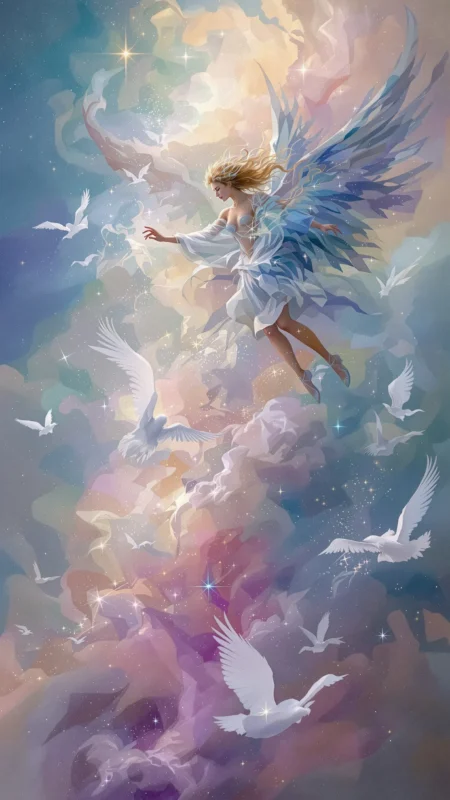


The Spirit World

Archetype Meaning & Symbolism

Ethereal, liminal, ancestral, intuitive, formless, resonant, silent, timeless, cyclical, veiled

  • Listen not with your ears, but with the hollow space between your ribs. The answers were planted there before the questions were ever formed.

If The Spirit World is part of your personal mythology, you may...

Believe

  • That death is not an ending but a transition, a change of address in a vast, conscious universe.

  • That intuition is a primary human sense, a direct line of communication with a deeper reality, as valid as sight or touch.

  • That there are no true coincidences; synchronicity is the language of the cosmos, revealing the hidden threads connecting all things.

Fear

  • Losing the 'signal,' that the subtle connection to the unseen world will go silent, leaving you stranded in a meaningless, purely material reality.

  • Being overwhelmed or psychically hijacked by malevolent or chaotic forces from this other realm, losing your sanity or sense of self.

  • The crushing realization that it is all a delusion, a beautiful and complex fantasy you've constructed to avoid the harsh, random nature of existence.

Strength

  • A deep reservoir of resilience. You are able to contextualize personal struggles within a much larger, timeless narrative, which prevents you from being completely overwhelmed by them.

  • Profound creativity and problem-solving abilities. You can access ideas, insights, and solutions that are unavailable to a purely rational or linear mode of thinking.

  • An unshakable sense of purpose. Your motivation comes from a deep inner source, making you less dependent on external rewards or validation to feel that your life is meaningful.

Weakness

  • A tendency toward being ungrounded or dissociated. You may find the inner world so much more compelling than the outer that you neglect practical responsibilities and relationships.

  • Difficulty with boundaries. Being highly attuned to the unseen can make it hard to distinguish your own feelings from the feelings of others or the atmosphere of a place.

  • Susceptibility to spiritual bypassing. You might use spiritual concepts to avoid engaging with difficult emotions, interpersonal conflicts, or systemic real-world problems.

The Symbolism & Meaning of The Spirit World

In the personal mythos, the Spirit World may not be a literal place with ghosts and ghouls, but a sophisticated metaphor for the unconscious mind. It is the inner landscape where forgotten memories, repressed desires, and archetypal figures reside. To journey into this inner realm is to engage in the work of self-discovery, to confront the parts of oneself that operate in shadow. It symbolizes the vast, untapped potential that lies beyond the narrow confines of the ego. The symbols that emerge from it—in dreams, daydreams, and moments of quiet contemplation—could be seen as a direct, unmediated language of the soul, offering guidance that bypasses the rational intellect entirely. This world is the source code of your personal reality, the place where the patterns of your life are first woven.

The Spirit World archetype also speaks to a profound sense of continuity and legacy. It suggests that you are not an isolated entity, but a single, vibrant thread in a vast, ancient tapestry of lineage. Your personal story is informed by the silent stories of those who came before you; their triumphs and their sorrows may echo in your own life in ways you may not consciously understand. This realm could symbolize the collective, the inherited psychic atmosphere of your family and culture. Engaging with it might involve an exploration of genealogy, not just for names and dates, but for the emotional and psychological patterns that persist across time, offering a chance to heal ancestral wounds or to claim long-forgotten strengths.

Ultimately, this archetype provides a framework for finding meaning beyond the material. It posits that there is an invisible order, a deeper logic at play beneath the surface of everyday chaos. It is the source of synchronicity, where the inner world and outer world mysteriously align, creating moments of startling significance. For one whose mythology includes the Spirit World, a chance encounter is never just a chance encounter; a recurring dream is not just random neural firing. It is all part of a larger, more intricate narrative. This perspective imbues life with a sense of enchantment and purpose, suggesting that you are in a constant, subtle dialogue with a reality that is far richer and more intelligent than it appears.


The Spirit World Relationships With Other Archetypes

The Sage

The Sage is the Spirit World's translator. While the Spirit World communicates in the silent, symbolic language of feeling, imagery, and synchronicity, the Sage gives it voice and structure. The Sage archetype within a personal mythos might be the one who pores over dream journals, notices the patterns in tarot spreads, or connects a gut feeling to an ancient myth. The Spirit World provides the raw, potent data; the Sage refines it into wisdom. Without the Sage, the messages from the Spirit World could remain a bewildering swirl of emotion and intuition. Without the Spirit World, the Sage might have profound knowledge, but lack the spark of divine, irrational insight that turns intellect into true gnosis.

The Trickster

The Trickster is the gatekeeper and psychopomp of the Spirit World, the one who gleefully dances on the veil itself. The Trickster, perhaps Coyote or Hermes, is the only one who can cross between the orderly world of the living and the chaotic, formless realm of spirits without getting lost. In a personal mythos, the Trickster's influence might manifest as a sudden, disruptive event that, in retrospect, opens a necessary portal to this deeper realm. A 'coincidence' that shatters one's rational worldview, a Freudian slip that reveals a profound truth, or a strange character who appears in one's life to deliver a cryptic but crucial message—these are the footprints of the Trickster, leading you, often against your will, to the edge of the Spirit World.

The Orphan

The Orphan archetype may have the most poignant and desperate relationship with the Spirit World. Feeling disconnected and lacking a sense of lineage or belonging in the physical world, the Orphan may turn to the Spirit World as a source of surrogate parentage and ancestry. Their personal mythos might be a quest to find their 'true' home or 'soul family' within this unseen realm. This connection can provide immense comfort, a feeling of being watched over by benevolent guides or cosmic parents. However, it also carries a risk: the Orphan may so deeply invest in their connection to the Spirit World that they further alienate themselves from the potential for belonging and connection in the tangible world, mistaking a coping mechanism for a final destination.

Using The Spirit World in Every Day Life

Navigating Grief

When loss feels like a finality, a slammed door, the Spirit World archetype reframes it as a thinning of the veil. Your personal mythology may incorporate rituals not of goodbye, but of continued conversation. You might find yourself speaking to the departed in the quiet of a morning commute, interpreting a sudden gust of wind as a response. Grief becomes a liminal space you can visit, a landscape with its own strange comforts, transforming an ending into a different form of ongoing relationship.

Breaking Creative Deadlock

Staring at a blank page or an empty canvas can feel like a confrontation with nothingness. Incorporating the Spirit World archetype suggests this 'nothingness' is actually a plenum, a reservoir of latent forms. Your creative process may become a form of scrying or listening. You might consciously enter a daydream state, asking the unseen for an image, a phrase, a melody, trusting that the block is not a lack of ideas, but a temporary inability to hear the signals already being transmitted from this deeper source.

Making Life-Altering Decisions

When logic and pro-con lists lead to a stalemate, the Spirit World archetype offers intuition as a legitimate form of data. You might treat a 'gut feeling' with the same seriousness as a financial projection. Your mythology could posit that your ancestors, or a version of your future self, have a vested interest in your success and are communicating preference through somatic signals: a feeling of expansion in the chest for 'yes,' a tightening in the stomach for 'no.' The decision becomes less a cold calculation and more a collaborative effort with an unseen advisory board.

The Spirit World is Known For

The Veil

This represents the gossamer-thin, permeable membrane thought to separate the ordinary, physical world from the numinous, unseen realm. It is known to thin at certain times, like dusk or dawn, or in certain places, like ancient ruins or crossroads, making communication and passage more likely.

Ancestral Resonance

The Spirit World is often considered a vast repository of ancestral memory, wisdom, and unresolved trauma. It is the place from which inherited traits, both gifts and burdens, may emerge into the narrative of a person's life, echoing through generations.

The Ineffable

It is fundamentally known for that which cannot be easily articulated or proven, the source of intuition, synchronicity, and moments of profound, unexplainable connection. It is the landscape of the 'hunch,' the 'gut feeling,' and the waking dream.

How The Spirit World Might Affect Your Personal Mythology

How The Spirit World Might Affect Your Mythos

When the Spirit World is a central feature of your personal mythology, your life story ceases to be a linear progression from A to B. It becomes a spiral, constantly circling back on themes and lessons, with each pass revealing a deeper layer of meaning. Your narrative may be punctuated by moments of synchronicity, deja vu, and intuitive flashes that you interpret not as random noise, but as crucial plot points guided by an unseen hand. Ancestors might feature as active characters, their unresolved struggles or hidden talents emerging as challenges or gifts in your own life. Your mythos is less about what you achieve in the material world and more about the evolution of your consciousness, a chronicle of your dialogue with the invisible.

Furthermore, your story might be characterized by a 'double vision.' You live and operate in the consensus reality, but you perceive a second, symbolic reality layered over it. A difficult boss is not just a difficult boss; they are an embodiment of a shadow archetype you must integrate. A recurring illness is not just a biological fact; it is a somatic message from your deeper self. This transforms your life from a series of external events into a rich, symbolic text. The central conflict of your mythos may not be 'human versus nature' or 'human versus society,' but 'ego versus soul,' the ongoing drama of aligning your conscious life with the quiet, persistent guidance bubbling up from the Spirit World within.

How The Spirit World Might Affect Your Sense of Self

Your sense of self may become wonderfully fluid and expansive. You are not just your job, your relationships, or your personality. You are a vessel, a meeting point between the ancestral past and the potential future. This identity could be deeply grounding, providing a sense of self that is not dependent on external validation or achievement. You might feel older than your years, carrying a quiet wisdom that seems to have come from somewhere else. The self is not a fortress to be defended but a permeable membrane, constantly in exchange with a larger, unseen world. This can foster a profound sense of inner peace and resilience; if your core identity lies in this timeless realm, the dramas of the everyday world may seem less threatening.

However, this same fluidity can sometimes lead to a diffuse or unstable sense of self. It may be difficult to establish firm boundaries, both psychologically and energetically, as you might feel the emotions of others or the 'vibe' of a place too acutely. There could be a struggle to reconcile the persona required to navigate the mundane world with the more expansive, mystical self you experience internally. You might feel like a translator for a country that no one else can see, leading to moments of profound loneliness or a feeling of being fundamentally different. The challenge is to build a self that can act as a sturdy bridge between these two realities, rather than one that dissolves into the mists of the unseen.

How The Spirit World Might Affect Your Beliefs About The World

Your worldview is likely one of enchantment. The world is not an inert machine of cause and effect but a living, intelligent organism, shot through with meaning and mystery. You may see patterns and connections where others see only randomness. A flight of birds, a song on the radio, a chance encounter—all could be pieces of a larger conversation the universe is having with you. This perspective fosters a deep sense of reverence and wonder for the natural world and for the simple unfolding of daily life. Materialism may seem a strangely impoverished way to view existence; the true richness lies in the symbolic, the resonant, the unseen.

This enchanted worldview could also cultivate a certain detachment from conventional markers of success and failure. If the 'real' action is happening on a spiritual or energetic plane, then worldly triumphs and disasters are merely part of the curriculum, not the final grade. This might lead to a more philosophical and less reactive approach to life's ups and downs. The danger, however, is a potential slip into a kind of magical thinking that ignores practical realities. You may be tempted to believe that all problems can be solved with ritual or intention alone, neglecting the necessary, often tedious, work required in the physical realm. The key is to see the world as both magical and material, and to honor the demands of both.

How The Spirit World Might Affect Your Relationships

Relationships may be perceived through a lens of karma, soul contracts, and spiritual purpose. You might believe that you connect with certain people to learn specific lessons, heal old wounds (perhaps even from past lives), or accomplish a shared task. This can imbue your connections with an incredible depth and significance. You may find yourself drawn to others who share this perspective, forming bonds that are less about shared hobbies and more about shared spiritual journeys. In these relationships, you may feel 'seen' on a soul level, a connection that transcends personality and circumstance and provides a profound sense of belonging.

On the other hand, this perspective can complicate relationships with more pragmatic or skeptical individuals. You might feel that they are missing the 'real' meaning of your connection, while they may find your interpretations to be fanciful or dismissive of practical concerns. There can be a tendency to spiritualize relationship problems, framing a partner's bad behavior as a 'karmic lesson for you' rather than an issue to be addressed directly. It may also lead to a painful impatience, a feeling of being 'stuck' with someone who is not on the same 'vibrational level,' creating a subtle but persistent barrier to true intimacy and acceptance of the other person as they are.

How The Spirit World Might Affect Your Role in Life

Your perceived role in life might be less a job title and more a sacred function. You may see yourself as a Healer, a Dreamer, a Guardian of memories, or a Bridge between worlds. Your purpose is not defined by what you produce but by the quality of consciousness you bring to your activities. You could feel that your primary role is to listen: to the earth, to the ancestors, to the collective unconscious, and to translate what you hear into some form of art, service, or wisdom. This provides a powerful sense of vocation that is independent of income or social status, a north star that guides your choices even when the path is unclear.

This can, however, create a conflict between your perceived spiritual role and the economic necessities of life. You may struggle to find work that feels aligned with your deep sense of purpose, leading to dissatisfaction in conventional jobs. There is also the risk of adopting a 'specialness' narrative, a subtle form of spiritual ego where you believe your role is more important or enlightened than the roles of others who are focused on more mundane matters. The challenge is to recognize the sacred in all roles, to see how the 'spirit world' needs not just mystics and artists, but also accountants and plumbers who perform their work with presence and integrity.

Dream Interpretation of The Spirit World

In a positive context, a dream of visiting the Spirit World is a homecoming. It may feel like a place of profound peace, light, and unconditional love. You might encounter deceased loved ones who appear healthy and happy, offering reassurance and guidance. Or, you could meet archetypal figures, spirit guides, or luminous beings who provide clarity on a waking life problem. Such a dream often leaves you with a feeling of being deeply nourished, reset, and reminded of your connection to something vast and benevolent. It can be an affirmation that you are on the right path, a direct experience of the support and wisdom available to you from beyond the veil of ordinary consciousness.

Conversely, a negative dream of the Spirit World can be terrifying. It may manifest as a disorienting, murky, or labyrinthine landscape where you are lost and alone. You might be pursued by shadowy figures, or encounter ancestors who are angry, sorrowful, or trapped. This could symbolize a fear of death, a confrontation with unresolved personal or ancestral trauma, or a feeling of being overwhelmed by the contents of your own unconscious. Such a dream may serve as a warning that you are disconnected from your spiritual grounding, that you are dabbling in forces you don't understand, or that there is a profound grief or fear in your psyche that is demanding to be seen and integrated.

How The Spirit World Archetype Might Affect Your Needs

How The Spirit World Might Affect Your Physiological Needs

For one who integrates the Spirit World into their mythos, physiological needs are seldom just biological imperatives. The body itself may be seen as a sacred vessel, a temporary home for a timeless essence. Therefore, acts like eating, sleeping, and breathing take on a ritualistic quality. Food might be chosen for its energetic properties as much as its nutritional content, and eating becomes an act of communion. Sleep is not just rest; it is a nightly pilgrimage to another realm. This perspective can lead to a deeply respectful and intuitive relationship with one's body, treating its signals not as mere symptoms but as messages from a deeper intelligence.

However, the shadow of this can be a neglect of the physical in favor of the spiritual. The body's needs may be seen as base, mundane, or an impediment to spiritual pursuits. This could manifest as extreme asceticism, ignoring pain or illness in the belief that it can be overcome by mind alone, or a general 'ungroundedness' that leaves one feeling disconnected and spaced out. The body might be treated as a troublesome animal to be transcended rather than a wise partner to be cherished, leading to a breakdown in health that ironically severs the very connection to the spirit it was meant to enhance.

How The Spirit World Might Affect Your Ideas of Belonging

Belongingness transcends the immediate social circle. It is a profound, cosmic sense of being part of a vast, interconnected whole. You may feel a kinship with people long dead, with animals, with landscapes, and with a 'soul family' scattered across the globe whom you may or may not have met. This provides a deep, unwavering sense of home that is internal and portable, a bulwark against the loneliness and alienation of modern life. Love itself may be seen as a recognition of another's eternal essence, a connection that exists beyond the confines of time and personality.

This can, however, create a chasm between you and more conventionally-minded friends, family, or colleagues. Your deep feeling of belonging to an unseen world might make you feel like a tourist or an exile in this one. You may struggle to engage in small talk or find common ground in social situations that feel spiritually empty. The intense, soulful connections you crave might be rare, making more casual friendships feel unsatisfying. There is a risk of becoming a 'spiritual snob,' judging others for their perceived lack of depth and isolating yourself in a self-created world that, while beautiful, is ultimately lonely.

How The Spirit World Might Affect Your Feelings of Safety

Safety needs may be understood in primarily spiritual or energetic terms. While a locked door is a practical measure, true safety might be felt as a state of energetic integrity or spiritual protection. One might rely on talismans, prayer, rituals, or the felt presence of guardian spirits or ancestors to create a sense of security. The greatest threats are not necessarily physical intruders, but negative energies, psychic attacks, or spiritual disconnection. Your personal mythos could involve creating sacred space in your home or developing a strong auric field as your primary means of defense, making you feel secure even in unpredictable external circumstances.

This redefinition of safety can be empowering, but it may also lead to a dangerous disregard for real-world threats. One might stay in an unsafe neighborhood or a volatile relationship, believing that spiritual protection alone is sufficient. It can foster a kind of magical paranoia, where every misfortune is interpreted as a psychic attack, and every person with a negative attitude is seen as an 'energy vampire.' This can create a fragile sense of safety, entirely dependent on subjective feelings and rituals, and can prevent one from taking the practical, mundane steps necessary to ensure genuine physical security.

How The Spirit World Might Affect Your Views of Esteem

Self-esteem may be sourced internally, rooted in the awareness of oneself as a unique and eternal spiritual being on a meaningful journey. Your worth is not contingent on your career success, physical appearance, or the approval of others. It is an inherent quality. This can foster a quiet, unshakable confidence and a deep well of self-acceptance. You might derive esteem from the quality of your intuition, the richness of your inner life, and your ability to perceive the subtle magic in the world. Failure becomes less a judgment on your worth and more a redirection or a lesson from the universe.

Conversely, esteem tied to the Spirit World can become fragile and unmoored from reality. It might become dependent on receiving 'signs,' having 'visions,' or feeling a constant sense of spiritual connection. When these experiences inevitably ebb and flow, self-worth can plummet. One may develop a spiritual ego, where esteem is derived from feeling more 'enlightened,' 'intuitive,' or 'connected' than others. This is a precarious foundation for self-worth, as it relies on a sense of superiority and can be shattered by anyone who challenges your spiritual interpretations or experiences, leading to defensiveness and doubt.

Shadow of The Spirit World

When the Spirit World archetype falls into shadow, it can manifest as a profound spiritual arrogance. The individual may believe they have exclusive access to 'the truth,' becoming a self-proclaimed guru who looks down upon the 'unawakened' masses. Their interpretations of signs and symbols become rigid dogma, and they may use their perceived connection to manipulate or control others. Communication from the 'spirits' conveniently validates their own egoic desires and prejudices. This shadow turns a source of wonder and humility into a tool for self-aggrandizement, creating a deep isolation that is masked by an illusion of spiritual superiority. It is a deep betrayal of the archetype's essence, using the language of the soul to serve the agenda of the ego.

A darker, more terrifying shadow is the descent into psychosis and paranoia. The veil doesn't just thin; it disintegrates. The individual loses the ability to distinguish between inner and outer reality, between metaphor and literalism. Every negative thought becomes a demonic entity, every random sound a spiritual attack. They feel constantly besieged by malevolent forces, losing all sense of personal agency. The world, once enchanted, becomes a house of horrors. This is the Spirit World untethered from a strong, grounded ego, a mind that has drowned in the vast ocean of the collective unconscious it once sought to navigate.

Pros & Cons of The Spirit World in Your Mythology

Pros

  • Access to a profound sense of meaning, purpose, and wonder that can infuse even the most mundane aspects of daily life.

  • A powerful inner compass of intuition that provides guidance and clarity during times of uncertainty, transition, and loss.

  • A deep feeling of connection and belonging that transcends social circles, providing a resilient buffer against loneliness and alienation.

Cons

  • A potential for social isolation and feeling chronically misunderstood by those who operate from a more materialistic or rational worldview.

  • A risk of becoming ungrounded, neglecting practical life responsibilities in favor of more compelling spiritual or internal pursuits.

  • Vulnerability to delusion, spiritual bypassing, and manipulation by others who exploit a belief in the unseen for personal gain.