 Believe
 Fear
Fear Strength
 Weakness
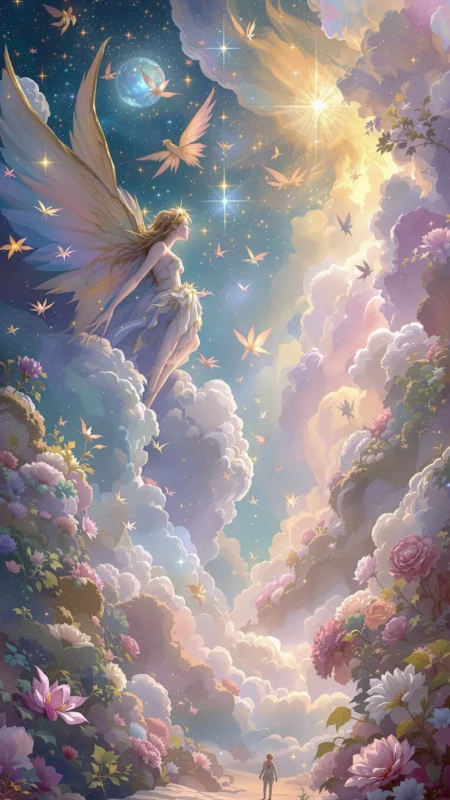
To have the Fairy Realm as a cornerstone of your personal mythology is to possess a secret geography. It is the inner landscape where intuition is the only reliable compass and logic is a foreign tongue. This realm may symbolize the subconscious mind itself: a place of profound, archetypal imagery, both luminous and menacing, where the rules of the waking world dissolve. It represents a reality that runs parallel to our own, a layer of meaning shimmering just beneath the surface of the mundane. It is the belief that there is more to the world than what can be measured, cataloged, and explained by science, a space where coincidence is conspiracy and beauty is a form of power.
Living with this archetype means you may navigate your life by a different set of laws. The hard facts of a situation may matter less than the feeling, the atmosphere, the resonance. It is the allure of the unknown, the romance of the perilous. This realm is not a place of comfort and safety in the conventional sense; it is a place of wild, untamed nature, both within and without. It whispers that to be fully alive is to be a little bit feral, to honor the parts of yourself that have not been civilized or domesticated, the instincts that twitch at the rising of the moon or the scent of rain on dry earth.
Furthermore, the Fairy Realm archetype speaks to the ambiguous nature of reality. It challenges the binary of good and evil, replacing it with a more complex ecology of motivations: caprice, curiosity, ancient loyalties, and inscrutable codes of honor. Things are not what they seem, and this is not a trick, but a fundamental truth. A beautiful flower may be poisonous; a grotesque creature may offer profound wisdom. It is an invitation to look deeper, to question surfaces, and to accept that some mysteries are not meant to be solved, only experienced.