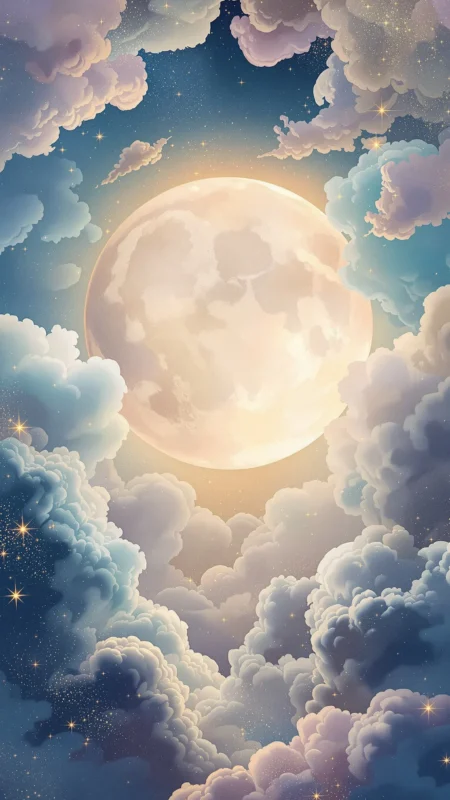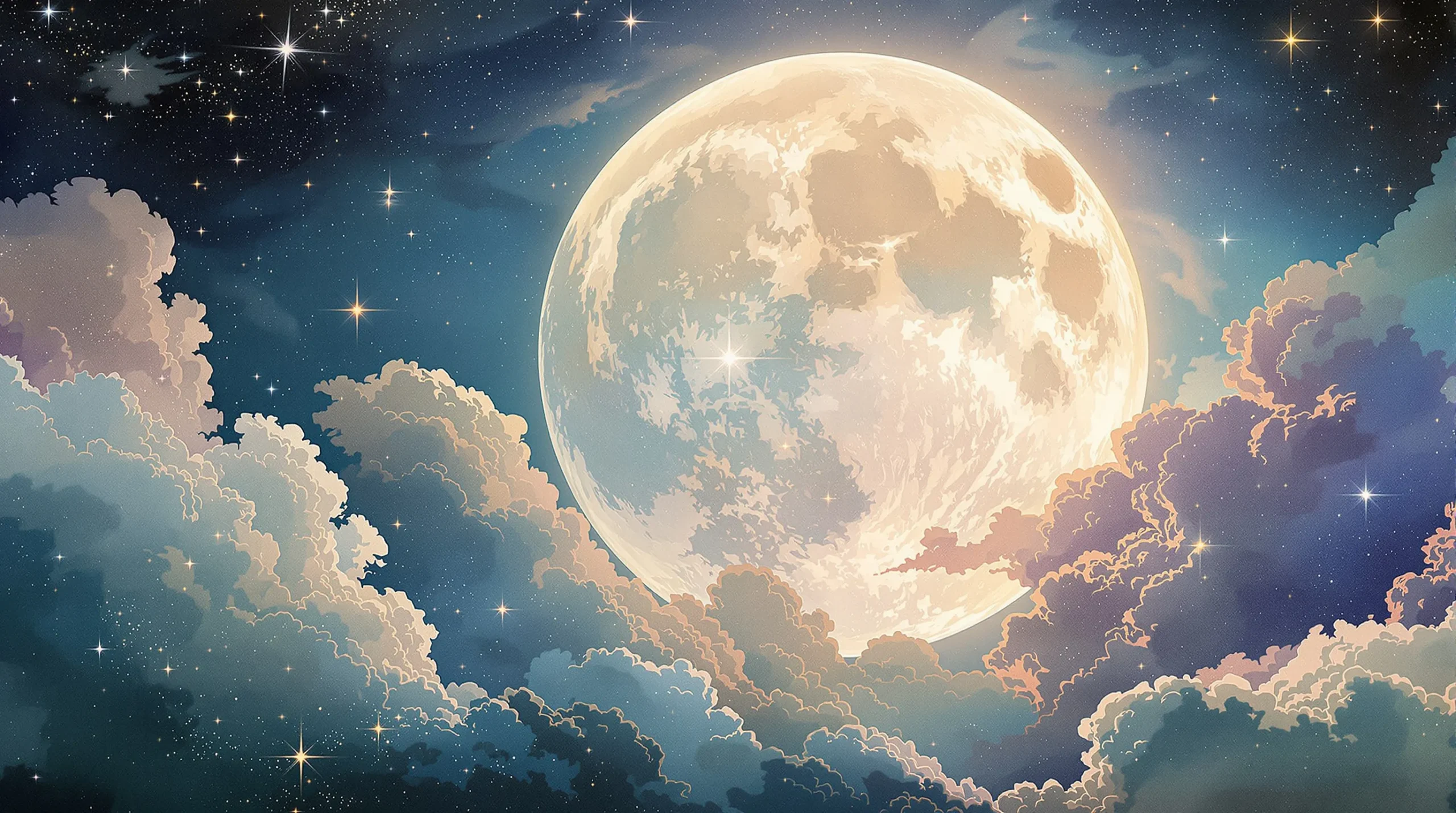


Moon

Archetype Meaning & Symbolism

Intuitive, cyclical, mysterious, reflective, emotional, receptive, hidden, tidal, luminous, shadowy, magnetic, silent

  • Do not ask for constant light. Ask for the wisdom to navigate the darkness, for that is where true seeing begins.

If Moon is part of your personal mythology, you may...

Believe

  • That the greatest clarity often comes after a period of deep confusion, just as the full moon follows the dark.
  • That what is not said in a conversation is often more important than what is said.
  • That your feelings are not random interruptions but an intelligent guidance system, a compass for the soul.

Fear

  • Being fully 'figured out' by others, leaving no room for mystery or private inner worlds.
  • Losing your intuitive connection and being forced to navigate life by logic alone.
  • A world without secrets, shadows, or dreams: a world of perpetual, sterile daylight.

Strength

  • A profound intuition that allows you to perceive the hidden dynamics and emotional undercurrents of any situation.
  • Resilience born from an innate understanding of cycles: you know that difficult phases will always pass.
  • A calming and mysterious presence that makes others feel safe to explore their own depths.

Weakness

  • A tendency towards passivity or indecisiveness, waiting for the perfect intuitive 'hit' before taking action.
  • Susceptibility to absorbing the moods of others, sometimes losing track of your own emotional center.
  • A inclination to retreat or become secretive when feeling overwhelmed, making it difficult for others to offer support.

The Symbolism & Meaning of Moon

In the modern psyche, the Moon archetype represents a necessary counterbalance to the relentless solar logic of the waking world. It is the permission to not know, to feel rather than to analyze, to receive rather than to strive. It is the voice of intuition, the wisdom that whispers from the body and the dream-state, often contradicting the spreadsheets and five-year plans of the conscious mind. To have the Moon as a central figure in your mythos is to honor the part of you that is fluid, cyclical, and deeply connected to the unseen. It suggests your life's meaning may not be found in a singular, heroic achievement, but in the rhythm of your own becoming, the quiet waxing and waning of your inner world.

It also symbolizes the power of reflection. The Moon generates no light of its own: it beautifully and mysteriously reflects the sun's fire. In a personal narrative, this could translate to a unique power of consciousness. You may not be the one who creates the initial spark, but you are the one who can hold it, soften it, and give it a different kind of life. This is the power of the artist, the therapist, the poet, the confidant. It is the ability to take the raw, often brutal, energy of life and transform it into something numinous and full of meaning, to illuminate the darkness for others by reflecting a light they may be too overwhelmed to see directly.

The Moon speaks to the sacredness of what is hidden. It governs the night, dreams, magic, and the unplumbed depths of the psyche. Your story may be one of appreciating the beauty in secrets, in ambiguity, and in the parts of yourself and others that remain wild and untamed. It is a mythology that finds comfort in shadows, seeing them not as threats but as places of gestation, mystery, and rest. Your personal legend may not be written in headlines but in the subtle shifts of your own inner landscape, a story legible only by moonlight.


Moon Relationships With Other Archetypes

The Sun

The Sun is the Moon’s archetypal partner and opposite: the conscious mind to the subconscious, the direct statement to the subtle metaphor, the day to the night. They are not enemies but the two hands of a cosmic clock. In a personal mythos, this relationship is central. The Sun-driven part of you may build the career and make the plans, but the Moon-driven part gives that life its resonant meaning, its poetry. A mythos dominated by one at the expense of the other is incomplete: all Sun creates a desert, all Moon a swamp. The dance between them is the story of achieving wholeness, learning when to act and when to reflect, when to speak and when to be silent.

The Ocean

The Ocean is the Moon’s subject, its vast, emotional body. The Moon’s pull dictates the Ocean’s mood, its high tides of expression and its low tides of withdrawal. If the Ocean is part of your mythos, representing your deep emotional self, then the Moon is the mysterious, distant force that governs you. You may feel your moods are not entirely your own, but are responses to a cosmic rhythm you can sense but not control. Your life story may be about learning to build your harbors and lighthouses in accordance with these tides, to surf the waves of feeling when they are high and explore the revealed tide pools when they are low, understanding the power that moves you.

The Wolf

The Wolf that howls at the Moon is the untamed, instinctual soul responding to the call of the wild psyche. The Moon does not command the Wolf, it awakens it. If the Wolf is a key figure in your personal story—representing your primal instincts, your loyalty to your pack, your fierce independence—then the Moon is your catalyst. It is under the Moon’s light that your Wolf-self feels most alive, most free to express its true nature. Your narrative may involve a struggle between the domesticated, daylight self and the wild, moonlit self, and your journey is about integrating the two, letting your inner Wolf sing its song without shame.

Using Moon in Every Day Life

Navigating Emotional Rhythms

When you feel an inexplicable melancholy or a sudden surge of creative energy, you might consult the Moon within your mythos. Instead of pathologizing the feeling, you could see it as a phase: the dark moon asking for introspection, the waxing crescent for gentle beginnings, the full moon for celebration and release. You might begin to chart your own emotional life not as a flat line of expected consistency but as a reliable, repeating cycle of depths and heights, learning to work with your tides rather than fight against them.

Illuminating the Subconscious

When faced with a complex decision where logic provides no clear answer, the Moon archetype encourages a different approach. You might use this time for reflection, paying close attention to dreams, daydreams, and symbols that emerge from your subconscious. It is about trusting the glimmer of an idea that has no rational basis, the gut feeling that contradicts the facts. It is the practice of seeing by reflected light, allowing the hidden parts of your psyche to illuminate the path forward.

Embracing Fallow Periods

In a culture that demands constant productivity, the Moon archetype grants permission for rest and retreat. When a project stalls or a relationship feels dormant, you may recognize this not as failure but as a necessary waning period. This is the time to gather energy, to allow ideas to gestate in the dark, and to honor the need for stillness. Like the new moon, this apparent emptiness is not an absence but a potent state of pure potential, just before a new cycle begins.

Moon is Known For

Governing the Tides

The Moon is known for its gravitational command over the oceans, a physical reality that serves as a profound metaphor for its dominion over the emotional, subconscious tides within us. It is the unseen force that pulls at the waters of the soul.

Cyclical Phases

Its constant, predictable journey from darkness to light and back again serves as a cosmic symbol for all of life's cycles

birth, growth, decay, and rebirth. It teaches that no state is permanent, and that even in total darkness, the return to light is assured.

Light in Darkness

As the luminary of the night, the Moon is the guardian of all that is hidden, mysterious, and nocturnal. It represents intuition, the unconscious, and the courage to find our way when the clear path of the sun has disappeared.

How Moon Might Affect Your Personal Mythology

How Moon Might Affect Your Mythos

When the Moon archetype shapes your personal mythos, your life story may eschew a linear, cause-and-effect plot. Instead, it might unfold in cycles, like a tide coming in and out. Periods of intense, outward-facing creativity and social engagement could be followed by necessary seasons of quiet retreat and introspection, and these are not seen as interruptions but as essential parts of the narrative. Your defining moments might not be loud, dramatic victories, but quiet, internal epiphanies that arrive in the middle of the night. The central conflict of your story could be the ongoing dance of integrating your intuitive, emotional self with the demands of a rational, sunlit world, with your character arc measured in deepening wisdom rather than accumulating power.

Your mythos might be rich with symbolism, secrets, and the power of what is left unsaid. The supporting characters in your story are perhaps not just allies and enemies, but mirrors, reflecting hidden aspects of your own psyche back at you. The 'quest' may not be to find a tangible treasure, but to explore the vast, sometimes frightening, landscape of your own subconscious. Your personal legend becomes less about what you do and more about who you become in the quiet moments between actions, a narrative told in shades of silver and gray, where the deepest truths are found not by looking directly at them, but by seeing them reflected.

How Moon Might Affect Your Sense of Self

Your sense of self, under the Moon's influence, may be fluid and changeable rather than static and rigidly defined. You might identify more with the process of becoming than with any fixed state of being. Your identity is not a stone monument but a body of water, reflecting the shifting skies of your inner world. This can be a source of great creative adaptability, but it might also lead to periods of identity confusion, where you feel you are no one at all because you are momentarily in a 'new moon' phase. Self-acceptance comes from embracing this cyclical nature, knowing that your light will always return.

You may perceive your 'true' self as the one that emerges in solitude, at night, in dreams. It is the self that exists beyond social roles and expectations. This can create a rich and deeply personal inner life, a secret garden of the soul. However, it may also create a feeling of alienation from the external world, a sense that your most authentic self is invisible to others. Your journey of self-discovery is one of learning to bring that moonlight out into the day, to trust that your intuitive, reflective nature has a valid and powerful place in the world.

How Moon Might Affect Your Beliefs About The World

Your worldview might be one that sees the universe as fundamentally mysterious and intelligent, a place animated by unseen forces and subtle energies. You may be less interested in dissecting the world to understand its mechanics and more interested in experiencing its poetry and magic. Reality is not just the solid, tangible world the sun illuminates, but also the equally vast and valid world of dreams, emotions, and archetypes that the Moon governs. You may believe that the most important truths cannot be spoken directly but must be hinted at through art, myth, and symbol.

This perspective might lead you to question conventional metrics of success and progress. You may see the modern world's relentless pursuit of growth and certainty as a dangerous imbalance, a denial of the necessity of darkness, rest, and surrender. Your philosophy could be one of trust in natural cycles, a belief that solutions often emerge not from forceful intervention but from patient observation and waiting for the right moment. The world, for you, is not a problem to be solved, but a mystery in which to participate.

How Moon Might Affect Your Relationships

In relationships, you may be the keeper of the unspoken. You are likely drawn to connections that operate on a deep, intuitive level, where a shared silence is more intimate than a flurry of words. You might act as an emotional mirror for your partners and friends, reflecting their own feelings and hidden potentials back to them with a gentle, non-judgmental light. People may feel they can reveal their shadow selves to you, the parts they keep hidden from the sunlit world, because you offer a safe and mysterious space for that revelation.

However, your cyclical nature can be challenging for those who require consistency. Your emotional energy may wax and wane, leading you to be intensely present at times and mysteriously distant at others. This is not a withdrawal of love, but a natural retreat into your own inner world, a tidal necessity. The challenge for you in relationships is to communicate these rhythms to others, and the challenge for those who love you is to trust your cycles, to know that your tide will always turn back toward them.

How Moon Might Affect Your Role in Life

Your perceived role in life might be that of the Seer, the Dreamer, the Poet, or the Quiet Counselor. You are not the king who rules by decree, but the advisor who interprets the dream. Your power is subtle, your influence indirect. You may feel your purpose is to tend to the soul of your family, your community, or your workplace, reminding others of the importance of the inner world, of rest, and of emotional honesty. Your contribution is often invisible but essential: you are the one who feels the shift in the emotional atmosphere, who senses the coming storm or the nascent idea before anyone else.

This can lead to a feeling of being behind the scenes, your work essential but uncredited. You might struggle with a world that rewards the loudest voice and the most decisive action. Your life's task may be to find value and power in your reflective, receptive role, to understand that illuminating the path for others is as vital as walking it yourself. Your legacy might not be a monument but a mood, a subtle change in the collective consciousness that you helped to nurture in the dark.

Dream Interpretation of Moon

In a positive context, the Moon appearing in a dream is often a powerful omen of subconscious breakthrough and intuitive clarity. A bright, full Moon might symbolize the culmination of a cycle, the full illumination of a matter that was previously hidden in darkness. It may be your psyche telling you to trust your gut feelings and to embrace your receptive, creative side. A crescent moon could suggest a new beginning, the planting of a seed of an idea or a project that will grow in time. To dream of moonlight on water often signifies a harmony between your conscious and unconscious mind, a moment of profound emotional insight.

Conversely, the Moon in a negative dream context can point to confusion, delusion, and fear of the unknown. A dark, eclipsed, or blood-red moon may represent repressed emotions, anxieties, or a part of your shadow self that is demanding attention. It could suggest that you are disconnected from your intuition, lost in a metaphorical darkness without inner guidance. Dreaming of being stranded in a barren, moonlit landscape could symbolize feelings of emotional desolation, isolation, or a fear that your inner world is sterile and lifeless. It is a call to look at what you are refusing to see within yourself.

How Moon Archetype Might Affect Your Needs

How Moon Might Affect Your Physiological Needs

Your physiological needs, through the lens of the Moon archetype, are deeply tied to rhythm and cycle. The need for sleep is not just a mechanical requirement but a sacred pilgrimage into the subconscious. You may feel a profound need for true darkness to rest properly, your body rebelling against the artificial light that denies the night. You might honor your body’s need for fallow periods, understanding that physical energy, like the moon's light, must wax and wane. Pushing through exhaustion may feel like a violation of a natural law.

Furthermore, you might experience a heightened sensitivity to monthly or even lunar cycles, feeling your energy, appetite, and sociability shift in predictable patterns. Your relationship with your body may be less about command and control and more about listening and responding. Health is not a static state to be maintained, but a fluid dance of balance. Your physical well-being depends on honoring these tides, allowing for both the high energy of the 'full moon' phase and the deep, restorative quiet of the 'new moon' phase.

How Moon Might Affect Your Ideas of Belonging

Your need for belonging may be fulfilled not by large, boisterous communities, but by a select few souls with whom you share a silent orbit. True connection is felt as a gravitational pull, an unspoken understanding that transcends social pleasantries. You find your tribe among those who are not afraid of your shadows or your silences, those who can sit with you in the dark without needing to flick on a light. You create belonging by holding a receptive space for others, allowing them to be their whole, complex selves.

This can sometimes lead to feelings of loneliness in a world that often equates belonging with constant communication and social performance. You might feel like you are speaking a different language, a language of symbol and feeling. Your path to connection is one of quality over quantity. Finding even one other person who understands your rhythm, who can dance between the light and shadow with you, can be more fulfilling than being accepted by a crowd that only sees your sunlit face.

How Moon Might Affect Your Feelings of Safety

A sense of safety for you may be found not in fortifications or guarantees, but in your ability to navigate the unknown. You might feel most secure when you are in tune with your intuition, trusting that inner 'knowing' to guide you through uncertain territory and alert you to hidden dangers. Safety is the confidence that even if you find yourself in darkness, you carry your own source of reflected light. You might find brightly-lit, hyper-rational environments to be paradoxically unsafe, as they create an illusion of certainty while denying the existence of shadow and unpredictability.

Conversely, a threat to your safety could be a state of inner disconnection. When you lose touch with your intuitive senses, you may feel adrift and vulnerable, unable to read the subtle currents of your environment. True danger is not the shadow itself, but the inability to see within it. Therefore, you may cultivate practices like meditation, dream journaling, or spending time in nature at night as essential tools for survival, ways of keeping your inner navigational instruments finely tuned and reliable.

How Moon Might Affect Your Views of Esteem

Esteem, for you, is likely cultivated from within, rooted in the quality of your relationship with your own subconscious and emotional world. You may feel a deep sense of self-worth when you trust your intuition and it proves true, or when you create something beautiful out of the raw material of your dreams and feelings. Your value is not measured by your productivity, but by your depth. Your esteem is nurtured in the quiet moments of reflection, when you honor your own complex, cyclical nature without judgment.

However, this inner-directed esteem can be fragile in a world that overwhelmingly rewards solar qualities: extroversion, linear achievement, and unwavering confidence. You may struggle with feeling invisible or undervalued, as your greatest strengths are subtle and often hidden. A core challenge for your self-esteem is to hold onto the worth of your lunar qualities even when they are not externally validated, to trust that the ability to illuminate the darkness has a profound and irreplaceable value.

Shadow of Moon

When the Moon archetype falls into shadow, it becomes lunacy. The gentle reflection of intuition hardens into the distorted mirror of paranoia. Here, every shadow holds a threat, every subtle feeling is amplified into a terrifying and inescapable truth. This is the state of being lost in one's own inner world, where the boundaries between self and other, fantasy and reality, dissolve. The receptive, nurturing presence becomes a cold, barren satellite, emotionally remote and manipulative, using its mystery as a weapon to keep others in a state of confused orbit.

The shadow also manifests as a deep emotional swamp, a crippling passivity where one is drowned by the tides of feeling. It is the refusal to ever meet the Sun, to bring intuitive insights into the light of conscious action. One may become stuck in a perpetual state of dreaming, reflection, and feeling, but never doing. Life stagnates. This shadow Moon is the undertow of the psyche, the force that resists all movement, all clarity, and all connection to the solid ground of the waking world, preferring the alluring and ultimately lifeless depths.

Pros & Cons of Moon in Your Mythology

Pros

  • You possess a rich inner world and a natural wellspring of creativity sourced from the subconscious.
  • You have an innate capacity for empathy and can navigate complex emotional landscapes with grace.
  • You embody a sense of calm and mystery, offering a restful presence in a chaotic world.

Cons

  • You may be perceived as moody, unreliable, or disconnected from reality due to your cyclical nature.
  • You can be vulnerable to emotional overwhelm, taking on the feelings of others as your own.
  • Your natural rhythm of productivity and rest may clash with the linear, constant-demand structure of modern life.