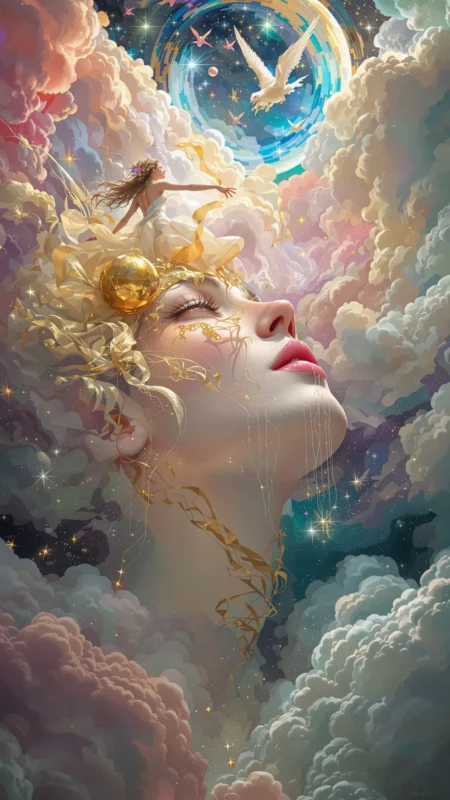


Alternate Reality

Archetype Meaning & Symbolism

Liminal, What-If, Malleable, Unseen, Potential, Recursive, Fractured, Hypothetical, Possible, Elsewhere

  • You are not a single story read aloud, but the entire library of every book that could have been written.

If Alternate Reality is part of your personal mythology, you may...

Believe

  • That every choice, no matter how small, births a new universe.

    That your current self is not definitive, but is merely one possibility you are currently exploring.

    That reality is fundamentally subjective and can be reshaped by perception and belief.

Fear

  • That you are currently living in one of the 'bad' timelines and made a catastrophic wrong turn somewhere in the past.

    That you will never manage to access or become your 'true' or 'best' self, who is thriving in another reality.

    Losing your grip on this reality entirely, becoming lost in the labyrinth of what-ifs.

Strength

  • An almost limitless capacity for creative problem-solving and innovation, as you are not bound by 'the way things are'.

    A profound psychological resilience in the face of regret or failure, seeing them as divergences rather than dead ends.

    The ability to empathize with wildly different viewpoints, as you can easily imagine the reality in which those views are correct.

Weakness

  • A tendency toward analysis paralysis, where the sheer number of possible futures makes it impossible to choose one.

    A vulnerability to escapism, dissociation, and chronic dissatisfaction with the tangible world.

    Difficulty with commitment in relationships and careers, always wondering if a better option exists on a path not taken.

The Symbolism & Meaning of Alternate Reality

Alternate Reality is the ghost in the machine of consciousness, the subtle shimmer at the edge of perception that suggests this version of events is not the only one available. In personal mythology, it could be the ever-present landscape of potential, a territory as real as the one underfoot. It symbolizes the profound and terrifying freedom of choice. Every 'yes' is a 'no' to a million other realities, and to live with this archetype is to be keenly aware of the silent, invisible deaths that accompany every birth of a new moment. This isn't about escapism in the simple sense: it's a deeper philosophical orientation that questions the primacy of the tangible world. The life you did not choose may exert a gravitational pull, shaping your desires and fears in this one.

This archetype also speaks to a distinctly modern condition. In a digital age of avatars, simulated environments, and curated online identities, the line between the 'real' and the 'alternate' has perhaps never been more porous. Your personal mythos might reflect this, seeing your life not as a single, coherent narrative, but as a series of coexisting feeds or parallel streams. One for work, one for a private passion, one for a past self you still visit. The Alternate Reality archetype suggests that the self is not a solid state but a quantum one, existing in multiple possibilities at once until observed. It is the place where potential energy is stored, where the blueprints for other lives are kept on file.

Ultimately, this is the archetype of hope and its shadow, despair. It is the belief that a better world is possible, a better self is achievable, just one decision away. But it can also be the source of chronic dissatisfaction, the nagging sense that you are in the wrong timeline, living a lesser version of your own story. It is the quiet hum beneath the floorboards of the present, reminding you that the architecture of your life could have been built differently, and perhaps, still could be. It asks you to consider which walls are truly load-bearing and which are merely partitions you have forgotten you can move.


Alternate Reality Relationships With Other Archetypes

The Trickster:

The Trickster is perhaps the only native inhabitant of the Alternate Reality, the one who knows all the back doors and secret passages between worlds. While you may only glimpse other possibilities, The Trickster hops between them, creating chaos and revealing truth by juxtaposing one reality against another. If Alternate Reality is the library of all possible stories, The Trickster is the mischievous librarian who swaps the covers on the books, forcing you to question the narrative you thought you were reading. Your mythos may feel this relationship as a sudden, inexplicable event that shatters your sense of normalcy, revealing that the rules you lived by were only suggestions.

The Labyrinth:

The Labyrinth is the physical architecture of the Alternate Reality. Each turn is a choice, each path a different timeline, and the center is not a monster to be slain but perhaps the terrifying realization of all the lives you could have lived simultaneously. To walk The Labyrinth is to actively engage with the Alternate Reality archetype, to experience the weight of branching paths not as an abstract concept but as a claustrophobic or liberating series of corridors. In your personal story, feeling stuck may not be a dead end but a moment of standing at a complex intersection within The Labyrinth, unable to discern which path leads to the self you most want to become.

The Oracle:

The Oracle does not predict a single future but perceives the shimmering threads of many Alternate Realities. The Oracle's prophecies are often cryptic because they are glimpses into a multiplicity of outcomes, any of which could be solidified by choice. The Oracle is the gatekeeper, the one who can see the potential weather patterns over the landscapes of what-if. In your mythos, an encounter with this archetype might be a moment of profound intuition, a sudden, jarring insight into the consequences of a decision, as if for a second you were able to see down two hallways at once, feeling the different temperatures emanating from each.

Using Alternate Reality in Every Day Life

Navigating Career Indecision:

When faced with a professional crossroads, you might not just weigh pros and cons. Instead, you could inhabit each potential future: you spend a week living as if you have already taken the job in the city, feeling its rhythms, its compromises. You then spend the next week living in the quiet reality of the promotion at your current firm. The archetype is not a tool for prediction, but for embodiment: a way to test a life before committing to the ink of its first chapter.

Healing from Regret:

For a past choice that haunts the present, the Alternate Reality archetype offers a unique solace. It suggests that the person who made that choice still exists, thriving, in a reality spun from that decision. Your current self is not the failed version, but simply a different one. This perspective may not erase the pain, but it could reframe it as a divergence, not a deficit, allowing you to grieve the path not taken as you would a distant country you can no longer visit.

Expanding Creative Boundaries:

An artist or writer might use this archetype to shatter creative blocks. They could ask: what if the protagonist was the villain? What if gravity worked sideways in this story's world? By consciously stepping into a parallel narrative framework, they access possibilities that linear, consensus reality would have dismissed. It becomes a speculative laboratory where the fundamental laws of a project can be altered to reveal a more interesting truth.

Alternate Reality is Known For

Sliding Doors Moments

It is known for the profound exploration of pivotal choices: the train missed, the 'yes' that was almost a 'no,' the random encounter. It embodies the branching paths that radiate from every decision point, making the mundane act of choosing a cosmically significant event.

World-Building:

The archetype is the patron of all speculative fiction, the quiet engine behind every fantasy realm, parallel dimension, or counterfactual history. It represents the power of imagination to construct a coherent reality with its own laws, histories, and possibilities, offering a temporary or permanent exit from our own.

The Consolations of 'What If':

It is perhaps most intimately known for its role in personal psychology: the private comfort or torture of imagining a life where a different path was taken. It is the realm of second chances, of rectified mistakes, of loved ones never lost, existing purely in the potent space of thought.

How Alternate Reality Might Affect Your Personal Mythology

How Alternate Reality Might Affect Your Mythos

When Alternate Reality is a cornerstone of your personal mythos, your life story ceases to be a linear progression from A to B. Instead, it might become a palimpsest, with the faint outlines of other stories, other selves, visible beneath the surface of the present. Your narrative is not 'what happened' but 'what happened in this version'. A past failure is not a defining scar but a branching point, a moment where one version of you stumbled while another, on a parallel track, succeeded. This doesn't necessarily negate the pain or joy of your current timeline, but it could frame it with a sense of cosmic perspective. The story of you is less a novel and more a 'choose your own adventure' book where you are perpetually aware of the pages you didn't turn to.

This perspective could also infuse your mythos with a profound sense of agency, or its opposite, paralysis. If your reality is just one of many, then you are a co-creator, constantly making choices that ripple across the multiverse of your own potential. The story is never truly finished, the ink never dry. This can be liberating, a belief that you can always begin a new chapter that shifts the entire narrative. However, it might also lead to a mythos of perpetual hesitation, a story about a character who stands forever at a crossroads, so haunted by the ghosts of the paths not taken that they are unable to take any path at all.

How Alternate Reality Might Affect Your Sense of Self

Your sense of self may become fluid, less a statue carved from stone and more a river fed by countless invisible streams. The 'you' of this moment is a temporary confluence, and you might feel a deep kinship with the 'yous' who made different choices: the one who became a musician, the one who never left their hometown, the one who married their first love. This can foster a profound sense of self-compassion. The parts of yourself you dislike or regret might not be flaws, but echoes from another timeline, vestiges of a different life path. Your identity is not a monolith but a mosaic, and you may feel less pressure to be a single, consistent being.

Conversely, this fractured sense of self could be deeply unsettling. You might feel like an impostor in your own life, constantly measuring yourself against a more successful, happier, or more authentic alternate self. This idealized version, living in a perfect 'what-if' scenario, can become a source of profound insecurity, making your present accomplishments feel hollow. The self is no longer a home but a series of hotel rooms, some more comfortable than others, with a persistent feeling that you left your most important baggage in a room you can no longer access. This might manifest as a perpetual search for a 'true' self, believed to be stranded in another reality.

How Alternate Reality Might Affect Your Beliefs About The World

The world might cease to appear as a solid, objective stage on which a single drama unfolds. Instead, it could be seen as a quantum field of shimmering possibilities, where consensus reality is simply the most probable outcome, not the only one. This worldview may cultivate a deep senseemia of open-mindedness and a suspicion of dogmatic certainty. If countless other versions of history and science could exist, then one's own cultural and personal beliefs become beautifully relative. It may allow for a greater capacity to hold contradictory ideas, to see the validity in opposing viewpoints, as they could simply be transmissions from a different, equally valid, reality.

This perspective could also lead to a sense of profound detachment or even solipsism. If this reality is just one of many, its stakes can feel dramatically lowered. The suffering, joys, and moral imperatives of this world might seem less urgent, like events in a dream you know you will wake from. This could foster a kind of passivity, a reluctance to fully invest in a world that feels arbitrary or illusory. Why fight for change in this timeline when a perfect one might already exist? The world becomes a fascinating but ultimately transient phenomenon, and your engagement with its problems might be tinged with an ironic distance.

How Alternate Reality Might Affect Your Relationships

Relationships may be viewed through a constantly shifting prism of what could have been. A current partnership could be haunted or blessed by the ghost of a past love, imagined into a parallel timeline where the relationship never ended. This might lead to a deeper appreciation for the specific, improbable magic of the connection you *do* have: of all the infinite possibilities, this person and you found each other in *this* reality. It is a cosmic lottery win. You may value the present moment with a partner more acutely, aware of the thousand alternate universes where you are strangers.

On the other hand, the Alternate Reality archetype can be poison to intimacy. It may breed a chronic 'what-if' syndrome, where a partner is constantly compared to an idealized version of another person from the past, or even to an imagined, perfect partner who surely exists in another timeline. Minor conflicts can be magnified into evidence that you are on the 'wrong' relational path. This could prevent deep commitment, as you might always keep one emotional foot out the door, ready to jump to another timeline should the opportunity arise. Relationships might feel conditional, always being measured against a spectral, impossibly perfect alternative.

How Alternate Reality Might Affect Your Role in Life

Your perceived role in life—as a parent, an artist, a professional, a friend—might feel less like a fixed identity and more like a costume you have chosen to wear for this particular play. This can be incredibly freeing. It allows you to experiment with different roles without feeling that you are betraying a 'true' self. You could be a lawyer by day and a poet by night, not as a hobby, but as two equally valid expressions of your potential, two different realities you choose to inhabit. This perspective may prevent burnout and the existential dread that comes from over-identifying with a single function in the world.

However, this same fluidity could undermine your ability to find meaning and purpose within a chosen role. If you are only 'playing the part' of a parent or a leader, you may struggle to fully commit to its responsibilities and sacrifices. The role might feel hollow, an arbitrary assignment in this particular timeline. This could lead to a lack of conviction, a sense that your actions don't truly matter because they are being performed by just one of your many possible selves. It may be difficult to build a legacy or a sense of lasting impact when you feel like you are merely a guest actor in your own life's production.

Dream Interpretation of Alternate Reality

In a positive context, dreaming of an alternate reality is an invitation from the psyche to explore untapped potential. These dreams may not be literal suggestions but symbolic explorations of dormant talents, unexpressed desires, or different ways of being. A dream where you are a celebrated scientist, when in waking life you are an accountant, could be your subconscious reminding you of your analytical and curious nature. These dreams are playgrounds for the self, safe spaces to try on different lives, and may return you to your waking world with a renewed sense of possibility and a broader understanding of who you are and who you could become.

In a negative context, such dreams might signal a dangerous disconnection from your present reality. They could represent a profound dissatisfaction with your current life, a form of psychological escapism where the dream world becomes more compelling than the waking one. If you repeatedly dream of a reality where a past mistake was averted or a loved one is still alive, it may indicate you are trapped in a cycle of regret or grief, unable to fully inhabit the life you have now. These dreams could be a warning that your focus on 'what could have been' is draining the vitality from 'what is,' leaving you a ghost in your own home.

How Alternate Reality Archetype Might Affect Your Needs

How Alternate Reality Might Affect Your Physiological Needs

The focus on alternate possibilities could subtly influence your relationship with your own body and its fundamental needs. On one hand, you may be more inventive in meeting these needs, seeing traditional methods of securing food, water, and shelter as just one possible script. You might be drawn to alternative lifestyles, experimental diets, or novel forms of housing, all stemming from the belief that there isn't one 'right' way to inhabit a physical form. The body is simply the vessel for this particular timeline, and you might treat its maintenance as a creative problem to be solved, rather than a chore.

Conversely, a deep immersion in the Alternate Reality archetype could lead to a neglect of physiological needs. The body, with its insistent, tangible demands, can feel like an anchor, tethering you to a reality you'd rather escape. You might get lost in thought, in digital worlds, or in creative projects, forgetting to eat or sleep. The needs of the flesh seem mundane, even coarse, compared to the infinite possibilities of the mind. This disembodiment is a risk, where the care and keeping of the physical self becomes secondary to the exploration of non-physical realms, potentially leading to a breakdown in health.

How Alternate Reality Might Affect Your Ideas of Belonging

The need for love and belonging might become a search for fellow travelers, for others who also feel like they are visitors in this reality. You may form your deepest bonds not based on shared histories in this world, but on a shared sense of a world that could be. These relationships, built on speculative conversations and a mutual recognition of unseen potentials, can be incredibly profound. You might feel a sense of belonging with thinkers, artists, and dreamers who understand that the most important conversations are about the worlds we carry inside us.

This same impulse can also create a profound sense of alienation. You might feel that no one in this reality truly understands you, because your true soulmates exist in a different timeline. The love and friendship you find here could feel like pale imitations of a connection you feel you were 'supposed' to have. This may lead to an inability to fully commit or be vulnerable in relationships, as you are always saving a part of yourself for a world that may not exist. The sense of belonging is perpetually deferred, an ache for a home you've never visited but feel deeply homesick for.

How Alternate Reality Might Affect Your Feelings of Safety

Your need for safety, both physical and psychological, could be framed in complex ways. The current reality, with all its flaws, might be viewed as a safe harbor. You may feel a strange sense of gratitude for its stability and predictability when you imagine the infinite other timelines where things are catastrophically worse. This perspective could foster resilience and an appreciation for the simple safety of a normal day. The knowledge of more dangerous alternate paths might make you more cautious and deliberate in your choices, keenly aware of how quickly security can be lost.

Alternatively, this archetype might thoroughly dismantle your sense of safety. The belief that a single different choice could have led to a far better life can make your current security feel like a gilded cage. You may feel trapped in a 'safe' but unfulfilling reality, a life of quiet desperation, while your 'true' self is out having adventures in another timeline. This can foster a deep-seated anxiety and restlessness, a feeling of being fundamentally unsafe because you are not where you are supposed to be. The stability of your life might feel like a prison, and you may be tempted to make reckless choices in an attempt to break through to a different, more authentic reality.

How Alternate Reality Might Affect Your Views of Esteem

Esteem could be built on a foundation of pure potential. Your self-worth may not be tied to your actual achievements in this reality, but to your awareness of the multitude of successful selves you could be. This can create a resilient, almost untouchable sense of esteem: a failure in this world is just a data point, a minor event in one of many stories. You might derive pride from your imaginative capacity, your ability to envision better worlds and better selves, seeing this as a talent in itself. Your value is not what you *are*, but the infinite set of what you *could be*.

However, this is a double-edged sword. More often, esteem is eroded by the constant, crushing comparison to an idealized alternate self. The 'you' who took the risk, wrote the book, or won the prize becomes a silent judge of your current life. Every accomplishment in this reality can feel diminished when measured against the imagined triumphs of that other self. This creates a fragile, conditional esteem that is dependent on outrunning the ghost of your own potential. It can lead to a state of perpetual striving, not for excellence, but to simply quiet the inner critic who knows of a better version of you.

Shadow of Alternate Reality

The shadow of the Alternate Reality is a profound and seductive paralysis. It is the state of being so enthralled by the library of possible lives that you never actually read a single book. Here, potential is not a creative force but a cage. The individual becomes a ghost in their own life, their vitality siphoned off to feed the imaginary worlds where they are happier, more successful, more loved. They may abdicate all responsibility for their actions in this world, reasoning that it is only one flawed version of reality and thus doesn't truly matter. Relationships wither from lack of presence, careers stall from indecision, and the body itself may be neglected, seen as a temporary and inconvenient vessel.

In its deepest shadow, this archetype fosters a corrosive solipsism. The outer world becomes a dream, and other people become non-player characters in one's private simulation. Empathy dies, because the suffering of others is not 'real' in the same way one's own internal landscape of possibilities feels real. This can lead to a detached cruelty or a complete withdrawal from a world deemed inferior to the ones inside. The shadow turns the beautiful, expansive landscape of 'what if' into a hall of mirrors, where the individual can see only infinite, and ultimately empty, reflections of themself.

Pros & Cons of Alternate Reality in Your Mythology

Pros

  • It fuels boundless creativity and innovation by refusing to accept the status quo as the only option.

    It offers a powerful psychological tool for reframing past trauma and regret, fostering resilience.

    It cultivates open-mindedness and the ability to hold complex, contradictory ideas, leading to greater wisdom.

Cons

  • It can breed chronic dissatisfaction, as the real world can rarely compete with an idealized imaginary one.

    It may lead to a crippling fear of commitment and decision-making, resulting in a life of passivity.

    It carries the risk of encouraging escapism and a detachment from the responsibilities and relationships of one's actual life.