

Valhalla

Archetype Meaning & Symbolism

Glorious, earned, boisterous, martial, communal, resilient, honorable, selective, celebratory, relentless

  • Do not pray for a lighter burden. Pray for a stronger back. The feast is for those who carried the weight.

If Valhalla is part of your personal mythology, you may...

Believe

  • A life without a great challenge to overcome is a life that has not been fully lived.

    Scars, whether physical or emotional, are maps of survival and should be honored, not hidden.

    True rest is not a state of inaction, but the celebration that follows a monumental effort.

Fear

  • Reaching the end of life only to realize you never fought for anything that truly mattered.

    A life of quiet desperation and uneventful comfort, a 'death by a thousand paper cuts' rather than a glorious battle.

    That you will fail or show cowardice in a defining moment, letting down those who depend on you.

Strength

  • An almost supernatural resilience; the ability to not only endure hardship but to be strengthened by it.

    A profound and unwavering sense of purpose that can cut through ambiguity and inspire decisive action.

    The capacity to forge incredibly strong, loyal bonds with others, creating a chosen family of trusted allies.

Weakness

  • A tendency to instigate conflict or drama during times of peace out of a fear of irrelevance or boredom.

    An inability to fully relax or accept success, as the self is only validated by the next struggle on the horizon.

    A potential for burnout, pushing oneself and others relentlessly without acknowledging the real need for unstructured, unearned rest.

The Symbolism & Meaning of Valhalla

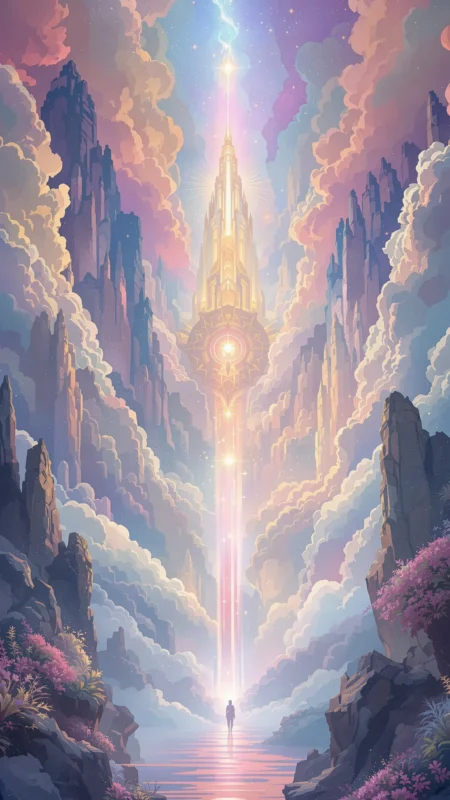
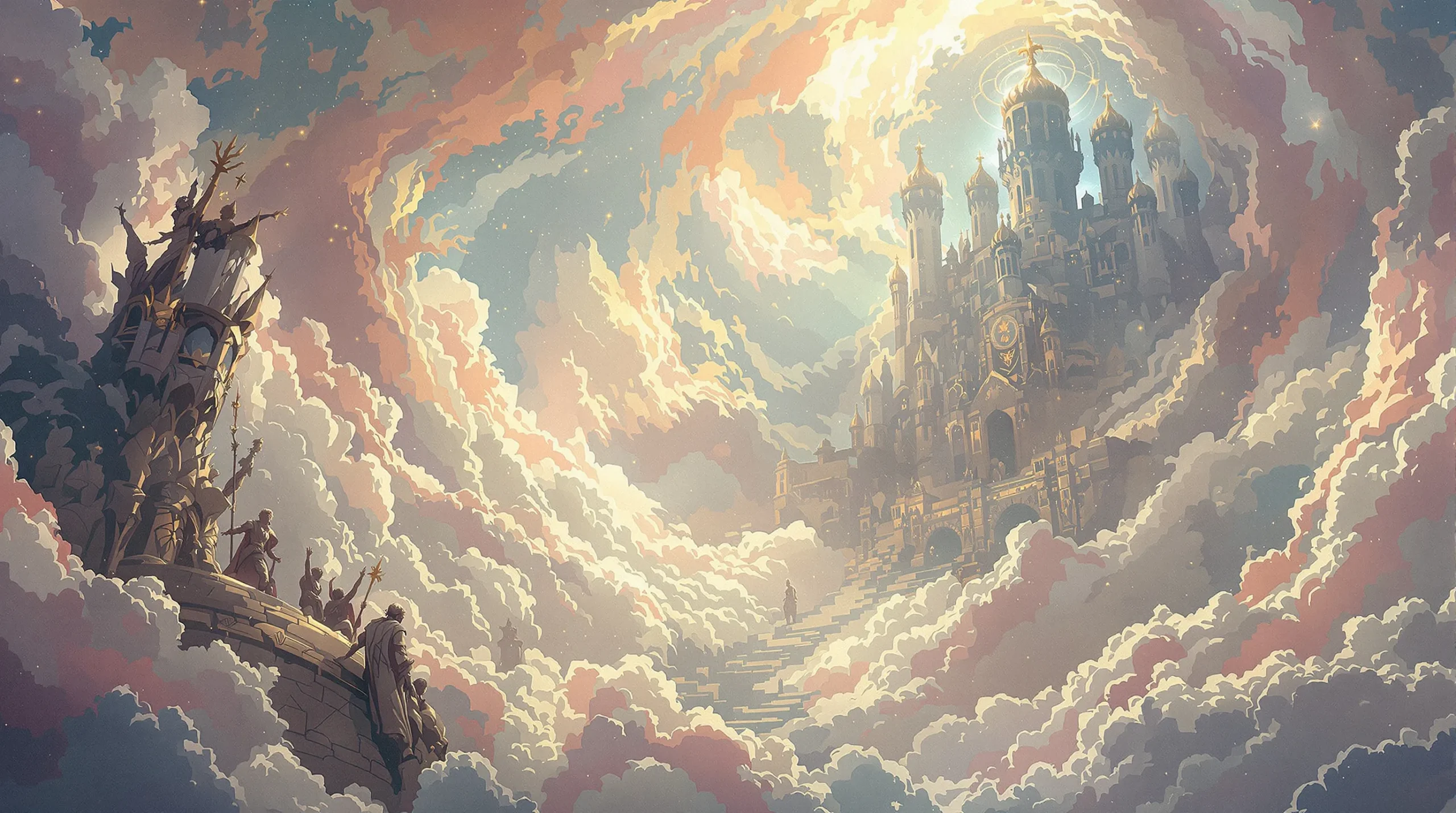
In the landscape of the modern psyche, Valhalla is perhaps not a promise of an afterlife, but a metaphor for a particular kind of fulfillment. It represents the belief that true peace is not a gentle slope, but a high plateau reached by a treacherous climb. It is the internal architecture of earned success, a psychic space constructed from the very struggles it took to get there. To have Valhalla in your personal mythology is to hold the conviction that a life well-lived is a life tested, and that the celebration is made sweeter by the memory of the battle. It is the grand hall of the soul where you feast with the ghosts of your former, weaker selves, honoring them for the fight that allowed your current self to emerge.

The archetype speaks to a rejection of unearned comfort. It is the antithesis of the quiet retirement cottage or the serene meadow. Valhalla is loud, boisterous, and alive with the energy of past conflicts overcome. It suggests a value system wherein scars are more beautiful than unblemished skin, and resilience is the highest virtue. This place within us is where we store our proudest moments of endurance. It's the memory of finishing the marathon, of navigating a brutal negotiation with integrity, of sitting with a loved one through a long illness. It is the internal proof that we were tested and not broken.

Ultimately, Valhalla symbolizes a destination built from effort. It is the state of being where you can finally look back on the chaos of your life’s battles and see not a mess of painful events, but a glorious, coherent saga. It is the moment of integration, where struggle is transmuted into strength, and pain into purpose. It's the knowledge that when the end comes, you will not be met by a void, but by a roaring fire and a seat at a long table, surrounded by all the versions of you that fought honorably to get you there.


Valhalla Relationships With Other Archetypes

The Valkyrie

The Valkyrie is the chooser of the slain, the emissary of destiny who recognizes worthiness on the battlefield. In a personal mythos, the Valkyrie is not an external being but an internal faculty: intuition. It is that sudden, electrifying moment of clarity in the midst of chaos when you recognize a path forward, an opportunity that is both terrifying and perfect. It is the voice that says, 'This struggle is worthy of you.' Valhalla cannot be reached without this inner Valkyrie, for it is the part of the self that identifies the battles that matter, distinguishing the path to glory from the road to pointless exhaustion.

The Abyss

Valhalla is a realm defined by its opposition to the Abyss. The Abyss is the void, the terror of a meaningless existence, the fear that all our striving comes to naught. Valhalla is the ultimate refutation of this fear. It is the belief that honorable struggle creates its own meaning. Every challenge met, every fear faced, is another stone laid in the foundation of Valhalla, a bulwark against the encroachment of the Abyss. One's relationship with Valhalla is therefore tempered by their awareness of the Abyss: the hall seems brighter and the songs louder because one knows the silence and the dark it holds at bay.

The Hearth

If Valhalla is the great, echoing hall of public victory and communal celebration, The Hearth is its necessary counterpart: the small, warm circle of intimate rest and vulnerability. One cannot feast and fight eternally. The warrior must have a place to remove their armor, to tend to their wounds not as glorious scars but as painful realities. The Hearth represents the private self, the quiet connections, the unconditional acceptance needed to recover. A healthy mythos requires a path between these two places. To live only in Valhalla is to become a hollow suit of armor, while to live only by The Hearth is to never know the strength you possess.

Using Valhalla in Every Day Life

Navigating a Career Transition:

When faced with the daunting prospect of changing careers, you might frame it not as a fearful leap into the unknown, but as a noble campaign. Each networking email is a dispatched scout, each interview a skirmish. The period of uncertainty is the long, hard march. The new role, when finally secured, is not merely a job: it is the captured citadel, a place earned through strategy and courage, your personal Valhalla of professional fulfillment.

Confronting Personal Demons:

For the soul wrestling with addiction or a deeply ingrained negative pattern, the Valhalla archetype transforms the struggle from one of shame to one of honor. Each day of sobriety, each moment of choosing a healthier path, is a battle won. The community of a support group becomes the shield-wall of fellow warriors. The goal is not a sterile, problem-free existence, but the boisterous, joyful hall of the self, where the scars of the fight are toasted as symbols of a victory well-earned.

Undertaking a Major Creative Project:

Writing a novel or building a business from scratch can feel like a solitary, thankless war. By viewing the endeavor through the lens of Valhalla, the long nights and creative blocks become the worthy adversaries. The finished work is the great hall itself, a testament to the creator's endurance. Its completion is a feast, and its legacy is the saga sung by those who experience it, an immortality earned not by avoiding the fight, but by wrestling the beautiful thing into existence.

Valhalla is Known For

The Hall of the Valiant

Valhalla is mythologically the destination for those chosen for their courage in battle. In one's personal mythos, this may translate to an inner sanctum reserved for the parts of yourself that have faced great challenges with honor, a psychological space of earned respect.

Eternal Renewal:

The warriors of Valhalla, the Einherjar, fight all day and are reborn to feast all night. This could symbolize a deep psychological resilience: the ability to engage fully in life's conflicts, to be wounded and exhausted, yet to find renewal and joy in the aftermath, ready to rise again the next day.

The Ultimate Purpose:

The gathering of heroes in Valhalla is not for idle rest; it is in preparation for the final battle of Ragnarok. This suggests that the rewards of our struggles are not an end in themselves, but a strengthening for even greater challenges to come, imbuing life with a sense of profound, forward-moving purpose.

How Valhalla Might Affect Your Personal Mythology

How Valhalla Might Affect Your Mythos

When Valhalla is a key landmark in your personal mythos, your life story ceases to be a search for happiness and becomes a quest for a worthy narrative. The plot is driven by challenge. You may subconsciously structure your life’s chapters around great trials: 'The Time I Moved Across the Country With Nothing,' 'The Year I Fought for My Business,' 'The Long Winter of That Heartbreak.' These are not seen as unfortunate events to be recovered from, but as the epic poems that give your existence weight and meaning. Your personal history becomes a saga, and you are its central hero, defined not by what you were given, but by the dragons you chose to face.

The narrative arc of your life may bend towards moments of intense, focused effort followed by periods of exuberant release and celebration. There is little room for languishing or ambivalence. Your mythos demands action, for it is only through action that one can be 'chosen.' This can create a powerful, self-fulfilling prophecy, as the belief that you must engage in great struggles to be worthy may lead you to seek them out, continually adding richer, more dramatic chapters to your epic, ensuring your internal saga is one worth retelling.

How Valhalla Might Affect Your Sense of Self

Your perception of self may become intrinsically linked to your capacity for endurance. Self-worth is not a given; it is forged in the fires of adversity. You might see yourself as a survivor, a fighter, a bastion of strength. Your identity is built upon a foundation of 'I have been tested, and I am still here.' The scars of your life, both visible and invisible, are not flaws to be hidden but medals to be worn, each one telling a story of a battle endured. This can foster a profound sense of self-reliance and an inner core of steel.

However, this self-concept may also be perilously brittle. If your identity is that of 'the warrior,' what happens when there are no wars to fight? Peace can feel like a personal failing, and periods of calm may provoke anxiety and a restless search for a new conflict. You might struggle to accept the softer, more vulnerable aspects of yourself, viewing them as weaknesses that have no place in the great hall. The self becomes a hero who is terrified of becoming a mere person, living a quiet life.

How Valhalla Might Affect Your Beliefs About The World

The world may appear as a grand, honorable battlefield, a proving ground designed to test the mettle of the human spirit. It is not necessarily a hostile or malevolent place; rather, it is an arena that offers up an endless supply of worthy opponents and challenges. From this perspective, obstacles are not annoyances but opportunities. A difficult boss, a financial crisis, a societal problem: these are the giants and sea serpents of modern life, sent to allow you to demonstrate your valor. This view can imbue life with a thrilling sense of purpose and meaning, transforming the mundane into the mythic.

This lens can also filter the world into a stark binary. Situations, people, and endeavors might be judged as either part of a worthy struggle or a meaningless distraction. There can be an impatience with nuance, a disdain for activities or goals perceived as 'soft' or 'frivolous.' The world, in its beautiful, chaotic complexity, may be flattened into a simple map with two territories: the battlefield and the irrelevant hinterlands. This can create a very directed and powerful life, but one that perhaps misses the subtle poetry found in the quiet, unchallenged moments.

How Valhalla Might Affect Your Relationships

In relationships, you may seek a comrade-in-arms over a soulmate. The deepest bonds are forged in the trenches of shared experience, a concept you might call 'shield-kin.' The friend who helped you through a devastating breakup, the business partner who weathered the storm of a start-up with you, the sibling who stood by you against family judgment: these are the people who have a permanent seat at your table. Loyalty in the face of adversity could be the highest currency, and you would likely go to incredible lengths for those who have proven themselves 'in the fight.'

This can create intensely powerful and resilient relationships, but it may also create a barrier to intimacy with those who lead more peaceful lives. You might find it difficult to connect with people who haven't been 'tested' in the same way you have, subconsciously judging them as naive or untested. There can be a subtle intolerance for complaints about minor problems, a 'what do you know of war?' attitude that can create distance. The desire for a fellow warrior can sometimes obscure the need for a gentle healer.

How Valhalla Might Affect Your Role in Life

You may feel that your role in any group—family, work, community—is that of the champion or the point person for crisis. You are the one who runs toward the fire, who takes on the impossible project, who speaks the hard truth when no one else will. This is not necessarily born of ego, but from a deep-seated belief that this is your purpose: to face the challenges that others shy away from. You might feel a profound sense of duty to protect your 'clan' by being its strongest, most resilient member.

This self-assigned role can be both a gift and a curse. It can inspire others and achieve incredible results. However, it can also be profoundly isolating and exhausting. The burden of being the designated warrior can prevent you from ever showing vulnerability or asking for help, as that might feel like abandoning your post. You may become trapped in the role of the strong one, unable to lay down your metaphorical arms even when the battle is long over.

Dream Interpretation of Valhalla

To dream of Valhalla in a positive light, of being welcomed into a vast, roaring hall filled with light and laughter, may be the psyche's way of celebrating a recent victory. It could signify the successful integration of a difficult life lesson or the culmination of a long period of struggle. This dream is an affirmation. It suggests a deep-seated feeling of pride and self-respect, an internal acknowledgment that you have fought a good fight and earned your place of honor. It is the soul feasting on its own resilience, finding deep satisfaction not in the absence of conflict, but in the fact of its honorable conclusion.

Conversely, a nightmare of Valhalla can be deeply unsettling. To stand before its gates only to be denied entry, to find the great hall silent and empty, or to be a ghost unseen by the feasting warriors within, may symbolize a profound fear of meaninglessness. This dream might arise when you feel your struggles are going unnoticed, that your sacrifices are for nothing. It can point to a crisis of purpose, a fear that you have chosen the wrong battles or fought for a cause that was ultimately hollow. It is the chilling anxiety that after a lifetime of fighting, your personal saga will amount to nothing.

How Valhalla Archetype Might Affect Your Needs

How Valhalla Might Affect Your Physiological Needs

For one with Valhalla in their mythos, the body's basic needs are not simply requirements for living; they are the logistics of a grand campaign. Food is not mere sustenance; it is the feasting hall's wild boar, the fuel required to rebuild strength after the day's battle. A grand meal after a grueling project is not indulgence, but a necessary and righteous reward. Sleep is not a passive state, but the vital process of sharpening one's axe and mending one's armor for the conflicts of the morrow. Ignoring these needs is seen not just as unhealthy, but as a strategic error, like a general failing to supply his troops.

The body itself may be viewed as the primary weapon in life's struggles. There could be a drive to hone it, to push its limits through intense physical exercise or discipline, not for aesthetics, but for capability. The goal is to make the physiological self a more effective vessel for the warrior spirit. This can lead to great physical strength and vitality, but also carries the risk of seeing the body as a mere tool, pushing it towards injury or burnout in the service of an unyielding will.

How Valhalla Might Affect Your Ideas of Belonging

Belonging is not granted; it is earned and demonstrated. Love and friendship are rooted in a deep, abiding respect for another's strength, character, and the honorable way they've navigated their own life's battles. The most profound connection is with a 'shield-sibling,' someone who has stood with you back-to-back in a crisis. This form of belonging is incredibly potent, a bond forged in the heat of shared struggle that can feel unbreakable and more meaningful than mere affection or shared interests. You belong because you have proven you are worthy of the clan.

This creates a small, fiercely loyal circle of intimates. However, it can make it difficult to form connections in times of peace or with people who value harmony above all else. There might be a subconscious test for others: have they been through the fire? If not, they may be held at a distance, their experiences deemed less valid. The need for love and belonging can become conditional, dependent on a shared warrior ethos, potentially cutting one off from the gentle, easy affection that is just as vital to the human soul.

How Valhalla Might Affect Your Feelings of Safety

Safety, in the context of the Valhalla archetype, is not a padded room; it is a well-fortified armory. True security is not found in the absence of threat, but in the unwavering confidence in one's ability to meet any threat that arises. Financial security is not a hoard of gold to be sat upon, but the resources needed to fund the next expedition, to weather the next siege. Shelter is not a cozy hiding place, but a strategic stronghold from which to plan the next day's campaign. Safety is an active, dynamic state of preparedness, not a passive one of avoidance.

This perspective fosters a deep sense of personal agency and competence. The individual feels safe because they trust themselves. They have faced down metaphorical wolves before and know they have the skills and the courage to do so again. The potential downside is a hyper-vigilance, a constant scanning of the horizon for the next enemy. The peace that comes from simply trusting that the world can be a safe place may be elusive. The only safety that can be truly trusted is the one forged by one's own hands, which is a heavy burden to carry alone.

How Valhalla Might Affect Your Views of Esteem

Esteem is a direct reflection of honor and accomplishment. Self-respect is derived from the knowledge of battles fought, challenges overcome, and duties fulfilled. It's the internal nod of approval from the self, recognizing that you did not flinch, you did not take the easy way out, you acted with integrity under pressure. The respect of others is valued, but only from those who are themselves deemed honorable—the 'peers' in the great hall. Being liked by the masses is irrelevant; being respected by the few you admire is everything.

This provides a powerful, internal locus of control for self-esteem. It is not dependent on fleeting praise or external validation, but on a lived code of conduct. However, it can also lead to a performance-based sense of self. If your esteem is tied to your last victory, what happens after a defeat? A failure might not be seen as a learning experience, but as a deep stain on one's honor, leading to harsh self-judgment. The pressure to constantly prove one's worthiness can be immense, leaving little room for grace or self-compassion.

Shadow of Valhalla

The shadow of Valhalla manifests as a glorification of conflict for its own sake. It is the soul that mistakes pugnacity for honor, and cruelty for strength. In this shadow aspect, the individual becomes a perpetual warlord in their own life, seeking out enemies, manufacturing drama, and thriving on chaos because peace feels like a void. They may trample on the feelings of loved ones, seeing compromise as weakness and vulnerability as a fatal flaw. This is the executive who creates a toxic work environment to 'weed out the weak,' or the family member who is always at the center of a feud, all under the guise of strength and principle. It is the tragedy of a warrior with no worthy war, who begins to burn down their own village just to see something burn.

Another dark aspect is the crushing despair that can follow a great achievement. When the battle is won, the project is finished, the crisis is averted, the shadow of Valhalla can descend as a profound sense of purposelessness. The entire identity was tied to the struggle, and in its absence, the self feels hollow and adrift. This can lead to a desperate search for a new 'war,' often of a lower and less meaningful nature than the last. It is the hero who, having slain the dragon, finds he cannot live in the peaceful kingdom, and so goes in search of smaller and smaller lizards to hunt, slowly diminishing his own legend until he is just a man picking fights in a tavern.

Pros & Cons of Valhalla in Your Mythology

Pros

  • You likely possess an immense capacity for resilience, viewing setbacks as temporary and challenges as opportunities for growth.

    Life is imbued with a deep sense of purpose and meaning, which can be a powerful motivator through difficult times.

    You are capable of forming profoundly loyal and supportive relationships based on mutual respect and shared experience.

Cons

  • You may have a difficult time simply being at peace, potentially leading to burnout or the creation of unnecessary conflict.

    Your intensity and focus on 'worthy struggles' can alienate those who have a gentler, more harmony-focused approach to life.

    There is a risk of developing a conditional self-esteem that is entirely dependent on your last victory or accomplishment.