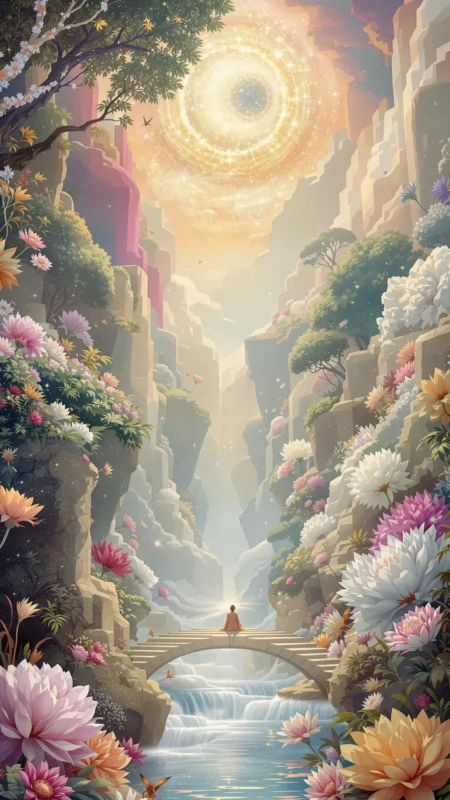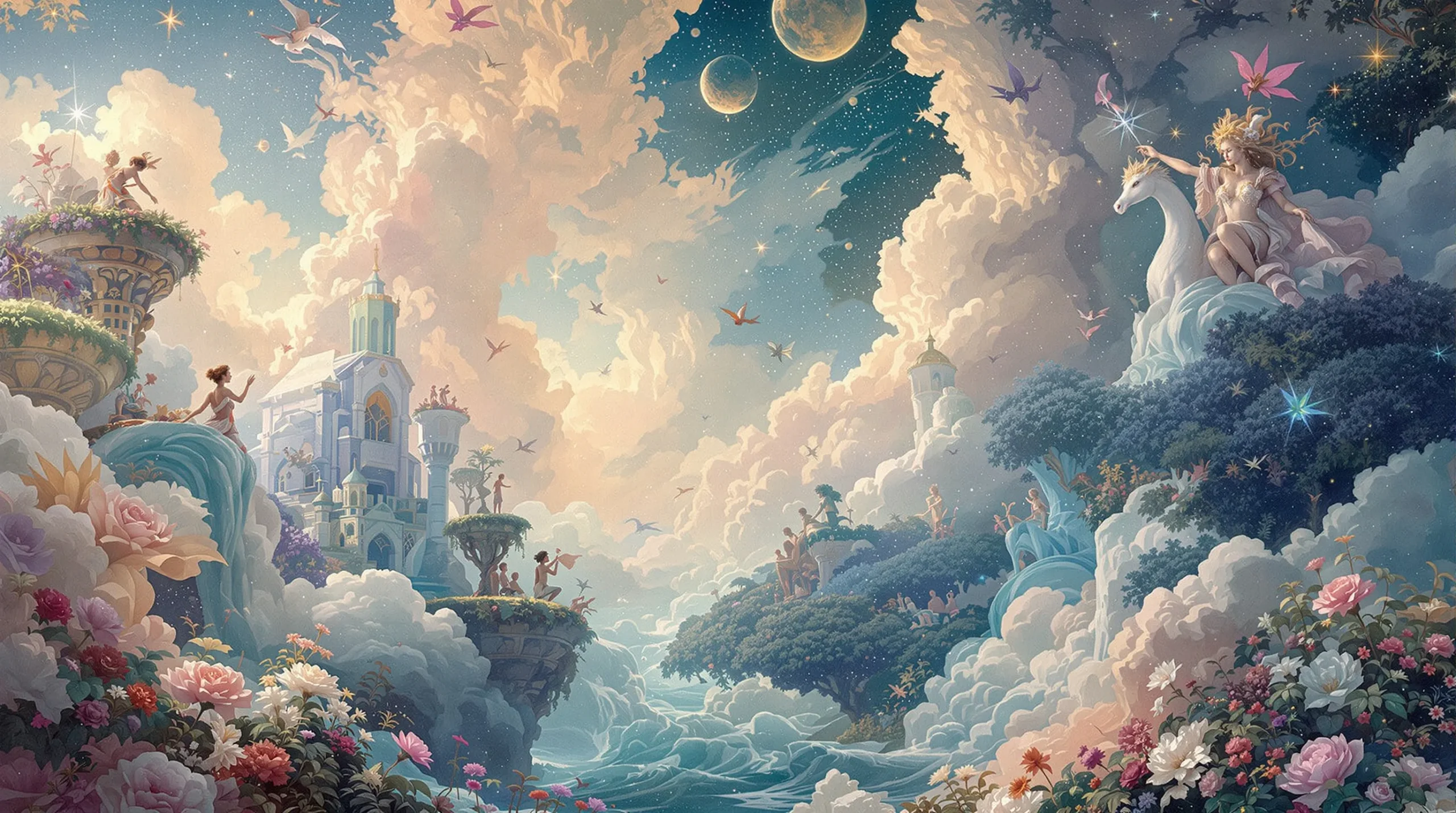


Paradise

Archetype Meaning & Symbolism

Sanctuary, Utopia, Innocence, Abundance, Stasis, Serenity, Isolation, Idealism, Fragility, Unattainable

  • Rest here. The world outside can wait for what you will become.

If Paradise is part of your personal mythology, you may...

Believe

  • You may believe that a state of perfect, enduring peace is not only possible but is the ultimate purpose of a well-lived life.

    You may believe that innocence is a form of wisdom, and that protecting it in oneself and others is a sacred duty.

    You may believe that the external world is a flawed reflection of a more perfect, ideal reality that can be accessed through imagination, art, or spirit.

Fear

  • You may fear chaos and complexity, dreading any situation that is messy, unpredictable, or morally ambiguous.

    You may fear being contaminated or corrupted by the world, a deep anxiety about losing your core innocence or purity.

    You may harbor a secret fear that Paradise is an illusion, and that your lifelong quest for it will ultimately lead to disappointment.

Strength

  • You possess a powerful and vivid imagination, allowing you to envision better possibilities and inspire others with your ideals.

    You have a talent for creating spaces of genuine peace, beauty, and sanctuary, offering respite to yourself and those you care for.

    Your deep well of optimism and hope serves as a resilient force, enabling you to persevere in the face of cynicism and hardship.

Weakness

  • You may exhibit a profound naivete, an unwillingness to engage with difficult realities that threaten your idealized worldview.

    You may have a tendency toward avoidance and isolation, retreating into your inner world rather than confronting external conflicts.

    You may be prone to crippling perfectionism and deep disappointment when people and life inevitably fail to meet your sublime expectations.

The Symbolism & Meaning of Paradise

In the personal mythology of a modern life, Paradise is rarely a physical destination one books a ticket to. It is, perhaps, an internal state, a carefully cultivated inner landscape that serves as both refuge and aspiration. It is the quiet Sunday morning of the soul, a place of psychic order where the dissonant chords of daily life resolve into harmony. This inner Eden may be a memory of a childhood summer, distilled and perfected by time, or a vision of a future self, free from the anxieties that currently besiege you. It symbolizes a baseline of peace, a personal standard of serenity against which the chaos of the world is measured.

Paradise also functions as a powerful telos: an ultimate aim or purpose. The myth of your life may be structured as a journey toward this perfected state. This could manifest as the relentless pursuit of a dream home, the building of a self-sustaining farm, or the crafting of a career that feels like effortless play. The danger and the beauty of this is its unattainability. The map to Paradise is always being redrawn, because the moment you arrive, the horizon of your desire simply moves further away. It is the pursuit, not the arrival, that shapes the contours of your personal legend.

Furthermore, the archetype carries the poignant symbolism of innocence, both lost and protected. To have a strong connection to Paradise might mean you feel a profound nostalgia for a simpler time, a pre-lapsarian state before you knew certain hard truths about the world or yourself. Your story might be one of guarding that remaining innocence, creating pockets of safety and wonder for yourself and others in a world you perceive as fallen. It is the act of tending a single, perfect rose in a garden overrun with weeds, believing in the power of that one bloom to redeem the entire plot.


Paradise Relationships With Other Archetypes

The Wanderer

The Wanderer and Paradise exist in a state of magnetic tension. Paradise is the destination the Wanderer dreams of on cold nights, the shimmering oasis on the horizon that gives meaning to the hardship of the journey. Yet, the static perfection of Paradise may be, in its way, a kind of prison for the Wanderer, whose identity is forged by movement and the unknown. Upon arriving, the Wanderer might find the endless serenity suffocating. Paradise represents the end of the story, while the Wanderer's very essence is the story itself. Thus, Paradise is the goal the Wanderer both seeks and must ultimately leave behind.

The Serpent

The Serpent is the catalyst that makes Paradise a story rather than a static image. It introduces knowledge, complexity, and choice into a world of blissful unity. In a personal mythos, the Serpent archetype may represent a disruptive truth, a transformative relationship, or a necessary crisis that forces you out of a comfortable but stagnant situation. While it may feel like a violation, the Serpent's arrival is what allows for growth, consciousness, and the beginning of a new chapter. Without the Serpent, the inhabitant of Paradise remains a child; with it, they are forced to become a protagonist.

The Caretaker

The Caretaker is the guardian of Paradise, the one who tends its gardens and maintains its pristine order. This is a role of profound stewardship, a commitment to preserving beauty and peace. However, the shadow of the Caretaker can emerge as a Warden. Fearing contamination or change, the Warden may build the walls of Paradise too high, turning a sanctuary into a gilded cage. They might stifle creativity or reject new people and ideas, all in the name of protecting the ideal. The relationship shows that the act of preserving a perfect state can sometimes be the very thing that causes it to stagnate and die.

Using Paradise in Every Day Life

Navigating Burnout

When the external world becomes a relentless cacophony of demands, the Paradise archetype offers a mental landscape for strategic retreat. You may consciously build this inner world: a sunlit library with silent, turning pages, a coastline where the waves erase all thought. This is not mere escapism; it is a pilgrimage to the source of your resilience, a place to mend the spirit before re-engaging with the necessary battles of your life, returning not empty, but replenished.

Creative Visualization

For the artist, the entrepreneur, the visionary, Paradise serves as the uncorrupted source code for a new project. Before the compromises of budget and physics, before the critic’s voice enters the room, there is the perfect, luminous version of the thing you wish to create. By spending time in this ideal realm, you anchor your vision in its purest form, creating a powerful north star to guide you through the messy, imperfect process of bringing it into reality.

Defining Core Values

When facing a significant life choice, you might ask: what does Paradise look like on the other side of this decision? This act of imagination clarifies what you truly seek. Is it a paradise of quiet solitude or one of communal harmony? Of boundless adventure or deep-rooted stability? The features of your imagined Eden reveal your deepest values, offering a map not to a physical place, but to a state of being you are trying to manifest in your own life.

Paradise is Known For

The Garden of Eden

This is the foundational myth of Paradise in the West: a state of primordial innocence, effortless abundance, and direct communion with the divine, lost through the acquisition of knowledge. It represents a past perfection we can never reclaim but always remember.

Shangri-La:

A mythical, hidden valley of eternal youth and profound peace, isolated from the corrupting influence of the outside world. Shangri-La is the dream of a utopia preserved through secrecy and separation, a perfect society that exists parallel to our own flawed one.

The Elysian Fields:

In Greek mythology, Elysium was the final resting place for the souls of the heroic and the virtuous. It was a vision of the afterlife not as a spiritual abstraction, but as a perfect landscape: meadows, sunlight, and the eternal pursuit of art and leisure. It represents reward and perpetual contentment.

How Paradise Might Affect Your Personal Mythology

How Paradise Might Affect Your Mythos

When Paradise is a central feature of your personal mythos, your life story may be framed as a narrative of exile and return. There might be a 'Golden Age' in your past: a time of perceived innocence, security, and wholeness, perhaps in childhood or a specific relationship, which was irrevocably 'lost.' The rest of your story then becomes a quest, conscious or not, to reclaim or recreate the conditions of that lost Eden. Every major decision, from career choice to partner selection, could be filtered through the question: 'Will this bring me closer to that feeling of home?' This creates a poignant, often heroic narrative arc, but one that is perpetually haunted by a sense of something missing.

Alternatively, your mythos might not look to the past, but to the future. Paradise is not a memory but a prophecy, a 'Promised Land' you are destined to build. Your life story becomes one of a visionary, an architect of utopia, whether that utopia is a thriving business, a harmonious family, or a social movement. You are the protagonist leading yourself and perhaps others out of the wilderness of the mundane and into a better world of your own design. This mythos is charged with purpose and a powerful creative impulse, compelling you to transform the raw material of your reality into something that reflects your inner ideal.

How Paradise Might Affect Your Sense of Self

Your sense of self may be deeply intertwined with a feeling of inherent purity or goodness, a core identity that feels 'untouched' by the harshness of the world. You might see your true self as this serene, wise inhabitant of your inner garden, while viewing your anxiety, anger, or ambition as foreign invaders. This can create a strong moral compass and a resilient inner core of peace. However, it may also lead to a fractured self-concept, where you disown the 'messier' parts of your personality, viewing them as shameful contaminants rather than integral aspects of your whole humanity.

Conversely, a self-concept shaped by this archetype could be one of perpetual exile. You may feel that you don't quite belong in this gritty, imperfect world. There could be a persistent, low-grade sense of alienation, a feeling of being a visitor from a gentler, more beautiful realm. This can foster profound empathy and a unique artistic perspective, as you see the world with the fresh, critical eyes of an outsider. Yet, it can also lead to a paralyzing sense of loneliness and a difficulty in feeling truly at home and at ease in your own skin, as you are always comparing your flawed reality to an imagined perfection.

How Paradise Might Affect Your Beliefs About The World

A worldview informed by the Paradise archetype may be one of high idealism. You could possess an unwavering belief in the potential for a better world, for humanity to transcend its baser instincts and create societies of peace and cooperation. This fuels a powerful optimism and a drive toward social reform, environmentalism, or any cause that aims to mend a broken world. You see the world not just as it is, but as it could be, holding a luminous blueprint of a more perfect version in your mind. This vision can inspire great works and profound hope in others.

The shadow of this perspective, however, is a potential for deep cynicism and withdrawal. When the world consistently fails to live up to the sublime standards of your inner Paradise, the result can be a crushing disillusionment. You may conclude that the world is irredeemably fallen and that the only sane response is to retreat. This could manifest as building a literal or metaphorical fortress around your life, curating your information, relationships, and environment to keep the ugliness of the world at bay. It is the worldview of the hermit in the pristine garden, who finds peace by refusing to look over the wall.

How Paradise Might Affect Your Relationships

In relationships, you may be driven by a desire to co-create a shared paradise with a partner. The relationship itself becomes a sacred, enclosed garden, a sanctuary for two against the outside world. This can lead to incredibly deep, intimate, and harmonious bonds, where both partners are dedicated to nurturing a space of mutual support, beauty, and peace. You might idealize your partner and the relationship, seeing it as a perfect union that completes your sense of self and brings you into a state of wholeness.

This idealization, however, is fragile. You may have little tolerance for the inevitable conflicts, compromises, and imperfections of a real human relationship. When your partner reveals a flaw or a messy emotion that doesn't fit the utopian blueprint, it can feel like a betrayal, a crack in the walls of Eden. This may lead to a pattern of placing impossible expectations on partners, followed by profound disappointment when they, being human, fail to meet them. There can be a tendency to flee at the first sign of trouble, perpetually searching for the 'perfect' partner who can inhabit your flawless inner world without disruption.

How Paradise Might Affect Your Role in Life

Your perceived role in life might be that of the Placid Creator or the Guardian of Beauty. You feel a calling to bring more harmony, peace, and aesthetic pleasure into the world. This could manifest in a career as an artist, a designer, a gardener, a chef, or a healer. Your purpose is not to disrupt or conquer, but to cultivate. You see your role as tending to the soul of the world, creating small pockets of sanctuary—a beautiful meal, a peaceful room, a soothing piece of music—that offer others a momentary taste of Paradise. Your work is an act of gentle service, a quiet rebellion against the chaos.

Alternatively, you might adopt the role of the Visionary Idealist. You are not content to merely create small oases; you feel a responsibility to guide society toward a larger utopia. Your role is that of the prophet, the reformer, the community builder who holds a clear vision of a better future and works tirelessly to manifest it. You are the one who drafts the plans for the new city, who writes the manifesto for the intentional community, who inspires others to believe that a more perfect world is not just a dream, but a destination. This role carries the weight of great hope but also the burden of potential failure.

Dream Interpretation of Paradise

To dream of Paradise in a positive context—walking through a luminous garden, arriving at a peaceful shore, feeling a sense of profound belonging in a perfect place—often signifies a state of psychological integration and wholeness. It may suggest that you are in alignment with your truest self, that you have found a source of inner nourishment, or that you are entering a period of rest, healing, and creative fertility after a time of struggle. The dream is an affirmation from your unconscious: you have found, or are close to finding, your center. It is a symbol of self-acceptance and profound inner peace.

A negative dream involving Paradise, however, can be deeply unsettling. Dreaming of being locked out of a beautiful garden, watching Paradise crumble into dust, or finding a snake or a blight within it, may point to a number of anxieties. It could symbolize a fear of losing your innocence, a feeling of being disconnected from your creative source, or a sense of being 'cast out' from a state of happiness due to a perceived personal failing. It might also represent the disillusionment that comes when an idealized person or situation has been revealed as flawed. The dream highlights a painful gap between your ideal and your reality.

How Paradise Archetype Might Affect Your Needs

How Paradise Might Affect Your Physiological Needs

From a mythological perspective, the body itself may be viewed as the primary garden to be tended, the most immediate landscape of Paradise. This could manifest as a deep-seated need for physiological purity and harmony. You may be drawn to clean eating, detoxification rituals, and organic foods not merely for health, but as a way of keeping the 'soil' of the body free from the 'pollutants' of the industrial world. The goal is to make the internal, physical environment mirror the pristine quality of the archetypal ideal.

This drive can also translate into a heightened sensitivity to one's physical surroundings. You may feel a physiological need for environments that are aesthetically pleasing, orderly, and calm. Clutter, harsh lighting, or loud noises might feel like a genuine assault on your nervous system, a violation of your inner sanctuary. Consequently, you may invest significant energy in curating your home and workspace to be tranquil and beautiful, recognizing that your physical well-being is directly tied to the harmony of the space you inhabit.

How Paradise Might Affect Your Ideas of Belonging

The need for belongingness is often fulfilled through the creation or discovery of a small, exclusive tribe that shares your utopian vision. You may not seek to belong to the world at large, which you may perceive as too flawed, but rather to a select group of kindred spirits who 'get it.' True belonging is found in a shared aesthetic, a common set of ideals, and a mutual commitment to creating a pocket of perfection together. This can lead to incredibly loyal, deep, and supportive friendships and communities.

However, this can also foster a kind of relational elitism. You might hold potential friends or partners to an impossibly high standard of ideological or emotional purity. The fear of 'letting the wrong person in' can lead to suspicion and a reluctance to be vulnerable with those outside the inner circle. Belonging is conditional on maintaining the harmony of the group, which can sometimes stifle dissent, individuality, and the messy but necessary process of growth that comes from engaging with difference.

How Paradise Might Affect Your Feelings of Safety

Safety, for you, may be defined less by physical security and more by psychological and emotional insulation. True safety is the feeling of being within the serene, walled garden of your inner world, protected from the chaotic, unpredictable nature of external reality. This could lead to the creation of highly structured routines, predictable schedules, and carefully managed environments. Safety is found in the absence of surprise, the elimination of dissonance, and the maintenance of a steady, calm emotional state.

This need for a protected space can extend to your information diet. You may actively avoid distressing news, violent media, and contentious online debates. This is not necessarily an act of ignorance, but a deliberate act of self-preservation, a guarding of the gates of your mental Paradise. The primary threat to your safety is not a physical intruder, but a psychological one: an idea, an image, or a conflict that could disrupt your carefully cultivated inner peace. Safety is the power to curate your own reality.

How Paradise Might Affect Your Views of Esteem

Your self-esteem may be deeply connected to your ability to maintain a state of purity and innocence. You feel good about yourself when your life is orderly, your conscience is clear, and your actions are aligned with your highest ideals. Esteem is derived from being 'good,' from successfully keeping the complexities and compromises of the world at bay. This can manifest as a strong moral character and a life of integrity, as your self-worth depends on living up to your own pristine self-image.

This foundation for esteem can be precarious. A single mistake, a moral compromise, or an outburst of a 'negative' emotion can trigger a catastrophic crisis of self-worth. If your esteem is built on the idea of being untouched, then any mark or stain can feel like a fundamental corruption of your identity. You may engage in harsh self-judgment for normal human failings, perpetually feeling that you have 'fallen' from a state of grace and must constantly work to purify yourself to regain your own respect.

Shadow of Paradise

The shadow of Paradise is stagnation disguised as peace. It is the lotus-eater's island, a place so comfortable and pleasant that all motivation to grow, strive, or change withers and dies. In this shadow state, the pursuit of serenity becomes a radical avoidance of any life-giving challenge. Relationships are kept superficial to avoid conflict, career ambitions are abandoned to avoid stress, and difficult self-knowledge is ignored to preserve a placid self-image. The garden, untroubled by new seeds or seasons, becomes a sterile, unchanging terrarium, and the soul within it slowly suffocates from a lack of movement and meaning.

Another shadow emerges when the guardian of Paradise becomes a tyrant. In the obsessive quest to maintain purity and order, you might impose rigid, unforgiving standards on yourself and others. This can create a culture of judgment and exclusion, where anyone who exhibits messy humanity is deemed a contaminant and cast out. The open, life-giving sanctuary becomes a walled, oppressive cult of perfection. This is the gated community of the spirit, a place that maintains its beauty not through cultivation, but through a ruthless weeding out of anything—and anyone—deemed imperfect.

Pros & Cons of Paradise in Your Mythology

Pros

  • It provides a constant source of inspiration and hope, a guiding vision that fuels creativity and the motivation to improve oneself and the world.

    It encourages the cultivation of inner peace and resilience, offering a psychological sanctuary that can be accessed during times of stress and turmoil.

    It fosters an appreciation for beauty, harmony, and simplicity, leading to a life rich in aesthetic pleasure and meaningful tranquility.

Cons

  • It can foster a dangerous detachment from reality, leading to poor decision-making based on wishful thinking rather than facts.

    It may result in a judgmental and intolerant attitude toward the normal imperfections of life, humanity, and oneself.

    The perpetual gap between the ideal and the real can create chronic dissatisfaction, a feeling that life is never quite good enough.