 Believe
 Fear
Fear Strength
 Weakness
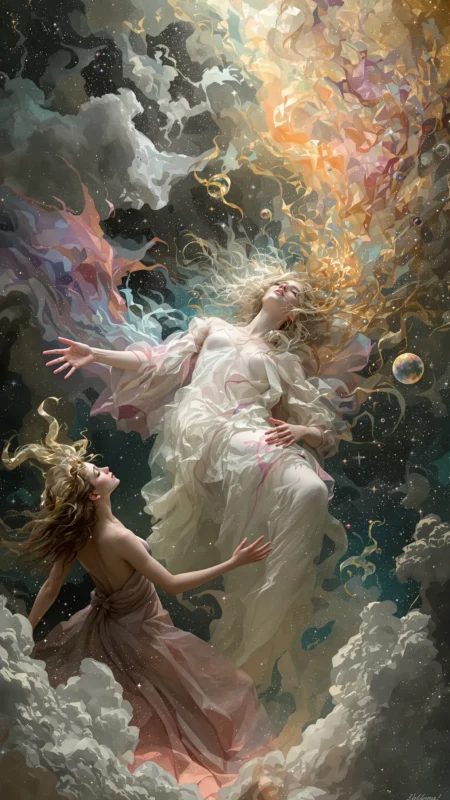
In the personal mythos, Limbo is the necessary void, the silent, fallow field before creation. It is the airport terminal at 3 a.m., a non-place between an origin and a destination where the normal rules of time seem suspended. It is the breath held before the plunge. Our culture, obsessed with relentless progress and clear narratives, often pathologizes this state, viewing it as stagnation or failure. Yet, Limbo could be a sacred, albeit uncomfortable, phase of incubation. It is where the old self is shed not in a blaze of glory but in a quiet, gradual dissolution, like a photograph fading in the sun, making space for something new to constellate out of the haze.
To have the Limbo archetype active in your mythology is to be intimately familiar with the question mark as a state of being. Your story may not be a straight line but a series of ellipses, of moments where the protagonist simply waits, watches, and becomes. This archetype challenges the hero's journey, suggesting that sometimes the most heroic act is to do nothing at all: to simply endure the ambiguity. It is a pilgrimage into the heart of uncertainty, a confrontation with the self when all external definitions have been stripped away. It teaches that identity is not a static object to be found, but a fluid process to be witnessed.
Ultimately, Limbo symbolizes the terrifying, liberating truth of pure potentiality. It's the blank page before the first word, the uncarved block of marble. This state forces a reckoning with freedom, which can feel more like a burden than a gift. The meaning derived from this place is not one of achievement, but of resilience. It is the quiet wisdom gained by learning to exist in the space between notes, recognizing that the silence itself is an integral part of the music. It is the discovery that you are not the path, nor the destination, but the space in which the path appears.