 Believe
 Fear
Fear Strength
 Weakness
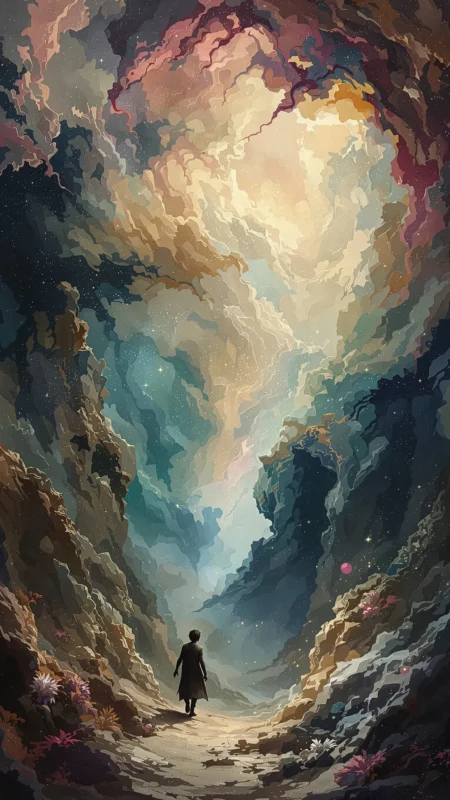
In the contemporary mythos, the Underworld has largely shed its cloak of fire and brimstone, revealing itself as a metaphor for the vast, fertile, and often intimidating landscape of the unconscious. It is the inner geography where we are all sole sovereigns: a realm of echoing caverns that hold our deepest fears, riverbeds carved by the flow of old griefs, and sleeping gardens where our greatest potentials lie dormant. To have the Underworld as a central feature of your personal landscape suggests a life oriented not toward the sunlit peaks of constant achievement, but toward the resonant depths of meaning. It is an acknowledgment that what is buried—the family secret, the abandoned dream, the disowned part of the self—still exerts a gravitational pull on the surface of everyday life.
The symbolism is not one of punishment, but of profound potential. It is the darkroom where the negatives of our experience are developed into meaningful images. The journey there is often involuntary, triggered by loss, failure, or a sudden crisis that cracks the surface of a well-managed life. Yet, for one whose mythos includes this realm, such descents are not aberrations. They are rites of passage. The treasures found in this place are not gold and jewels, but self-knowledge, compassion born of seeing one's own monstrosities, and a creativity that draws from the rich, composted soil of all that has been lived and forgotten.
Ultimately, the Underworld archetype signifies a relationship with mystery. It is the understanding that some questions do not have simple answers, that some wounds do not fully heal but become sources of wisdom, and that life's most potent magic happens in the dark. It is a commitment to wholeness over perfection, recognizing that the lotus flower of consciousness is nourished by the mud and muck of the unseen depths. It is less a place to be feared and more a territory to be respectfully navigated, a source of gravity and substance in a world that can often feel weightlessly superficial.