

Crypt

Archetype Meaning & Symbolism

Hidden, deep, ancestral, secret, final, protective, silent, enduring, foundational, forgotten

  • What is buried is not lost, only gestating.

If Crypt is part of your personal mythology, you may...

Believe

  • What is most true is what is hidden from view.

    The past is never dead; it is the foundation upon which the present is built.

    Silence holds more meaning than noise.

Fear

  • Desecration: having one's inner, sacred space violated or misunderstood.

    Exposure: being fully seen and having one's deepest secrets brought into the light against one's will.

    Collapse: the terror that one's foundations are unstable and the entire structure of the self will crumble.

Strength

  • Profound self-knowledge and a rich, complex inner life that provides a deep well of resources.

    The ability to hold space for the heaviest truths and be a deeply trustworthy keeper of confidences.

    A natural connection to history, lineage, and the cycles of life and death, granting a long-term perspective.

Weakness

  • A tendency towards isolation, emotional unavailability, and sealing oneself off from connection.

    A powerful resistance to change, feeling uncomfortably anchored to the past and its patterns.

    A potential for brooding, melancholy, or becoming trapped in the unresolved stories of family history.

The Symbolism & Meaning of Crypt

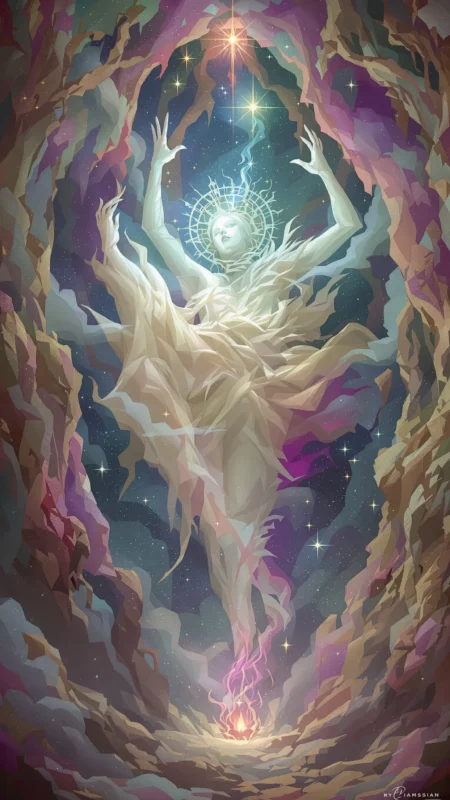
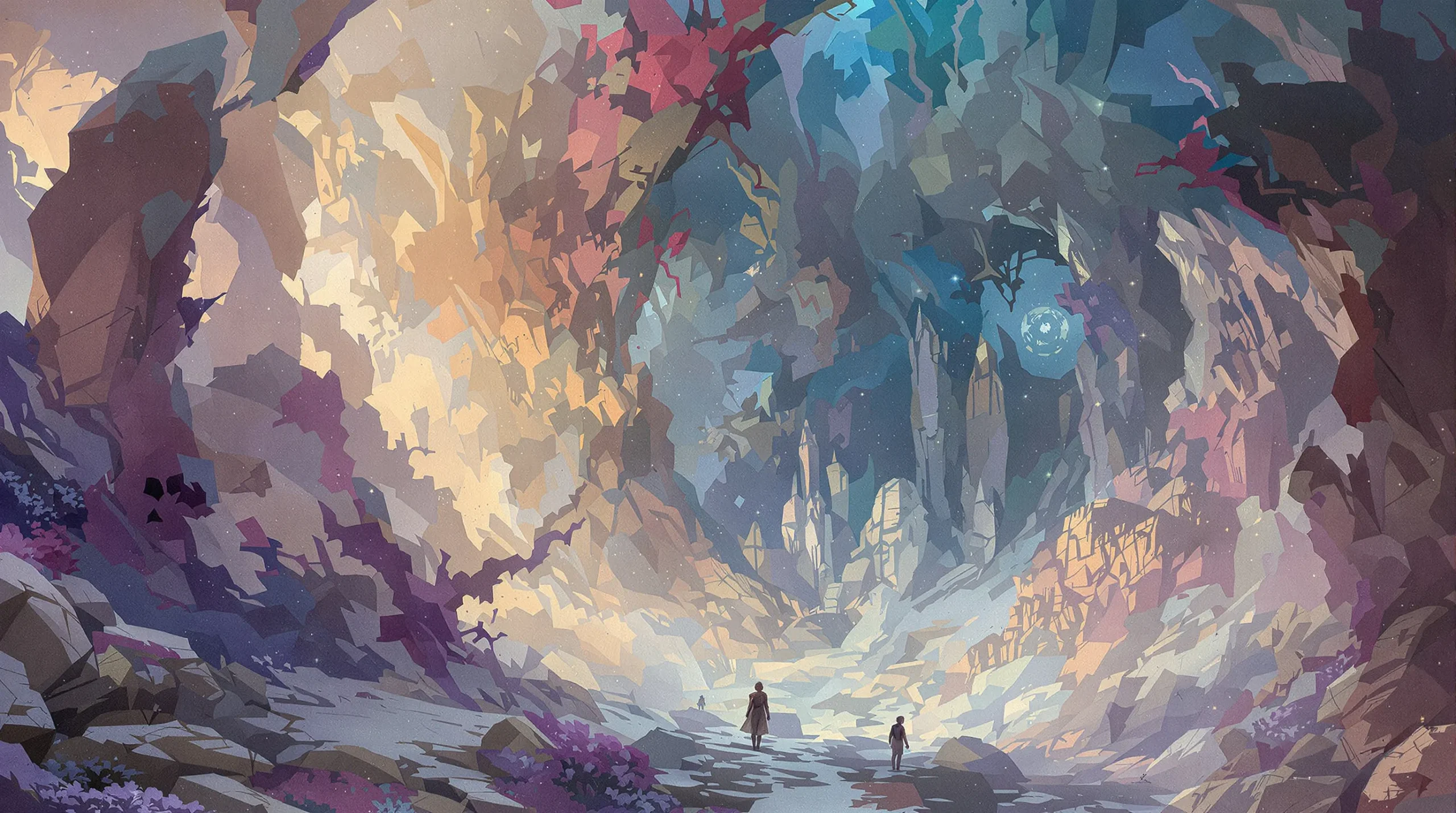
In personal mythology, the Crypt is the architecture of your subconscious. It is the vast, subterranean structure beneath the small house of your conscious mind. Its chambers may hold the bones of past selves, the sealed-away griefs, the forgotten childhood wisdom. To have the Crypt as a central feature of your mythos is to acknowledge that the most significant parts of you are not immediately visible. Your identity is a matter of excavation. You may feel that your thoughts and actions are echoes from these deep chambers, that your foundational beliefs were carved into the stone walls long before you learned to read them.

The Crypt is not merely a tomb for the past; it is a womb for the future. It symbolizes the profound potential of the dark, the quiet, and the fallow. It is the soil where seeds must be buried to germinate, the cocoon where transformation occurs unseen. A person with this archetype may understand instinctively that periods of withdrawal, silence, and inactivity are not failures but necessary gestations. They trust the processes that happen below the surface, believing that what is truly powerful and new must first be hidden and protected, gathering its strength in secret before it is ready to emerge into the light.

This archetype also speaks directly to lineage and inheritance. You may perceive yourself as the current custodian of a family crypt, entrusted with its legacies and its secrets. This inheritance can be a source of immense strength: a foundation of ancestral wisdom, resilience, and identity. Or, it could be a source of burden: the 'skeletons in the closet,' the unhealed generational traumas that haunt the structure of the present. Your life's work might involve either reinforcing these foundations or undertaking the difficult, delicate work of bringing a long-buried poison to the surface to finally be cleansed.


Crypt Relationships With Other Archetypes

The Gardener:

The Gardener works in the sun, tending to what is visible, encouraging blooms and harvesting fruit. The Crypt, in contrast, governs the deep earth, the unseen world of roots, dormant seeds, and the slow, sacred decay that creates fertile soil. The Gardener’s vibrant, temporal world is entirely dependent on the Crypt’s silent, enduring one. In a personal mythos, this relationship might represent the interplay between conscious effort (the Gardener) and subconscious processing (the Crypt). You can tend your garden all you want, but if the soil of your psyche is poor or holds buried toxins, nothing will truly flourish.

The Key:

The Crypt is defined by its seal, its separation from the everyday world. The Key is the catalyst, the specific insight or event that grants access. The Key archetype doesn’t create the contents of the Crypt, but it determines their relevance. A forgotten memory, a stranger's poignant remark, a line in a book: these can be Keys that suddenly unlock a door to a vast inner chamber you never knew existed. This relationship suggests that self-knowledge is not just a brute-force excavation but a matter of finding the right 'fit' to open what has been locked away, revealing the treasures or terrors within.

The Ghost:

The Ghost is that which cannot rest in the Crypt. It is the unintegrated trauma, the unmourned loss, the secret that refuses to stay buried. While the Crypt represents the proper and peaceful containment of the past, the Ghost is a symptom of a dysfunctional Crypt. Its haunting of the surface world is a sign that something was interred improperly or that a truth is demanding to be acknowledged. A person with a strong Crypt archetype may be tasked with understanding the Ghosts in their life, recognizing them not as malevolent forces but as messengers from a part of their inner landscape that requires healing and a proper, final resting place.

Using Crypt in Every Day Life

Processing Grief

When confronted with a significant loss, the Crypt archetype offers a mental space for sacred burial. Instead of attempting to 'get over it' or immediately process the pain in the open, you may choose to consciously place the memory and its associated emotions into your inner crypt. This is not an act of forgetting, but of preservation. Here, in the quiet dark, the grief can be honored and integrated over time, its sharp edges softening into a foundational part of your story, to be visited and understood rather than constantly carried in the daylight world.

Exploring Ancestry

If you feel a disconnect from your family history or are seeking to understand inherited patterns, you can approach your lineage as a crypt to be explored. This means looking beyond the simple family tree and seeking the buried stories, the unspoken rules, the emotional legacies. It is a form of personal archaeology where you become the one who deciphers the carvings on the walls, honors the bones of past struggles, and brings a lantern into the forgotten chambers of your own heritage to understand how they shape the rooms you live in today.

Creative Incubation

For a nascent idea or a vulnerable creative project, the world's feedback can be premature and destructive. The Crypt archetype allows you to seal the project away from prying eyes. You give it time to develop in the subconscious dark, feeding it your quiet attention without demanding it perform. This protected gestation period allows the work to form its own strong bones, to become itself, so that when you finally choose to open the doors, it emerges fully formed and resilient, not a fragile thing easily swayed by external opinion.

Crypt is Known For

Preservation

The Crypt is a vessel for time itself. It holds not just remains, but the essence of what was: sacred relics, family histories, profound secrets. It is a deliberate act against entropy, a refusal to let the valuable be erased by the relentless march of moments.

Secrecy

It is the ultimate container for the unspoken. Whether safeguarding a culture's foundational myths or an individual's most private trauma, the Crypt's power lies in its silence. Its walls do not talk; they absorb, holding truth in a state of suspended animation until the right key, or the right moment, arrives.

Threshold

While it represents an end, the Crypt is also fundamentally a place of transition. It is the boundary between the known world and the great mystery, the physical and the ancestral, life and the next state of being. To enter it is to cross a threshold into a deeper layer of reality.

How Crypt Might Affect Your Personal Mythology

How Crypt Might Affect Your Mythos

When the Crypt is central to your mythos, your life story ceases to be a linear journey forward and becomes an archaeological expedition downward. Your personal narrative is not about conquering new lands but about exploring the territory you already stand upon. Major life events may be framed as 'discoveries,' the unearthing of a hidden chamber in your own psyche or the deciphering of an inscription left by an ancestor. Your quest is for foundation, for the source code of your being. The plot of your life may revolve around understanding why the floorboards of your consciousness creak in a certain way, a sound whose origin lies stories deep beneath the surface.

Your mythos might also be that of a custodian or a legatee. You are not the first chapter of your story but perhaps the final living chapter of a much older book. This colors your choices with a sense of historical weight and consequence. You may see your purpose as honoring the 'good bones' of your inheritance or, conversely, as being the one to finally reckon with the 'ghosts in the cellar.' Your narrative arc is not about self-creation from nothing, but about a complex dialogue with what has come before, making you a bridge between the buried past and the unborn future.

How Crypt Might Affect Your Sense of Self

Your sense of self may be profoundly layered and private. You might perceive your personality as a kind of surface structure, a gatehouse perhaps, while your true self resides in the catacombs below. This can lead to a rich and complex interior life that you feel no one fully sees. You may not feel the need to be immediately understood, finding a kind of integrity and safety in your own hidden depths. Self-awareness, for you, is not a sudden flash of insight but a slow, candle-lit descent, becoming familiar with the echoes and shadows that reside within.

This can also mean you view yourself as fundamentally ancient, as if you carry the weight and wisdom of ages within your very being. You might feel a kinship with old things, with ruins and records, seeing a reflection of your own soul in them. The self is not a fleeting, contemporary phenomenon but a timeless entity built upon the bedrock of what came before. This may lead to a feeling of being an 'old soul,' someone whose identity is inextricably linked to the stories and secrets held in the bones of their lineage.

How Crypt Might Affect Your Beliefs About The World

You may perceive the world as a place of surfaces, beneath which lie the real mechanisms of power, history, and meaning. You might be naturally skeptical of headlines, official narratives, and superficial trends, always sensing the vast, hidden structure that truly governs events. For you, a society's character is not found in its bustling marketplaces but in its cemeteries, its archives, its forgotten ruins, and its unspoken taboos. Reality is palimpsestic: the present is thinly written over the deep, often invisible, text of the past.

This worldview could cultivate a profound sense of patience and a long-term perspective. You may not be easily swayed by the urgencies of the moment, understanding that most current events are but fleeting weather patterns on the surface of a deep and ancient ocean. There could be a belief that true change is not rapid or revolutionary, but slow and foundational, happening at a geological pace. You might see the most potent forces in the world not as the loudest, but as the most silent and deeply buried.

How Crypt Might Affect Your Relationships

In relationships, you may crave a depth that transcends casual conversation. Intimacy, for you, is not about shared activities but about the granting of access. To truly let someone in is to give them a key to your inner crypt, to trust them in the quiet, vulnerable chambers of your self. You may be an exceptional keeper of other people's secrets because you understand the sanctity of what is hidden. The ideal bond is one where two people can sit together in the silent dark of their shared understanding, without needing to fill the space with noise.

Conversely, this deep-seated need for privacy can create formidable walls. You might hold back essential parts of yourself, not out of malice, but from a profound, instinctual need to protect your core. Others may feel that they can only get so close before they meet a sealed stone door. This can lead to a lonely existence, even when surrounded by people, as the most essential part of you remains in solitary confinement. Learning to build a door, and to trust someone with the key, can be a central challenge of your relational life.

How Crypt Might Affect Your Role in Life

You might feel your role in the world is that of a keeper or a guardian of what is sacred and hidden. This could manifest professionally as an archivist, historian, therapist, or researcher, but more often it is a personal role you assume within your family or community. You are the one who remembers, the one who holds the context, the one who can be trusted with the difficult truth. You feel a deep, quiet responsibility to preserve the past, not as a static monument, but as a living foundation for the future.

Alternatively, your role may be that of the excavator. You may feel compelled to bring secrets to light, to uncover what has been deliberately buried. This is the role of the investigative journalist, the family truth-teller, the social critic who exposes the rot in the foundations of an institution. This path is often fraught with conflict, as the process of excavation can be destabilizing to the structures—and people—who rely on those secrets remaining buried. Your purpose is not to destroy, but to reveal the truth so that a more honest structure can be built.

Dream Interpretation of Crypt

When the Crypt appears in your dreams in a positive light, it may signal a deep connection with your own foundations and ancestral knowledge. Dreaming of a well-ordered, peaceful, or even beautiful crypt could suggest you are successfully integrating past experiences and subconscious material. You might discover a treasure or a wise ancestor within its walls, symbolizing access to a deep, inner resource you were previously unaware of. This dream can be an affirmation that your inner world is a place of strength and sanctuary, a solid base from which you can confidently navigate the surface world.

A negative dream involving a crypt often points to repressed fears or unresolved trauma. Dreaming that you are trapped in a crypt, that its walls are collapsing, or that it is flooded or contains something monstrous, may indicate a fear of being overwhelmed by the past. It can symbolize a toxic family legacy that feels inescapable or a secret that is threatening the stability of your psyche. Such a dream is a call to pay attention to your foundations, suggesting that something buried requires your conscious acknowledgment before it breaks through and causes collapse.

How Crypt Archetype Might Affect Your Needs

How Crypt Might Affect Your Physiological Needs

From the perspective of your personal mythos, your physiological needs may be interpreted through a lens of deep, foundational security. Your body itself is a crypt of genetic memory, a physical inheritance from countless ancestors. This could manifest as a need for profound rest and stillness, not just to recover from daily exertion, but to allow the deep, slow processes of the body to occur undisturbed. You may feel that sleep is a sacred descent into the body's wisdom, a time when the conscious mind steps aside to let the ancient, cellular knowledge do its work. External chaos might feel like a direct physiological threat, as it disrupts the tomb-like peace your nervous system craves.

There may be a tendency to store, rather than express, physiological responses to stress. Like unspoken words absorbed by stone walls, tension might be held deep in your bones, fascia, and core muscles. This can lead to a feeling of physical density or heaviness, as if you are carrying the weight of history in your tissues. The need for physical safety might translate into a need for enclosure and predictable sensory input: quiet rooms, heavy blankets, and an environment that feels sealed off from the jarring unpredictability of the outside world. Your body doesn't just want shelter; it wants a sanctuary.

How Crypt Might Affect Your Ideas of Belonging

Your sense of belonging may be forged in silence and shared depth, not in chatter and common interests. You likely feel most connected to others when a mutual trust allows for the sharing of the 'crypts' of your inner worlds. This kind of intimacy is rare and sacred. You might find your truest family not in blood relatives, but in a small circle of friends who understand the language of what is not said, who can sit with you in your darkness without needing to turn on a light. Belonging is the quiet recognition of a shared foundation, the feeling of being with someone who knows the layout of your subterranean passages.

This very need for depth can, paradoxically, foster a profound sense of isolation. The surface-level interactions that constitute most social life may feel alienating and hollow. You may feel like an ancient ruin in a modern city, an object of curiosity perhaps, but not something people know how to truly connect with. This can lead to a feeling that you are fundamentally unknowable, that the price of admission to your inner world is too high for most. The loneliness of the Crypt is not the absence of people, but the absence of anyone willing or able to make the descent.

How Crypt Might Affect Your Feelings of Safety

Your need for safety is likely synonymous with the need for inviolable privacy. A secure environment is one that cannot be easily penetrated, physically or emotionally. You may find true peace only in spaces where you feel completely unobserved, where the metaphorical doors are sealed against the intrusions of the world. This can lead to the creation of personal sanctuaries—a study, a workshop, a corner of a room—that function as personal crypts, places where your vulnerable self can exist without armor. Safety is not about the absence of threat, but the presence of impenetrable boundaries.

This deep need for security can also manifest as a pervasive fear of exposure. The thought of your private journals being read, your search history being seen, or your deepest feelings being laid bare for public consumption could feel like a profound violation, a desecration of your inner sanctum. Consequently, you may invest significant energy in managing your privacy, building complex emotional fortifications, and carefully vetting anyone you allow into your inner circle. The ultimate threat is not physical harm, but the soul-level vulnerability that comes with being fully seen before you are ready.

How Crypt Might Affect Your Views of Esteem

Self-esteem, when the Crypt is your ally, is derived from your inner substance and resilience. Your worth is not measured by external achievements or the applause of others, but by the quiet, internal knowledge of your own solid foundations. You may take a private pride in your ability to withstand storms, to hold difficult truths, and to be a keeper of sacred trusts. Your self-worth is like old, masterfully-laid stone: it does not glitter, but it is unshakable and endures. It comes from knowing that, beneath the shifting soils of daily life, you are anchored to something deep and timeless.

However, your esteem may become fragile if it depends on keeping parts of your history or yourself perfectly hidden. If your foundations contain a 'shameful' secret, your self-worth could feel constantly under threat of excavation. Any probing question or intimate advance might feel like a spade striking stone, triggering a fear of collapse. You might also struggle with feelings of irrelevance or stagnation, believing that your deep-rooted nature makes you too slow, too heavy, and too melancholic for the bright, fast-paced world, leading to a quiet sense of inadequacy.

Shadow of Crypt

In its shadow form, the Crypt ceases to be a sacred space of preservation and becomes a prison. The individual becomes entombed by their own history, perpetually haunted by past failures, traumas, or ancestral burdens they refuse to release. Life is lived as a memorial to what has been lost, rather than as a living process. Here, secrets are not kept for protection but are hoarded as a source of stagnant power or shame. This shadow turns the individual into a ghost in their own life, their vitality sealed away in a past they can neither escape nor integrate, leaving them emotionally cold, rigid, and disconnected from the vibrant, sunlit world.

The opposite shadow expression is a terrified rejection of depth altogether. Fearing the silence, finality, and secrets the Crypt represents, a person might live a life of frantic, noisy superficiality. They may overshare compulsively, equate privacy with deception, and avoid introspection at all costs. Their inner world is a barren, un-tilled plot of land because they are terrified of what they might find if they ever dared to dig. This creates a fragile, ungrounded existence, constantly seeking external validation and distraction to avoid the terrifying, echo-less silence of their own neglected depths.

Pros & Cons of Crypt in Your Mythology

Pros

  • You possess a rare depth and an appreciation for the complex, layered nature of life, which allows you to find meaning where others see only surfaces.

    You are a trustworthy keeper of secrets and a source of quiet, unshakable strength for others, making you a valued confidant and friend.

    You have potential access to a deep well of ancestral wisdom and personal history that can provide profound guidance and a solid sense of identity.

Cons

  • You may be perceived by others as secretive, distant, morose, or unapproachable, making it difficult to form new connections.

    You can become stuck in the past, finding it difficult to move on from loss, adapt to new circumstances, or break free from inherited patterns.

    Your rich inner world can sometimes feel profoundly isolating, creating a gulf between yourself and others that feels impossible to bridge.