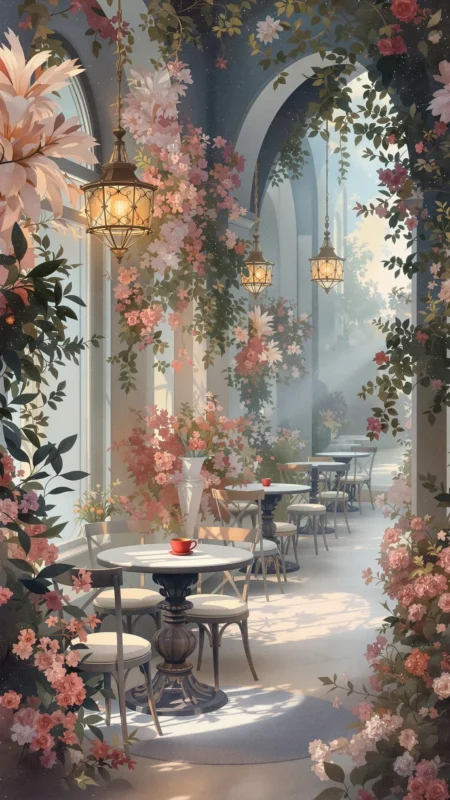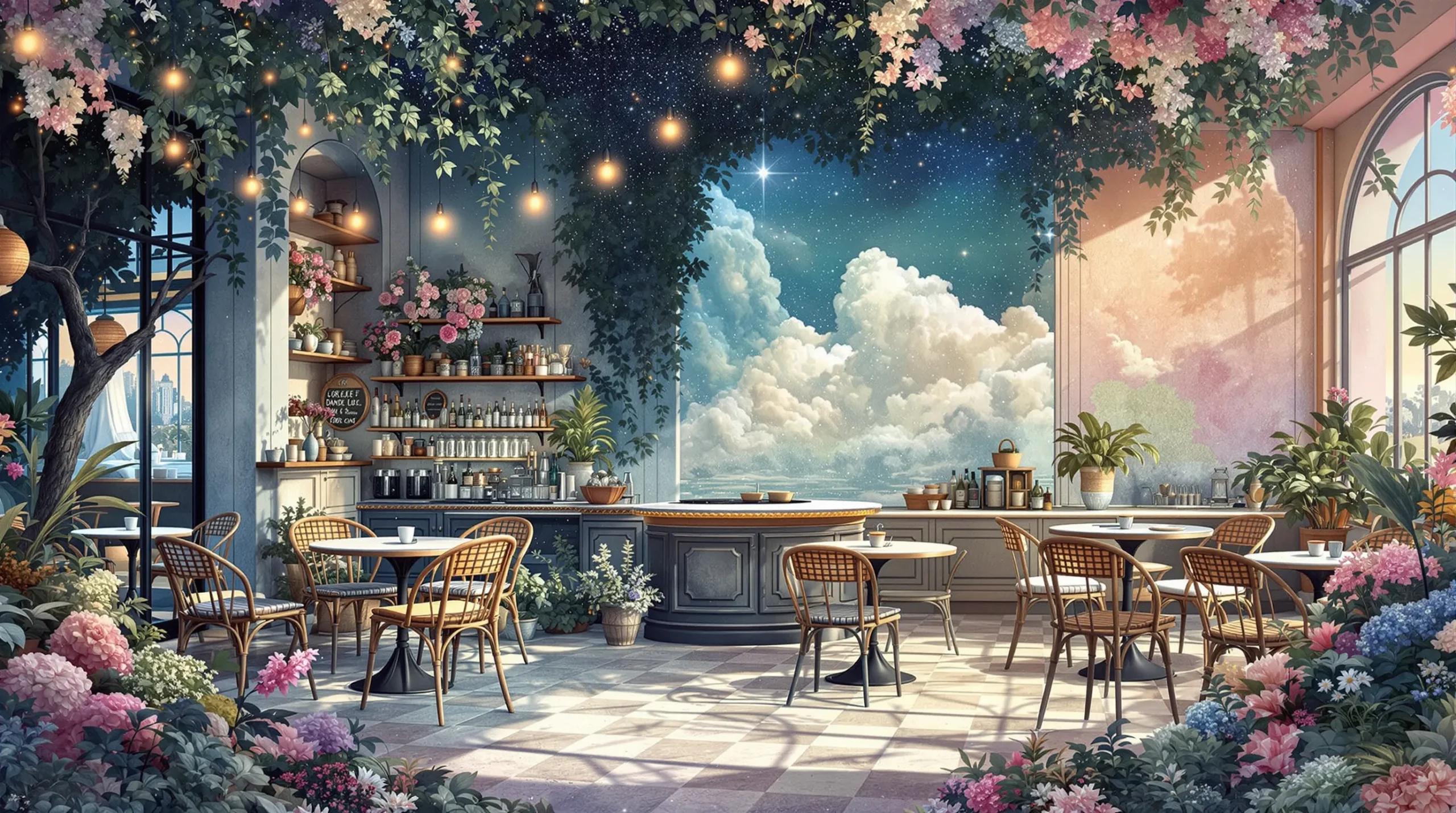


Café

Archetype Meaning & Symbolism

Transitional, intellectual, social, solitary, aromatic, stimulating, cozy, anonymous, liminal, reflective

  • Sit. The world will wait. Your story, however, is brewing now.

If Café is part of your personal mythology, you may...

Believe

  • The best ideas are born in the space between solitude and society.

  • A change of scenery can change the mind, and a warm cup can warm the soul.

  • True community can exist in shared silence and the simple recognition of being a regular.

Fear

  • The erosion of public 'third places,' leaving only the binary of home and work.

  • Being trapped in environments that demand constant performance or superficial interaction.

  • That the quiet, contemplative life will be completely swallowed by a culture of noise and distraction.

Strength

  • An ability to find comfort and inspiration in transitional, public spaces.

  • A profound talent for deep observation, listening, and synthesizing information from the world around you.

  • A strong capacity for self-reliance and the ability to be comfortably, productively alone.

Weakness

  • A tendency to observe life rather than fully participating in it, becoming a spectator in your own story.

  • An over-reliance on a specific external environment to feel calm, focused, or creative.

  • A potential for intellectual aloofness or using the café's anonymity to avoid genuine social risk.

The Symbolism & Meaning of Café

In personal mythology, the Café may symbolize the threshold, the liminal space where one chapter of a life bleeds into the next. It is rarely the destination, but almost always the place where the journey is contemplated, planned, or unexpectedly rerouted. It is the waiting room of destiny. One goes to a café to leave a job, to begin a love affair, to write the first sentence of a novel, or to simply let the mind wander until it stumbles upon a new truth. The very air seems thick with potential, each table a small stage for minor epiphanies and quiet transformations. Its presence in your mythos could suggest a life narrative defined not by grand, dramatic acts, but by a series of significant pauses, reflective moments that alter everything that comes after.

The archetype also carries the meaning of alchemy. It is a place where a simple, bitter bean is transformed through fire and water into a complex, aromatic elixir that awakens the mind. This process perhaps mirrors our own internal alchemy. We may enter the Café feeling raw, unfocused, or dispirited: a collection of rough materials. Through the ritual of ordering, sitting, and sipping, through the engagement with a book or a friend or our own thoughts, we could emerge slightly transformed, more alert, with a clearer perspective. The Café is a vessel for this gentle, everyday magic, a reminder that profound change can begin with a small, warm thing held in our hands.

Furthermore, the Café could stand for the beauty of the anonymous collective. It is a temple to the quiet dignity of the individual within the crowd. Here, one can practice the art of seeing without being the center of attention. It symbolizes a connection to humanity that is observational rather than performative. You are part of the scenery, a character in dozens of other people’s stories for a brief moment, just as they are in yours. This fosters a sense of interconnectedness that is light and unburdened, a belief that community can be a quiet, shared experience, not just a loud declaration of belonging.


Café Relationships With Other Archetypes

The Writer

The Café is the Writer's indispensable partner, a muse in liquid form. For The Writer archetype, the Café is not merely a location but a necessary condition for creation. It provides the perfect blend of monastic solitude and worldly distraction. The background noise becomes a kind of white noise that sharpens focus, while the parade of human life passing by the window offers an endless stream of character sketches and snippets of dialogue. The relationship is symbiotic: the Writer gives the Café its intellectual mystique, and the Café gives the Writer the psychic space and caffeinated fuel to fill the blank page.

The Crossroads

The Café might be seen as a modern, domesticated version of The Crossroads. Where The Crossroads is a stark, often rural, place of fateful, sometimes perilous, decisions, the Café is its urban, contemplative cousin. It is a place one goes to deliberately meet a choice. The paths diverging are not dusty roads, but career options, relationship statuses, or internal belief systems. The deal made is not with a devil, but with oneself, a pact to follow through on a new direction. The relationship is one of refinement: the Café takes the raw, mythic power of The Crossroads and contains it within a civilized, accessible ritual.

The Library

If The Library is a silent tomb of established knowledge, the Café is the noisy workshop where new ideas are being forged. They are intellectual cousins with vastly different temperaments. The Library demands reverence for the past, for the words already written. The Café, by contrast, invites debate, discussion, and the messy, collaborative process of thinking out loud. One goes to the Library to consume knowledge quietly; one goes to the Café to generate it, often noisily. The Café archetype offers a relationship to ideas that is active and alive, a dialogue rather than a monologue.

Using Café in Every Day Life

Navigating a Creative Block

When the story stalls or the canvas remains blank, you might use the Café. The change of venue itself is a ritual, a small pilgrimage from the stuckness of the familiar. Here, amidst the gentle chaos of clinking porcelain and whispered conversations, the pressure to create may dissolve. The ambient energy of others working, talking, and living provides a low hum of inspiration, a current to carry your own thoughts forward without the crushing silence of an empty room. The archetype offers a space that is neither home nor office, a neutral territory where new perspectives can percolate.

Mending a Difficult Relationship

To have a conversation that feels too heavy for the living room, you could invoke the Café. It provides a public, yet private, stage. The presence of others enforces a certain civility, a check on raised voices and raw emotion. It's a neutral ground, unburdened by the history that haunts a shared home. In this space, you are two patrons, two individuals meeting to talk, which can strip the conflict of its domestic power. The simple act of ordering a coffee can be a pause, a moment to breathe before speaking the hard truth, making the archetype a vessel for careful, deliberate connection.

Contemplating a Life Transition

Faced with a major decision: a career change, a move to a new city, the end of an era: the Café can serve as your personal oracle's chamber. With a notebook and a warm cup, you can become an anonymous observer of life's flow while mapping out your own. The archetype allows you to step outside your life for an hour or two, to see its architecture from a distance. The comings and goings of strangers are a reminder that all is in flux, that stories are constantly beginning and ending. This perspective might grant the clarity and courage needed to choose a new path.

Café is Known For

The Third Place

Beyond the primary realms of home (first place) and work (second place), the Café archetype represents the essential third place. It is a vital anchor of community life that fosters broader, more creative interaction. It's the neutral ground where people can gather, socialize, and simply be, untethered from the obligations of their other roles.

Intellectual Hub

Historically and mythologically, the Café is a crucible for ideas. It's the fabled meeting ground for revolutionaries, poets, and philosophers. This aspect of the archetype speaks to its power as a catalyst for intellectual synergy, where conversations over coffee can spark movements, birth manifestos, and shape the cultural landscape.

Ambient Solitude

The Café is known for offering a unique state of being: alone, together. It provides a space where one can be solitary without being isolated. The background hum of activity, the murmur of conversations, the clatter of cups: this all creates a comforting social fabric that allows for focused work, deep thought, or quiet contemplation, free from the starkness of true seclusion.

How Café Might Affect Your Personal Mythology

How Café Might Affect Your Mythos

When the Café becomes a central feature in one's personal mythos, the life story itself may take on an episodic, contemplative quality. The narrative is less a linear, heroic quest and more a collection of vignettes, each centered around a different table, a different conversation, a different moment of quiet realization. The major turning points in this mythos might not be battles won or mountains climbed, but the afternoon a chance encounter in a coffee shop changed a career path, or the morning a difficult truth was finally spoken over an espresso. This shapes a mythos that values process over destination, and recognizes that the most profound journeys are often internal, undertaken while sitting perfectly still.

This archetypal influence could also craft a mythos of the observer, the flâneur of their own life. The protagonist’s role is not always to act, but to watch, to listen, and to synthesize. Their wisdom is gathered from the periphery. Their story is rich with the details of overheard conversations, the emotional weather of strangers, and the subtle shifts in their own perspective as the world unfolds around them. The personal legend, in this case, is not about changing the world, but about understanding it with profound depth and clarity from the vantage point of a corner booth, making the narrative one of quiet, accumulated wisdom.

How Café Might Affect Your Sense of Self

A person deeply connected to the Café archetype may view themselves as being in a state of perpetual, gentle becoming. Their identity is not a fixed monument but a fluid process, constantly being shaped and reshaped by new thoughts, books, and conversations. They could find comfort in this lack of a hard-and-fast self, seeing their personality as a text that is always open for revision. This perspective fosters intellectual humility and curiosity, as the self is not something to be defended, but something to be explored, ideally with a good cup of coffee in hand.

This archetype might also cultivate a self-concept rooted in intellectual independence. The ability to be content and productive while alone in a public space is a quiet superpower. It may foster a sense of self-reliance, a knowledge that one's own company is not just tolerable, but enriching. The self is perceived as a sovereign entity, capable of generating its own ideas and finding its own comfort, using the social environment as a resource rather than a requirement for validation.

How Café Might Affect Your Beliefs About The World

If the Café is your landscape, you might view the world not as a series of grand, opposing forces, but as a vast, interconnected web of conversations. Progress, to you, may not look like a revolution in the streets but a gradual shift in the tenor of public discourse, a change that begins in small hubs of thought and spreads outward. This worldview prioritizes dialogue, serendipity, and the power of shared spaces to foster understanding. It is an optimistic, yet realistic, perspective that sees humanity's best potential brewing in the places where people can simply sit and talk.

This archetype could also inform a worldview that deeply values the 'in-between'. It champions the importance of slowness, of pauses, of the moments that are not dedicated to productive labor or domestic duty. The world is seen as a place that requires these pockets of respite to function humanely. Life is not just the dramatic events, but the quiet interstitial times where we process those events. This is a worldview that resists the cult of frantic productivity and instead elevates reflection as a worthy and necessary human activity.

How Café Might Affect Your Relationships

In relationships, an individual influenced by the Café archetype may prioritize intellectual and conversational intimacy above all else. The measure of a strong connection could be the quality of the dialogue, the ability to sit together for hours, talking or in comfortable silence. They might see relationships as ongoing conversations, things that need to be nurtured in neutral spaces where both parties can be their most authentic, thoughtful selves. The 'coffee date' is not a cliché, but the ideal format: a low-stakes, high-potential arena for genuine connection.

This person may also have a deep appreciation for relationships that respect autonomy. The Café is a place you can go with someone, yet still be in your own world. This model could translate to partnerships where individual space and solitude are not seen as threats, but as essential components of a healthy bond. They may believe the best relationships are those where two people can share a table, each engrossed in their own book or work, and feel nothing but comfort and solidarity in their shared, separate existence.

How Café Might Affect Your Role in Life

Your perceived role in life, under the influence of the Café, might be that of the Connector or the Facilitator. You may not feel the need to be the sage on the stage, but rather the guide on the side who brings the right people together or creates the environment where brilliant ideas can emerge. Your contribution is holding the space, asking the right questions, and knowing that the most powerful movements often begin with a simple invitation: 'Let's get a coffee and talk about it.' Your power is subtle, ambient, and enabling.

Alternatively, you may see your role as the quiet Observer or the Chronicler. You are the one who watches, listens, and understands the subtle currents of human interaction. Your purpose is not to direct the play, but to record it, to make sense of it, either for yourself or for others. This could manifest as a writer, an artist, a sociologist, or simply the person in any group who provides the most insightful perspective because they have been paying the closest attention.

Dream Interpretation of Café

In a positive context, dreaming of a warm, bustling, and inviting café could symbolize a readiness for new ideas, social connection, and gentle progress in your waking life. The aroma of coffee might represent inspiration and mental awakening. Seeing friends or friendly strangers could indicate a sense of belonging and community support. Such a dream may be your psyche's way of telling you that you are in, or should seek out, a supportive environment where your thoughts and plans can be safely nurtured. It is an affirmation of a fertile period for intellectual and social growth.

Conversely, a dream featuring a cold, dark, empty, or unpleasantly chaotic café could suggest feelings of alienation, creative block, or social anxiety. An empty café might symbolize a profound loneliness or a lack of inspiring ideas. A chaotic, noisy one could reflect feeling overwhelmed by social pressures or scattered thoughts. Being unable to get served or finding a dirty table might point to frustrations and obstacles in your path to finding clarity or connection. The dream could be a warning that your 'third place' is psychically unavailable, and you need to address what is causing this inner sense of isolation or stagnation.

How Café Archetype Might Affect Your Needs

How Café Might Affect Your Physiological Needs

From a mythological perspective, the Café archetype may tie your physiological needs directly to your mental and spiritual state. The need for warmth is not just about body temperature; it is a need for the warmth of ideas and human presence. The craving for coffee or tea is not merely a chemical dependency on caffeine; it is a ritualistic summoning of alertness and clarity, a physical act to trigger a desired mental state. Your body may learn to associate the smell of roasted beans with the feeling of safety and the promise of productivity, making the scent itself a physiological comfort.

Sustenance within this archetype is also symbolic. The choice of a pastry, the bitterness of an espresso, the comfort of a latte: these are not just calories, they are sacraments in the daily ritual of being. A simple croissant could represent a small, affordable luxury, a moment of self-care that nourishes the soul as much as the body. This archetype suggests that for you, the act of consumption is deeply intertwined with the act of contemplation, and that to be physically sated in this space is to create the foundation for mental and emotional nourishment.

How Café Might Affect Your Ideas of Belonging

The need for belongingness, seen through the Café archetype, may be satisfied not by intense tribal affiliation, but by the gentle, low-stakes bond of being a 'regular.' To belong is to be recognized with a subtle nod, to have your presence acknowledged without it demanding anything of you. It's a form of community that respects boundaries and cherishes quiet solidarity. Love and connection are expressed through the ritual of meeting, of setting aside time to share a space and a conversation. It's a belonging that is chosen, day after day, cup by cup.

This archetype could suggest that you find love and intimacy in shared intellectual spaces. A deep connection is forged when you can sit with another person and feel the comfortable flow of ideas, or the equally comfortable silence of shared concentration. The café itself becomes a third party in the relationship, a benevolent host that facilitates the connection. This perspective defines belonging as a meeting of minds and spirits, a shared appreciation for the quiet moments that make up a life, rather than grand declarations or public displays.

How Café Might Affect Your Feelings of Safety

For one whose mythos includes the Café, a sense of safety may be found in the principle of 'public privacy.' True security is not behind a locked door in an empty house, but in a corner booth, shielded by the anonymous presence of others. The gentle hum of the environment acts as a protective force field, a buffer against both external threats and internal anxieties. This feeling of safety is rooted in being an unobserved observer, visible but not vulnerable, part of a collective but not obligated to perform. The greatest threat, then, is not intrusion, but stark isolation.

This need for safety might also manifest as a reliance on routine and familiarity within these spaces. Safety is the barista who knows your order, the specific table that gets the morning light, the predictable rhythm of the place. This repetition creates a stable container for the often-unstable work of thinking, feeling, and creating. It's a controlled environment that minimizes surprises, allowing the mind to feel secure enough to wander into new and potentially challenging intellectual territory. The physical safety of the space provides the foundation for psychological and creative risk-taking.

How Café Might Affect Your Views of Esteem

Esteem, for a person aligned with the Café archetype, may be deeply connected to the quality of their inner world. Self-worth is not necessarily derived from external achievements, promotions, or public accolades, but from the internal satisfaction of a well-articulated thought, a difficult passage of writing completed, or a complex idea finally grasped. The café provides the arena for this quiet work. Esteem is built in the solitary hours spent wrestling with a concept or perfecting a craft, with the finished product being less important than the integrity of the process itself.

Furthermore, self-esteem might be found in the role of the thoughtful confidant or the insightful conversationalist. It is the feeling of being the person others seek out when they need to talk through something important. The esteem comes from being a good listener, from asking the questions that lead to clarity for someone else. In this way, worth is measured by one's ability to hold space for others, to facilitate their epiphanies, and to be a trusted partner in the collaborative act of making sense of the world, one conversation at a time.

Shadow of Café

The shadow of the Café archetype emerges when observation curdles into voyeurism and contemplation becomes a gilded cage of inaction. In its shadow form, the café is not a launchpad but a hiding place, a permanent address for a life that is perpetually 'about to begin.' Here, the individual becomes a professional spectator, endlessly journaling about the novel they will never write or the business they will never start. The comforting anonymity it offers becomes a shield to avoid the messy, unpredictable, and sometimes painful business of full participation in life. The archetype's gift of detachment sours into a deep and lonely alienation, masked by the superficial presence of others.

Another shadow aspect is intellectual snobbery. The café patron becomes a judge, silently critiquing the conversations, fashions, and choices of those around them. Their quiet corner becomes a throne of superiority. This shadow fosters a sense of being separate from and better than the 'ordinary' people who populate the world. The stimulating environment, meant to inspire connection and creativity, instead becomes a fuel for ego and a justification for disengagement. It is the performance of a thoughtful life, rather than the living of one, where the aesthetic of the thinker is more important than the actual thinking.

Pros & Cons of Café in Your Mythology

Pros

  • Provides a reliable sanctuary for focused thought, creative work, and meaningful social connection.

  • Fosters a life rich with observation, reflection, and intellectual curiosity.

  • Encourages relationships built on the strong foundation of genuine conversation and shared ideas.

Cons

  • Can lead to a passive or overly detached stance on life, where watching is preferred to doing.

  • May create a psychological dependency on a specific type of environment for productivity and emotional regulation.

  • Risks romanticizing loneliness and fostering a form of social avoidance disguised as intellectualism.