 Believe
 Fear
Fear Strength
 Weakness
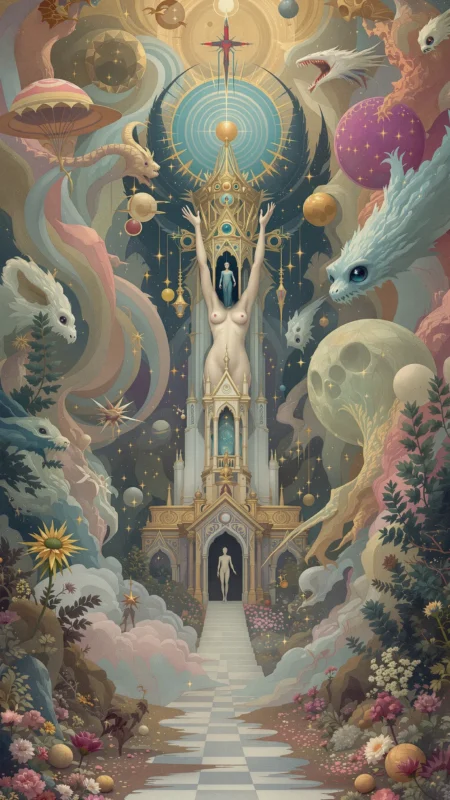
In personal mythology, the Asylum is the sacred geography of the interior world made manifest. It is the quiet room at the center of the labyrinthine self, the walled garden where the rarest, most fragile ideas can bloom away from the trampling feet of public opinion. It may represent a necessary chapter in one's life story: a period of intentional withdrawal for the purpose of healing, creation, or profound self-inquiry. This is not the Void’s empty space, but a structured, architectural quiet. It has walls, routines, perhaps a window with a single, curated view. The symbolism here is one of deliberate containment, the understanding that for something new to grow, it first needs a vessel to protect it.
The modern meaning of the Asylum archetype has evolved beyond its clinical, often grim, history. It is now perhaps the silent rebellion against a culture of relentless connectivity and performative extroversion. To have the Asylum in your mythos is to value the unseen work: the mending of a psyche, the slow gestation of a masterpiece, the quiet recalibration of a life’s trajectory. It symbolizes the belief that the most important journeys are often not across landscapes, but through the corridors of one's own mind. It’s the personal library where you are the sole librarian, the observatory where you are the only astronomer charting your inner constellations.
However, the Asylum is eternally haunted by its shadow: the specter of madness and imprisonment. Its symbolism carries a crucial warning. A sanctuary, if inhabited for too long, becomes a prison. The peace it offers can curdle into stagnation. It asks a vital question of your personal myth: are you building a retreat, or are you building a cage? The difference may lie in the door. In a healthy Asylum, you hold the key, and the door can be opened from the inside. In its shadow form, the key is lost, or perhaps it was never yours to begin with.