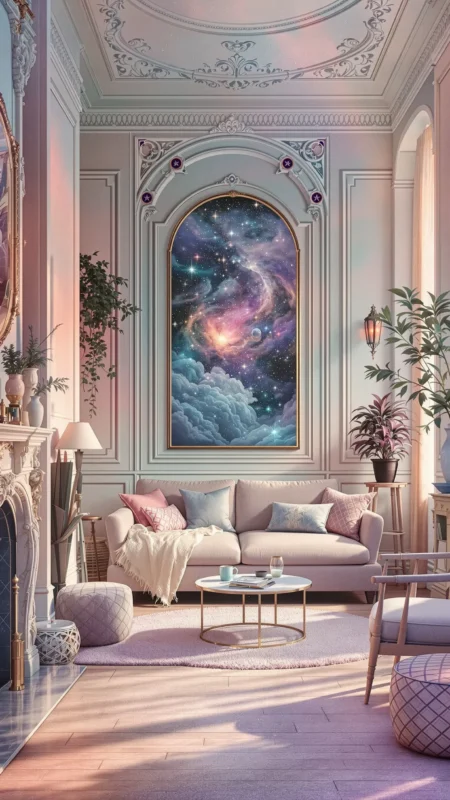


Apartment

Archetype Meaning & Symbolism

Contained, layered, proximate, transitional, anonymous, curated, partitioned, temporary, aspirational, resonant

  • The world is just a series of rooms. Find yours, furnish it with what you love, and listen to the stories bleeding through the walls.

If Apartment is part of your personal mythology, you may...

Believe

  • You can tell everything you need to know about a person by seeing their living space.

    True freedom is having a door you can close and lock against the world.

    Personal growth can be measured in square footage.

Fear

  • Eviction: the sudden, forced expulsion from the sanctuary of the self.

    Infestation: the invasion of your curated private world by something chaotic, irrational, and unclean.

    The neighbor's noise: the terrifying realization that your boundaries are permeable and your private reality is never truly your own.

Strength

  • Adaptability: You have a powerful ability to create a sense of home and self within any given set of constraints, to bloom wherever you are planted, even if it's a fifth-floor walk-up.

    Boundary Setting: You are a master of psychic space, able to carve out a zone of privacy and peace for yourself even in the most crowded of environments.

    Curatorial Vision: You possess a strong aesthetic sense for life, skillfully selecting the people, experiences, and objects that best express your authentic self.

Weakness

  • Perpetual Transience: You may struggle to put down deep roots, always feeling as though you are just passing through, which can inhibit long-term connection to community and place.

    Conflation of Self and Space: You might over-identify with your surroundings, allowing your self-worth to rise and fall with the status of your address or the quality of your furniture.

    Fear of Entanglement: The comfort of your controlled, private space can become so seductive that you resist the beautiful, messy reality of deep, long-term relationships that require you to knock down a few walls.

The Symbolism & Meaning of Apartment

The Apartment, in the personal mythos, is a container for the self. It is a psychological construct as much as a physical one, a rented space in the larger structure of society. Its symbolism is tied to a modern form of identity: fluid, adaptable, and defined by carefully curated boundaries. Unlike The House, which speaks of roots and generations, The Apartment speaks of the present chapter. It may represent a period of profound becoming, where the individual, separated from their origins, must construct a world from scratch within a pre-fabricated shell. The very act of furnishing an apartment becomes a ritual of identity formation, each object a chosen artifact for the museum of the self.

Furthermore, the archetype carries the tension between the private and the public. The walls are thin. The lives of others are a constant, muffled soundtrack. This could symbolize the porous nature of our own consciousness, our inability to ever be truly separate from the collective. The shared hallways, the communal laundry room, the anonymous notes about noise: these are the liminal spaces where our private myths intersect. To live with this archetype is to be in constant, subtle negotiation with the other, to understand that your story is a single unit in a much larger, more complex building.

Its meaning is also found in its limitations. The floor plan is fixed, the views are predetermined, the rules are set by an unseen landlord. This may reflect a feeling of living within systems beyond one's control. And yet, the genius of the archetype lies in the freedom found within those constraints. It suggests that true creativity and selfhood are not born from infinite possibility, but from the artful way we inhabit the spaces we are given. The Apartment teaches that a universe can be built in a single room.


Apartment Relationships With Other Archetypes

The City

The Apartment is the mitochondria of The City. It is the smallest repeating unit of private life that powers the overwhelming public energy of the metropolis. The City offers the promise of anonymity, connection, and ambition, but it is The Apartment that offers the necessary refuge, the place where the actor can remove their mask. Their relationship is symbiotic and often fraught: The City's sirens bleed through the windows, while the collective loneliness of a thousand apartments fuels The City's restless, insomniac spirit. One's mythos may be a perpetual oscillation between these two poles: the expansive, shared narrative of the street and the intensely personal, contained story of the room.

The Key

The Key is the keeper of the threshold, the small metal talisman that separates the world of the self from the world of everyone else. Its relationship with The Apartment is one of sovereignty. To hold the key is to be the master of a small universe. To lose it is to be exiled from one's own identity, locked out of your own story. In a personal myth, the act of giving someone a key to your apartment is a profound ritual, symbolizing a merger of narratives and a granting of access to the most vulnerable parts of the self. It is the modern equivalent of a sacred vow, a tangible piece of trust.

The Neighbor

The Neighbor is the ghost in the machine of The Apartment archetype. They are the ever-present Other, known not by their face but by the sound of their footsteps, the smell of their cooking, the rhythm of their arguments. The Neighbor represents the lives that run parallel to our own, a constant reminder of the infinite stories unfolding just beyond our perception. They are the mirror we rarely look into, reflecting our own noise, our own habits, our own humanity. A relationship with The Neighbor archetype in one's mythos could signify an awareness of the interconnectedness of seemingly separate lives, and the ways in which we are all, silently, shaping each other's reality.

Using Apartment in Every Day Life

Defining Personal Boundaries

When your life feels overrun by the demands of others, embodying the Apartment archetype can be an act of reclamation. It is the practice of defining what is inside and what is outside. You might consciously curate your social interactions as you would furnish a room, deciding who gets a key to your time and emotional space, and who must buzz from the lobby. This is not about building fortresses but about understanding that a well-defined threshold is necessary for a peaceful interior.

Navigating Life Transitions

The mythos of the Apartment is one of chapters. If you find yourself between jobs, relationships, or identities, this archetype offers a map. Your current situation may be a 'studio phase': cramped, perhaps, and multifunctional, but a necessary step. The goal isn't to stay but to gather the resources and experiences needed for the next, more expansive space. It reframes uncertainty not as homelessness, but as the moment before signing a new lease on life.

Cultivating a Private Self

In a world that demands constant performance and public disclosure, the Apartment is a sanctuary for the un-posted, un-shared self. To use this archetype is to consciously cultivate an inner life that is yours alone. It could mean developing a hobby no one knows about, keeping a private journal, or simply cherishing the quiet, unobserved moments within your own space. It is the art of having a rich, detailed interior world that requires no external validation.

Apartment is Known For

Proximity and Anonymity

The Apartment is famous for the paradox of being surrounded by humanity while feeling utterly alone. It is the experience of hearing your neighbor's life through the wall—arguments, laughter, music—while never learning their name. This dynamic may symbolize the delicate balance between community and isolation in modern life.

The Curated Interior

It is known as a canvas for the self. Unlike a house, which often speaks of lineage and permanence, the apartment is a personal statement for the present moment. Its contents, from the books on the shelf to the art on the walls, are a carefully selected exhibition of one's identity, taste, and aspirations.

A State of Transience

Few people imagine they will die in their first apartment. It is a known vessel for a specific phase of life

the post-college years, the first foray into a new city, the temporary stop after a major life change. It is defined as much by its future absence as by its present reality, a symbol of becoming rather than being.

How Apartment Might Affect Your Personal Mythology

How Apartment Might Affect Your Mythos

When the Apartment archetype shapes your personal mythos, your life story may unfold as a series of distinct settings, each with its own cast and emotional color. The narrative is not a sweeping epic across a vast landscape, but a collection of one-act plays, each confined to a specific address. Milestones are not measured in years, but in leases signed and security deposits returned. There is the myth of the 'First Apartment,' a tale of newfound freedom and foolish mistakes, followed by the 'Heartbreak Apartment,' where every corner holds a memory. Your personal history might be mapped by floor plans, a cartography of past selves.

This archetype could also infuse your mythos with a theme of perpetual becoming. You are always in the process of setting up, and always subtly preparing to move on. This creates a narrative drive based on aspiration: the next apartment will be better, have more light, be in a better neighborhood, and will house a better version of you. The self is not a fixed entity but a work-in-progress, constantly being re-curated against a new backdrop. Your heroic journey might be the search not for a final home, but for the perfect temporary container for the person you hope to be next.

How Apartment Might Affect Your Sense of Self

Your view of self may be intrinsically linked to the concept of a container. You might perceive your personality and identity as something to be managed, organized, and decorated within a defined space. The self is not an infinite, sprawling wilderness but a curated gallery. This can lead to a powerful sense of self-possession and an artistic approach to life, where you are the sole curator of your own being. You choose what to display, what to store away, and what to discard. There is a comfort in these boundaries, a feeling that the self, while perhaps limited, is at least knowable and under your control.

Conversely, this archetype could foster a feeling that the true self is hidden, accessible only to a select few who are invited past the front door. Your public persona becomes the hallway, the lobby: functional and impersonal. The authentic you only emerges in the privacy of your own domain. This might create a sharp division between your inner and outer life, a potential source of both profound integrity and deep loneliness. You may struggle with vulnerability, seeing it as leaving the door unlocked, a risky invitation for the outside world to come in and rearrange the furniture of your soul.

How Apartment Might Affect Your Beliefs About The World

With the Apartment as a core archetype, you may view the world as a vast, interconnected building of individual realities. Society is not a melting pot but a high-rise, where millions of lives unfold in parallel, separated by the thinnest of walls. This perspective can foster a unique blend of empathy and detachment. You may feel a deep, abstract connection to the humanity humming all around you, while simultaneously maintaining a respectful distance. You understand that every window you pass holds a story as complex and vital as your own, which can be a source of both wonder and a certain urban melancholy.

This worldview could also be profoundly architectural. You might see problems, social structures, and even belief systems as things with floor plans, load-bearing walls, and cosmetic facades. You look for the structure beneath the surface, the hidden wiring, the foundational issues. Your approach to understanding the world may be to mentally diagram it, to see how the different 'rooms' of politics, culture, and economy connect, and to question who holds the master keys. Life is a matter of finding your place within the grand, and often bewildering, blueprint.

How Apartment Might Affect Your Relationships

Relationships may be understood through the spatial metaphors of The Apartment. Intimacy is the act of sharing space, of deciding which of your personal artifacts can coexist with another's. A new relationship might feel like decorating a room together, a process of negotiation and aesthetic compromise. You might gauge the seriousness of a connection by how much 'space' you are willing to give the other person, both literally and emotionally. The ultimate commitment is not a ring, perhaps, but the signing of a joint lease, a tangible binding of two private worlds into one shared unit.

This archetypal influence could also mean that you place a high value on personal space within relationships. You may believe that even the most intimate partners need their own 'room,' a psychic space that remains inviolably their own. Conflict, in this view, can often be a border dispute, a disagreement over where one person ends and the other begins. Friendships might be a network of beloved, familiar apartments you can visit, safe harbors in the city of life, each offering a different view and a different kind of comfort.

How Apartment Might Affect Your Role in Life

Your perceived role in life might be that of The Tenant: a temporary steward, not a permanent owner. This can instill a sense of humility and a focus on the present. You may not feel burdened by legacy or long-term possession, but are instead focused on inhabiting your current 'lease' on life as fully and beautifully as possible. This role encourages adaptability and a non-attachment that can be a form of spiritual grace. You know that all situations are temporary, and you become skilled at making the most of the space you are given, for as long as you are given it.

However, the role of The Tenant can also come with a shadow of restlessness and a feeling of being unmoored. You might feel like a perpetual guest in your own life, hesitant to invest too deeply in any one place, job, or community for fear of the inevitable move. Your role may feel passive, subject to the whims of a metaphorical 'landlord'—be it a boss, the economy, or fate itself. The challenge of this role is to find a sense of inner ownership and permanence that is not dependent on any external deed or address.

Dream Interpretation of Apartment

In a positive context, dreaming of an Apartment can symbolize your current psychological state and sense of self. A spacious, light-filled, beautifully furnished apartment may suggest a period of personal growth, self-acceptance, and inner harmony. You feel 'at home' in your own skin. Discovering a new, hidden room in your dream apartment is a classic symbol of uncovering a new talent, potential, or aspect of your personality. The dream might be affirming that you have successfully built a comfortable and authentic inner world for yourself, a sanctuary within the chaos of life.

In a negative light, an apartment dream can reflect feelings of confinement, limitation, or alienation. A cramped, cluttered, or decaying apartment could indicate that you feel trapped by your circumstances, your job, or your own outdated beliefs. It's a sign that your psychological 'living space' has become too small for you. Being locked out of your apartment might symbolize a disconnection from your true self or a fear of losing your identity. Dreaming of thin walls where you can hear everything next door may point to a lack of emotional boundaries or a feeling that your privacy is being invaded.

How Apartment Archetype Might Affect Your Needs

How Apartment Might Affect Your Physiological Needs

When The Apartment is part of your mythos, basic physiological needs may be perceived through a lens of infrastructure and negotiation. Warmth is not simply a state of being, but a commodity controlled by a radiator you must learn to tame. Air is not the open sky, but what flows through a window that also lets in the city's noise and grime. Sleep may be contingent on the habits of the person living above you. Your body's needs are met not in direct communion with nature, but through a series of systems: pipes, wires, and vents.

This can cultivate a heightened awareness of the body as a delicate ecosystem that requires a carefully managed environment. You might become a connoisseur of temperature, a master of blocking out light and sound, an artist of creating a personal biosphere. Your physical well-being feels directly tied to your ability to control your immediate surroundings. The body itself can begin to feel like the ultimate apartment, a structure you inhabit that requires constant, mindful maintenance against the pressures of the external world.

How Apartment Might Affect Your Ideas of Belonging

The need for belongingness, when filtered through the Apartment archetype, may be satisfied in unconventional ways. A sense of community might come not from a shared town square, but from the shared rhythm of a building: the collective groan when the elevator is broken, the unspoken solidarity of taking out the recycling on the same night. Belonging is the nod exchanged with a familiar face in the lobby. It is a tribe of strangers living in parallel, a community of respectful proximity rather than deep intimacy.

Love and connection may be symbolized by the merging of two carefully curated spaces. The act of giving someone a key is a profound gesture of belonging, an invitation into the inner sanctum. A relationship's success might be measured by the ability to create a shared home that honors both individuals' need for private space. Belonging is not about losing oneself in another, but about finding a way for two separate, complete worlds to coexist harmoniously within a shared set of walls.

How Apartment Might Affect Your Feelings of Safety

Safety, in the mythology of The Apartment, is a matter of thresholds and locks. It is the solid click of the deadbolt, the comforting distortion of a peephole, the impersonal voice of the intercom. This archetype may foster a worldview where security is not a given state but an active practice of boundary management. You might feel that safety is a fragile bubble you create, a carefully maintained perimeter between your private world and the unpredictable energies of the shared hallway and the street below. Trust is extended cautiously: to the superintendent with the master key, to the neighbor who collects your mail.

This constant low-level vigilance can create a highly developed sense of awareness, a skill for reading environments and sensing potential threats. However, it can also lead to a persistent state of anxiety, a feeling that the sanctuary is always one broken lock away from invasion. The fear is not of the wild beast at the edge of the forest, but of the human unpredictability on the other side of the wall. Safety becomes a psychological fortress you must build and rebuild every single day.

How Apartment Might Affect Your Views of Esteem

Esteem needs, under the influence of the Apartment archetype, can become deeply entwined with the physical space you inhabit. The apartment itself may become a primary symbol of your success and worth. Its size, location, decor, and even its view can feel like a direct reflection of your value in the world. Upgrading from a studio to a one-bedroom is not just a practical move; it is a tangible marker of progress, a validation of your efforts. Your home becomes your calling card, a curated stage upon which you present your best self to the world.

This can motivate great ambition and a refined aesthetic sense, as you strive to create an external reality that matches your internal sense of self. However, the shadow side is a potential for your self-esteem to become fragile, overly dependent on external markers. A leaky faucet or a rent increase could feel like a personal failure. There is a risk of conflating who you are with the things you put inside your walls, leading to a constant, anxious cycle of acquisition and display in a quest for validation.

Shadow of Apartment

The shadow of the Apartment archetype manifests as a prison of one's own making. It is the transformation of sanctuary into fortress. In one form, it is the hoarder, whose curated self has collapsed under the weight of possessions, each object a defense against the empty space of genuine feeling. The apartment becomes a tomb of past identities, impossible to navigate. The air is stale with memory and fear of loss. Life is not about living in the space, but about guarding its contents. Movement, both literal and metaphorical, becomes impossible.

Alternatively, the shadow can be a sterile, aggressive minimalism where the space is scrubbed clean of any personality at all. It is a fearful refusal to commit to a life, to an aesthetic, to a self. Every surface is bare, not out of peace, but out of a terror of making the wrong choice, of leaving a mark, of revealing a vulnerability. This is the apartment of someone who has not yet arrived in their own story, perpetually waiting for life to begin. The shadow is also the voyeur, who lives more through their window or by listening through the walls than within their own four walls, a life of secondhand experience and profound, lonely isolation.

Pros & Cons of Apartment in Your Mythology

Pros

  • Fosters powerful self-definition. The limited space forces you to be intentional about what—and who—you allow into your life.

    Cultivates resilience. The inherent transience of apartment living teaches you how to let go, start over, and reinvent yourself in a new setting.

    Encourages an appreciation for privacy and the richness of an inner life, creating a strong core self that doesn't rely on constant external validation.

Cons

  • Can lead to a sense of profound rootlessness and instability, a feeling of being a perpetual guest in the world without a true anchor.

    May promote a materialistic or superficial sense of identity, where self-worth becomes dangerously tied to aesthetics, location, and status symbols.

    The comfort of a controlled private space can easily curdle into isolation, making one fearful of the messy, unpredictable, but vital world outside the door.