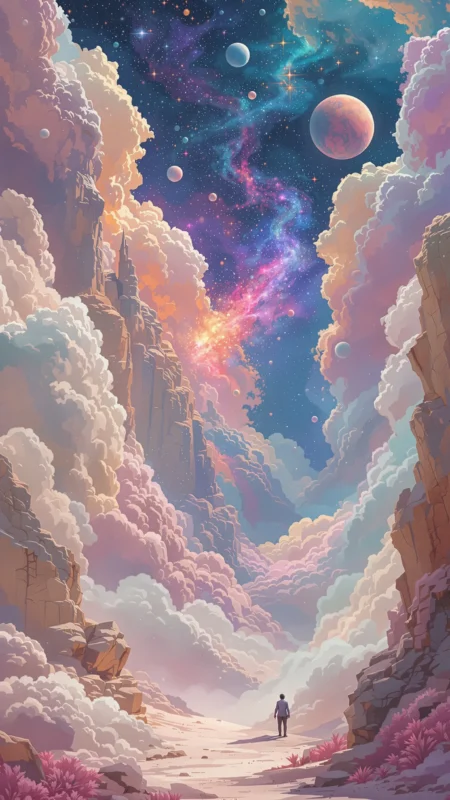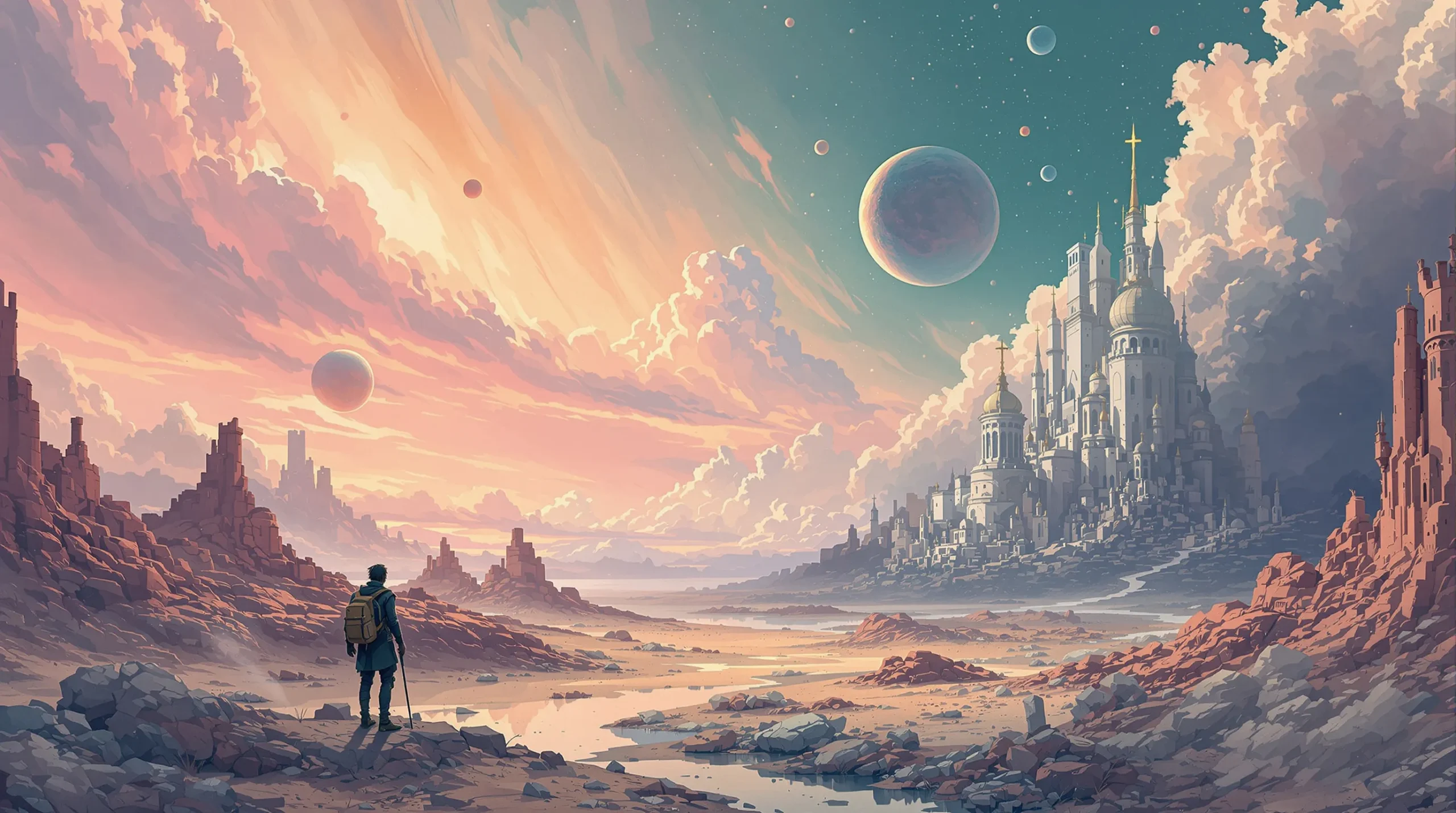


Wasteland

Archetype Meaning & Symbolism

Barren, fallow, silent, stark, potential, enduring, vast, desolate, clarifying, elemental

  • Come here when you have lost everything. I will teach you the difference between empty and open.

If Wasteland is part of your personal mythology, you may...

Believe

  • You may believe that true clarity is only possible after everything superfluous has been stripped away.
  • You may believe that survival itself is a sacred act, and endurance is the highest form of worship.
  • You may believe that growth that comes too easily is not to be trusted.

Fear

  • You may fear that the emptiness is not a phase, but the final truth of your being.
  • You may fear that you are incapable of cultivating or sustaining life, be it in relationships, creative projects, or your own soul.
  • You may fear that you will be abandoned in your desolation, that no one will undertake the journey to find you there.

Strength

  • You possess an almost unbreakable resilience, an ability to withstand hardship that would shatter others.
  • You have a profound capacity for focus and clarity, untroubled by the noise and distractions that plague the crowd.
  • You are self-reliant to an extraordinary degree, able to generate your own meaning and motivation from within.

Weakness

  • You may have a tendency toward nihilism or pessimism, finding it difficult to trust in joy or abundance.
  • You may struggle to accept help or nourishment from others, convinced you must survive on your own.
  • You might inadvertently create wastelands in your external life, pushing away opportunities or relationships because the desolation feels more familiar and safe.

The Symbolism & Meaning of Wasteland

The Wasteland in your personal mythology is perhaps the silent chapter between louder, more dramatic acts. It is the landscape of 'after': after the fire, after the flood, after the love, after the faith has gone. It symbolizes a state of being stripped bare, a psychic ground zero where the intricate architecture of your identity has collapsed into dust and silence. This is not necessarily a tragedy. It could be a profound and holy emptiness, a space cleared of old ghosts and tired narratives. It is here, in the shimmering heat of absence, that you might hear the whisper of your own bedrock, the resonant hum of what cannot be taken from you because it is you.

This archetype is also a potent symbol of potential. It is the fallow field awaiting a seed, the blank canvas before the first stroke. Where others see only lack, your mythos may understand this as a place of pure possibility. Nothing grows here now, which means anything could. This perspective reframes desolation as a form of freedom: freedom from expectation, from history, from the tyranny of a crowded inner life. The Wasteland could be the necessary void from which a more authentic self, a more intentional world, is born. It is the stark and silent initiation into a deeper form of creativity, one that does not merely arrange what is already present but calls forth life from the very heart of nothingness.

The Wasteland may also represent a confrontation with meaning itself. In a lush, abundant inner world, meaning can be taken for granted, absorbed from the environment like water. But in the Wasteland, there are no external sources. Meaning is not found, but made. It must be generated from within, a defiant act of creation against a backdrop of cosmic indifference. This landscape could be your internal monastery, your desert of contemplation, where you are forced to build a spiritual or philosophical shelter with only the materials of your own spirit. The journey through it is a pilgrimage toward a self-authored truth.


Wasteland Relationships With Other Archetypes

The Hermit:

The Wasteland is The Hermit's cathedral. While others flee its emptiness, The Hermit seeks it out, understanding that its lack of distraction is a presence in itself. In the Wasteland, the static of the collective world fades, allowing The Hermit to hear the crystalline signal of the inner voice. The landscape does not offer answers, but it provides the profound silence in which answers, long dormant within The Hermit, can finally be heard. Their relationship is symbiotic: The Hermit gives the Wasteland purpose by witnessing it, and the Wasteland gives The Hermit clarity by emptying his world.

The Oasis:

The Oasis is the Wasteland's secret heart, its hidden promise. It represents the radical, unexpected flourishing of life, love, and inspiration in the midst of desolation. For a person whose mythos contains the Wasteland, The Oasis is not just a place of relief but a symbol of irrational hope and grace. Its existence proves that sterility is not absolute and that even in the most barren psychic conditions, a source of profound nourishment can emerge. The relationship is one of dramatic contrast: the perceived endlessness of the Wasteland makes the discovery of The Oasis an earth-shattering, life-altering miracle.

The Phoenix:

The Phoenix needs the Wasteland as a stage for its rebirth. The Wasteland is the aftermath of the fire, the bed of ashes from which the mythical bird will rise. For this archetype to be a part of your story, there must first be a profound burning-down, a reduction to elemental components. The Wasteland is this state of being post-conflagration. It is the quiet, smoking ground where the old life has been utterly consumed, creating the necessary conditions for a transformation so complete it constitutes a new creation. The Wasteland is the silence, and the Phoenix is the song that breaks it.

Using Wasteland in Every Day Life

Navigating Creative Blocks:

When the well of inspiration runs dry, to intentionally enter the Wasteland of your personal mythology could be an act not of surrender, but of strategy. It is to cease the frantic digging for ideas and instead sit within the silence. In this space, stripped of the pressure to produce, the subtle mirages of new forms may begin to shimmer on the horizon, born not from force, but from the quiet accumulation of neglected observations and the stark clarity that only creative drought can provide.

Processing Grief and Loss:

After a profound loss, the inner world can feel like a blasted landscape. Rather than rushing to rebuild or replant, embodying the Wasteland archetype allows for a necessary period of fallowness. It is the permission to be desolate, to let the winds of sorrow scour the terrain clean of what was. This period is not an absence of life, but a different kind of living: a time of deep, quiet integration where the ground of the self rests before it can even consider the possibility of new growth.

Reassessing Life Paths:

At a career or life crossroads, where old ambitions have turned to dust, the Wasteland provides a blueprint for radical simplification. It is a psychic space to retreat to, shedding titles, expectations, and the noise of external validation. Here, in the elemental quiet, one may discern the true, vital needs from the cultivated wants. The path forward may reveal itself not as a grand highway, but as a single, resilient desert flower pointing toward water.

Wasteland is Known For

Fallow Periods

The Wasteland is known for representing periods of inactivity that are not empty but are in fact crucial for future fertility. It is the winter of the soul, a necessary dormancy where resources are gathered in unseen depths, preparing for an eventual, often surprising, spring.

Tests of Endurance

This is the landscape of the spiritual crucible, a place that tests the limits of one's resilience, faith, and self-reliance. To cross it is to be stripped of all that is non-essential, revealing a core of irreducible strength one might not have known they possessed.

Radical Simplicity

The Wasteland is the ultimate minimalist. It is known for its stark, uncluttered vistas that force an encounter with the fundamental elements of existence

earth, sky, self. It offers a profound clarity, a freedom from the superfluous distractions of a more crowded inner world.

How Wasteland Might Affect Your Personal Mythology

How Wasteland Might Affect Your Mythos

When the Wasteland is a recurring landscape in your personal mythos, your life story may not read as a linear progression but as a series of cycles: ruin and slow rebirth, exodus and the search for a promised land. Your narrative might be defined by what you have survived, the periods of profound drought that separate the chapters of abundance. Your myth might be one of an explorer of desolate places, both internal and external, a pioneer of the void. You may see your own history not as a building of successive stories upon a foundation, but as a single, resilient structure that has been repeatedly leveled by storms and patiently rebuilt from the rubble, each time a little wiser, a little simpler.

Furthermore, your personal mythos could become a testament to the beauty of minimalism and resilience. The heroes of your story are not those who accumulate the most, but those who need the least. The great quests may not be for treasure, but for a single drop of pure water: a moment of authentic connection, a flash of genuine insight. Your life story could become an instruction manual on how to find sustenance in scarcity, how to read the subtle signs of life in a seemingly dead landscape, and how to carry on when all external encouragement has fallen silent. It is a mythos that champions the quiet courage of endurance over the loud fanfare of victory.

How Wasteland Might Affect Your Sense of Self

To hold the Wasteland within is to perhaps cultivate a self-view of profound resilience. You may see yourself as a survivor, someone who has been tested by scarcity and not been broken. This can forge a deep, quiet confidence, untethered to external praise or material success. It is the self-knowledge that you can endure near-nothingness, and this knowledge itself is a form of wealth. You might perceive your own essence as something elemental and irreducible, having seen all superficial layers of your identity stripped away by the harsh, clarifying winds of your inner landscape.

Conversely, this internal geography could lead to a persistent feeling of being an outsider, a barren place in a world that celebrates fertility and growth. You may struggle with a sense of inner poverty, believing you lack the vibrant resources—the easy emotions, the bountiful creativity, the lush social connections—that seem to come naturally to others. This could manifest as a secret shame, a fear that if others were to truly see the starkness of your inner world, they would turn away. The challenge is to see this space not as a deficiency, but as a different kind of territory, with its own unique and austere beauty.

How Wasteland Might Affect Your Beliefs About The World

Your worldview, shaped by the Wasteland, may be one of stark realism. You might be less susceptible to grand, utopian promises, understanding that entropy and decay are fundamental forces. This is not necessarily pessimism, but a kind of clear-sightedness that sees the cracks in every facade. You may view civilizations, ideologies, and even relationships as temporary structures built against an encroaching desert, appreciating their beauty all the more for their impermanence. The world might seem less a garden to be tended than a desert to be navigated with skill, respect, and a deep appreciation for rare moments of shelter.

This perspective could also foster a profound sense of wonder for the smallest signs of life. When one's baseline expectation is emptiness, a single wildflower blooming in a cracked pavement becomes a miracle. You might see the world with a heightened sensitivity to grace, to the stubborn, irrational persistence of beauty and kindness in harsh conditions. Your worldview might reject the noise and clutter of modern life, valuing silence, space, and simplicity as the highest goods. You may look at a crowded city or a chaotic social media feed and see not abundance, but a different, more terrifying kind of desert.

How Wasteland Might Affect Your Relationships

In the realm of relationships, the Wasteland archetype might lead you to view connection as a rare and precious resource, like an oasis. You may not seek a wide circle of acquaintances but a few, deep wells of companionship capable of sustaining life in a harsh environment. The trust and intimacy you offer are not given lightly, for you understand the cost of vulnerability in an exposed landscape. When you do commit, it may be with a fierce, survivalist loyalty, creating a bond built not on convenience but on shared hardship and mutual reliance.

However, this internal landscape could also foster a deep-seated isolation. You may feel that your inner world is too barren or stark to be a welcoming place for another, leading you to keep others at a distance to protect them from your perceived emptiness. There may be a tendency to retreat into your internal Wasteland when relationships become difficult, preferring the familiar solitude of desolation to the complexities of connection. You might unconsciously test partners, seeing if they can survive the climate of your soul, a trial that few can endure, reinforcing your belief that you are meant to walk alone.

How Wasteland Might Affect Your Role in Life

Your perceived role in the world could be that of the clearer, the one who strips away the non-essential to reveal what is true and lasting. In a group, a project, or a family, you may be the person who cuts through the noise and complexity to point toward a stark, simple truth. Your role is not to add, but to subtract; not to build higher, but to clear the ground so that something new and more authentic can be built by others. You might be a minimalist, a truth-teller, a person whose presence helps others shed their own illusions.

Alternatively, you may feel your role is simply to endure, to be a quiet testament to the power of survival. You may not see yourself as an active agent of change but as a stoic witness, a fixed point in a changing and chaotic world. This can be a role of immense passive strength, offering a strange comfort to those caught in their own storms. They see you, seemingly content with so little, and are reminded that it is possible to survive the hollowing out of their own lives. Your purpose, then, is not to lead the way out of the Wasteland, but to show others how to live within it.

Dream Interpretation of Wasteland

In a positive context, dreaming of a Wasteland could symbolize a necessary and cleansing psychic event. It may signify that you are successfully shedding old, outdated aspects of yourself—beliefs, relationships, or identities that no longer serve you. The vast, empty space is not a threat but a promise: a clean slate. Such a dream might appear when you are consciously working to simplify your life or recover from a period of overwhelming complexity. It is your subconscious mind affirming this process, presenting the emptiness not as loss, but as a newly available and spacious peace, a ground prepared for a new and more intentional planting.

In a negative light, a Wasteland dream may be a direct confrontation with feelings of hopelessness, creative sterility, or profound spiritual drought. It could reflect a waking life where you feel isolated, uninspired, and cut off from any source of nourishment. The endless, arid landscape might mirror a state of deep depression or grief, where the future appears as a barren expanse devoid of possibility. If you are lost, thirsty, or hunted in this dream-Wasteland, it may be amplifying fears of failure, of being unable to survive a current life challenge, or of being left utterly alone in your struggle.

How Wasteland Archetype Might Affect Your Needs

How Wasteland Might Affect Your Physiological Needs

When the Wasteland is a core part of your personal mythology, your relationship with basic physiological needs—food, water, shelter, sleep—may become highly disciplined, almost ascetic. You might operate from a baseline of scarcity, even in times of abundance. This could manifest as minimalist eating habits, a high tolerance for physical discomfort, or an ability to function on very little sleep. Your body may be treated less as a vessel for pleasure and more as a lean, efficient survival machine. You might feel a deep distrust of excess, viewing it as a weakness, a dangerous softening for the inevitable lean times ahead.

This orientation can create a powerful physical resilience. You may be the person who can endure long journeys, periods of intense work, or physical hardship without complaint. However, it can also lead to a neglect of the body's legitimate needs and signals. The subtle cues of hunger, thirst, or fatigue might be ignored as mere noise, dismissed by a psyche accustomed to deprivation. This can create a disconnect from your physical self, where the body is not a partner in the journey of life but a tool or a beast of burden, valued only for its ability to endure the harsh conditions of your internal and external world.

How Wasteland Might Affect Your Ideas of Belonging

A dominant Wasteland archetype can create a profound and aching sense of alienation. It is the feeling of being a desert creature in a forest world, a speaker of a silent language amidst a cacophony of voices. You may look upon the easy intimacy and communal bonds of others as a traveler dying of thirst looks upon a mirage: a beautiful, unattainable illusion. This can lead to a belief that you are fundamentally separate, that your inner landscape is simply too inhospitable for love to take root. The search for belonging can feel like a hopeless quest for water in a dry land.

Yet, this very isolation can make the connections you do form incredibly powerful and sacred. When you find another who understands your internal silence, who is not afraid of your starkness, the bond can be immediate and unbreakable. These relationships become oases of belonging in a vast desert of solitude. You might cultivate a 'tribe of survivors,' a small, fiercely loyal community of people who have also known desolation. In this context, love and belonging are not about casual inclusion but about the profound recognition of finding another soul who can withstand the same harsh, beautiful, and empty vistas.

How Wasteland Might Affect Your Feelings of Safety

The Wasteland is an exposed place, offering no cover. As such, an internal Wasteland can manifest as a chronic feeling of vulnerability and exposure. You may feel that you are always on guard, constantly scanning the horizon for threats without ever finding a true place of rest or security. This could translate into a life structured around mitigating perceived risks, a deep need for control, or a hyper-vigilance in social situations. The feeling is one of being psychically un-sheltered, raw to the world, with no walls to protect the fragile core of the self from the harsh elements of life.

Paradoxically, having survived the Wasteland of your mythos could also instill a unique form of fearlessness. When you have already faced the void, when you have walked through the landscape of absolute loss and endured, other, lesser fears may lose their power. You might develop a profound sense of psychological safety that is internally generated, independent of external circumstances like financial stability or social approval. Your safety lies not in preventing bad things from happening, but in the unshakeable knowledge that you have the capacity to survive them. You have built a shelter inside yourself.

How Wasteland Might Affect Your Views of Esteem

Esteem, in the context of the Wasteland, is rarely derived from external validation. There is no audience in the desert to applaud your performance. Therefore, if self-esteem is to exist at all, it must be forged in the crucible of self-reliance. It is the quiet, bedrock pride that comes from knowing you can face emptiness and not dissolve. This kind of esteem is not brittle; it cannot be shattered by criticism or inflated by praise. It is a deep, internal knowing of your own endurance and your ability to generate your own meaning in a seemingly meaningless void.

However, the Wasteland can also be a breeding ground for profound worthlessness. The barren landscape can easily be internalized, leading to the belief that you are inherently empty, sterile, or lacking in value. You may compare your stark inner world to the perceived lushness of others and find yourself wanting. This can create a cycle of shame and retreat, where you hide your perceived barrenness, further reinforcing your isolation and low self-worth. The core challenge is to learn to value the unique qualities of your own landscape: its clarity, its resilience, its quiet, austere beauty.

Shadow of Wasteland

The shadow of the Wasteland emerges when the fallow field becomes a permanent, chosen state. It is the conscious or unconscious decision to remain in the desert long after the rains have come. This may manifest as a perverse pride in one's own deprivation, a spiritual asceticism that sours into a rejection of all worldly joy and connection. The person deep in this shadow may actively sabotage sprouting opportunities for love, success, or happiness, because the terror of losing a newfound oasis is greater than the familiar pain of thirst. They become a curator of their own emptiness, meticulously pulling any weeds of hope that dare to grow.

In its more aggressive form, the Wasteland's shadow seeks to impose its barrenness on others. It is the critic who scorches the creative efforts of others, the cynic who pours salt on the dreams of the hopeful, the minimalist who judges the sentimentality of another's treasures. This shadow self cannot tolerate the fertile abundance of others because it is a painful reminder of its own sterility. And so, it seeks to create a world that mirrors its own internal landscape: a world stripped of color, of complexity, of messy, vibrant, unpredictable life. It becomes an agent of entropy, turning gardens into deserts not with fire, but with the cold, dry wind of relentless negativity.

Pros & Cons of Wasteland in Your Mythology

Pros

  • You develop a profound inner strength and self-reliance, knowing you can survive on very little.
  • You gain a rare and powerful clarity, free from the illusions and distractions that clutter the minds of others.
  • You cultivate a deep appreciation for the smallest signs of life, beauty, and connection, experiencing them with a joy that those who live in abundance cannot know.

Cons

  • You can be prone to isolation and a deep sense of alienation from a world that seems effortlessly fertile.
  • You may struggle with chronic pessimism or nihilism, finding it difficult to trust or invest in hopeful futures.
  • You might neglect your own needs for joy, comfort, and nourishment, having become too accustomed to deprivation.