 Believe
 Fear
Fear Strength
 Weakness
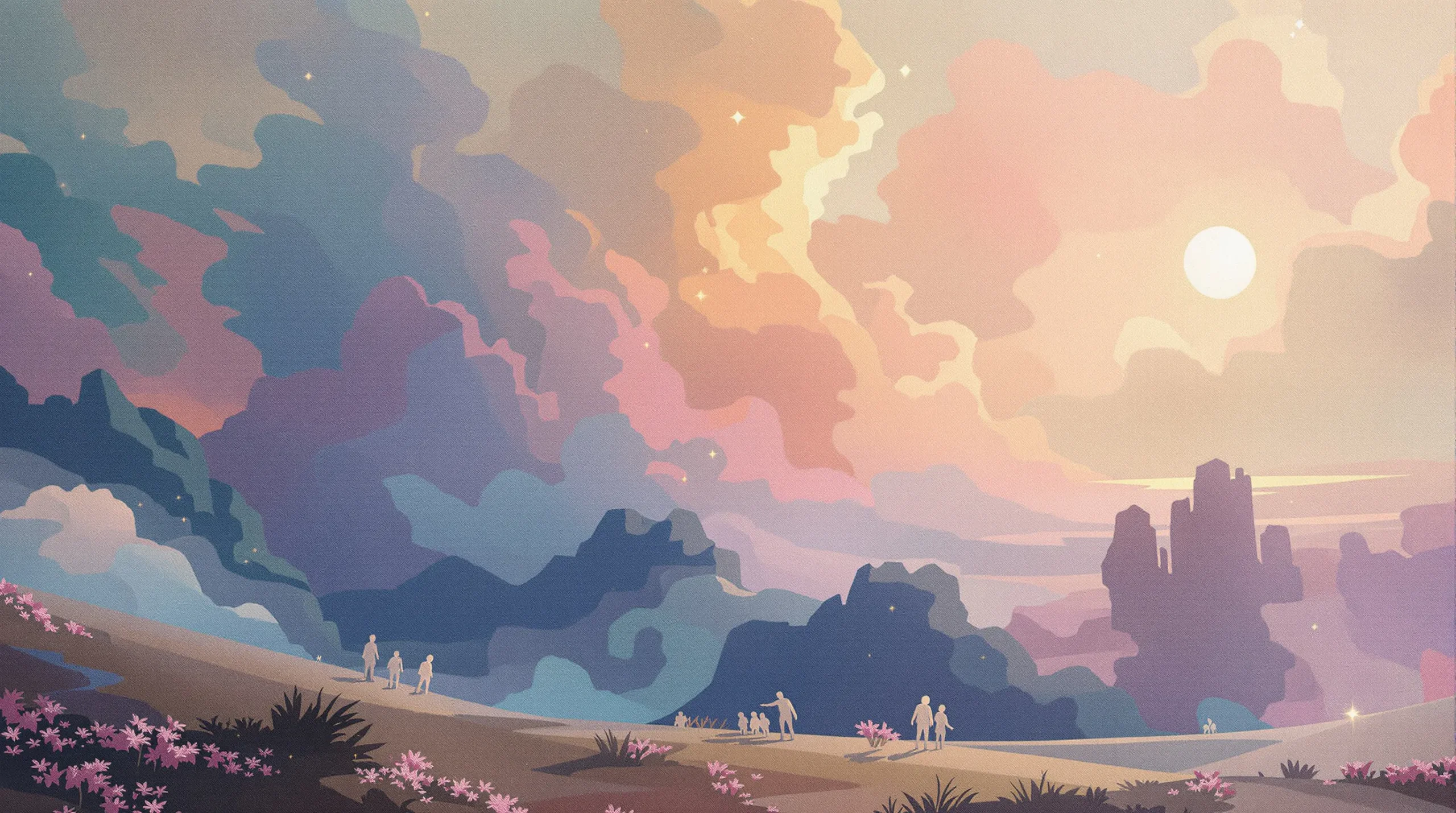
In personal mythology, the Steppe archetype often represents the internal landscape of pure potential, the vast and sometimes intimidating space before a decision is made or an identity is formed. It is the silence between notes, the clean slate, the unwritten chapter. To have the Steppe within your mythos is to carry a private expanse where you can retreat to see things clearly, without the clutter of society's forests or the distracting heights of its mountains. This inner realm demands a kind of radical self-reliance; there are no landmarks but the ones you create, no shelter but the one you build within yourself. It is the psychic ground for the stoic, the minimalist, and the wanderer, a place that teaches that the most profound events often happen in the quietest, most open spaces.
The Steppe is also a potent symbol of cyclical time and deep-seated endurance. Its life is not one of linear growth but of seasonal death and rebirth. The grasses turn brown, the earth freezes solid, the wind scours the land clean, yet life always returns with an almost stubborn insistence. For an individual, this may translate into a worldview that deeply trusts in process and accepts periods of fallowness as necessary and productive. It fosters a long-term perspective, a patience that understands that creative, emotional, and spiritual winters are not failures but preludes to a spring. This is not the explosive resilience of a volcano, but the quiet, persistent resilience of a blade of grass pushing through frozen soil.
In a contemporary context saturated with information and distraction, the Steppe archetype may arise as a powerful yearning for simplicity and essence. It is the soul's answer to the claustrophobia of the digital age. It symbolizes the courage to be with oneself without a screen, to face one's own thoughts without the buffer of constant noise. Embracing this archetype could mean consciously curating a life with more 'negative space'—more unscheduled time, more silence, more moments of just being. It is a mythology not of accumulation but of curation, where value is found not in what you have, but in the clarity and freedom you maintain.