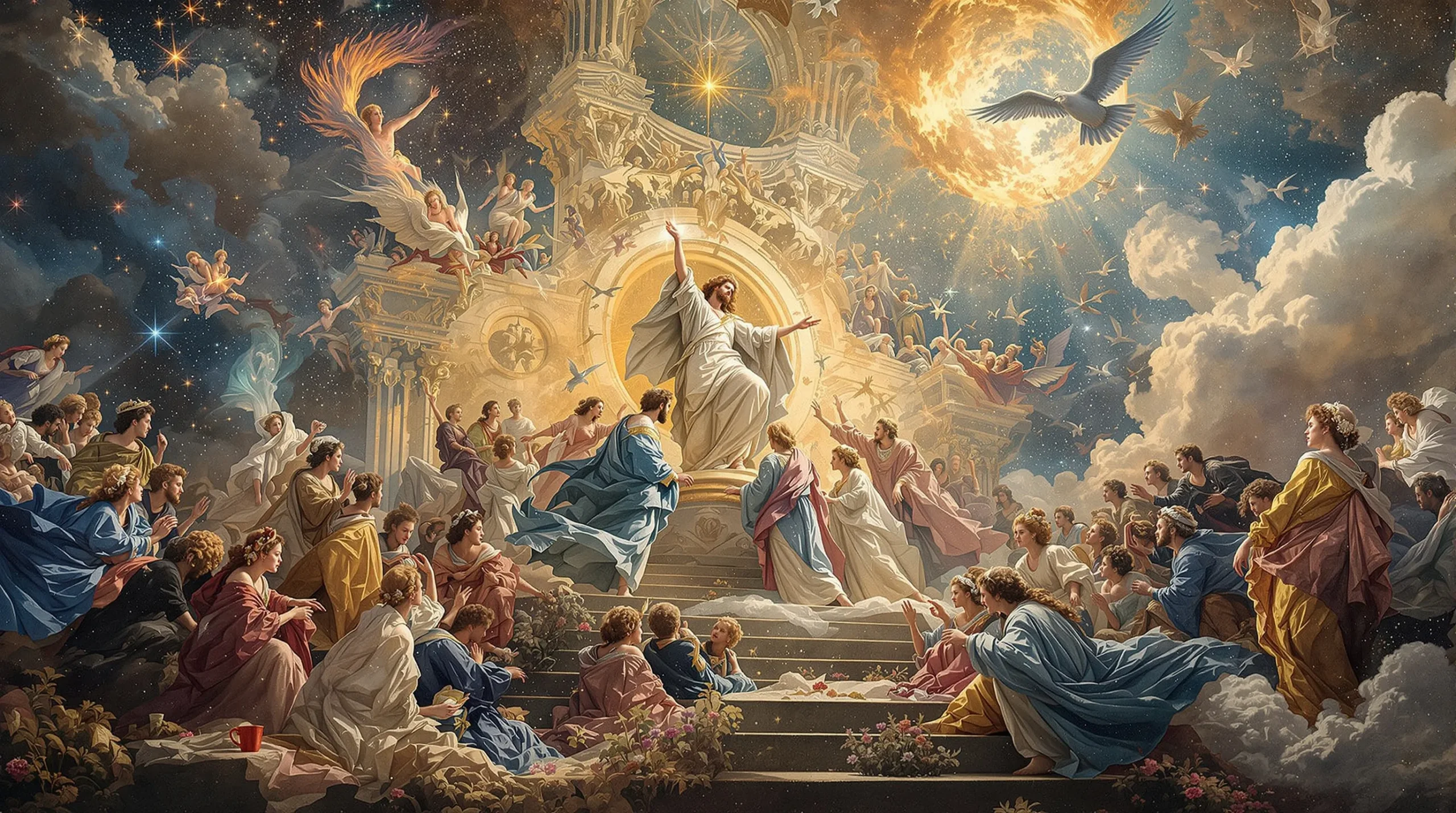


Reformation

Archetype Meaning & Symbolism

Iconoclastic, zealous, clarifying, austere, principled, uncompromising, dogmatic, revolutionary, structural, puritanical

  • The truth is not a thing to be discovered in the archives of the past; it is a structure to be built in the unforgiving clarity of the present moment.

If Reformation is part of your personal mythology, you may...

Believe

  • A single, pure principle is a lever powerful enough to move the world, and it is my duty to find that lever and use it.

  • The past is not something to be integrated; it is a corrupt text that must be burned to make way for a new one.

  • Clarity is kindness. Ambiguity is a form of moral cowardice that allows injustice to fester.

Fear

  • Compromise. The fear that a small concession will be the first step on a slippery slope back to the old, corrupt ways.

  • Nostalgia. The seductive, dangerous pull of the past, with its comfortable illusions and familiar poisons.

  • Irrelevance. The fear that after the great break, your revolution will fail to take root, leaving you an exile with no cause and no home.

Strength

  • Moral Courage. The unwavering ability to stand for your principles, even when you stand alone, and to speak truth to power regardless of the consequences.

  • Visionary Clarity. The capacity to see the deep, structural flaws in a system and to imagine a new, coherent, and radically different alternative.

  • Immense Self-Discipline. The power to align your daily actions with your highest ideals, creating a life of extraordinary focus and integrity.

Weakness

  • Dogmatic Rigidity. An inability to adapt, evolve, or accept new information that contradicts the established doctrine, leading to brittleness in the face of complexity.

  • Self-Righteousness. A tendency to see yourself as morally superior, which can alienate potential allies and blind you to your own flaws and hypocrisies.

  • Destructive Puritanism. The impulse to destroy anything that seems imperfect or impure, which can lead to the loss of valuable, beautiful, or nuanced parts of life, relationships, and the self.

The Symbolism & Meaning of Reformation

In personal mythology, the Reformation archetype represents a profound schism in the narrative of the self. It is the soul’s insistence that the current operating system is irrevocably corrupt and must be replaced, not merely patched. This archetype could rise when a person realizes the beliefs they were raised with are a cathedral built on a faulty foundation, or that the love they pursued follows a script written by fear. It symbolizes a moment of clarifying rebellion, a seismic break from a personal Rome, whether that Rome is a family, a career, a religion, or a deeply ingrained habit of being. The symbolism is not one of gentle evolution, but of a deliberate, often painful, amputation of a part of one's own history in the service of a purer future.

The process of Reformation in a life story is never without cost. It is symbolized by the winter of exile, the spartan meal, the bare room. To reform is to choose the desert over the palace, principle over comfort. It suggests a period of austerity where the individual strips their life down to its essential truths, discarding accumulated baggage, relationships that require compromise, and comforts that dull the sharp edge of their new conviction. This archetype speaks to the part of us that craves structure, but a structure of our own making. It finds meaning not in freedom’s boundless expanse, but in the elegant geometry of a new, self-imposed set of rules, a new liturgy for living.

Ultimately, Reformation's modern meaning is about the courage to become your own authority. It is the assertion that you can author your own sacred texts, that your conscience can be your own pope. In a world of fluid identities and endless choice, this archetype offers the profound gravity of conviction. It may suggest that the most meaningful life is not one of discovery, but of construction: a life meticulously rebuilt stone by stone from the ruins of what came before, consecrated to a single, fiercely held truth. Your personal myth becomes a testament to this rebuilding, a story of how you stopped interpreting the world and began to write its laws for yourself.


Reformation Relationships With Other Archetypes

The Monarch:

The Reformation archetype often stands in direct opposition to The Monarch. Where The Monarch represents the established order, tradition, and the inherited crown of 'how things are done,' Reformation is the revolutionary sermon that declares the king corrupt and his laws invalid. Their relationship is one of usurpation and challenge. The Monarch’s power is in continuity and divine right; Reformation’s power is in revelation and moral purity. In a personal myth, this could play out as the struggle between the desire for stable, predictable success (The Monarch) and the soul's urgent call to tear down that very stability in the name of a higher, more authentic principle (Reformation).

The Mystic:

Reformation and The Mystic both seek a connection to a deeper truth, but their paths diverge dramatically. The Mystic finds truth in the dissolution of structure, in direct, unmediated experience, in the cloud of unknowing. Reformation, however, seeks to build a new, more perfect structure to house the truth. It codifies revelation into law. The Mystic whispers; Reformation proclaims from the pulpit. They could be allies against a corrupt establishment, but eventually, Reformation may grow suspicious of The Mystic’s formlessness, seeing it as dangerously close to heresy, while The Mystic may view Reformation’s new doctrines as just another cage for the spirit, albeit a newly-forged one.

The Trickster:

The Trickster is often the unwitting catalyst for Reformation. By revealing the absurdity and hypocrisy of the old order through chaos and mockery, The Trickster creates the cracks in the foundation where Reformation’s ideology can take root. The Trickster exposes the emperor’s lack of clothes, and Reformation is the one who then writes the new dress code. However, Reformation has no patience for The Trickster's enduring ambiguity. Once the new order is established, The Trickster's love of paradox and disruption becomes a threat to the new dogma. Reformation demands unwavering belief, and The Trickster, who believes in nothing and everything at once, may be the first to be exiled from the new utopia.

Using Reformation in Every Day Life

Rewriting a Professional Narrative:

When your career path feels like a series of inherited compromises, the Reformation archetype may compel a dramatic schism. This is not merely changing jobs: it is a rejection of an entire professional ethos. You might abandon a lucrative but soulless corporate ladder not for a similar job elsewhere, but to found a small, ethical press, or to retrain as a stonemason. The act is a public declaration that the old metrics of success are heretical to your soul’s purpose, and you must now live by a new, self-authored professional covenant.

Reforming a Family System:

Within a family mythology steeped in unspoken rules and generational trauma, Reformation could manifest as the refusal to participate in the established script. It may be the decision to be the first to go to therapy, to speak the unspeakable truth at the holiday table, or to establish boundaries that are seen as a radical betrayal by others. This isn't just about personal change; it is an attempt to nail a new set of terms and conditions to the family's front door, forcing a crisis that could lead either to a healthier system or a permanent exile.

Altering the Bodily Constitution:

An individual might experience a health crisis not as a mere medical event, but as a sign that the entire constitution of their life is corrupt. The Reformation impulse would then demand a complete overhaul: not just a diet, but a new philosophy of nourishment; not just exercise, but a ritual of bodily discipline. They may purge their home of all processed foods, adopt a spartan lifestyle, and treat their body as the first territory to be reclaimed and purified in a much larger personal revolution.

Reformation is Known For

The Public Declaration

This archetype is known for the moment of schism, the public act of defiance against an established order. It is the nailing of the theses to the door, the shattered teacup on the floor, the letter of resignation sent to everyone in the company. It is a point of no return, where a private conviction becomes an open rebellion.

Iconoclasm

Reformation is famous for the tearing down of old idols. This could be literal, like smashing statues, or metaphorical, such as dismantling long-held family beliefs, rejecting sacred traditions, or exposing a mentor as a fraud. It is the belief that the symbols of the old power must be destroyed to make way for the new truth.

The New Doctrine

Following the destruction, Reformation is characterized by the meticulous construction of a new system of rules, a new doctrine, or a new constitution. It isn't content with anarchy; it seeks to replace a flawed order with a more perfect one. This is the new diet plan, the new manifesto, the new set of personal commandments by which one vows to live.

How Reformation Might Affect Your Personal Mythology

How Reformation Might Affect Your Mythos

When Reformation is a central pillar of your personal mythos, your life story is likely structured as a tale of conversion. There is a definitive 'B.C.' and 'A.D.': before the crisis of faith, and after. The narrative hinges on a singular, pivotal moment of schism, an event that cleaved your history in two. The time before may be painted as an age of ignorance, corruption, or sleepwalking, a necessary prologue to the great awakening. Every subsequent chapter of your life is then interpreted through the lens of this break, serving as a testament to the new principles you adopted.

Your personal mythos might eschew the hero’s journey of gradual learning and integration. Instead, it favors the prophet’s narrative: a sudden revelation, a period of trial in the wilderness, and the building of a new Jerusalem in the promised land of your own life. The antagonists in your story are not monsters or external foes so much as they are ideologies: compromise, mediocrity, hypocrisy, and the seductive whisper of your own former self. Your myth becomes a didactic tale, a living document of a new thesis for how a life should be lived, and you are its first and most fervent practitioner.

How Reformation Might Affect Your Sense of Self

Your sense of self may be forged in the crucible of conviction. Identity is not something to be found, but something to be declared and then rigorously defended. You might see yourself as a vessel for a particular truth, and your primary purpose is to live in alignment with that truth, regardless of personal cost. This can grant an immense sense of stability and purpose: you know who you are because you know what you believe. The self is a fortress, with clear walls defining what is acceptable and what is heretical.

However, this can also lead to a brittle sense of identity. If your self-worth is fused with the rightness of your cause, any challenge to your beliefs can feel like a personal attack of the highest order. There may be little room for a 'shadow self'; parts of you that are ambiguous, contradictory, or don't fit the new doctrine may be harshly repressed or denied. You may perceive your own human fallibility not as a natural aspect of being, but as a moral failure, a sign that the old corruption is seeping back in, requiring constant, vigilant self-purification.

How Reformation Might Affect Your Beliefs About The World

The world, through the lens of Reformation, is often a stark and morally legible place. It is a battleground between truth and falsehood, purity and corruption, the old guard and the new vanguard. You may be acutely sensitive to the hypocrisy and decay in systems, whether they be political, social, or interpersonal. This worldview is not cynical, but zealous; it believes fervently in the possibility of a better world, but only through a radical break with the current one. Nuance and ambiguity may be viewed with suspicion, as they can blur the clear lines needed for righteous action.

This perspective could grant you the clarity to see injustice where others see only complexity. You may feel a profound responsibility to act as a corrective force, to speak truth to power, and to not rest while the world remains in a 'fallen' state. History is not a gentle, flowing river, but a series of violent, necessary revolutions of thought and spirit. Your role is to find your place in the current revolution and push it forward, believing that a new, more just order is not just possible, but divinely or morally mandated.

How Reformation Might Affect Your Relationships

Relationships could be sorted and valued based on ideological alignment. Your deepest bonds may be with fellow 'believers,' those who have undergone a similar reformation or who subscribe to your new covenant. These relationships can be intensely loyal and supportive, forged in the shared fire of a common cause. There is a sense of being comrades in arms, holding the line together against a world that doesn't understand. This can create a powerful, albeit insulated, sense of community.

Conversely, relationships with those who remain part of the 'old order'—perhaps family members or old friends who don't share your newfound convictions—can become strained or may be severed entirely. Love and acceptance from you may feel conditional upon their 'conversion.' You might struggle with partners or friends who value harmony over principle, or who embody the very compromises you've sworn to reject. Intimacy requires not just emotional connection, but doctrinal purity, which can make for a lonely and demanding relational landscape.

How Reformation Might Affect Your Role in Life

Your perceived role in life might be that of the Prophet or the Agitator. You may feel less like a participant in the world and more like an instrument for its correction. There's a calling, a weight of purpose that compels you to speak out, to challenge the status quo, and to live as an example of a new way of being. This role is not chosen for its comfort or popularity; in fact, its legitimacy is often confirmed by the resistance it provokes. You might feel you are the 'lone voice in the wilderness,' preparing the way for a truth that others are not yet ready to hear.

This can lead to a sense of profound significance, but also one of deep isolation. You might not see yourself as having a 'job' so much as a 'mission.' Every action, from what you eat to how you spend your time, is imbued with the gravity of this mission. The personal is always political, and the mundane is always theological. While this can make for a remarkably coherent and purpose-driven life, it leaves little room for play, spontaneity, or the simple, unexamined joy of being.

Dream Interpretation of Reformation

In a positive context, dreaming of the Reformation archetype might involve imagery of tearing down a dilapidated or oppressive building to reveal a clean, solid foundation beneath. You could dream of meticulously writing a new set of laws on clean parchment, of shattering a stained-glass window depicting a false idol, or of leading a willing group of people out of a dark, labyrinthine city into a stark, sunlit plain. Such dreams may symbolize a necessary and healthy psychic revolution, an empowering break from limiting beliefs, and the successful establishment of a more authentic and integrated sense of self.

In a negative or cautionary context, the dream imagery may turn tyrannical. You might find yourself the inquisitor, obsessively searching for heresy in others, or being put on trial for a minor deviation from a rigid doctrine. Dreams could feature the burning of beautiful books, the destruction of art, or the construction of a new building that is even more restrictive and prison-like than the one it replaced. This could reflect a fear of your own inner fanatic, a sign that your pursuit of purity has become a destructive force, leading to self-righteousness, sterile perfectionism, and the loss of compassion for yourself and others.

How Reformation Archetype Might Affect Your Needs

How Reformation Might Affect Your Physiological Needs

Physiological needs may be viewed through the austere lens of purpose rather than pleasure. The body could be seen as an instrument for the will, a temple to be kept pure for a higher calling, or a potential source of corrupting appetites that must be disciplined. This might translate into rigorous and controlled approaches to food, sleep, and exercise. Sustenance is for fuel, not for delight. Rest is for recovery, not for leisure. The body's base needs are met with an efficient, almost monastic severity, ensuring it can function optimally in service of the great work.

This perspective might lead to a neglect of the body's signals for simple, unprincipled joy. Sensual pleasure, idleness, and comfort could be regarded with suspicion, as potential distractions from the mission or as vestiges of the old, self-indulgent life. The physiological self is subordinated to the ideological self. While this can foster incredible discipline and physical resilience, it risks creating a deep disconnect from the body's wisdom, treating it as a potentially rebellious subject that must be kept under constant, vigilant rule.

How Reformation Might Affect Your Ideas of Belonging

Belongingness is potent but highly conditional. It is the fierce camaraderie of the righteous, the deep bond of the revolutionary cell. You belong with those who share the doctrine, who speak the same language of truth, and who have fought the same battles against the old order. This in-group loyalty can be absolute, providing an incredibly strong sense of identity and place. You are not just a person; you are a member of the vanguard, the elect, the conscious few.

However, this powerful sense of belonging is often purchased at the price of broader connection. Those outside the circle of belief—even former loved ones like family and old friends—may be relegated to the category of 'the other,' the unenlightened, or even the enemy. Love and acceptance can become entangled with agreement. This creates a precarious dynamic where any deviation from the group’s orthodoxy could result in immediate exile, making the need to belong a powerful enforcer of conformity within the new system.

How Reformation Might Affect Your Feelings of Safety

For the Reformation archetype, safety is found not in physical comfort or material security, but in ideological coherence. The greatest danger is not bodily harm, but spiritual or intellectual corruption. You may feel safest when your life is perfectly aligned with your principles, when your beliefs are a fortress against the chaotic and compromising influences of the outside world. True security is knowing you are right, and that you have not betrayed your own truth.

This can lead to a willingness to sacrifice conventional forms of safety. You might risk your job, your reputation, or even your physical well-being to uphold a principle. The real threat is the slippery slope of compromise, the small betrayals that erode the foundation of your new world. As such, you might create a highly controlled environment, a 'safe space' of ideological purity, and view the outside world as a landscape fraught with the perpetual danger of heresy and temptation.

How Reformation Might Affect Your Views of Esteem

Self-esteem is derived almost exclusively from the integrity of your convictions and your adherence to them. Your worth is measured by your righteousness, your discipline, and your unwavering commitment to the cause. You may feel a deep sense of pride not in being liked or admired, but in being correct and principled, especially in the face of opposition. Esteem is the quiet, solid certainty of a clear conscience, the knowledge that you have not sold out or compromised.

This makes self-esteem both incredibly robust and incredibly vulnerable. It is robust because it is not dependent on external validation from the corrupt 'mainstream.' Yet, it is vulnerable because any personal failing or lapse in discipline is not just a mistake, but a profound moral and existential crisis. It's a crisis that questions your very worthiness and your right to champion the cause. The inner critic may take on the role of a merciless inquisitor, and the demand for perfection can become a crushing weight.

Shadow of Reformation

The shadow of Reformation is fanaticism. When this archetype operates from a place of fear and insecurity, the principled reformer becomes the merciless inquisitor. The noble quest for purity curdles into a witch hunt for heresy, not only in the world but within the self. Every thought, every impulse, is put on trial. The new doctrine, intended to liberate, becomes a prison more restrictive than the one it replaced. The world, once seen as a place to be saved, is now seen only as a source of contamination. Compassion is discarded as a weakness, and nuance is seen as a moral failing.

In its deepest shadow, Reformation is not about building a new world but about punishing the old one. The joy is not in creation, but in destruction. The iconoclast, having smashed all the external idols, turns the hammer upon themself and others, seeking to obliterate any trace of human frailty. The new Jerusalem is never built, because no foundation is ever pure enough, no stone perfectly cut. The revolution begins to eat its own children, and the reformer, who once stood against tyranny, becomes the very thing they fought against: an absolute authority who tolerates no dissent.

Pros & Cons of Reformation in Your Mythology

Pros

  • It can provide the motive force for radical, necessary change, breaking you out of stagnant and destructive life patterns.

  • It generates a powerful sense of purpose, meaning, and moral clarity in a world that can feel chaotic and meaningless.

  • It fosters an exceptional degree of personal integrity and discipline, aligning your actions with your deepest-held beliefs.

Cons

  • It can foster a rigid, black-and-white worldview that lacks compassion and an appreciation for the complexities of life and people.

  • It can lead to profound isolation, as relationships are sacrificed on the altar of ideological purity.

  • The reformer risks becoming a tyrant, and the new, 'pure' system can become as oppressive and dogmatic as the one it overthrew.