 Believe
 Fear
Fear Strength
 Weakness
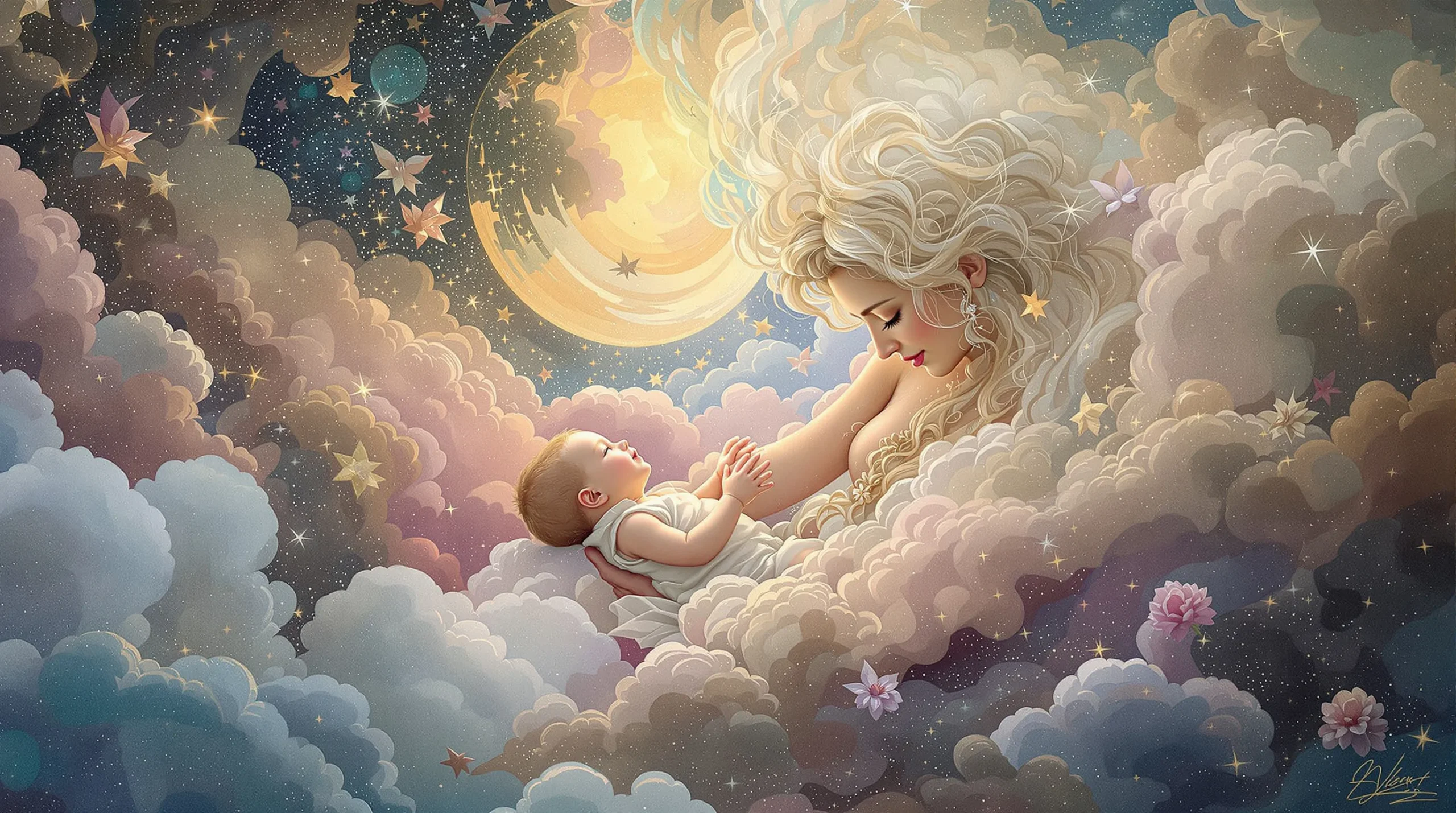
The emergence of the Becoming a Grandparent archetype in one's personal mythos may signify a profound temporal shift, a folding of time. Suddenly, you are not just living in the present; you inhabit three temporal spaces at once. You are a curator of the past, holding the stories of your parents and their parents. You are a witness to the future, gazing into the eyes of a person who will likely see a world you can only imagine. And your present is re-contextualized as the vital, connective tissue between these two epochs. This is not merely growing older: it is becoming an anchor point in the timeline of a family, a place where history and destiny meet for a quiet conversation.
This archetype may also symbolize a release from the ego's primary narrative. For decades, the story was about you: your struggles, your triumphs, your becoming. Now, the mythos widens to include a new protagonist. You might find your role shifting from the hero on a quest to the wise guide who offers the hero a map, a bit of magic, or simply a safe place to rest. This decentering can be profoundly liberating. The pressure to achieve, to strive, to prove oneself, may dissolve, replaced by a quieter, more profound purpose: to simply be, to love, and to bear witness. It's the moment the story becomes less about what you have done and more about what you have passed on.
Furthermore, this transition could represent the harvest of a life's emotional labor. It is the culmination of all the love you have given and received, now blooming in an unexpected and powerful form. A grandchild's love is a unique vintage: it is not earned through parental duty but given freely, a pure reflection of connection. In your personal mythology, this may feel like a form of grace, a reward you didn't know you were working toward. It suggests that the true legacy of a life is not a monument of stone but a chain of affection, passed hand to tiny hand down through the years.