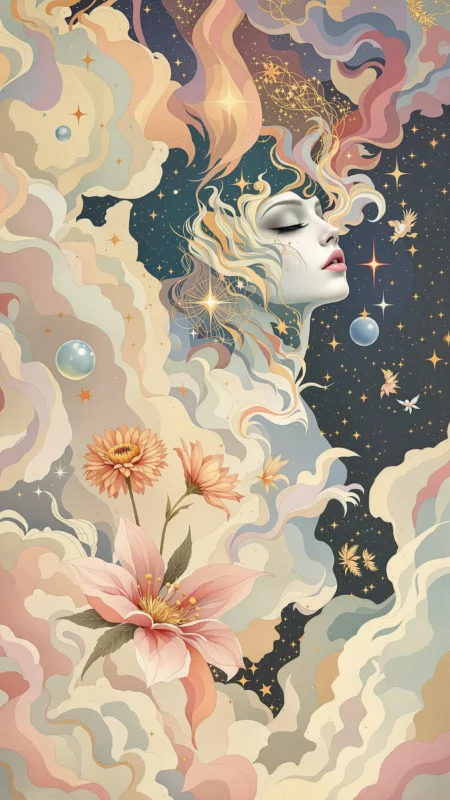


Déjà Vu

Archetype Meaning & Symbolism

ephemeral, prescient, cyclical, uncanny, familiar, disorienting, intuitive, recursive, haunting, fleeting

  • The future is just a memory waiting to be recalled. Pay attention to the echoes.

If Déjà Vu is part of your personal mythology, you may...

Believe

  • You may believe that time is not a straight line, but a tangled, beautiful loop, and that your life is one of many threads you are weaving simultaneously.

  • You may believe that your strongest gut feelings are not impulses, but memories arriving from the future to guide you.

  • You may believe that certain people and places are 'fated,' and that your moments of Déjà Vu are cosmic appointments you are successfully keeping.

Fear

  • You may fear that free will is an illusion and you are simply an actor re-reading lines from a script you can't remember writing.

  • You may fear that you are trapped in a karmic cycle, doomed to repeat the same mistakes and relive the same heartaches until you finally figure out the lesson.

  • You may fear that your perceptions are fundamentally unreliable, and that you are living on the edge of a reality that could fracture at any moment.

Strength

  • You may possess a powerful and highly reliable intuition, allowing you to navigate complex situations with an uncanny sense of the right path.

  • You may have the ability to see the larger patterns in life, recognizing recurring themes and cycles that others miss, giving you a unique and wise perspective.

  • You may hold a deep, unshakable trust in the journey of your life, able to weather uncertainty with a calm assurance that everything is unfolding as it should.

Weakness

  • You may have a tendency towards fatalism and passivity, failing to take action because you believe the outcome is already predetermined.

  • You may find it difficult to stay grounded in the present moment, as your consciousness is often pulled into the echo chamber of the past and the premonitions of the future.

  • You may be prone to over-interpreting coincidences, projecting profound meaning onto random events and getting lost in a web of imagined connections.

The Symbolism & Meaning of Déjà Vu

In your personal mythology, Déjà Vu is not a neurological hiccup: it is the quiet chime of a cosmic bell, struck in another room, in another time. It symbolizes a moment of alignment, a point where your current path intersects with a pre-written map, a soul contract, or a parallel timeline. This feeling suggests that your life is not a single, straight line but perhaps a tapestry woven with threads from past lives, future selves, and unrealized possibilities. When Déjà Vu occurs, you may be standing on an 'X' that marks a spot of profound significance, a choice point that has been, and will be, pivotal across multiple versions of your story. It’s a call to attention, a moment when the veil thins and you are granted the brief, unnerving privilege of remembering what you have not yet experienced.

The archetype also represents the power of intuition as a form of memory. It posits that some knowledge is not learned but recalled. This could be the deep, inexplicable knowing that a certain street will lead you home, or that a stranger’s eyes hold a story you are meant to be a part of. To incorporate Déjà Vu into your mythos is to validate these non-linear, non-logical ways of knowing. It is to believe that your spirit has a memory far older and wiser than your mind. This archetype asks you to treat these fleeting moments not as oddities to be dismissed, but as sacred signposts from a deeper, truer self who has already walked this path and is leaving notes for you along the way.

Furthermore, Déjà Vu could symbolize the cyclical nature of your personal journey. It’s the universe’s way of saying, “You’ve been here before. Did you learn what you needed to last time?” It transforms life from a series of random events into a spiral curriculum. Each loop brings you back to a similar emotional or situational landscape, but at a higher level of awareness. The sudden familiarity is a test: will you react with the old pattern, or will you use the foreknowledge, however faint, to make a new choice and break the cycle? It’s a deeply personal form of prophecy, one that doesn’t foretell the future but illuminates the present with the wisdom of the past.


Déjà Vu Relationships With Other Archetypes

The Oracle:

Déjà Vu might be seen as the quiet, introverted cousin of The Oracle. While The Oracle speaks in grand, often cryptic, pronouncements about the fate of kingdoms or heroes, Déjà Vu whispers intimately and only to you. It offers no sweeping prophecies, only a sudden, somatic certainty about a single, mundane moment: this conversation, this slant of light, this turn in the road. It is a democratized form of prophecy, suggesting that every individual has access to a sliver of foresight, a personal oracle whose temple is the landscape of their own life.

The Labyrinth:

Déjà Vu shares a deep, winding relationship with The Labyrinth. To walk a labyrinth is to follow a path that folds back on itself, where you can see parts of the journey you have yet to walk. The experience of Déjà Vu is much the same: it’s the psychic sensation of turning a corner and recognizing the pattern of the tiles, not from a past journey, but from a future one glimpsed in passing. It suggests that your personal mythos is not a straight path to a goal, but a complex maze where past, present, and future are neighbors, and true progress is measured not in distance covered, but in the recognition of the repeating patterns within the walk itself.

The Echo:

If Déjà Vu is an experience, The Echo is its voice. The Echo is a sound that has already been, returning fainter but still recognizable. Similarly, Déjà Vu is an event that feels like it has already been, returning as a feeling. The two archetypes explore the nature of resonance and the idea that nothing truly disappears. An action or a word, like a sound in a canyon, reverberates through time. Déjà Vu could be the moment you feel the return of a choice made long ago, or perhaps a choice you will make in the future, its emotional echo traveling backward to find you in the present.

Using Déjà Vu in Every Day Life

Navigating a Career Crossroads:

When presented with two job offers, you may find one office, one particular conversation, one turn down a hallway, sparks a powerful wave of Déjà Vu. This isn't necessarily a sign to accept the offer, but rather an invitation to pause. The feeling might be a resonance with a long-forgotten childhood dream or a signal that this new environment contains a crucial, recurring lesson your personal mythos requires you to confront once more. It asks you to trust the feeling over the spreadsheet.

Deepening a New Relationship:

Upon meeting a stranger, the cadence of their laughter or the way they hold their teacup might trigger an inexplicable sense of deep familiarity. This archetype suggests leaning into that uncanny connection. It could be a prompt to explore a past-life connection or, more pragmatically, to recognize a pattern of person you are drawn to. It transforms the initial meeting from a simple introduction into a chapter in a much older story you are just now remembering.

Overcoming Creative Stagnation:

An artist, writer, or innovator stuck in a rut may experience Déjà Vu while walking through a museum or reading an old book. This could be the archetype signaling a return to a foundational inspiration. The feeling might not be about the specific piece of art, but about the emotional state it evokes: a feeling you've felt before when you were at your most creative. It becomes a map back to the source of your own unique voice, a reminder of a creative self you've met before.

Déjà Vu is Known For

The Uncanny Valley of Time

It is known for inducing a brief, intense sensation where the present moment feels simultaneously new and ancient, creating a cognitive dissonance that momentarily fractures our linear perception of time.

Glitches in the Matrix

In the popular imagination, Déjà Vu is often seen as a crack in the façade of reality, a signal that the world is not as it seems and that a hidden script or code has just been repeated.

Whispers of Past Lives

For many, the experience is interpreted as a bleed-through from a previous incarnation, a cellular memory from another self, suggesting that the soul carries a map of experiences that transcends a single lifetime.

How Déjà Vu Might Affect Your Personal Mythology

How Déjà Vu Might Affect Your Mythos

When Déjà Vu is a central archetype in your personal mythos, your life story may cease to be a linear progression from A to B. Instead, it becomes a spiral, a cyclical pilgrimage where key themes, relationships, and challenges reappear, not as reruns, but as opportunities for deeper mastery. Your narrative might be framed not by what you achieve, but by what you recognize. The major plot points of your life—a move to a new city, a significant relationship, a career change—may be preceded by these flashes of familiarity, casting them as fated encounters or chapters you were always meant to write. Your mythos is one of destiny, but a gentle destiny, one that guides with whispers of memory rather than dictates with iron-clad prophecy.

This archetype also infuses your mythos with a sense of the sacred in the mundane. A simple coffee shop is not just a place for caffeine: it could be the stage for a recurring cosmic drama. A conversation with a friend is not just idle chatter: it could be the echo of a thousand similar conversations across time. This perspective transforms a personal history into a sacred text, filled with foreshadowing, recurring motifs, and hidden layers of meaning. You become the protagonist in a story you are simultaneously living, writing, and, in strange, fleeting moments, remembering for the first time.

How Déjà Vu Might Affect Your Sense of Self

An individual guided by the Déjà Vu archetype may view themselves as an 'old soul,' someone with an innate, unexplainable wisdom that transcends their years. This could foster a quiet confidence, a trust in gut feelings that others might dismiss as illogical. The self is not seen as a blank slate at birth but as a traveler arriving with a suitcase of memories from other journeys. This can lead to a profound sense of inner stability, a feeling that no matter how chaotic the external world becomes, there is an inner compass calibrated to a map that exists outside of linear time. You may feel less like a creator of your destiny and more like a skilled navigator of it.

Conversely, this archetype could also introduce a subtle rift in one's sense of self. It might create a feeling of being a passenger in one's own life, watching a film that feels vaguely familiar. This can lead to a sense of detachment or fatalism, a questioning of free will. If this has all happened before, do my choices truly matter? The self might feel fractured, split between the person experiencing the moment and a spectral observer who already knows the outcome. This can make it difficult to be fully present, as part of the psyche is always scanning the horizon for the next flicker of supernatural familiarity.

How Déjà Vu Might Affect Your Beliefs About The World

A worldview informed by Déjà Vu is often mystical and layered. Reality is not a solid, fixed thing but a shimmering, multi-dimensional fabric. Time might be seen not as a river flowing in one direction, but as an ocean where past, present, and future coexist as currents that can sometimes cross. This perspective allows for a belief in concepts that defy conventional logic: synchronicity, fate, reincarnation, or parallel universes. The world becomes an enchanted place, full of signs and symbols, where a glitch in perception is not an error but a message. It fosters an outlook of constant curiosity and wonder, a belief that there is always more going on than meets the eye.

This archetype could also cultivate a worldview that is deeply patterned and interconnected. If you can re-experience a moment, then perhaps all moments are linked in a vast, invisible network. The actions of one person may echo in the life of another, and the events of today may be the direct resonance of a choice made centuries ago. This leads to a profound sense of responsibility and connection. The world is not a collection of separate, random events, but a single, coherent story, constantly rhyming with itself. This can dissolve feelings of isolation, replacing them with the awesome and sometimes daunting understanding that everything is part of a larger, recurring whole.

How Déjà Vu Might Affect Your Relationships

In relationships, the Déjà Vu archetype often manifests as the 'soulmate' phenomenon: an instant, profound, and unsettling familiarity with another person. It feels less like getting to know someone and more like remembering them. This can create bonds of incredible intensity and speed, bypassing the usual stages of courtship and plunging directly into a deep, intuitive connection. You might feel you know their secrets before they are told, or can anticipate their reactions as if you've lived this life with them before. Relationships are not built from scratch but are 'rediscovered,' which can be both powerfully romantic and intensely challenging.

However, this same archetypal influence can create complex, repeating dynamics. You may find yourself experiencing Déjà Vu with a new partner's specific habits or a particular argument, recognizing it as the same conflict you had in a previous relationship. The archetype here is not signaling a soulmate, but a recurring lesson you have yet to learn. It can create a feeling of being trapped in a relational loop, dating the same person in different bodies. This challenges you to see the pattern not as fate, but as a curriculum designed for your own growth, asking you to finally choose a different response to a familiar situation.

How Déjà Vu Might Affect Your Role in Life

If Déjà Vu is part of your mythos, you may feel that your role in life is that of a 'Pattern Recognizer' or a 'Cosmic Detective.' You are not here to invent a new path but to trace the faint outlines of a trail that has already been laid. Your purpose could be to notice the synchronicities others miss, to understand the cyclical nature of events within your family or community, and to act as a guide for others who are walking a path you inexplicably remember. Your unique contribution is not in forging ahead into the unknown, but in bringing a calming wisdom to the present by recognizing its echoes of the past and future.

This can also cast you in the role of the 'Guardian of the Threshold,' a keeper of the liminal space between the known and the unknown. Your frequent encounters with this temporal anomaly may give you a unique comfort with ambiguity and mystery. Others might come to you when they feel lost, not for concrete answers, but for reassurance that there is a larger, unseen order to things. Your role is to hold the space for mystery, to remind people that not everything needs to be explained by logic, and that sometimes the most profound guidance comes in the form of a fleeting, inexplicable feeling.

Dream Interpretation of Déjà Vu

In a positive context, a dream featuring the sensation of Déjà Vu—dreaming that you have dreamed this dream before—may be a powerful symbol of affirmation from your subconscious. It could be your psyche's way of telling you that you are precisely where you need to be, following a 'correct' path that your deeper self has already charted. The dream might present a scenario that feels both new and ancient, signifying a milestone in your personal growth: you have reached a new level, but it feels like coming home. It is a dream of alignment, integration, and a deep trust in the unfolding of your life's narrative.

In a negative context, dreaming of Déjà Vu can be a sign of being psychologically stuck. The dream might be a frustrating, recurring loop, where the feeling of familiarity is tinged with anxiety or dread. This could symbolize an unresolved issue, a trauma, or a self-defeating behavior that you are replaying in your waking life without conscious awareness. The dream is a warning from your subconscious that you are trapped in a cycle. The feeling of having 'been here before' is not a comfort but a cage, urging you to identify the pattern and make a conscious choice to break free from it.

How Déjà Vu Archetype Might Affect Your Needs

How Déjà Vu Might Affect Your Physiological Needs

From the perspective of personal mythology, the Déjà Vu archetype suggests that physiological needs are intertwined with spiritual memory. The body, in this view, is an archive. The sudden chill, the racing heart, the prickling on the skin that accompanies a Déjà Vu moment is not just a neurological event; it could be the body's physical memory being activated. Your need for sustenance might be tied to remembering ancient famines, your need for warmth a cellular echo of ice ages. This archetype encourages a deep listening to the body’s seemingly random signals, treating them not as mere symptoms, but as somatic messages from a long lineage of past selves or experiences.

This can transform your relationship with your physical being. Instead of seeing the body as a machine to be maintained, you might see it as a sacred vessel, a resonant chamber that picks up on frequencies that the conscious mind cannot. Meeting your physiological needs—eating, sleeping, seeking shelter—becomes an act of honoring this ancestral and spiritual wisdom. A sudden craving for a specific food might be interpreted not just as a nutritional deficiency, but as the body remembering a place or time where that sustenance was vital. It grounds the mystical in the physical, suggesting that the most profound spiritual experiences are felt, quite literally, in your bones.

How Déjà Vu Might Affect Your Ideas of Belonging

This archetype can profoundly shape one's experience of belonging. When you meet someone and are struck by a powerful Déjà Vu, it can create an instant and unshakable sense of connection, as if you have found a lost member of your soul's tribe. This feeling transcends shared interests or backgrounds, creating a bond based on a mysterious, shared history. It can make you feel deeply seen and understood, fostering a sense of belonging that is both immediate and timeless. Similarly, arriving in a new place and feeling you've 'come home' can satisfy a deep yearning for rootedness, a sense that you have finally found where you belong in the world.

Conversely, the Déjà Vu archetype can also lead to a deep sense of alienation. If you frequently experience these temporal slips while others do not, it can be an incredibly isolating experience. Trying to explain the feeling to someone who has never felt it can make you feel strange or misunderstood. This might lead to a feeling of not quite belonging to this time or this reality, of being a traveler who is slightly out of sync with everyone else. This can create a subtle but persistent loneliness, the feeling of being the only one who remembers a story that everyone else has forgotten.

How Déjà Vu Might Affect Your Feelings of Safety

The Déjà Vu archetype can have a dual effect on one's need for safety. On one hand, it may provide a profound, almost mystical sense of security. The feeling of 'I have been here before' can imply 'and I survived.' In a moment of crisis or uncertainty, a flash of Déjà Vu could be a reassuring signal from your deep self that this challenge is familiar terrain, a test you have already passed in some other time or context. This can instill a deep-seated resilience, a belief that you are equipped to handle whatever comes your way because, on some level, you already have.

On the other hand, the archetype can seriously undermine your sense of safety by destabilizing your perception of reality. If you cannot trust that a new experience is truly new, how can you trust your own judgment? This feeling can create a persistent, low-level anxiety, a sense that the ground beneath your feet is not solid. The fear may arise that if you've been here before, you are fated to repeat a mistake or re-experience a trauma. The feeling of familiarity becomes a harbinger of doom, a warning that you are on a track leading to a known, and dreaded, destination, eroding your sense of agency and safety in the present moment.

How Déjà Vu Might Affect Your Views of Esteem

When integrated positively, the Déjà Vu archetype can be a powerful source of self-esteem. The experience can make you feel special, chosen, and uniquely attuned to the deeper mysteries of the universe. It validates your intuition and inner world, providing evidence that your perceptions are picking up on something real, even if it's not scientifically verifiable. This fosters a strong sense of self-trust. You may come to believe that you possess a unique wisdom or an inner guidance system that others lack, which can be a cornerstone of a healthy and resilient ego. Your esteem is built not on external validation, but on a private, mystical connection to the flow of time.

However, if the experiences are frequent and unsettling, or if they are dismissed and ridiculed by others, the archetype can damage esteem. You might begin to question your own sanity, worrying that there is something wrong with your brain or your perception of reality. This self-doubt can be corrosive, leading to feelings of being flawed, unstable, or 'crazy.' The lack of external validation for such a profound internal experience can make you feel invalidated as a person, leading you to distrust your own mind and retreat from sharing your unique perspective with others, thus lowering your sense of worth and place in the world.

Shadow of Déjà Vu

The shadow of the Déjà Vu archetype manifests as a profound paralysis, a state of what might be called 'spiritual stagnation.' When you lean too heavily into the sense of predestination, you may begin to abdicate all responsibility for your own life. Why strive, why choose, why risk, if it has all happened before and is destined to happen again? This can lead to a passive, ghost-like existence, floating through a life that feels like a television rerun. The shadow here is the mistaking of a cosmic nudge for an unbreakable commandment. Instead of using the flicker of familiarity to make a more conscious choice, you use it as an excuse to make no choice at all, becoming a prisoner of a destiny you refuse to engage with.

Another, more insidious shadow emerges when the experience is twisted by ego. One may begin to see themselves as a prophet, a chosen one with special access to the secrets of time. This can breed a subtle arrogance and a detachment from the 'unenlightened' people around them. It can also lead to a dangerous misinterpretation of the signals. A Déjà Vu experienced during a toxic argument might be twisted to mean 'this conflict is fated and therefore necessary,' rather than 'you have been in this destructive pattern before.' The shadow convinces you that the comfort of the familiar is the same as the rightness of destiny, causing you to knowingly walk into the same traps, over and over, all while telling yourself it's the will of the universe.

Pros & Cons of Déjà Vu in Your Mythology

Pros

  • It provides profound moments of reassurance and a deep sense that you are on the right path, even when circumstances are difficult.

  • It encourages a powerful trust in your own intuition and non-linear ways of knowing, validating your inner world.

  • It fosters a richer, more mystical view of life, infusing everyday moments with a sense of wonder, destiny, and magic.

Cons

  • It can create a disorienting sense of unreality or psychological detachment, making it difficult to feel grounded in the present.

  • It may lead to a sense of fatalism or passivity, discouraging active participation in shaping one's own life.

  • The experience can be deeply isolating and difficult to articulate, leading to feelings of being misunderstood or abnormal.