 Believe
 Fear
Fear Strength
 Weakness
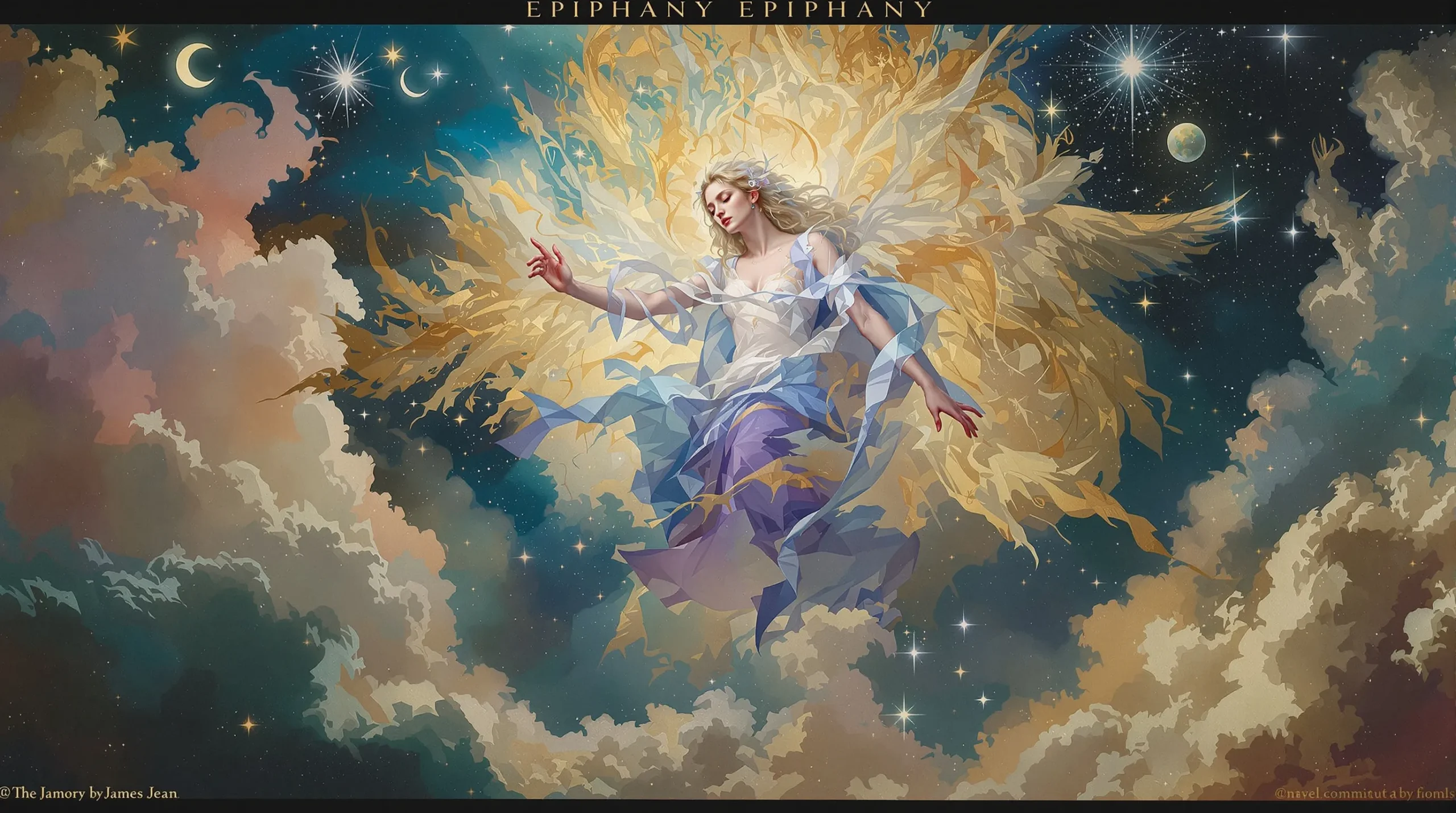
In the modern context, the Epiphany archetype could represent a moment of profound signal in an age of overwhelming noise. It is the personal, subjective truth that cuts through the static of data, opinions, and algorithm-fed content. For an individual's personal mythology, it may function as a sacred event, a private miracle where the universe seems to momentarily stop and whisper a secret meant only for them. This is not about objective fact, but about the felt sense of rightness, the sudden alignment of inner and outer worlds that gives a life its unique narrative gravity. The Epiphany is the anchor point in the story, the moment the protagonist finally understands the nature of their quest.
This archetype also symbolizes the mind’s hidden, associative power. It suggests that below the surface of our rational, linear thinking, a deeper consciousness is always at work, connecting dots we didn't know existed. An epiphany could be the result of this subterranean mind finally breaking through to the surface. In a personal mythos, living with this archetype means trusting these invisible processes. It means believing that the answer to a problem is already present within one’s accumulated experience, waiting not for more effort, but for a moment of quiet, a shift in perspective, that allows it to emerge whole and shimmering.
Furthermore, the Epiphany may symbolize a radical form of self-creation. Each genuine epiphany doesn't just add a new piece of information; it reconstructs the very self that perceives the information. The person before the realization and the person after are, in a mythological sense, two different characters. This transformative power is central to its meaning. To have the Epiphany as a key part of your story is to be open to periodic reinvention, to understand that your identity is not a fixed monument but a dynamic process, capable of being fundamentally re-patterned by a single, illuminating thought.