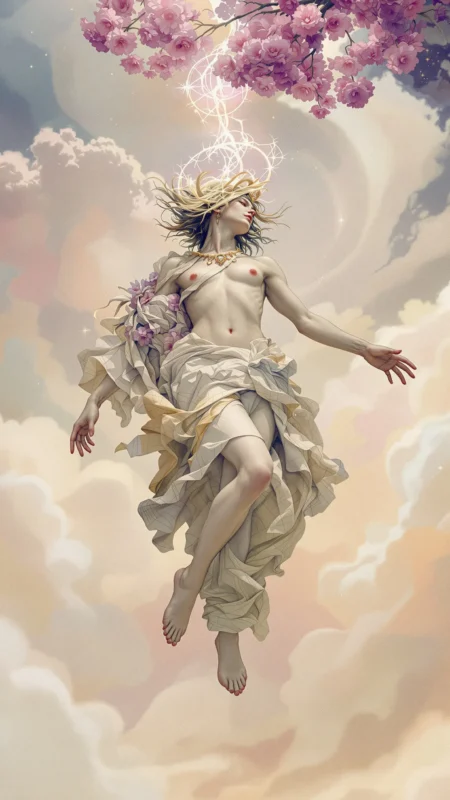
Famine

Archetype Meaning & Symbolism

scarcity, resourceful, gaunt, patient, barren, stark, resilient, hoarding, consuming, empty

  • The deepest hunger is not for bread, but for meaning. Do not curse the empty bowl; see it as the space where a feast might one day be born.

If Famine is part of your personal mythology, you may...

Believe

  • There is never truly 'enough,' only varying degrees of 'not enough yet.'

  • Wastefulness is the greatest moral failure, a direct insult to the struggle for survival.

  • True strength is not in having much, but in needing little.

Fear

  • Dependency on any person, system, or substance that you cannot control.

  • A sudden, unforeseen catastrophe that wipes out all your carefully saved resources.

  • Being seen as a burden or a drain on the people you care about.

Strength

  • Unparalleled resourcefulness and an ability to find a use for everything.

  • A profound and genuine appreciation for small comforts and moments of plenty.

  • Deep resilience and the capacity to endure hardship with stoic calm.

Weakness

  • A persistent pessimism that can prevent you from seeing or seizing opportunities.

  • An inability to fully relax and enjoy abundance, always waiting for the other shoe to drop.

  • A tendency to hoard resources—whether material, emotional, or informational—out of fear.

The Symbolism & Meaning of Famine

In personal mythology, Famine is rarely about the literal absence of food. It is the architect of the inner landscape of lack. It is the ghost that haunts the banquet, whispering that the plates will soon be empty. To have Famine in your mythos is to carry the ancestral memory of lean times, a psychic blueprint for survival that shapes your perception of abundance. You may live in a world of plenty but operate from a core belief in scarcity. This archetype is the silent force that compels you to save string, to finish every last crumb on your plate, to view windfalls with suspicion, knowing that winter is always, eventually, coming.

Famine's symbolism also extends to the creative and spiritual realms. It represents the fallow period, the necessary void before creation. It is the stark, quiet desert where prophets go to receive visions. In this context, Famine is not a curse but a crucible. It strips away the non-essential, forcing a confrontation with what truly sustains you. It could be the author's block that precedes a masterpiece or the dark night of the soul that births a profound spiritual awakening. It teaches that emptiness has its own texture, its own wisdom, and that true creativity often requires us to be hungry for it.

Ultimately, Famine's meaning is a duality of depletion and resilience. It is the parched earth, cracked and seemingly lifeless, that holds the dormant seed. It symbolizes the parts of you that have been starved: of love, of opportunity, of recognition. Yet, it also symbolizes the incredible, tenacious part of you that learned to survive on less, to find water where others saw only rock, to weave a life from the thinnest of threads. It is the testament to your own endurance, the quiet, persistent strength forged in the crucible of want.


Famine Relationships With Other Archetypes

The Harvester:

The Harvester, an archetype of abundance, bounty, and celebration, is Famine's polar opposite and often its secret object of desire. Famine watches the Harvester from a distance, with a mixture of suspicion and deep longing. In a personal mythos, this relationship may manifest as a cycle of boom and bust. You might work relentlessly under the influence of Famine to achieve a moment of harvest, only to be unable to enjoy it, immediately beginning to hoard the gains in fear of the next lean season. The Harvester represents joy in the present moment, while Famine is forever preparing for a future winter, making their coexistence a tense dialogue between gratitude and anxiety.

The Wanderer:

Famine is often the force that sets The Wanderer archetype in motion. When the land, literal or metaphorical, can no longer provide sustenance, the journey begins. The Wanderer is Famine's consequence: the search for a promised land, for a place of nourishment and safety. This relationship could define a life story of perpetual searching, of moving from job to job, relationship to relationship, or place to place, driven by a deep, internal sense of lack. The Wanderer is forever leaving a place of famine, but may carry the famine within, seeing scarcity even in lands of relative plenty.

The Miser:

The Miser is Famine's shadow, its lesson learned too well and twisted into pathology. Famine teaches cautious preservation; the Miser practices joyless hoarding. Where Famine saves out of a genuine fear of future want, the Miser accumulates for the sake of accumulation itself, starving both self and others in the midst of plenty. If Famine is a core part of your mythos, the Miser represents a potential pitfall: the point at which prudence curdles into paranoia, and the healthy respect for scarcity becomes an inability to ever feel or share abundance, creating a famine of the spirit that no amount of material wealth can cure.

Using Famine in Every Day Life

Navigating Financial Scarcity:

When your personal economy mirrors a drought-stricken land, the Famine archetype offers not despair but a blueprint for survival. It teaches the art of the essential, of mending rather than replacing, of finding nourishment in what others discard. This isn't about poverty as a virtue, but resourcefulness as a superpower: you learn to make a little go a long, long way, discovering a wealth of ingenuity when currency is scarce.

Overcoming Creative Blocks:

An artist facing a blank canvas or a writer a blinking cursor may be in the grip of a creative famine. Instead of forcing growth from fallow ground, you could embrace the emptiness. The Famine archetype suggests this is a necessary season. It is a time for gleaning inspiration from unexpected places, for allowing the soil of the psyche to rest, for understanding that the most fertile ideas often sprout after the longest winter of the mind.

Healing from Emotional Deprivation:

For those whose past is a landscape of emotional neglect, the Famine archetype can be a guide through the desert of the heart. It informs a cautious, deliberate approach to intimacy, teaching you to ration your trust and vulnerability. It also fosters a deep appreciation for genuine connection when it arrives, allowing you to savor every drop of kindness and build a personal storehouse of self-love that no external drought can deplete.

Famine is Known For

The Dust Bowl

A historical touchstone for ecological and economic collapse, where the very land became a source of scarcity, forcing migration and a recalibration of what it means to survive.

The Great Hunger:

A specific and devastating period, often an Gorta Mór in Ireland, that serves as a cultural memory of loss, dependency, and the deep trauma that scarcity can inflict upon a people's psyche for generations.

Emotional Starvation:

A more metaphorical but equally potent state of being, representing a profound lack of love, affirmation, or spiritual connection that leaves the soul gaunt and perpetually searching for sustenance.

How Famine Might Affect Your Personal Mythology

How Famine Might Affect Your Mythos

When Famine is a central thread in your personal mythos, your life story is likely a narrative of survival against the odds. Your great epic may not be about slaying dragons but about making it through the winter. Key plot points could revolve around periods of intense struggle, scarcity, and loss, followed by moments of hard-won stability. You may see your life as a series of lean years and slightly-less-lean years. Victories are not measured by trophies or accolades but by a full pantry, a paid-off debt, a stable roof over your head. The central conflict of your story is the ongoing battle against entropy and depletion, a quiet, persistent effort to build a buffer against the inevitable return of hardship.

This archetype could also cast you as The Provider-Against-All-Odds or The One Who Remembers the Lean Times. Your myth might be defined by a significant early experience of lack—be it financial, emotional, or social—that becomes the foundational event of your life. Every subsequent chapter is then a reaction to, or a recovery from, that initial famine. You may interpret your successes not as personal triumphs but as temporary reprieves. The narrative arc bends not toward a final, glorious victory, but toward the creation of a sustainable, resilient life, a small, walled garden in the midst of a vast and unpredictable desert.

How Famine Might Affect Your Sense of Self

Your self-perception may be deeply colored by a sense of being inherently 'not enough.' Famine teaches that resources are limited, and this can be internalized as a belief that your own energy, talent, or worth are also finite and easily depleted. You might see yourself as someone who must perpetually conserve, who cannot afford to be generous with your time, emotions, or creativity for fear of running out. This can lead to a kind of psychic austerity, where you deny yourself pleasure and rest, viewing them as luxuries. The internal monologue is often one of caution and self-restraint: 'Don't get your hopes up,' 'Save it for a rainy day,' 'You can't afford to fail.'

Conversely, this archetype could forge an identity built on incredible self-reliance and resilience. You may see yourself as a survivor, someone who can thrive where others would wither. Your sense of self-worth could be deeply tied to your ingenuity, your ability to make something from nothing, and your stoicism in the face of hardship. You might take a quiet pride in your low needs and your capacity to endure. The risk, however, is that this identity can become a trap, making it difficult to accept help or to believe you are worthy of ease and abundance when it arrives. You may feel like an imposter in times of plenty, more at home in the familiar landscape of struggle.

How Famine Might Affect Your Beliefs About The World

The world, seen through the lens of Famine, is often a zero-sum game. There is a finite amount of success, happiness, and resources, and one person's gain is another's loss. This perspective fosters a competitive and cautious approach to life. You may be skeptical of 'win-win' situations and view good fortune with suspicion, waiting for the other shoe to drop. The underlying assumption is that the universe is fundamentally indifferent or even hostile, and that stability is a temporary anomaly. This worldview prizes pragmatism over idealism and preparation over spontaneity. The future is not a wide-open horizon of possibility but a series of potential crises to be managed and mitigated.

This perspective could also cultivate a profound sense of gratitude for small things. When you believe that nothing is guaranteed, a simple meal, a moment of peace, or a gesture of kindness can feel like a miraculous gift. This worldview strips away entitlement and replaces it with a deep, quiet appreciation for what is present. You may find beauty in austerity, wisdom in simplicity, and a form of grace in the act of 'making do.' While it may be a world view shaded with pessimism, it is also one that is rarely disappointed and often finds cause for thankfulness in the most mundane aspects of existence.

How Famine Might Affect Your Relationships

In relationships, the Famine archetype may manifest as a deep-seated fear of dependency. Leaning on someone else can feel like a profound risk, as your inner narrative warns that they, too, may run out of what they can offer. This can lead to a guarded self-sufficiency in partnerships, an unwillingness to ask for help, and a tendency to feel like a burden. You might unconsciously test your partners, hoarding your own affection and vulnerability to see if they will stick around during 'lean times.' The flow of giving and receiving can feel fraught, as every expenditure of emotion is mentally calculated against a potential future deficit.

On the other hand, this archetype can foster relationships of immense loyalty and practicality. You may not be given to grand romantic gestures, but you show love by ensuring the metaphorical pantry is full and the roof doesn't leak. Your affection is demonstrated through acts of service and steadfast reliability. When you do commit, you are often in it for the long haul, prepared to weather any storm together. You value a partner who is also a survivor, someone who understands the importance of teamwork in the face of life's inevitable hardships. These relationships may lack a certain spontaneity, but they are often built on the unshakeable foundation of mutual reliance and a shared understanding of what it truly means to provide.

How Famine Might Affect Your Role in Life

You may unconsciously adopt the role of The Guardian of Scarcity. In any group, family, or organization, you are the one who watches the budget, who warns against extravagance, who reminds everyone of the worst-case scenario. This role is often thankless but vital. You are the designated realist, the anchor that keeps the collective from flying too close to the sun on wings of optimistic fancy. Your purpose, as you see it, is to ensure the long-term survival of the group, even if it means enforcing unpopular austerity measures in the short term. You are the steward of resources, the keeper of the seed corn for next season.

This archetype could also cast you in the role of The Alchemist of Lack. You might feel your purpose is to transform scarcity into something beautiful or meaningful. This could be the artist who creates masterpieces from discarded materials, the chef who makes a feast from scraps, or the community leader who builds a thriving organization on a shoestring budget. Your role is not just to survive scarcity, but to use it as a creative constraint, to prove that emptiness is not an end point but a starting point. You find your calling in demonstrating the profound resilience of the human spirit, showing others how to find nourishment in the most barren of landscapes.

Dream Interpretation of Famine

In a positive context, dreaming of Famine—a barren field, an empty pantry, a cracked desert floor—could symbolize a necessary clearing of the slate. Your psyche may be telling you that a particular area of your life needs to lie fallow to regain its fertility. It can represent the shedding of old, non-essential beliefs, relationships, or habits, creating a spaciousness for new growth. Such a dream might encourage you to embrace a period of simplicity, to turn inward and discover what truly nourishes you when external sources are scarce. It is an invitation to rest, to contemplate, and to trust that seeds are germinating beneath the seemingly lifeless surface.

In a negative context, a dream of Famine could be a stark warning from your unconscious. It may point to a profound depletion in your waking life: you could be starving for affection, creativity, spiritual meaning, or simple joy. An endless, dusty road in a dream might reflect a career path that offers no fulfillment. An empty plate could symbolize a relationship that takes far more than it gives. These dreams are often accompanied by feelings of anxiety, weakness, and despair, urging you to identify the source of this inner starvation and take immediate action to seek out the nourishment you desperately need.

How Famine Archetype Might Affect Your Needs

How Famine Might Affect Your Physiological Needs

The Famine archetype could translate into a hyper-awareness of your body's basic needs. You may be acutely sensitive to the slightest pang of hunger or thirst, seeing it as an early warning signal of a system in deficit. This can lead to meticulous planning around meals, a fear of being caught without snacks, or a tendency to eat not just for current hunger but for a future, anticipated hunger. Food is not just fuel; it's security. Every meal is a small victory against the ever-present threat of depletion. This mindset may lead to complex relationships with food, oscillating between rigid control and a compulsion to stock up.

Alternatively, this mythos might cause you to view your body's needs as a weakness to be overcome. You might take a strange pride in your ability to ignore hunger, to push through fatigue, to subsist on the bare minimum. In this narrative, the body is a tool, and its demands are inconvenient interruptions to the more important work of survival. This can lead to a state of chronic self-neglect, where you become disconnected from your own physiological signals. Rest and proper nutrition are seen as indulgences rather than necessities, and you may drive yourself to the point of physical collapse before admitting your own very real, very human limits.

How Famine Might Affect Your Ideas of Belonging

The need for belonging and love may be fraught with the fear of being a drain on others. You might believe, on a subconscious level, that you must earn your place in any group or relationship by contributing more than you take. This can make it very difficult to be vulnerable or to ask for support, as doing so feels like admitting you have a deficit, which could lead to being cast out. You may gravitate towards relationships that are transactional and clearly defined, where the terms of exchange are explicit. Love and affection can feel conditional, something you must constantly work to deserve, lest the supply be cut off.

This can also cultivate a fierce and protective loyalty towards your chosen few. When you do feel a sense of belonging, you may guard it jealously. You show love by providing, by ensuring the people in your 'tribe' are safe and have what they need. Your affection is a bulwark against the harshness of the world. You might create a small, tightly-knit family or community where resources are shared, and everyone is responsible for everyone else. For you, belonging is not about parties and social pleasantries; it is about knowing who would share their last piece of bread with you in the dead of winter, and for whom you would do the same.

How Famine Might Affect Your Feelings of Safety

Your need for safety may be paramount, manifesting primarily as a drive for financial and resource security. Safety isn't an abstract feeling; it's a tangible number in a bank account, a stockpile of canned goods in the basement, a fully paid-off mortgage. You may find it nearly impossible to feel safe without a significant buffer between you and potential disaster. This can create a life of perpetual striving for a level of security that can never quite be reached, as the goalposts of 'enough' are constantly shifting. You might avoid all forms of risk, from career changes to adventurous travel, because they threaten the fragile stability you've worked so hard to build.

The Famine archetype could also define safety as radical self-sufficiency. True security, in this view, comes not from accumulated wealth but from the knowledge that you can survive with nothing. You might feel safest when you are unburdened by possessions or dependencies that could be lost. This could lead to a minimalist lifestyle, not for aesthetic reasons, but for strategic ones. Safety is mobility, adaptability, and a skillset that allows you to land on your feet no matter what. The ultimate security is knowing that if everything were taken away tomorrow, you would have the inner resources and practical knowledge to start again from scratch.

How Famine Might Affect Your Views of Esteem

Esteem, within the Famine mythos, is almost exclusively tied to competence and resilience. Your self-worth is a direct reflection of your ability to be self-sufficient, to solve problems with limited resources, and to endure hardship without complaint. You feel good about yourself when you are productive, resourceful, and in control. Praise for your creativity or personality might feel hollow, but acknowledgement of your work ethic or your ability to fix a broken appliance feels deeply validating. Conversely, failure, especially a failure that leads to financial loss or dependency, can deliver a devastating blow to your self-esteem, feeling like a fundamental indictment of your character.

This can also create a dynamic where you struggle to feel worthy of 'unearned' comforts or pleasures. Your esteem is built on a foundation of deservingness, which is achieved through struggle and effort. Relaxing, taking a vacation, or indulging in a luxury can be accompanied by a nagging sense of guilt or anxiety. You might believe that you haven't done enough to warrant such a reward. True esteem, therefore, is not a state of being but a state of perpetual doing. It's the quiet satisfaction of knowing you have once again kept the wolves from the door through your own grit and ingenuity.

Shadow of Famine

When Famine's shadow falls, the prudent survivor becomes the paranoid Miser, and the resourceful conserver becomes the Devourer. In its shadow form, this archetype is not about navigating scarcity but about creating it, both for oneself and for others. It is the millionaire who lives in squalor, terrified of losing a fortune they never use. It is the manager who starves their team of resources and praise out of a misguided belief that pressure and lack are the only true motivators. The shadow of Famine is a self-perpetuating prophecy: by operating from a place of absolute lack, you create the very conditions you fear, alienating allies, burning out your own spirit, and ensuring the land of your life remains forever barren.

This shadow can also manifest as a competitive voraciousness, a need to consume all available resources before anyone else can. It is the fear-driven impulse to hoard, to take more than one's share, not for need, but to prevent others from having it. This can play out in relationships, where one partner emotionally 'devours' the other, draining them of their energy and vitality. It is the ghost of hunger that is never satisfied, no matter how much it consumes. It is a spiritual black hole, where the wisdom of 'enough' has been lost, replaced by the insatiable, desperate cry for 'more.'

Pros & Cons of Famine in Your Mythology

Pros

  • You are exceptionally prepared for life's downturns and crises.

  • You develop incredible ingenuity and problem-solving skills.

  • You are likely to live a life with minimal waste and a deep respect for resources.

Cons

  • You may find it difficult to trust in prosperity or accept help from others.

  • Your constant focus on potential lack can create a life filled with anxiety.

  • You may inadvertently impose a culture of scarcity on your loved ones or colleagues.