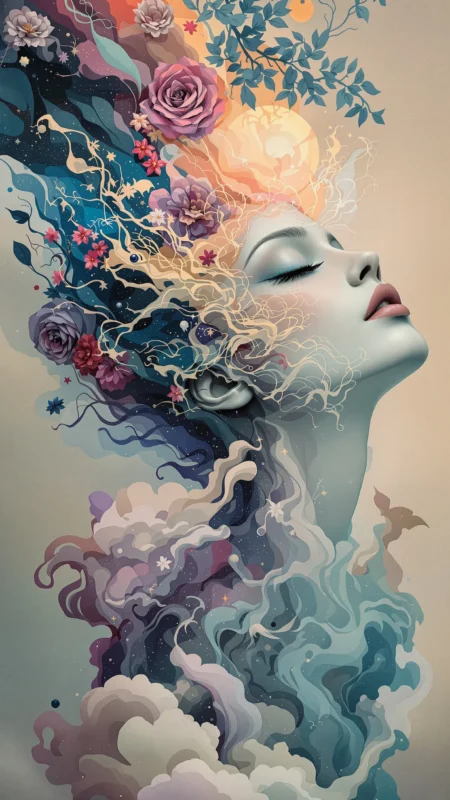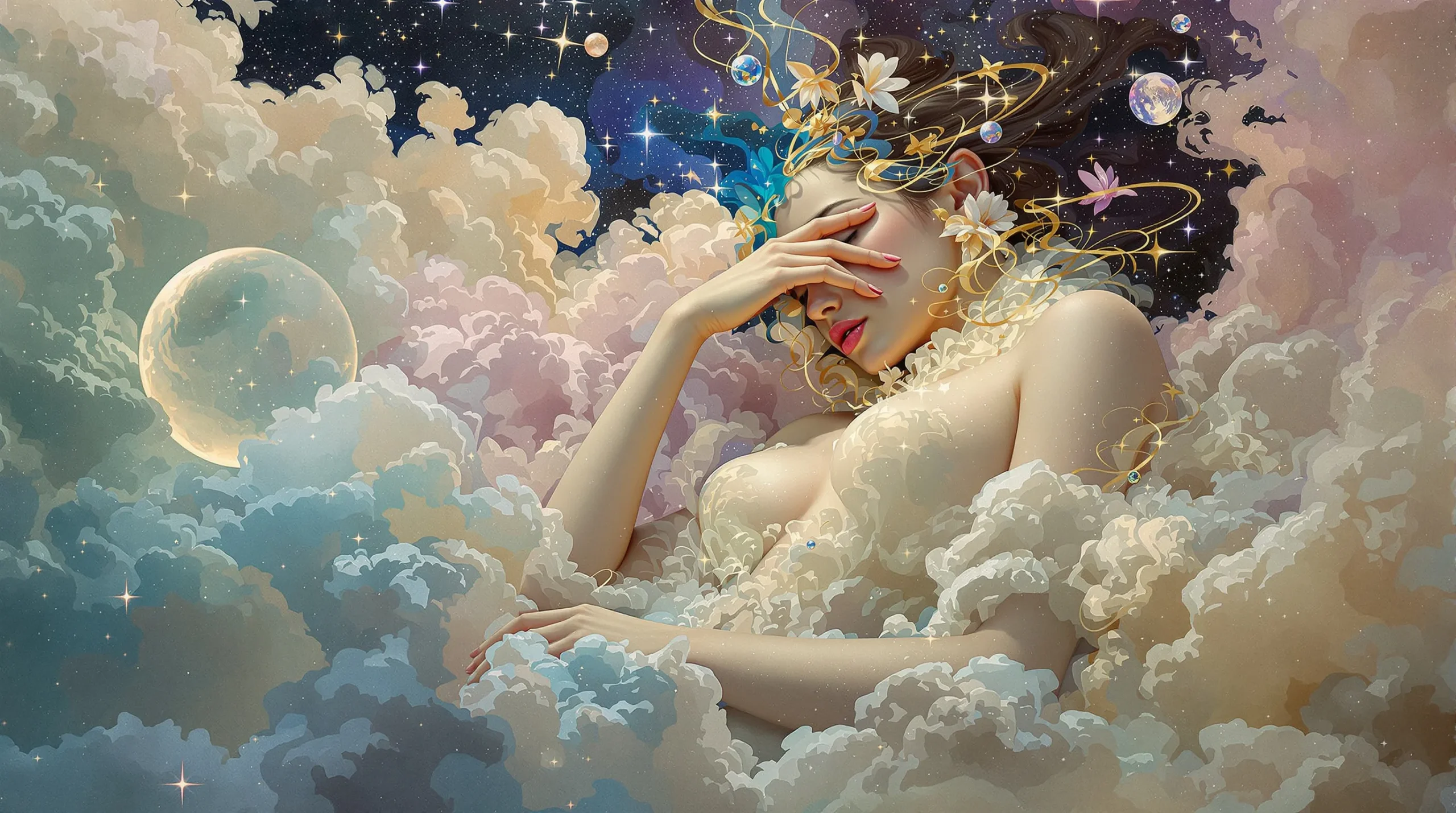


Illness

Archetype Meaning & Symbolism

Liminal, Revealing, Isolating, Demanding, Fragile, Reshaping, Slow, Ancient, Intimate, Uninvited

  • Stop. The world can spin without you for a moment. Listen to the quiet language of your own bones.

If Illness is part of your personal mythology, you may...

Believe

  • You may believe that the body has a wisdom that the mind cannot comprehend, and that its symptoms are not malfunctions but messages.

    You may believe that true strength is not the absence of weakness, but the courage to live gracefully with it.

    You may believe that the most profound moments of connection and beauty are often found in the quiet, small spaces that illness forces one to inhabit.

Fear

  • You may fear being a burden to those you love, that their lives are being diminished by the demands of your care.

    You may fear the loss of your own identity, that “patient” or “sick person” will eclipse every other part of who you are.

    You may fear the future's unknowability, not with the gentle curiosity of the healthy, but with a constant, low-grade dread of the next decline, the next symptom, the next loss.

Strength

  • You may possess a profound and unsentimental empathy for the suffering of others.

    You may have a highly developed ability to find joy and meaning in the present moment, free from the anxieties of long-term ambition.

    You may develop a fierce and resilient spirit, having been tested in ways that few can understand.

Weakness

  • You may be prone to a catastrophic mindset, where every new sensation is interpreted as a sign of impending doom.

    You may develop a sense of bitterness or envy toward the seemingly effortless lives of the healthy.

    You may use your illness as a shield, avoiding risks, responsibilities, or relationships under the guise of self-care.

The Symbolism & Meaning of Illness

In personal mythology, Illness is the uninvited oracle. It speaks a language the body understands before the mind, a dialect of ache and fatigue that translates into profound truths. It may arrive as a disruption, a thief of time and certainty, but its deeper symbolic role is often that of the catalyst. It is the journey to the underworld, the descent into the quiet, dark spaces of the self that are inaccessible in the bright glare of health. This archetype forces a radical re-evaluation of the story one tells about one's life. The protagonist is no longer simply an adventurer conquering external peaks; they become a cartographer of their own internal landscape, mapping the fragile territories of their own biology.

Furthermore, Illness could symbolize a necessary surrender. In a culture that worships control and relentless productivity, this archetype is the great corrective, a reminder of the body's sovereignty and the planet's ancient, cyclical rhythms of growth and decay. It dismantles the illusion of a separate, invincible self and reconnects one to a more elemental existence. The mythos shifts from a story of human will triumphing over nature to one of human consciousness learning to reside within it. Time itself may warp under its influence, stretching into the long, slow minutes of a sleepless night or compressing into seasons lost to convalescence, teaching a patience that the ticking clock of the well world cannot.

This archetype also embodies a peculiar form of intimacy. It is an intimacy with one's own mortality, with the intricate, mysterious workings of one's own cells. It may isolate you from the communal table, but it sits with you in the quiet room, a companion that knows you without illusion. In your personal myth, Illness could be the mysterious stranger who arrives and reveals that the house you thought you lived in—your body, your life, your identity—is far more complex and fragile than you ever imagined. It's a difficult guest, but one who leaves behind the gift of radical presence, the acute, vibrant awareness of what it means to simply be.


Illness Relationships With Other Archetypes

The Healer:

The relationship between Illness and The Healer is a delicate, often fraught, dance. Illness is not simply the problem that The Healer exists to solve; it may be a messenger with a vital truth. The Healer who approaches with only scalpels and prescriptions, seeking to eradicate Illness, may be viewed as a well-intentioned but deaf interpreter, silencing the message before it is understood. A more symbiotic relationship develops when The Healer learns to listen to Illness, to see it not as an enemy but as a disequilibrium that points to a deeper wound in the patient's mythos. In this dynamic, healing is not just a return to a previous state but an integration of the wisdom that Illness brought to light.

The Hero:

To The Hero, whose mythos is built on action and conquest, Illness may appear as the ultimate antagonist, a dragon nesting in one's own bones. It is the one challenge that cannot be met with sword or shield. This encounter forces a profound redefinition of heroism. The heroic journey shifts from the external world to the internal landscape. Victory is no longer about slaying the beast but about learning to live with it, to understand its nature, and to find strength not in spite of fragility, but because of it. The Hero may emerge from the sickbed not with a trophy, but with the quiet, unshakeable courage of one who has faced their own limits and survived.

The Home:

Illness utterly transforms The Home archetype. What was once a place of refuge and departure becomes the entire world, a landscape of confinement and intense focus. The bed becomes a ship, the window a portal, the hallway a long and challenging passage. The Home is no longer just a backdrop for the life story but a central character. It may become a sanctuary, its quiet corners offering solace, or a prison, its familiar walls echoing with loneliness. Illness tests the very foundation of The Home, revealing whether it is a place that can truly hold and sustain a person when their world shrinks to the space of a single room.

Using Illness in Every Day Life

Navigating Creative Blocks:

When inspiration feels like a distant country, the Illness archetype may invite a fallow period. Instead of forcing productivity, one could embrace the stillness it represents. This might mean literal rest, but it could also mean ceasing the struggle, allowing the mind to lie down, and paying attention to the small, internal signals one usually ignores. The creative breakthrough might not be a thunderclap but a quiet fever, an idea that incubates in the dark and emerges, fragile but fully formed, when strength returns.

Re-evaluating Ambition:

In a life narrative driven by relentless forward momentum, Illness can be the unseen wall that halts the charge. To invoke its wisdom here is to question the nature of the race itself. One might sit with the uncomfortable questions: What am I running from? What destination do I seek, and is it worth the cost to my own vessel? Illness proposes a different kind of progress, one measured not in miles covered but in depths understood. It could be the catalyst for leaving a soul-crushing job or redefining success on more humane, sustainable terms.

Deepening a Relationship:

When a connection with a loved one becomes superficial, a matter of shared calendars and routine updates, the archetype of Illness introduces a radical intimacy. It strips away pretense. To channel its energy is to show vulnerability, to ask for help, or to offer it without reservation. It’s the late-night conversation in a hushed room, the simple act of bringing a glass of water, that carries more weight than a thousand grand gestures. It forces a reliance that can either break or beautifully reinforce the bonds between people.

Illness is Known For

The Great Pause

Illness is known for its ability to impose a full stop on the narrative of a life. It may draw the curtains, quiet the room, and demand a period of inactivity, forcing a retreat from the world's relentless pace and a confrontation with the self that exists without its usual roles and responsibilities.

The Refiner's Fire:

It is a crucible. Illness may burn away the extraneous: the trivial worries, the social obligations one never truly valued, the ambitions that belonged to someone else. What remains after this purification is often a core of profound clarity about what truly matters.

The Unseen Companion:

For many, Illness is not a visitor but a permanent resident. It is the chronic condition that walks alongside them, a constant negotiation partner that shapes daily decisions, alters perceptions of time, and becomes an integral, if challenging, part of their identity.

How Illness Might Affect Your Personal Mythology

How Illness Might Affect Your Mythos

When Illness becomes a central feature of your personal mythos, it fundamentally alters the plot. Your life story may no longer be a linear progression of triumphs and milestones but a cyclical, recursive narrative. The story is bisected: there is the “Before,” a half-remembered country of ease and unconscious grace, and the “After,” a new territory where the protagonist must learn a new language of limits and possibilities. This archetype often introduces the theme of the quest, not for a golden fleece, but for a diagnosis, a treatment, an accommodation, a moment of peace. The great conflicts in your story may not be with external villains but with your own body, with uncertainty, and with the bureaucracy of care.

Your mythos could also become one of translation. You become the interpreter of a foreign tongue spoken by your own nerves and tissues, tasked with communicating its subtle and urgent meanings to a world that often prefers simple, heroic tales of recovery. This role as translator shapes your identity within the narrative. You are the keeper of a secret knowledge, one gained at great cost. The story’s climax might not be a dramatic cure but a quiet moment of acceptance, an integration of this difficult wisdom into the fabric of who you are, transforming the tragedy of affliction into a complex, nuanced, and deeply human story of resilience.

How Illness Might Affect Your Sense of Self

Your perception of self may be profoundly fractured and then remade by the Illness archetype. The self you knew—capable, independent, defined by actions and roles—could feel like a stranger. Illness introduces a self that is contingent, fragile, and deeply embodied. You may learn that you are not just a mind piloting a body, but an integrated, mysterious system whose microscopic processes can dictate the entire course of your life. This can be terrifying, but it might also be liberating, freeing you from the tyranny of the ego and connecting you to a more primal, creaturely existence.

This might also foster a divided self. There could be the self who remembers running, dancing, and working late into the night, and the self who now carefully measures each expenditure of energy. The dialogue between these two selves is a central drama. The integration of these parts—the healthy ghost and the present reality—is a major arc of your internal story. Self-compassion may cease to be an abstract concept and become a necessary, daily practice of negotiating the needs and limits of a body that has its own profound, and sometimes painful, wisdom.

How Illness Might Affect Your Beliefs About The World

Living with the Illness archetype could dismantle a worldview built on fairness, predictability, and control. The world may no longer seem like a just place where good things happen to good people. Instead, you might come to see existence as fundamentally chaotic, beautiful, and indifferent. This is not necessarily a descent into cynicism; rather, it can be an awakening to a more profound reality. You may find a deeper appreciation for the sheer, precarious luck of a good day, the taste of a simple meal, the warmth of the sun on your skin. The world's small, transient beauties can become intensely vivid against the backdrop of constant challenge.

Your perspective on time may also shift dramatically. The relentless, future-oriented focus of modern culture may seem absurd. The past is a country to which you cannot return, and the future is a landscape of uncertainty. As a result, the present moment—this breath, this sensation, this quiet minute—may become the only place of true refuge and reality. This radical presence, born of necessity, can be a profound spiritual gift. You may see the world not as a project to be completed or a ladder to be climbed, but as a series of moments to be inhabited as fully as possible.

How Illness Might Affect Your Relationships

Illness is a powerful solvent in relationships, capable of dissolving superficial connections and revealing the true substance of a bond. It may act as a filter, showing you who is willing to enter the quiet, often inconvenient, country of your new reality. Friends who were companions in activity may fall away, while others may reveal unforeseen depths of loyalty and compassion. You might find that the basis of your connections shifts from shared doing to shared being, from going out to staying in, from loud celebration to quiet company.

Within your most intimate relationships, Illness can introduce a dynamic of care that requires careful navigation. The roles of patient and caregiver can overshadow the identities of partners, lovers, or friends. There may be a risk of resentment on one side and guilt on the other. Yet, this same dynamic can also foster an astonishing intimacy. It necessitates a level of communication and vulnerability that many never experience. It's in the non-verbal understanding of a pain scale, the shared navigation of a medical system, the quiet acceptance of a cancelled plan, that a new, resilient, and deeply tested love may be forged.

How Illness Might Affect Your Role in Life

The archetype of Illness may force a complete abdication of your previous roles. The identity of “provider,” “adventurer,” “social hub,” or “hard worker” might be stripped away, leaving a void that can feel like a loss of self. You may be thrust into the role of the “patient,” a passive and often dehumanizing label that you must either fight against or learn to inhabit on your own terms. Your life's work may shift from an external career to the demanding, full-time job of managing your own health.

However, this stripping away of old roles can also be a catalyst for discovering a new, more authentic one. You might become the Advocate, not just for yourself but for others in similar situations. You could become the Witness, one who sees the world with a clarity that only comes from proximity to life’s fragile edge. Or you may become the Contemplative, whose forced withdrawal from the world allows for insights that the busy and the well may overlook. Your purpose may be redefined not by what you do, but by the quality of your presence and the wisdom you are able to distill from your experience.

Dream Interpretation of Illness

In a positive context, dreaming of illness might not be a literal portent of sickness but a symbolic invitation from your psyche to rest and retreat. It could signify that your inner self is demanding a pause from the relentless pace of your waking life. A dream of a fever could represent a necessary purification, the burning away of old, unhealthy attachments or beliefs. Discovering a hidden, painless ailment in a dream might symbolize an dawning awareness of a part of yourself you have neglected, not as a flaw, but as a unique quality that requires gentle attention and integration. It may be your subconscious signaling that it is time to stop, listen, and attend to your own deepest needs before proceeding.

Conversely, in a negative context, illness in a dream often speaks to feelings of powerlessness, contamination, or decay in some area of your life. A dream of a wasting disease could reflect a sense that your life force, creativity, or hope is being drained by a toxic job, relationship, or mindset. Dreaming of an illness that isolates you from others might point to a profound fear of being abandoned or a feeling of being fundamentally different and misunderstood. If the illness in the dream is mysterious and undiagnosable, it could symbolize a deep-seated anxiety or a problem in your life that you feel utterly unequipped to face, a shadow that you cannot name but whose debilitating effects you feel acutely.

How Illness Archetype Might Affect Your Needs

How Illness Might Affect Your Physiological Needs

When Illness is your archetype, your relationship with your foundational physiological needs becomes a central focus of your mythos. Food is no longer just for pleasure or fuel; it may be medicine or poison, a complex code you must decipher to manage your well-being. The simple act of eating could be fraught with calculation and consequence, turning each meal into a conscious negotiation between desire and necessity. Your mythos becomes a story of deep listening, of learning the specific language of your body's requirements, a language that may diverge wildly from conventional wisdom.

Sleep and rest are transformed from restorative luxuries into non-negotiable pillars of your existence. You might learn that true rest is not emptiness but a generative state, a workshop where the quiet, miraculous work of repair takes place. The need for shelter expands beyond a roof over your head to the creation of a sanctuary, a controlled environment where your physiological equilibrium is protected from the random aggressions of the outside world, be it allergens, noise, or stress. Your very survival in the narrative depends on honoring these elemental needs with a devotion that the healthy world may mistake for indulgence.

How Illness Might Affect Your Ideas of Belonging

Illness can be a profoundly isolating force, a pane of glass that descends between you and the world of the well. The shared language of casual complaints, future plans, and boundless energy can suddenly feel foreign. You may feel like an exile, watching a party from a distant window. This can trigger a deep crisis of belonging, a fear that your experience is so unique that you will never be truly understood or accepted again. Friendships may strain under the weight of your new reality, and the fear of being a burden can become a constant companion.

However, this very isolation can be the catalyst for finding a new, more authentic form of belonging. It may lead you to seek out others who speak your new language, forging powerful bonds in support groups, online communities, or among fellow travelers in the waiting rooms of specialists. These connections, born not of shared interests but of shared existence, can be extraordinarily profound. Furthermore, it forces a refinement of your existing relationships. You discover who is willing to sit with you in the quiet, to love the person you are now, not the person you were. In this stripped-down landscape, you may find a truer, more resilient sense of tribe.

How Illness Might Affect Your Feelings of Safety

The Illness archetype fundamentally redefines the concept of safety. External threats like financial instability or physical danger may still exist, but the more immediate and persistent threat could be internal. Safety is no longer about locking the doors at night; it is about managing the unpredictable territory of your own body. A minor infection, a change in the weather, a stressful encounter—these can be seismic events in your personal landscape. Your sense of security may become contingent on access to medication, proximity to trusted doctors, and the stability of your daily routines.

This creates a mythos where the protagonist must become a master strategist of their own security. You may develop a hyper-awareness, a constant scanning of both your internal state and external environment for potential triggers. This can feel like a state of high alert, but it can also foster a profound competence. Safety becomes a verb, an active practice of building a life that accommodates your vulnerabilities. It is the hard-won peace of knowing you have created a bastion of predictability in a world that, for you, is fraught with hidden dangers.

How Illness Might Affect Your Views of Esteem

Self-esteem, so often tethered to productivity, appearance, and social success in the modern world, may suffer a devastating blow under the influence of the Illness archetype. When you can no longer do the things that made you feel valuable, a profound crisis of worth can ensue. You might judge your body as failing or defective, and this judgment can easily metastasize into a core belief about your entire self. The external world's validation may diminish, and you are left alone with a self you may no longer recognize or value.

The journey through this landscape, however, offers the opportunity to rebuild esteem on a completely new foundation. It forces you to uncouple your worth from your abilities. Your value must be discovered not in doing, but in being. Esteem may be reborn as resilience, the quiet pride in enduring another difficult day. It may be found in your capacity for empathy, which has been deepened by your own suffering. It is the radical act of claiming your inherent worth as a human being, independent of your health, a quiet, unshakeable dignity that is forged in the very fires you feared would consume you.

Shadow of Illness

When the Illness archetype falls into shadow, it can manifest as a permanent victim identity. Here, the individual's entire mythos becomes a monument to their suffering. They may find a perverse power in their fragility, using it to manipulate others, absolve themselves of responsibility, and resist any genuine opportunity for healing or improvement. In this shadow form, the illness is no longer a challenging teacher; it is a tyrannical ruler of a shrunken kingdom. The person becomes so identified with their diagnosis that the prospect of health feels like a threat, an annihilation of the self they have so carefully constructed.

The opposite shadow is a brutal denial of the body's reality. This is the individual who wages war on their illness, treating their body as a treacherous enemy to be punished and conquered. They may push themselves far beyond their limits, refusing accommodations, ignoring pain, and masking their vulnerability with a brittle performance of wellness. This shadow expression rejects the wisdom of surrender, mistaking it for weakness. The tragic irony is that this relentless battle often exacerbates the very condition they are fighting, leading to a cycle of boom and bust that ultimately erodes the very strength they are so desperate to project.

Pros & Cons of Illness in Your Mythology

Pros

  • It can be a powerful catalyst for radical self-awareness and spiritual growth.

    It may foster incredibly deep, authentic, and resilient relationships with those who remain present.

    It often cultivates a profound appreciation for the simple, elemental joys of being alive.

Cons

  • It can lead to profound isolation and a feeling of being misunderstood by the world of the well.

    It may cause chronic pain, fatigue, and suffering that limits life experience.

    It can create immense financial and emotional strain on both the individual and their loved ones.