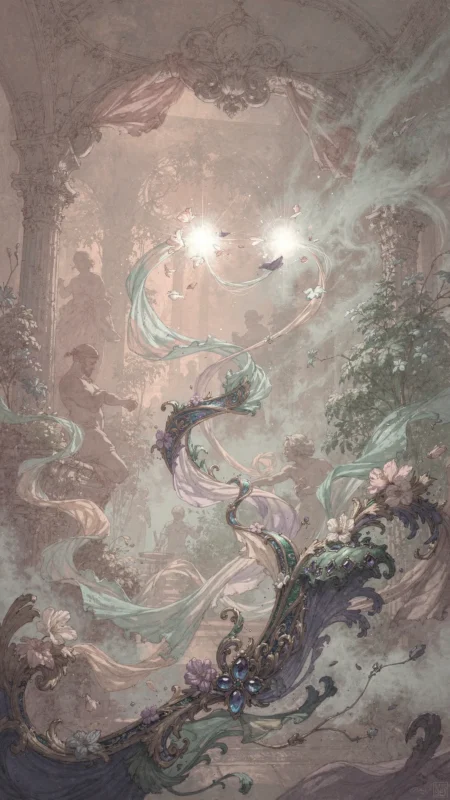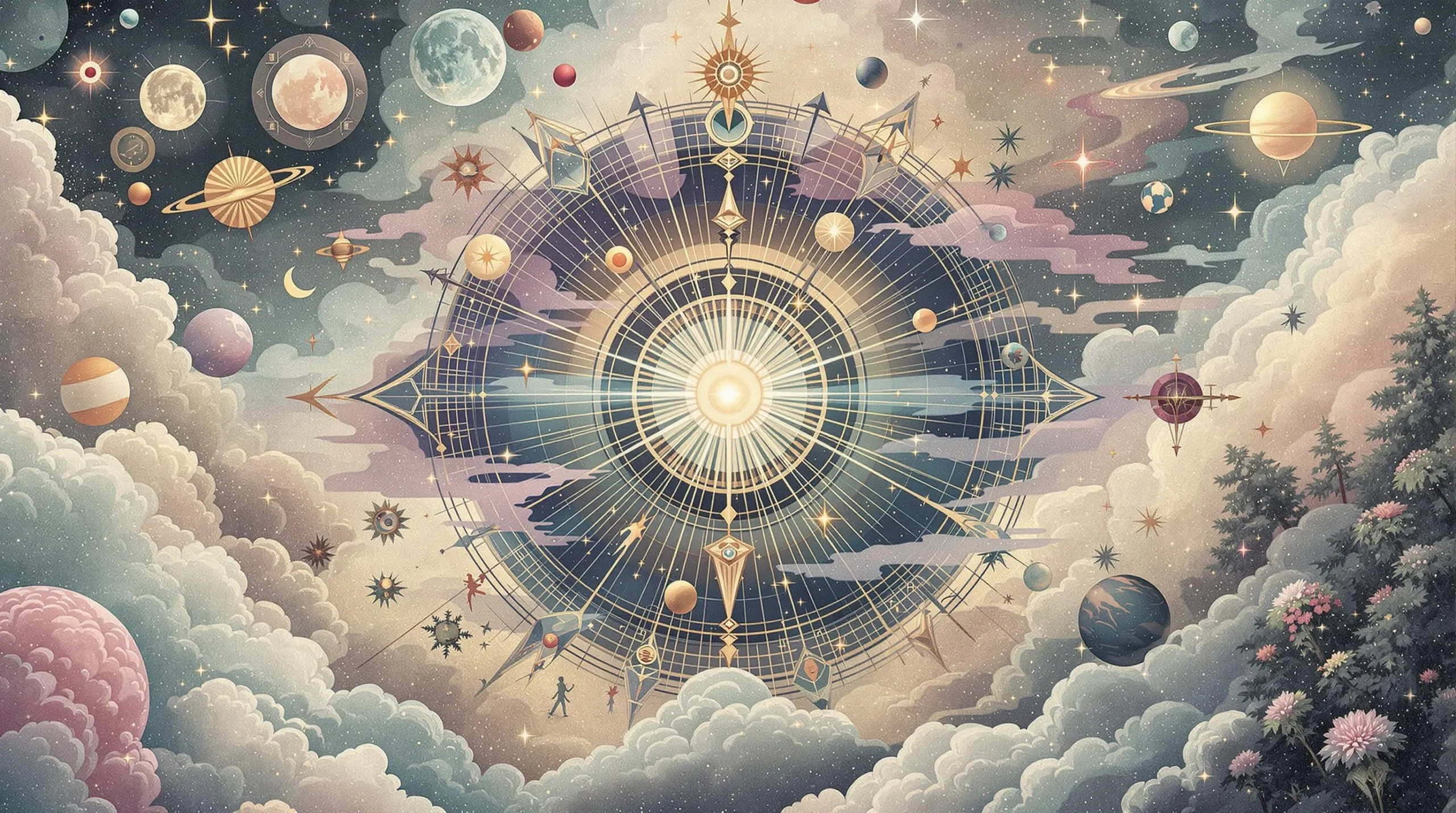


Two Connected Points

Archetype Meaning & Symbolism

Duality, Connection, Polarity, Relationship, Tension, Bridging, Distance, Dependence, Symmetry, Opposition

  • I am the journey and the map. The meaning is not in either destination, but in the path that proves they are not separate.

If Two Connected Points is part of your personal mythology, you may...

Believe

  • The truth of any matter is never found in one extreme, but in the tension between two opposing ideas.

  • Everything in the universe exists in a relationship to something else; nothing and no one is truly alone.

  • My purpose is not to win or lose, but to connect and understand.

Fear

  • Being forced to make a definitive choice that means severing a connection to the other side.

  • Total isolation: becoming a single point with no other to connect to.

  • That some gaps are too wide to be bridged, and some points are fundamentally irreconcilable.

Strength

  • A natural talent for empathy, diplomacy, and seeing multiple perspectives at once.

  • The ability to build strong, meaningful, and lasting relationships based on mutual respect.

  • Finding profound meaning and stability in a world that others might find chaotic and disconnected.

Weakness

  • A tendency towards indecisiveness, as you can always see the validity of both points of view.

  • Feeling overly responsible for the emotional state of others and the health of your relationships.

  • A risk of emotional exhaustion from being constantly pulled between competing needs or loyalties.

The Symbolism & Meaning of Two Connected Points

In the personal mythos, the Two Connected Points archetype emerges as the fundamental geometry of relationship. It is the silent, elegant line drawn between 'you' and 'them,' between 'here' and 'there,' between 'before' and 'after.' Its symbolism is not located in the points themselves, which are mere placeholders for states of being or individuals, but in the profound space of the connection. This archetype suggests that meaning is relational. A person, an idea, or an event does not hold significance in isolation but gains its texture and definition from what it is connected to. It is the primordial binary, the original pairing that allows a narrative to begin. Your life story, seen through this lens, may become a constellation of these connections: the line between your childhood home and your current one, the tense wire between a fear and a desire, the quiet, sturdy bond with a loved one.

The archetype speaks to the nature of choice and consequence. Every decision creates a new point, irrevocably connected to the point from which it was made. The path you didn't take haunts the one you are on, not as a mistake, but as its defining opposite. This could lend a certain gravity to your mythology, a sense that every moment is a fulcrum. The Two Connected Points might also symbolize an internal duality: the persona you show the world and the private self, the logical mind and the intuitive heart. The archetype doesn't demand these be reconciled into one homogenous point, but rather that you honor the connection between them, allowing them to inform each other in a dynamic, living polarity.

Ultimately, this archetype is about the sacredness of the 'in-between.' It finds beauty not in arrival but in the journey; not in resolution but in the creative tension that precedes it. It suggests your personal mythology is not a heroic solo performance but a duet. The universe, it whispers, is not made of particles but of the relationships between them. You are one point, the world is another, and your life is the ever-changing, vibrant line you draw between the two. It is the source code of empathy, the blueprint for dialogue, and the quiet acknowledgment that nothing, and no one, exists alone.


Two Connected Points Relationships With Other Archetypes

The Crossroads:

The Two Connected Points archetype has a parental relationship with The Crossroads. While The Crossroads presents a dizzying array of potential paths, each of its choices is, at its core, a simple binary: to go this way or that way. The Two Connected Points is the fundamental decision that underpins the more complex geometry of The Crossroads. Before you can choose between four roads, you must first understand the journey between your origin and the intersection itself. It represents the moment of decision distilled to its essence, the singular line of choice before it splinters into myriad possibilities.

The Mirror:

The relationship with The Mirror archetype is one of reflection and identity. The Two Connected Points can represent the self and its reflection, two points that are perfectly symmetrical yet opposite. The Mirror reveals the existence of the second point, forcing an acknowledgment of what is seen. This relationship explores themes of self-awareness, illusion, and the unsettling truth that our identity is often defined by what we project and what is reflected back to us. The connection between the person and their mirrored image is one of perfect, and sometimes terrifying, correspondence.

The Unraveled Thread:

The Unraveled Thread serves as the cautionary tale for the Two Connected Points. It is what happens when the connection is broken, when the tension snaps. While the Two Connected Points archetype celebrates the integrity of the line, The Unraveled Thread explores the chaos, loss, and formlessness that result from its severance. It is the aftermath of a broken bond, a failed dialogue, a journey abandoned. It reminds the Two Connected Points that connection is precious and requires maintenance, for once the thread is unspooled from its points, it may be impossible to reattach.

Using Two Connected Points in Every Day Life

Navigating a Career Change:

You may find yourself standing at a point labeled 'Current Job' while gazing at another labeled 'Dream Venture.' This archetype does not ask you to leap, but to consciously build the bridge. It invites you to map the space between: acquiring a new skill is laying a plank, a networking coffee is driving a nail. The journey itself, the act of connecting these two points in your life, becomes the transformation, not the final arrival.

Resolving an Argument:

In a disagreement, you and the other person may seem like two distant, opposing points. To embody this archetype is to stop shouting across the void and instead focus on the invisible line of connection that remains. It is to ask: what is the tension between us made of? Where is the common ground, the midpoint? The goal shifts from 'winning' from one point to understanding the geometry of the shared space.

Understanding Personal Growth:

This archetype can frame your personal history. One point is the person you were; the other is the person you are becoming. The line between them is your story. Rather than judging the past point or anxiously awaiting the future one, you can find profound meaning in the distance traveled, the lessons that formed the connection, and the awareness that you are, at all times, a living bridge between your own possibilities.

Two Connected Points is Known For

The Bridge

It is known for representing the link, the passage, the means of traversing a gap. This is not merely physical distance but the space between ideas, cultures, states of being, or two separate selves.

Polarity

The archetype embodies the concept of opposites that define each other: light and dark, chaos and order, silence and sound. It suggests that one point cannot be fully understood without the existence of its counterpart.

Tension

It is famous for the inherent tension in the line that connects. This tension can be creative, like the string of a violin, or it can be the strain of a bond about to break. It represents the energy within any relationship or system of two parts.

How Two Connected Points Might Affect Your Personal Mythology

How Two Connected Points Might Affect Your Mythos

When the Two Connected Points archetype anchors your personal mythos, your life story may cease to be a linear progression and become a gallery of powerful dyads. Your narrative is not about the singular hero's journey, but about a series of profound connections that define and shape you. Your mythos might be structured around key pairings: the bond with a mentor that represents the connection between ignorance and wisdom; the relationship with a rival that charts the tension between ambition and integrity; the internal dialogue between your younger and older self. Life events are not isolated incidents but points that give meaning to each other across the expanse of time. The greatest betrayal is understood only in relation to the initial trust; the greatest achievement is measured against the starting point of humble beginnings.

This reframes your purpose within that mythos. You are not just the protagonist; you may be the bridge. Your story's central theme might be about mediation, connection, and translation. Perhaps your myth is about bridging the gap between two conflicting ideologies within your family, or connecting your community to a forgotten tradition, or reconciling two warring parts of your own psyche. The climax of your story may not be a victory or a defeat, but a moment of successful connection, a handshake across a divide, the completion of a circuit that allows for a flow of understanding. Your legend is not written in your own deeds alone, but in the quality and strength of the lines you have drawn in the world.

How Two Connected Points Might Affect Your Sense of Self

Your sense of self may become deeply relational. You might not see yourself as a static, self-contained entity, but as one point in a dynamic relationship with everything else. Who you are could feel defined by your connections: as a partner, a child, a creator, a friend. This does not necessarily diminish your individuality; rather, it suggests your uniqueness is illuminated by contrast and contact with an 'other.' You may feel most yourself when you are in dialogue, in a state of exchange, or in the act of reaching out. Your identity could feel fluid, co-created by the people you love, the ideas you wrestle with, and the places you inhabit.

This can also lead to a perception of the self as a site of inherent duality. You might be acutely aware of your own internal poles: the introvert and the extrovert, the pragmatist and the dreamer, the skeptic and the believer. Instead of seeing these as conflicts to be resolved, you may view them as the two essential points that create the energetic tension of your personality. Your self-concept is not about finding a placid middle ground, but about learning to live on the vibrant, humming line between these internal opposites. Self-acceptance, for you, might be the art of holding this tension without breaking, understanding that your complexity is the source of your depth.

How Two Connected Points Might Affect Your Beliefs About The World

Your worldview may be fundamentally structured around dualities and relationships. You might see the world not as a collection of disparate facts and events, but as a web of interconnected pairs. History is the dialogue between oppression and liberation; science is the relationship between theory and evidence; art is the tension between form and content. This perspective fosters a deep appreciation for nuance and complexity. You may be less likely to accept simple, one-sided explanations, instinctively looking for the second point, the opposing view, the other side of the story that completes the picture. The world is a grand, cosmic dialogue.

This could also instill a belief that nothing is truly good or evil in a vacuum, but that qualities are defined by their relationships. A challenge is only an 'obstacle' in relation to a 'goal.' Silence is only 'empty' in relation to 'sound.' This fosters a worldview based on systems thinking. You may naturally perceive how a change in one area creates a corresponding reaction in another, like plucking one end of a string and feeling the vibration in the other. Your philosophy might be one of balance and interdependence, seeing conflict not as a sign of failure, but as a necessary energy for change and growth within any system, from a forest ecosystem to global politics.

How Two Connected Points Might Affect Your Relationships

In relationships, you may operate with a profound awareness of the 'third entity': the connection itself. For you, a relationship is not just 'me' and 'you'; it is the invisible, sacred space that exists between two people. You may invest enormous energy in tending to this space, ensuring the line of communication is clear, the tension is healthy, and the bond is strong. You might excel at seeing things from your partner's perspective, instinctively understanding that their point of view is as real and valid as your own. Empathy is not an effort but an axiom of your relational geometry.

You may also be highly sensitive to the distance and tension within your connections. You can feel the subtle shifts when a friend pulls away or when a professional partnership becomes strained. This can make you an exceptionally caring and attentive partner, friend, or colleague. However, it might also make you prone to anxiety about the health of your relationships, feeling a disproportionate sense of responsibility for maintaining the connection. You might struggle in relationships that lack clear definition or reciprocity, as the archetype within you craves the elegant certainty of two clearly defined points and the integrity of the line that joins them.

How Two Connected Points Might Affect Your Role in Life

Your perceived role in life, or in any given situation, may be that of the Connector, the Mediator, or the Translator. You might not see yourself as the leader who stands at the front or the follower who remains in the back, but as the crucial link who ensures the front and back are communicating. In a family, you could be the one who maintains peace between feuding relatives. At work, you might be the person who bridges the gap between the creative and analytical departments. You find purpose not in championing one side, but in ensuring the integrity of the whole system by honoring its constituent parts.

This could also lead you to a role as an interpreter. You may feel a calling to translate complex ideas into understandable language, to explain one culture's values to another, or to help two individuals with opposing worldviews find a shared vocabulary. Your life's work may not be about creating something from nothing, but about forging a new and meaningful connection between two existing things. This role is essential but often invisible. Your satisfaction may come not from applause, but from the quiet, internal knowledge that because of you, two disparate points now share a single, resonant line.

Dream Interpretation of Two Connected Points

In a positive context, dreaming of Two Connected Points, such as two stars linked by a beam of light, two hands clasped, or a perfectly drawn line between two dots, often symbolizes integration, resolution, and harmony. Such a dream may suggest that you have successfully reconciled two opposing parts of yourself, like your ambition and your ethics, or your need for security and your desire for freedom. It can signify the forging of a powerful and healthy new relationship, the successful completion of a project that bridges a gap, or a decision that has been made with clarity and conviction. The dream affirms the strength of your connections and the balance in your life; it is a subconscious nod to a problem solved or a union blessed.

In a negative context, this archetype can appear in dreams as a source of anxiety and distress. You might dream of a fraying rope bridge spanning a terrifying chasm, of two magnets repelling each other violently, or of being physically stretched between two points that are pulling you apart. These images could point to a feeling of being torn between two irreconcilable choices, loyalties, or desires. It may reflect a codependent relationship that feels suffocating, or an internal conflict that is causing immense psychological strain. A dream where the line snaps or the points drift apart could symbolize a fear of abandonment, a painful breakup, or the collapse of a system you relied upon. It is a warning from the psyche about unbearable tension or a connection that has become destructive.

How Two Connected Points Archetype Might Affect Your Needs

How Two Connected Points Might Affect Your Physiological Needs

From the standpoint of personal mythology, this archetype may draw your attention to the body’s own elegant dualities. Your well-being could become tied to the conscious balancing of opposing physiological states. You might find a narrative for your health in the rhythm of inhale and exhale, seeing it not as a mundane function but as a constant, sacred exchange between the self and the world. The sympathetic (fight-or-flight) and parasympathetic (rest-and-digest) nervous systems are no longer just biological terms; they are the two poles of your physical existence, and your health mythology centers on the art of moving gracefully between them.

This focus could lead to a heightened awareness of how internal tension manifests physically. Stress may not be a vague feeling but a tangible tightening of the line between your mind and body. You might interpret knots in your shoulders as the physical embodiment of an unresolved conflict or digestive issues as a sign of a relationship you cannot 'stomach.' Your path to physiological well-being, therefore, might be less about targeting symptoms and more about restoring a sense of flow and connection, perhaps through practices like yoga, breathwork, or dance, which mythologically serve to harmonize the body’s two fundamental points of tension and release.

How Two Connected Points Might Affect Your Ideas of Belonging

Belonging, for you, is likely defined by the existence of a clear, acknowledged connection. You don't need to merge with a group to feel a part of it; you simply need to feel the presence of a strong line connecting you to another person or a collective. Love and friendship are not about losing yourself in another, but about two distinct, sovereign points choosing to create and maintain a bond. The beauty of belonging lies in this very geometry: that you can be fully yourself and still be inextricably linked to another.

This perspective enriches your relationships but may also set a high standard for them. You might feel a sense of unease or 'not belonging' in ambiguous social situations where connections are not clearly defined. You may require reciprocity and acknowledgment to feel loved. A one-sided relationship, where you are extending a line that is not met by another, may feel like the loneliest place in the world. Belonging is an active, two-way current; when the circuit is incomplete, you may feel profoundly and existentially alone, even in a crowded room.

How Two Connected Points Might Affect Your Feelings of Safety

Your sense of safety may be deeply entwined with the stability of your connections. Security is not a fortress with high walls, but a well-maintained bridge to a trusted person, place, or community. You may feel safest when you know there is at least one other point you can rely on, an anchor in the storm. This could be a financial safety net (the connection between your savings and your expenses) or an emotional one (the unwavering bond with a best friend). Safety is the integrity of that line; it is the knowledge that you are not an isolated point adrift in a chaotic universe.

Conversely, the primary threat to your safety could be the severing of these connections. The fear is not necessarily of a physical attack, but of abandonment, isolation, or betrayal. You might feel a primal dread at the thought of a foundational relationship ending, being cut off from your community, or losing the job that connects you to society. This can make you cautious, meticulously maintaining your 'safety lines' to others. The danger is to be left floating, a single point without a counterpart, as this, in your mythos, is the ultimate state of vulnerability and exposure.

How Two Connected Points Might Affect Your Views of Esteem

Your self-esteem may be built upon your ability to act as a successful bridge. You derive a sense of worth from your capacity to connect, mediate, and create harmony. When you successfully help two friends resolve a fight, or explain a complex topic in a way that allows someone else to understand it, your esteem flourishes. You see your value not in your individual brilliance, but in your relational competence. The respect of others is earned, in your eyes, by being a reliable, trustworthy point of connection in their own lives.

Consequently, a perceived failure in this role can be a significant blow to your self-worth. When a relationship fails despite your best efforts, when you fail to bridge a divide, or when your attempts at mediation are rejected, you may internalize this as a deep personal failing. Your esteem might be vulnerable to the state of your relationships. You may struggle to feel valuable in solitude, as your internal narrative tells you that your worth is proven and made real only in the act of connecting with an 'other.'

Shadow of Two Connected Points

The shadow of the Two Connected Points manifests when the healthy tension of connection curdles into something destructive. In its 'too much' form, it becomes codependency. The points lose their individual integrity, and the line between them becomes a chain. One cannot exist without the other, and the relationship, meant to be a source of strength, becomes a prison. Here, the fear of the line snapping is so great that both points sacrifice their own growth, truth, and autonomy to maintain the connection at all costs. It is the myth of the tragic lovers who cannot live apart, but who also crush the life out of each other in their desperate embrace. The self is entirely subsumed by the relationship, and any threat to the bond is perceived as a threat of annihilation.

In its 'too little' or distorted form, the shadow appears as radical polarization. The creative tension becomes a declaration of war. The two points are no longer partners in a cosmic dance but intractable enemies across a battlefield. The individual sees the world in stark, unforgiving binaries: good versus evil, us versus them, right versus wrong. There is no room for a bridge, only a wall. This shadow self refuses to be the mediator and instead becomes the partisan, deriving a fierce, brittle identity from their opposition to the 'other.' Empathy is seen as weakness, and compromise as betrayal. It is the logic of the feud, the political schism, and the internal split where one part of the self seeks to destroy the other.

Pros & Cons of Two Connected Points in Your Mythology

Pros

  • You possess a natural gift for creating harmony and fostering understanding in your personal and professional life.

  • Your worldview is nuanced and complex, allowing you to appreciate ambiguity and avoid simplistic judgments.

  • You are capable of forming exceptionally deep and resilient bonds with others, built on a foundation of empathy and mutual respect.

Cons

  • You can become paralyzed by indecision when faced with choices that seem to have equal merit or consequence.

  • Your emotional well-being may be excessively tied to the stability of your external relationships, making you vulnerable to turmoil.

  • There is a risk of being perceived as non-committal or of having your loyalty questioned, as you naturally see the value in both sides of a conflict.