Believe
 Fear
Fear Strength
 Weakness
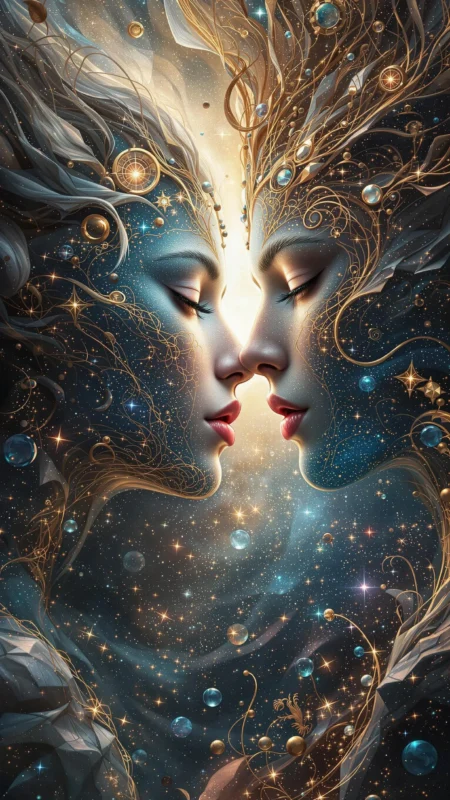
In personal mythology, Stardust speaks to an identity that transcends the individual ego. It is the quiet, persistent awareness that you are a composite being, a walking, breathing collection of ancient histories. Your moods, your thoughts, your very bones are borrowed from a cosmic narrative of unimaginable scale. This symbolism might dissolve the hard lines between 'self' and 'other,' 'life' and 'inanimate.' The stone on the path is your cousin; the light from a distant galaxy is your ancestor. To embody Stardust is to carry the weight and wonder of this connection, to see your brief life not as a singular story but as one verse in an epic poem that has no beginning and no end.
Stardust also represents a profound relationship with time. You are simultaneously ancient and brand new. Your constituent atoms are 13 billion years old, yet your consciousness is a flickering, momentary flame. This dual perspective may offer a kind of solace. The anxieties of the present moment can shrink to their proper size when viewed against the backdrop of geological time and cosmic distance. Your personal mythos may become less about a linear progression from A to B and more about a cyclical, spiraling dance. You have been here before, in other forms, and you will be here again. Failures become compost; successes become supernova flares, brilliant but temporary.
Furthermore, Stardust is the archetype of generative chaos. It is the antithesis of sterile order. It is the cosmic mess from which beauty is born. For a person whose mythos is informed by Stardust, creativity may not be a tidy process but a necessary surrender to entropy. It is about trusting that from the scattered fragments of old ideas, old loves, and old selves, something novel and coherent can coalesce. This archetype encourages finding beauty not in the finished product, but in the shimmering, uncertain cloud of potential that precedes it. It is the permission to be gloriously unfinished.