

Potted Plant

Archetype Meaning & Symbolism

Contained, Nurtured, Dependent, Patient, Decorative, Resilient, Quiet, Domesticated, Observant, Rooted

  • Find the sun in your window; a small world, attended to, is still the entire world.

If Potted Plant is part of your personal mythology, you may...

Believe

  • You may believe that true freedom is not the absence of limits, but the discovery of the right ones.
  • You may believe that the most significant events in a life are the small, almost imperceptible moments of growth.
  • You may believe that a life, like a home, is made beautiful not by its size, but by the loving attention given to what it contains.

Fear

  • You may fear neglect: the terror of being forgotten, unwatered, left in a dark corner to wither away.
  • You may fear being uprooted: a sudden, violent change that rips you from the stability of your pot and exposes your fragile roots to the harsh air.
  • You may fear that the world is too large and chaotic, and that you lack the capacity to survive outside of your carefully controlled environment.

Strength

  • Patience: You possess a deep, innate understanding that growth takes time and cannot be rushed. You can wait through long winters for the spring.
  • Attunement: You are highly sensitive to your own needs and the subtle shifts in your environment, allowing you to cultivate the precise conditions for your well-being.
  • Appreciation for the microcosm: You have the ability to find immense beauty and meaning in the small, the mundane, and the everyday, leading to a rich inner life.

Weakness

  • Dependency: Your reliance on a stable environment and the care of others can make you vulnerable and ill-equipped to handle radical independence.
  • Aversion to risk: A deep-seated fear of change and the unknown may prevent you from seizing opportunities that lie outside your comfort zone.
  • Passivity: You might have a tendency to wait for things to happen to you rather than actively seeking them, becoming a permanent fixture rather than an agent in your own life.

The Symbolism & Meaning of Potted Plant

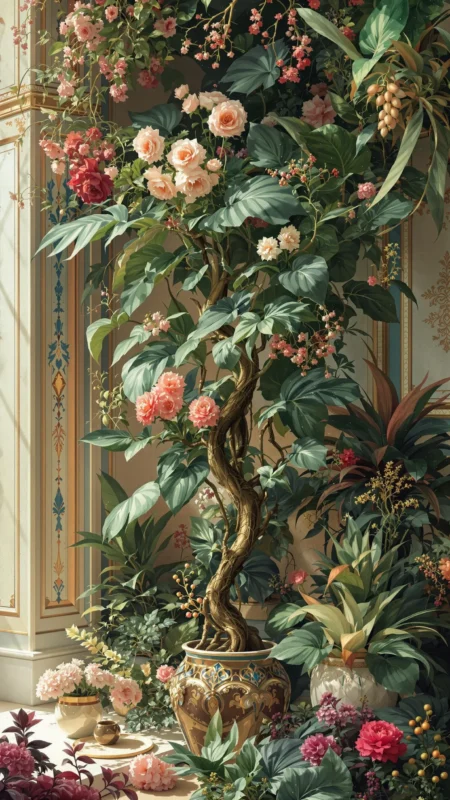
The Potted Plant is a potent symbol for a life that flourishes within carefully established boundaries. It is not the wild, sprawling epic of the Oak tree in the forest, but the curated, intentional poem of the Fiddle Leaf Fig in the corner of a sunlit apartment. To have this archetype in one's personal mythology is to understand that growth is not always about expansion, but often about deepening. The pot itself becomes a central symbol: it is the safe container of home, the structure of a specific career, the defined nature of a cherished relationship. It represents the idea that with the right foundation and consistent care, something beautiful and alive can be cultivated, even in a small space.

This archetype also speaks to a particular kind of resilience. Not the resilience of bending in a hurricane, but that of surviving a period of neglect and perking up again with the first splash of water. It is the quiet endurance of a life lived in one place. Its symbolism is tied to the domestic sphere, transforming a house into a home, an office into a more humane space. It suggests a philosophy where happiness is not found by chasing distant horizons but by tending to the garden, however small, that is right in front of you. It is the patron saint of introverts, homebodies, and anyone who finds their peace in the predictable rhythms of a well-cared-for life.

Furthermore, the Potted Plant embodies a form of quiet, aesthetic power. It does not need to make noise to be noticed. Its influence is in its presence, its gradual unfurling of a new leaf, its patient turning toward the light. In a personal mythos, this could represent a value system that prizes being over doing, observation over action, and gentle influence over forceful command. It is the belief that one’s life can be a work of art, cultivated with the same care and intention one gives to a prized orchid, and that this quiet, growing beauty is a worthy end in itself.


Potted Plant Relationships With Other Archetypes

The Gardener:

The relationship with The Gardener archetype is the most fundamental. It is a profound symbiosis of care and dependence, action and being. The Gardener provides the structure, the nourishment, the light, representing the forces of mentorship, love, or even the structured, nurturing aspects of the self. The Potted Plant, in turn, provides beauty, growth, and a purpose for The Gardener's efforts. In a personal mythos, this dynamic might play out in relationships where one partner thrives on providing stability and the other thrives on receiving it, each fulfilling a deep need in the other. It is a dance of giving and receiving, where the vulnerability of the plant is protected by the attention of its keeper.

The Window:

The Window is the Potted Plant’s primary connection to the world beyond its pot. It is a frame, a portal, a source of both life-giving light and tantalizing glimpses of a world it cannot join. This relationship is one of observation and longing. The Window represents a filtered experience of reality, offering knowledge without direct participation. For someone with the Potted Plant archetype, their relationship to media, to stories, or to the lives of more adventurous friends might be akin to looking through this window. It provides stimulus and a sense of connection without the risks of direct engagement, shaping a worldview that is rich in observation but perhaps poor in lived experience.

The Wild Forest:

The Wild Forest is the ancestral memory, the untamed cousin of the Potted Plant. It represents everything the Potted Plant is not: self-sufficient, chaotic, vast, and unbounded. The relationship is one of contrast and origin. The Potted Plant is a piece of the Forest, taken and domesticated. This might symbolize a tension within the individual between a desire for safety and domesticity and a latent, perhaps feared, yearning for a wilder, more authentic existence. The Forest is the call to an un-potted life, a reminder of what has been sacrificed for the sake of safety and curated beauty.

Using Potted Plant in Every Day Life

Navigating Creative Limitations:

When faced with a creative project constrained by a tight budget or specific rules, the Potted Plant archetype encourages you not to see these as restrictions but as the pot itself. It suggests that true creativity flourishes when it has something to push against. Instead of yearning for an open field of infinite resources, you might find a more potent and unique expression by working cleverly within the given form, turning limitations into the very structure that gives your work its strength and beauty.

Cultivating a Sanctuary:

In a world that feels chaotic and overwhelming, this archetype guides you in crafting a personal sanctuary. This could be a physical home, a corner of a room, or even a mental space. It is the act of consciously choosing what “nutrients” you allow in: the books you read, the music you hear, the people you invite over. It is about understanding that you may not thrive everywhere, but you can create one place where you are perfectly suited to grow, a safe container in a turbulent world.

Understanding Personal Energy:

The Potted Plant offers a metaphor for managing your own energy and needs. You may require a specific amount of “sunlight” (social interaction) or “shade” (solitude). You might recognize a need for regular “watering” (emotional nourishment, restful sleep) to avoid wilting under pressure. It reframes self-care not as an indulgence, but as a non-negotiable requirement for survival and growth, recognizing that your needs are specific and must be met with intention.

Potted Plant is Known For

Contained Nature

It is known for bringing a piece of the untamed world into a controlled, human environment. The Potted Plant is nature, but nature with an agreement. It offers the visual and psychological benefits of green life without the chaos or danger of the wilderness, a domesticated echo of a wilder world.

Silent Companionship:

It provides a presence that is felt but not heard. A Potted Plant can anchor a room, offering a living, breathing counterpoint to the inanimate objects around it. This companionship asks for nothing but care and offers a quiet, constant form of being that can be profoundly comforting.

Dependence on a Gardener:

Its very existence is a testament to a relationship of care. It cannot seek its own water or find better light. It is known for its reliance on an external force, a gardener, for its survival and flourishing. This highlights a dynamic of nurturing and dependency that is central to its identity.

How Potted Plant Might Affect Your Personal Mythology

How Potted Plant Might Affect Your Mythos

When the Potted Plant archetype shapes your personal mythos, your life story may not be an epic journey but a quiet epic of cultivation. The central plot is not about slaying dragons in the wild, but about tending to the soil of your own life to see what can grow. Your narrative might be defined by the containers you have chosen or been given: a childhood home, a long-term career, a defining relationship. The major conflicts are not external battles, but internal struggles against stagnation, neglect, or the temptation to bolt from the pot into a wilderness for which you may not be prepared. The climax of your story could be the unfurling of a new leaf after a long winter of doubt, or the moment you realize your pot has become too small and you must endure the terrifying vulnerability of being repotted.

Your personal mythology might champion the hero who stays put, the one whose great adventure is the inward journey. Triumphs are measured in subtle gradations of growth and resilience. The core belief in this narrative is that a meaningful life can be built in one place, through patience, observation, and meticulous care. You might see your past not as a series of locations and events, but as a succession of pots, each teaching you something new about your needs and capacity for growth. The ultimate quest is to create the perfect conditions for your own flourishing, to become your own master gardener.

How Potted Plant Might Affect Your Sense of Self

Your perception of self may be intrinsically linked to your environment. You might see yourself as a being who is deeply sensitive to your surroundings, someone who requires specific conditions—the right light, the right company, the right amount of quiet—to truly thrive. This can lead to a profound self-awareness, a keen understanding of your own emotional and psychological needs, much like a plant that knows instinctively to lean toward the sun. You may view your own growth as a slow, organic process, valuing patience and consistency over dramatic, disruptive change. There might be a sense of being both fragile and incredibly resilient; you could be shattered by being dropped, yet you possess the deep, quiet strength to regenerate from almost nothing if given the proper care.

This archetype can also foster a self-identity that is more about being than doing. Your value may not feel tied to your accomplishments or your productivity, but to your presence, your aesthetic, your ability to bring a sense of calm and life to a space. You might see yourself as a quiet anchor for others. However, this could also lead to a more passive sense of self, one that is defined by the care it receives from others. You may struggle to see yourself as an independent agent, instead viewing your identity as a reflection of the gardener who tends to you, whether that gardener is a person, a job, or a community.

How Potted Plant Might Affect Your Beliefs About The World

Your worldview might be one of a patient observer looking out from a fixed vantage point. The world is not a territory to be conquered, but a fascinating, sometimes overwhelming spectacle to be watched from the safety of your windowsill. You may cultivate a deep appreciation for microcosms, believing that the entire universe can be found in the small dramas of your immediate environment. The turning of the seasons, the changing light throughout the day, the subtle shifts in the atmosphere of a room—these are the grand events that capture your attention. This perspective fosters a contemplative mindset, one that finds meaning in the mundane and beauty in the details that others might overlook.

This can also lead to a worldview where safety and stability are the highest virtues. The unpredictable, the chaotic, the untamed—these are forces to be buffered against, not embraced. You may see the world as divided into safe, cultivated spaces and the dangerous wilderness that lies beyond. Your philosophy might be that the primary task of a good life is to create and maintain a nurturing container, a small pocket of order in a vast, indifferent universe. Change is often viewed with suspicion, as it threatens to overturn the pot and disrupt the delicate root system you have so carefully established.

How Potted Plant Might Affect Your Relationships

In relationships, you may unconsciously seek a dynamic of care. You might be drawn to partners who act as a 'Gardener,' those who provide stability, consistency, and emotional nourishment. In return, you offer a steady, calming presence and a quiet kind of beauty. Love, for you, might be expressed less through grand gestures and more through the daily acts of tending: a cup of tea made just right, a quiet understanding, the creation of a comfortable shared home. You thrive in partnerships that feel like a well-tended greenhouse, warm, predictable, and safe from the outside elements. Friendship might be about finding other 'plants' to share your windowsill with, enjoying quiet, parallel growth rather than demanding constant engagement.

However, this archetypal influence can also create a tendency towards dependency. You might feel that you cannot thrive without the constant attention of another, placing a heavy burden on your partner or friends to be your sole source of 'water and light.' A fear of being neglected or abandoned could be a primary driver in your relational dynamics. Conflicts may arise when your need for a stable, controlled environment clashes with a partner's desire for spontaneity and adventure. You may struggle with relationships that require you to be adaptable or to venture far from your comfort zone, viewing them as a threat to your very roots.

How Potted Plant Might Affect Your Role in Life

Your perceived role in life, society, or even a small group might be that of the aesthetic anchor or the silent witness. You are not the one driving the action, but the one who makes the space where action happens feel more grounded and humane. In a family, you may be the homebody who creates the comforting backdrop for everyone else's lives. In an office, you might be the one with the tidy desk and the calming presence that colleagues gravitate towards during a crisis. Your role is defined by your being: you bring life, quiet, and a touch of natural beauty to your environment simply by existing within it.

This role is often appreciated but can also be taken for granted. You may be seen as part of the decor, a pleasant but non-essential feature of the landscape. There is a risk of becoming passive, of allowing your growth to be entirely dictated by the needs and desires of those around you. You might struggle to assert your own needs for fear of disrupting the harmony you are meant to embody. The challenge in this role is to be more than just decorative, to understand that your quiet growth is its own form of powerful action, and that your need for the right conditions is not a passive request but an active claim on your own life.

Dream Interpretation of Potted Plant

In a positive context, dreaming of a healthy, thriving Potted Plant may symbolize a period of contentment, stability, and personal growth within your current life structure. It could suggest that you are feeling well-nurtured, safe, and that you have found an environment—be it a home, a job, or a relationship—that is perfectly suited to your needs. Seeing a new leaf unfurl or a flower bloom on the plant can be a powerful omen of a personal breakthrough, a new creative idea, or a deepening sense of self-esteem that has grown organically from a stable foundation. The dream affirms that your quiet, patient cultivation of your life is bearing fruit.

Conversely, a dream featuring a dying, wilted, or root-bound Potted Plant often points to feelings of stagnation, neglect, or being trapped. A wilting plant could represent a part of yourself that is being emotionally or spiritually starved, crying out for 'water' or attention. If the pot is shattered, it may signify a sudden, destabilizing event in your life that has destroyed your sense of security. A plant that is root-bound, its roots cramped and circling within the pot, is a classic symbol of outgrowing your current circumstances. It is a potent message from your subconscious that your container has become a prison, and that you must risk the vulnerability of being repotted in order to continue growing.

How Potted Plant Archetype Might Affect Your Needs

How Potted Plant Might Affect Your Physiological Needs

From a physiological standpoint, the Potted Plant archetype may instill a deep, almost instinctual understanding of your body's need for routine and regularity. Your life story might emphasize that your physical well-being depends on a predictable schedule, much like a plant needs watering at consistent intervals. The 'nutrients' of good food, the 'sunlight' of adequate Vitamin D or time outdoors in a safe space, and the 'darkness' of restful sleep are not just healthy habits; they are the core tenets of your physical existence. You might be acutely sensitive to disruptions in this routine, feeling physically 'wilted' or off-kilter if a meal is missed or sleep is interrupted.

The 'pot' itself is a metaphor for your body and its immediate environment. This mythos encourages you to see your body not as a vehicle for adventure, but as a delicate ecosystem that must be carefully maintained. You might prioritize creating a home environment that is physically calming—good air quality, comfortable temperatures, soothing light. Health issues may be interpreted as a sign that the environment is wrong or that the care regimen has failed. Wellness, therefore, is achieved not through pushing physical limits, but through creating a perfect, stable, and nurturing physical container for the self.

How Potted Plant Might Affect Your Ideas of Belonging

The need for belongingness is met by being placed and accepted within a specific context. You feel you belong when you have a designated spot on the 'windowsill' of a family, a friendship circle, or a community. It is the feeling of being a cherished part of a domestic landscape. Love and affection are often perceived and expressed through acts of care and tending. You feel loved when someone remembers your specific needs and provides for them, and you show love by creating a nurturing, stable environment for others. Connection is less about shared adventures and more about shared presence, of quietly co-existing in a warm, sunlit room.

This can lead to a form of belonging that is deeply rooted but also potentially conditional. You belong as long as you fit the aesthetic of the room, as long as you do not grow too large or demand too much. This may create an underlying anxiety about being 're-homed' or discarded if you become inconvenient. True belongingness, in this mythos, is found when you are valued not just for your decorative qualities, but for your intrinsic, living presence, and when your growth is celebrated, even if it eventually means needing a bigger pot.

How Potted Plant Might Affect Your Feelings of Safety

Safety needs are paramount within the Potted Plant mythos. The 'pot' is the ultimate symbol of security: the stable job, the mortgage, the predictable neighborhood, the reliable car. It is the boundary that separates the fragile, cultivated self from the chaotic, unpredictable 'wilderness' of the outside world. Your life narrative might revolve around the creation and defense of these containers. A primary goal is to ensure your pot is placed on a sturdy surface, away from drafts, pests, and the risk of being knocked over by sudden shocks.

Threats to safety are perceived as anything that could crack or shatter this container. Financial instability, abrupt changes in living situations, or volatile relationships are not just stressful; they are existential threats that risk 'uprooting' you entirely. Your sense of security is therefore tied to predictability and control over your immediate environment. You may go to great lengths to build buffers and redundancies into your life—savings accounts, insurance policies, well-stocked pantries—as a way of reinforcing the walls of your pot against the inevitable storms of life.

How Potted Plant Might Affect Your Views of Esteem

Esteem is not built on grand achievements or external accolades, but on the quiet, internal satisfaction of your own growth. Your self-worth may be tied to your resilience, your ability to endure and to put forth a new leaf even after a period of hardship. It is the pride of being a well-cared-for thing of beauty. Validation might come from the gentle appreciation of a 'Gardener'—a mentor, partner, or loved one who notices and values your subtle progress. Esteem is found in the knowledge that you are bringing a quiet joy and life force into your small corner of the world.

This framework for esteem can be both healthy and precarious. It fosters an appreciation for intrinsic worth separate from competitive success. However, if self-worth is too heavily reliant on the approval of the 'Gardener,' it can become fragile. If the caregiver is neglectful or critical, your esteem may wilt. The highest form of esteem in the Potted Plant mythos is achieved when you learn to become your own Gardener: to provide your own nourishment, to celebrate your own growth, and to find your own light, recognizing that your steady, quiet flourishing is a profound achievement in its own right.

Shadow of Potted Plant

The shadow of the Potted Plant emerges when the need for a container calcifies into a prison. In this state, the individual becomes utterly passive, a mere decoration in someone else's life story. They cease to grow, their leaves gathering dust, their existence defined solely by the space they occupy. All agency is surrendered to the 'Gardener,' who may be a controlling partner, a stifling job, or a rigid belief system. The person may rationalize this inertia as a love for stability, but it is a stability born of fear. They have become so terrified of the world outside the pot that they would rather have their roots rot in stale soil than risk the shock of being transplanted. This is the archetype in its most tragic form: a living thing that has chosen to be an object.

The other manifestation of the shadow is a bitter, stunted growth. This happens when the plant has long outgrown its pot but is given no new space. The roots become a tangled, choking mass. Growth, denied an upward outlet, turns inward and sour. The individual may become resentful, critical, and quietly poisonous to their environment, their leaves yellowing with unspoken frustrations. They resent the pot, they resent the Gardener, and they resent the vibrant, free-growing world they can only see through the window. It is the quiet desperation of a life that knows it needs more but is too trapped or too frightened to demand it, leading to a slow, internal decay.

Pros & Cons of Potted Plant in Your Mythology

Pros

  • It fosters a deep appreciation for home, stability, and the quiet rhythms of a cultivated life.
  • It encourages patience and a focus on deep, meaningful growth in a specific area, rather than shallow, scattered efforts.
  • It cultivates a contemplative and observant nature, highly attuned to beauty and the subtle needs of oneself and others.

Cons

  • It can lead to a paralyzing fear of risk, change, and the unknown, severely limiting life experiences.
  • It creates a vulnerability to dependency, making one susceptible to neglect or control by others.
  • There is a significant risk of becoming passive and living a life of observation rather than full participation.