 Believe
 Fear
Fear Strength
 Weakness
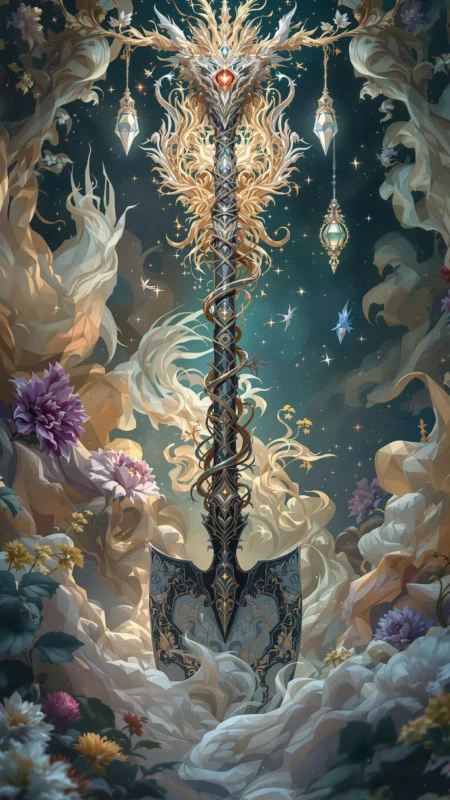
The Garden Hoe is an archetype of pragmatic transformation. It does not speak of lightning-bolt epiphanies or heroic, world-saving quests. Its mythology is etched in the cycles of labor, decay, and regrowth. To have the Garden Hoe in your personal mythos is to understand that change is a verb, an action, often a repetitive one. It symbolizes a belief in betterment through effort, a faith that even the most compacted, fallow ground of one's life can be made fertile again through deliberate, forceful intervention. It is the patron saint of rolling up one's sleeves. Its presence suggests a life story built not on what one is, but on what one does to cultivate the self.
Its symbolism is profoundly connected to the earth of the psyche. The hoe is the tool that mediates between the surface self and the subconscious depths. It is the sharp edge of conscious will, breaking into the packed soil of habit and history. It unearths what is hidden: the gnarled roots of past traumas, the sleeping seeds of future potential, the pale worms of unexamined fears. The hoe makes no judgment. It simply turns everything over, exposing it to the light. It embodies the uncomfortable truth that to create a space for new life, one must first disrupt the old order.
In a modern context, where so much effort is abstract and digital, the Garden Hoe archetype recalls a tangible connection to consequence. Its meaning is tied to a certain kind of wisdom: the knowledge that some problems cannot be thought or talked away but must be physically worked through. It represents the power in simple, repeated actions. It is the choice to show up, day after day, to tend the garden of one's own being, to pull the weeds, to turn the soil, and to trust that this patient, unglamorous labor is the truest path to a harvest.