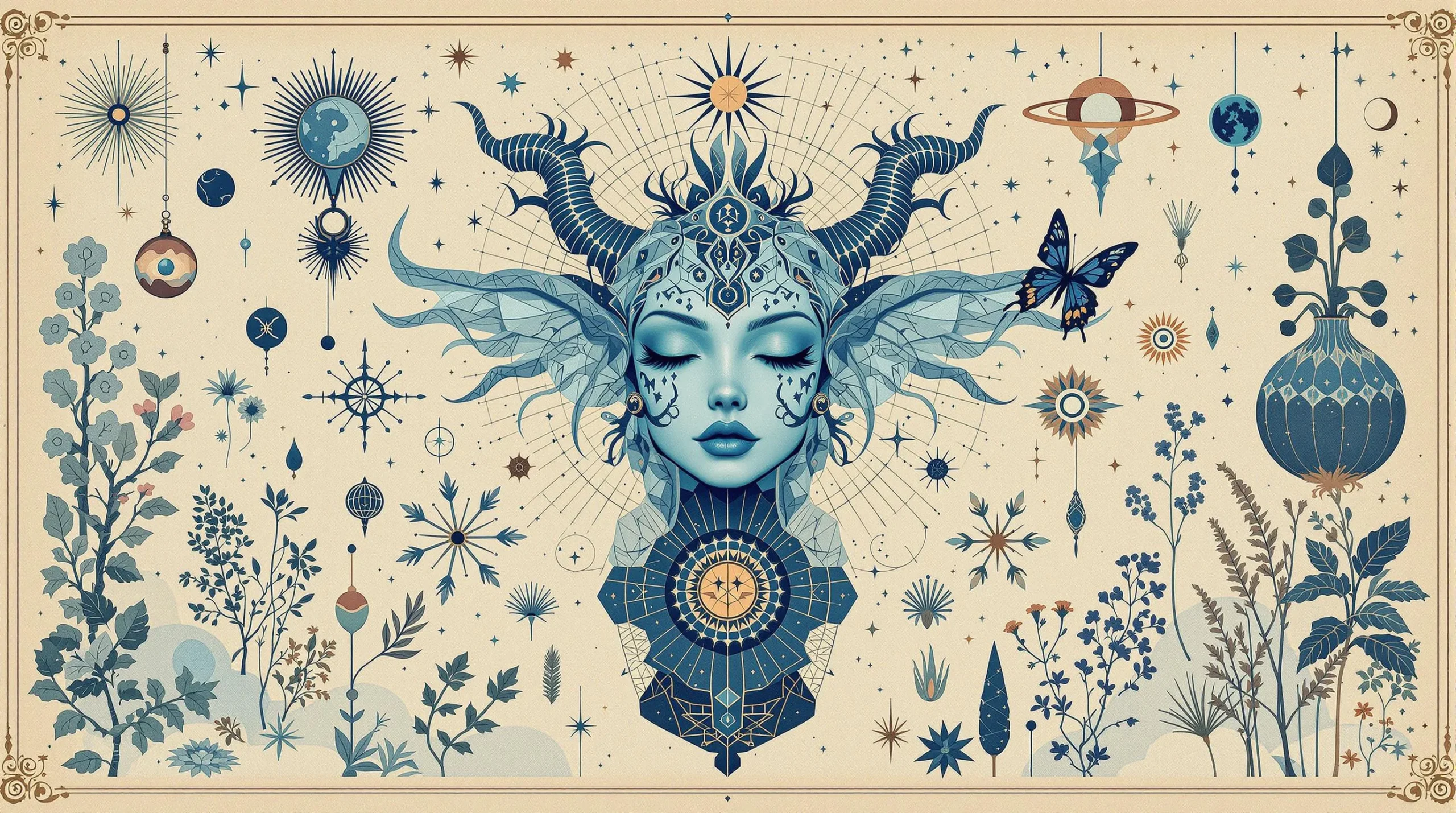


Blueprint

Archetype Meaning & Symbolism

Structural, intentional, precise, theoretical, potential, rigid, foundational, schematic, orderly, intricate

  • I am the silent instruction before the first stone is laid, the unseen logic in the finished cathedral. Do not mistake me for the building; I am the thought that holds it up.

If Blueprint is part of your personal mythology, you may...

Believe

  • There is a fundamental, underlying order to the universe, and my purpose is to align with it.
  • A well-conceived plan is the most powerful tool against the chaos of the world.
  • My life is a project, and my greatest responsibility is to build it correctly.

Fear

  • That a random event will shatter my carefully constructed plans, proving them meaningless.
  • That the reality I build will never live up to the perfection of its blueprint.
  • I am trapped by a flawed design in myself that I cannot change, and am destined to repeat the same structural mistakes.

Strength

  • The ability to distill complex, chaotic information into a clear, coherent, and actionable strategy.
  • Exceptional foresight, allowing you to anticipate obstacles and create contingency plans before they are needed.
  • A methodical and disciplined mind that ensures the creation of high-quality, robust, and well-considered outcomes.

Weakness

  • A deep-seated rigidity that makes it difficult to adapt or improvise when faced with unexpected change.
  • A tendency towards 'analysis paralysis,' becoming so lost in the perfection of the plan that you never begin the actual work.
  • An emotional detachment that struggles with the spontaneous, illogical, and messy realities of human relationships.

The Symbolism & Meaning of Blueprint

In the personal mythos, the Blueprint archetype could represent the very source code of your life. It is the unseen architecture of your personality, the schematic of your fate, the inherited design you carry within your soul. To have this archetype active within you is to possess an innate sense of structure, to believe that life is not a series of random accidents but a project unfolding according to a specific, if sometimes inscrutable, design. You may feel that your life has a purpose laid out like lines on cyan-colored paper, and your quest is to interpret these plans correctly and build accordingly. It is the faith in an underlying order, a conviction that every beam and joist of your experience, even the painful ones, has a designated place in the final structure.

The Blueprint speaks to a deep human yearning for control and understanding in a world that often feels chaotic and meaningless. It is the antidote to the void. Its presence in your mythos suggests a narrative where you are not simply a character at the mercy of the plot, but perhaps the architect of that plot. This archetype grants the power of foresight, of strategic thinking, of seeing the end from the beginning. It is the part of you that makes five-year plans, that visualizes success in meticulous detail, that believes a problem can be solved if it can be diagrammed. It is the quiet confidence that comes from knowing the plan, from holding the map of your own becoming.

However, the symbolism of the Blueprint is double-edged. Is it a divine plan, a map to your highest potential? Or is it a prison, a rigid set of expectations that denies you the freedom to improvise? It can symbolize both destiny and determinism. The mythic journey then becomes about your relationship with this internal schematic. Do you follow it slavishly? Do you dare to erase a line and draw a new one? The Blueprint forces you to confront the ultimate question of agency: are you building the life that was designed for you, or are you brave enough to become the designer yourself?


Blueprint Relationships With Other Archetypes

The Builder

The Blueprint and The Builder are locked in a necessary, often tense, partnership. The Blueprint is the pure, intellectual design, the realm of what should be. The Builder is the pragmatic, physical force, the realm of what can be done with the materials at hand. Within a personal mythos, this pairing represents the eternal conflict between planning and execution. The Blueprint self may become frustrated with the Builder self’s messy compromises and improvisations, while the Builder may resent the Blueprint’s rigid perfectionism, which fails to account for the grit and friction of reality. Their harmony creates masterpieces; their conflict results in abandoned projects and half-finished dreams.

The Wilds

The Wilds archetype is the antithesis of the Blueprint. Where the Blueprint is straight lines, grids, and calculated angles, The Wilds is tangled roots, unpredictable growth, and organic chaos. For a person animated by the Blueprint, The Wilds may represent a terrifying threat: the force that can overrun their carefully laid plans with weeds of chance and storms of passion. Alternatively, The Wilds could be a source of profound fascination, a necessary chaos that they seek to understand, contain, or perhaps even integrate. The inner journey may involve learning that not all of life can or should be paved over, and that some of the most beautiful structures are those that allow the ivy to grow freely over their walls.

The Dreamer

The Dreamer provides the soul, but the Blueprint provides the bones. The Dreamer imagines a castle in the clouds; the Blueprint calculates the load-bearing capacity of its foundations. This relationship is one of translation. The Dreamer speaks in the language of feeling, metaphor, and boundless possibility. The Blueprint must take this poetic vision and ground it in the stark grammar of physics, logic, and sequence. Without the Blueprint, the Dreamer’s visions remain beautiful but impotent fantasies. Without the Dreamer, the Blueprint creates technically perfect but sterile, lifeless structures. Their union is the very engine of meaningful creation, wedding inspiration to implementation.

Using Blueprint in Every Day Life

Navigating a Career Transition

A career change can feel like hacking a path through a dense jungle. The Blueprint archetype invites you not to swing a machete wildly, but to first survey the terrain from above. It encourages you to draft a map: charting your existing skills as landmarks, your desired positions as destinations, and the necessary training or networking as the routes connecting them. It transforms the anxiety of the unknown into a logistical challenge, a puzzle of placing the right steps in the right sequence to construct a new professional reality.

Rebuilding After Loss

When a central pillar of one's life collapses—a relationship, a belief, a sense of identity—the entire structure feels compromised. Invoking the Blueprint in this context is not about pretending the damage didn't happen, but about conducting a structural assessment of the self. It allows one to see the cracks and foundational flaws with an engineer's eye, not a victim's. The task then becomes architectural: designing new support systems, creating new load-bearing beliefs, and drafting a revised plan for a life that incorporates, and is strengthened by, the space the old structure once occupied.

Initiating a Creative Work

The initial spark of a creative idea is often pure, formless energy. The Blueprint serves as the crucible that gives this energy a vessel. For a novelist, it is the detailed outline that exists before the first sentence of prose is written. For a composer, the harmonic theory and melodic structure that underpins the symphony. For a chef, the recipe that balances flavor, texture, and chemistry. The Blueprint is the act of honoring the muse by giving her vision a skeleton, ensuring the final creation doesn't collapse under the weight of its own ambition.

Blueprint is Known For

Detailed Specification

The Blueprint is defined by its precision. It is a document of intolerance for ambiguity, translating a grand vision into a series of exact measurements, material lists, and procedural steps, ensuring the integrity of the final form.

Potential Manifestation:

It exists as the perfect, idealized version of what is to come. It is the promise of the cathedral before the quarry is even opened, the pure thought-form of a thing, holding all its potential within its lines and annotations, unmarred by the compromises of physical construction.

A Guide for Construction:

The Blueprint is the essential lexicon between the architect and the builder, the dreamer and the doer. It is the language that allows an intangible idea to be methodically and accurately translated into tangible reality, providing the sequence and structure for its creation.

How Blueprint Might Affect Your Personal Mythology

How Blueprint Might Affect Your Mythos

When the Blueprint is a cornerstone of your personal mythos, your life story may cease to feel like a series of haphazard events and instead appear as a carefully drafted narrative. You might perceive yourself not as a wanderer, but as the Chief Architect of your own destiny, viewing triumphs as successful project milestones and setbacks as structural flaws in the design that require revision. Your personal history could be read like a set of plans, with childhood experiences as the foundation, education and relationships as the framing, and career choices as the intricate wiring and plumbing. This lends your story a powerful sense of intention and coherence, a feeling that everything, for better or worse, fits into a larger, intelligible design.

This architectural view of your mythos shapes the very nature of your heroic journey. The central conflict may not be against an external dragon, but against a flawed plan. The great quest might be the search for a missing piece of the schematic, a lost instruction needed to complete the self. Your moments of epiphany are not bolts from the blue, but instances of profound clarity where the entire design suddenly makes sense. The danger is that your mythos can become too rigid; you might mistake the plan for the life, and resist any deviation or spontaneous adventure that is not ‘in the blueprint,’ potentially missing the most meaningful parts of the story.

How Blueprint Might Affect Your Sense of Self

Your self-concept may be deeply intertwined with the idea of being a 'work in progress' based on a specific design. You might see your identity not as a fluid, evolving entity, but as a structure being built toward a predetermined, ideal state. This can provide a strong sense of purpose and a clear metric for self-evaluation: how closely does the current self match the planned self? Your value may be tied to your intellect, your capacity for foresight, and your ability to impose order on your own inner world. You are the engineer of your own soul, constantly checking the schematics of your beliefs, behaviors, and goals.

This perspective can also foster a persistent, low-grade anxiety of incompletion. You may live with the nagging sense that you are not yet 'finished' or are 'behind schedule.' Flaws in your character or failures in your life are not just mistakes; they are design defects that can trigger deep-seated shame or a frantic need to 'go back to the drawing board.' The self can become a project to be managed rather than a life to be lived, and you might struggle to simply 'be,' always feeling the pressure to be building, optimizing, and perfecting according to the master plan.

How Blueprint Might Affect Your Beliefs About The World

You may view the world itself as a grand, intricate piece of architecture. Behind the apparent chaos of history, society, and even nature, you might perceive an underlying blueprint, a hidden order, a set of rules that governs everything. This could manifest as a faith in a divine plan, a fascination with the elegant laws of physics, or a cynical belief that all social systems are simply machines designed by the powerful to maintain control. Events are not random; they are the logical outcomes of the systems in which they occur. People's actions are not whimsical; they are products of their own internal 'blueprints' or conditioning.

This worldview fosters a powerful analytical lens. You are adept at deconstructing complex problems, identifying root causes, and seeing how disparate parts connect to form a whole. You look for the schematic behind the facade. However, this view can also disenchant the world, stripping it of mystery and spontaneity. If everything is part of a plan or a system, there is little room for genuine surprise, for grace, for the poetic absurdity of existence. It may become difficult to appreciate the beauty of a thing for what it is, as you are always busy trying to figure out its function within the larger machine.

How Blueprint Might Affect Your Relationships

In relationships, the Blueprint archetype may compel you to be the architect of connection. You might subconsciously design your friendships and romances, establishing clear 'rules of engagement,' expectations, and desired outcomes. A relationship is a structure to be built and maintained, requiring a solid foundation of shared values, well-defined roles, and a long-term plan. This can lead to remarkably stable, reliable, and transparent partnerships, where both parties always know where they stand. You provide a sense of security and intentionality that can be deeply comforting to others.

However, this architectural approach can inadvertently suffocate the organic life out of a relationship. Love and friendship can be mistaken for projects to be managed. You may struggle with the messy, unpredictable, and illogical nature of human emotions, both your own and others'. A partner's spontaneous decision might feel like a structural threat; a friend's emotional outburst may seem like a system malfunction. There is a risk of treating people like components that must 'fit' the design of your life, rather than as whole, independent, and wonderfully unpredictable beings with whom you co-create something new and unforeseen.

How Blueprint Might Affect Your Role in Life

Your perceived role in any group, family, or organization is likely that of the Strategist, the Planner, or the Architect. You are the one who brings the vision, the order, and the plan. When chaos erupts, people may turn to you to chart a path forward. You naturally gravitate towards creating itineraries, drafting project proposals, and structuring workflows. Your contribution is not in the heat of the moment, but in the careful forethought that precedes it. This role can make you indispensable and respected, the quiet foundation upon which the success of the group is built.

Yet, this can also be an isolating role. You may be perceived as controlling, detached, or inflexible, more concerned with the integrity of the plan than with the feelings of the people executing it. You risk becoming the 'project manager' of your own life and relationships, standing slightly apart from the messy, vibrant business of living. There can be a loneliness in always being the one holding the map, a quiet burden in feeling responsible for the structural integrity of every endeavor, unable to simply get lost and enjoy the journey with everyone else.

Dream Interpretation of Blueprint

In a positive context, to dream of a Blueprint that is clear, elegant, and perhaps illuminated from within signifies a profound moment of personal revelation. It suggests you are connecting with your core purpose or life's design. The dream may be offering you the 'master plan' for a problem you've been wrestling with, revealing the underlying structure of a complex situation and showing you the most logical path forward. It is a dream of deep alignment, indicating that your conscious actions are in harmony with your soul's intent. You may wake with a feeling of clarity, purpose, and the quiet confidence that you know exactly what you need to build next.

In a negative context, dreaming of a Blueprint can be a source of anxiety. You might find a plan that is torn, smudged, unreadable, or impossibly complex, with contradictory measurements and nonsensical instructions. This could symbolize a feeling of being trapped by a life plan that no longer fits or was flawed from the beginning. It may reflect overwhelming pressure from external expectations or your own rigid perfectionism. A dream of a blueprint for the wrong building—a prison when you wish to build a home—is a powerful sign of misalignment and a call to question the very foundation of your current goals and ambitions.

How Blueprint Archetype Might Affect Your Needs

How Blueprint Might Affect Your Physiological Needs

The Blueprint archetype may extend its influence to the very architecture of the body, treating physiological needs as a system to be optimized. This goes beyond simple health consciousness into the realm of biological engineering. Food is not just for pleasure or sustenance; it is a carefully calculated input of macronutrients designed for peak performance. Sleep is not rest; it is a scheduled cycle to be hacked for maximum cognitive efficiency. Exercise is a precise regimen for building a specific physical structure. The body becomes a high-performance machine, and maintaining it is a matter of adhering strictly to its operational manual.

This meticulous approach can lead to excellent physical health, but it can also create a profound disconnect from the body's intuitive wisdom. A craving might be seen as a system error to be suppressed rather than a signal to be understood. Illness or injury can feel like a catastrophic design flaw, leading to frustration and anger at the body for failing to perform according to the plan. There is a risk of treating your own flesh and blood as an object to be controlled, rather than as the living, breathing, and sometimes unpredictable vessel of your existence.

How Blueprint Might Affect Your Ideas of Belonging

A sense of belonging, through the lens of the Blueprint, is found in shared structures and clearly defined roles. You may feel most at home in communities where the rules of interaction are explicit and the group's purpose is well-defined: a corporation with a clear org chart, a religious order with a rich liturgy, a club with formal bylaws. These structures provide a predictable framework for social connection, which can feel safer and more manageable than the messy, ambiguous dynamics of informal groups. You know how you fit because your position is marked on the organizational chart.

In love and intimate friendships, you may seek partners who 'fit the plan,' individuals whose own life blueprints seem compatible with yours. This can be a pragmatic approach to building a stable life partnership. However, it also holds the danger of overlooking profound connections with people who don't fit your preconceived specifications. You might struggle to form bonds in fluid, unstructured social environments, and may accidentally keep others at a distance by presenting a life that seems too perfectly planned to have room for another, beautifully complex human being. Belonging becomes a matter of slotting into a pre-existing design, rather than co-creating a new one.

How Blueprint Might Affect Your Feelings of Safety

For the one who holds the Blueprint, safety is not an emotion; it is an engineered state. It is the result of meticulous planning, risk assessment, and the creation of redundant systems. Safety is found in a diversified financial portfolio, a well-stocked emergency kit, a career with a clear trajectory, and insurance policies for every conceivable disaster. The goal is to build a life so structurally sound that it is impervious to the storms of fate and chance. The sense of security comes not from a naive belief that nothing will go wrong, but from the conviction that you have a contingency plan for when it does.

This pursuit of a fail-safe existence can become a fortress that is also a prison. The primary fear is not of danger itself, but of an *unforeseen* variable—the one thing the blueprint did not account for. This can lead to a state of hyper-vigilance and an aversion to any form of risk, including the emotional risks necessary for growth and connection. True safety remains elusive, because the world will always be more chaotic than any plan. The drive to eliminate all risk can ultimately lead to a small, over-managed life, safe from failure but also insulated from the thrill of genuine, unplanned living.

How Blueprint Might Affect Your Views of Esteem

Esteem, for one guided by the Blueprint, is likely built upon the foundation of competence and successful execution. Your self-worth is directly proportional to the quality of your plans and your ability to manifest them in the world. You feel a deep sense of pride when a complex project unfolds exactly as you envisioned, when your foresight is validated, and when others rely on your strategic mind. Praise for your 'brilliant plan' or 'clear vision' is the highest form of affirmation. Your esteem is rooted in being the architect, the one who can see the finished cathedral in a block of uncut stone.

This makes your self-esteem potentially fragile and performance-based. A significant failure, a plan gone awry, or a miscalculation that leads to negative consequences can feel like a devastating indictment of your core worth. If your identity is the 'one who has the plan,' then what are you when the plan fails? You may be brutally self-critical, viewing mistakes not as learning opportunities but as evidence of a fundamental design flaw in yourself. This can lead to a terror of failure and a reluctance to take on challenges where the outcome is not virtually guaranteed by a perfect plan.

Shadow of Blueprint

The shadow of the Blueprint is tyranny, both internal and external. It is the plan that becomes more sacred than the life it is meant to serve. In this shadow state, you become the architect of a beautiful but unlivable house, the project manager who sacrifices the well-being of their team for a deadline, the parent who forces a child down a career path that crushes their spirit. The Blueprint's shadow forgets that the map is not the territory. It worships its own sterile logic, punishing reality and the people within it for failing to conform to its pristine lines. It is a cold, merciless perfectionism that values the design over the inhabitant.

The other face of this shadow is not tyranny but collapse. When the blueprint is proven wrong—when the market crashes, the diagnosis comes back, the partner leaves—the shadow self does not adapt; it shatters. This can lead to a profound nihilistic despair, a belief that if this one perfect plan has failed, then all plans are meaningless and all effort is futile. This is the creator who abandons their life's work at the first insurmountable obstacle, or the individual who falls into a deep depression after a life event invalidates their five-year plan. Without the guiding lines of the blueprint, they see only a terrifying, empty void, and they lack the tools or the will to begin drawing again.

Pros & Cons of Blueprint in Your Mythology

Pros

  • It provides a powerful sense of direction and purpose, converting the anxiety of the unknown into a manageable, structured project.
  • It fosters foresight, discipline, and thoroughness, leading to the creation of robust, sustainable, and well-crafted results in life and work.
  • It offers a reliable framework for bringing order to chaos, allowing you to deconstruct complex problems and devise effective solutions.

Cons

  • Its inherent rigidity can make you inflexible and slow to adapt, causing you to miss spontaneous opportunities or struggle in a rapidly changing environment.
  • It can stifle creativity, intuition, and the ability to live in the present moment, as you are always focused on the next step in the plan.
  • It risks creating an emotional distance from life's beautiful messiness, treating people and relationships as components in a system rather than living, breathing connections.