 Believe
 Fear
Fear Strength
 Weakness
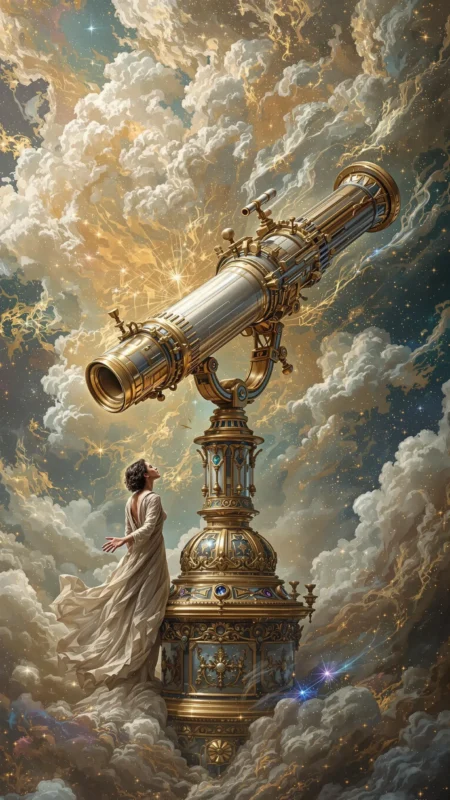
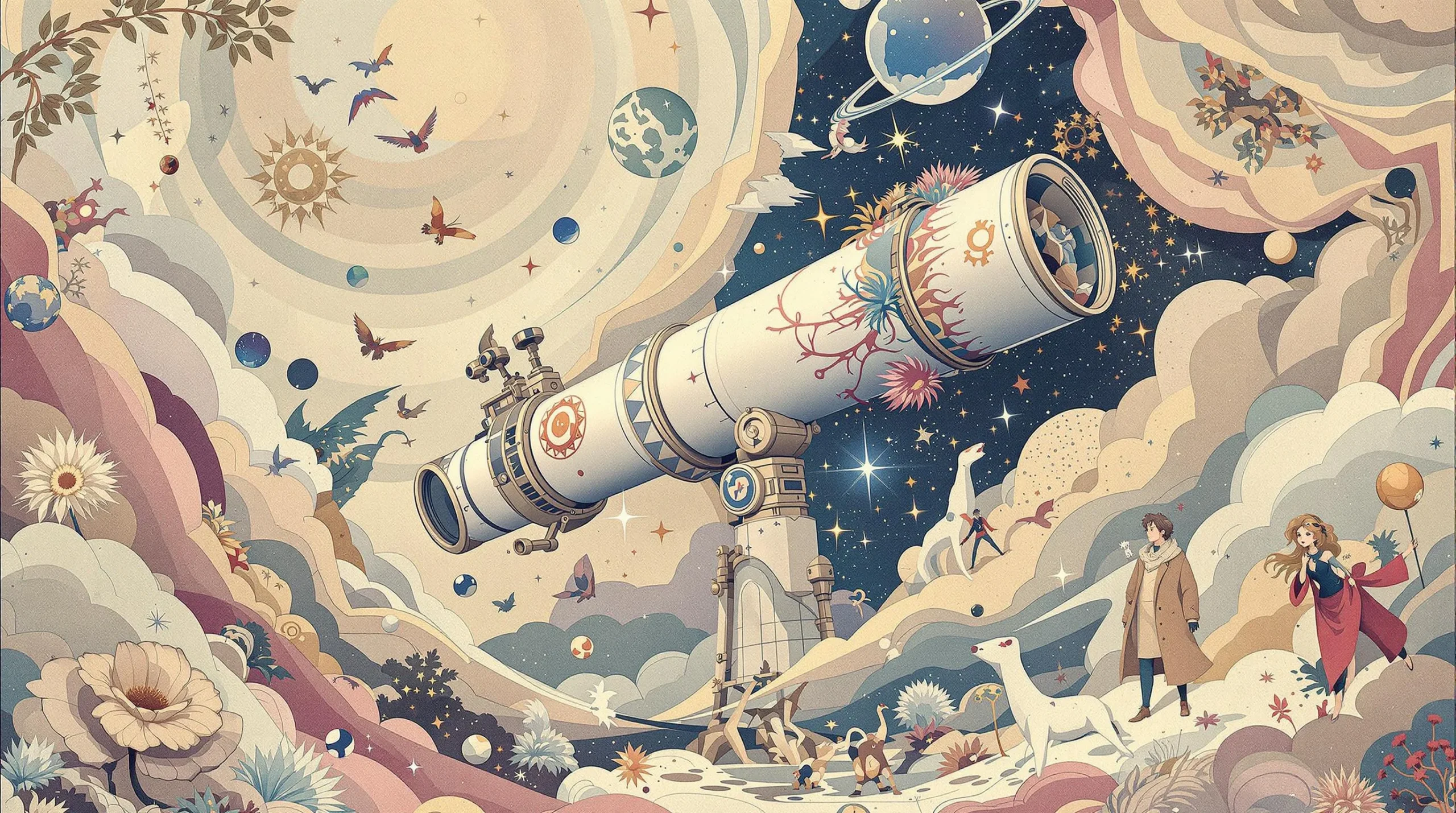
The Telescope in one's personal mythos could symbolize a profound yearning for perspective, a desire to rise above the emotional cacophony of the immediate and grasp a larger, more orderly truth. It is the totem of the seeker, the strategist, and the lonely philosopher, the one who finds comfort not in the warmth of the crowd but in the cool, clear apprehension of a grand design. Its presence suggests a life built around the pursuit of knowledge, not for its own sake, but as a means of navigation. It is the soul’s astrolabe, used to plot a course by distant, constant lights, trusting in pattern and trajectory over the fluctuating tides of feeling.
This archetype also speaks to a fundamental tension between observation and participation. The Telescope requires stillness, a certain removal from the field of action. To be the one looking through the eyepiece is to be the one not on the stage. For a person whose mythos is shaped by this object, life may be a series of carefully observed phenomena. They might be the chronicler, the analyst, the one who understands the party better than anyone else precisely because they are standing on the porch, watching the constellations wheel overhead. Their gift is clarity, their challenge is connection. The symbolism here is one of a beautiful, chosen isolation in service of a wider view.
Finally, the Telescope might represent a faith in the unseen. Not a mystical faith, but a rational one: the belief that what is currently beyond our perception is not beyond our comprehension. It embodies the conviction that with the right tools and the right focus, the universe's secrets can be coaxed into the light. In personal mythology, this translates to a persistent optimism about solving problems, a belief that an answer exists, floating in the ether, waiting for the lens to be polished and the eye to be trained upon it. It is the symbol of a patient, empirical hope.