 Believe
 Fear
Fear Strength
 Weakness
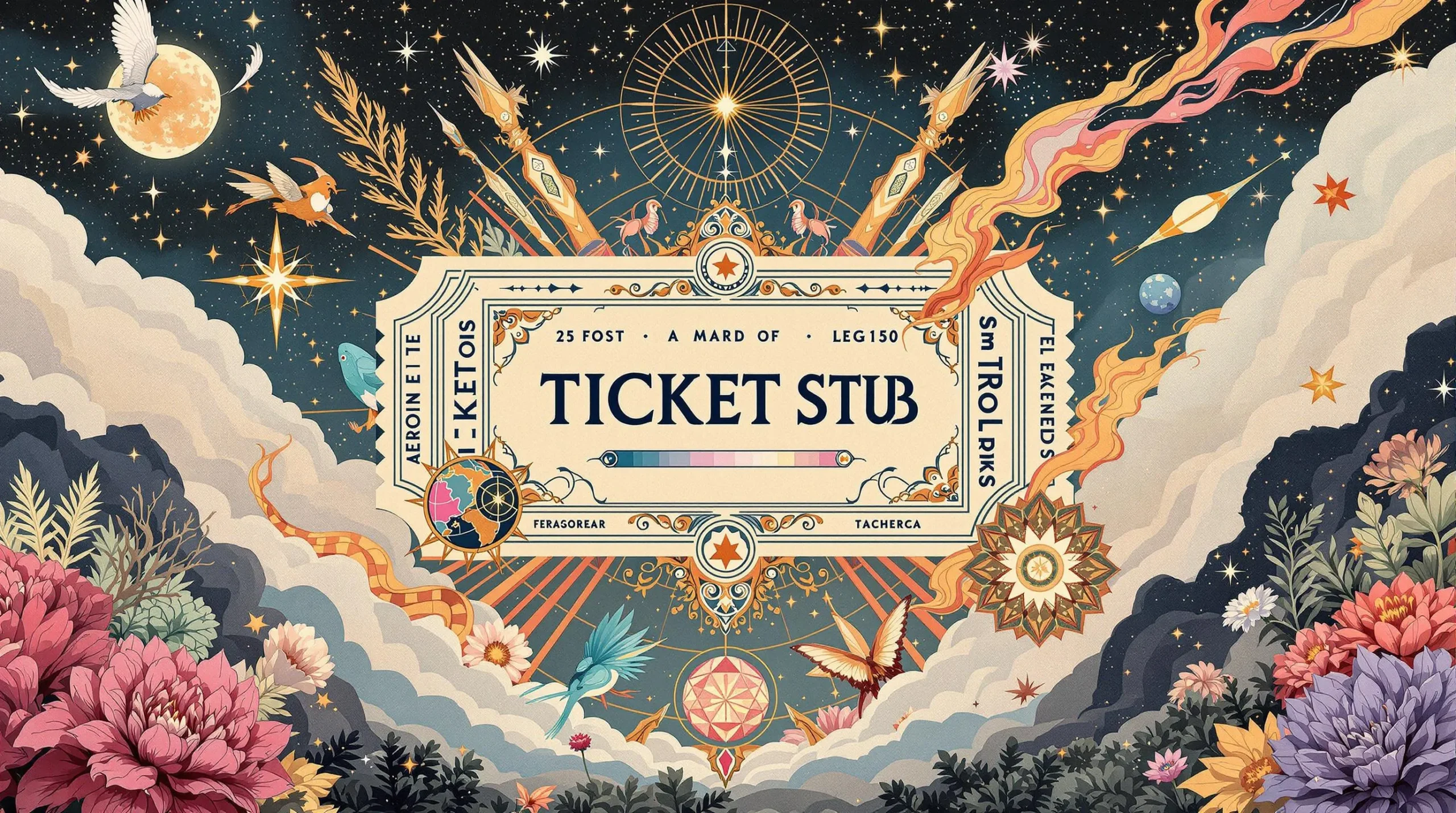
The Ticket Stub archetype is a testament to the chosen life. It is the artifact of participation. Unlike memories, which can warp and fade into unreliable narrators, the ticket stub is a piece of hard evidence: Section C, Row 12, Seat 4. You were there. In one’s personal mythos, a collection of these stubs may form a kind of secular rosary, a string of moments to be revisited, each one a bead representing a specific communion with art, with community, with a past version of the self. It champions the ephemeral and insists on its importance, arguing that the fleeting moments are the ones that build the mosaic of a soul. The stub is the body left behind by the ghost of a good time.
This archetype is also deeply concerned with access and the crossing of thresholds. To possess a ticket is to be granted entry, to be deemed worthy of the experience within. This can shape a personal mythology around themes of belonging and exclusion, of being on the right or wrong side of the velvet rope of life. The act of acquiring a ticket is a ritual of intention. You are not passively letting life happen to you; you are selecting your experiences, curating your timeline. The cost of the ticket is an investment in your own story, a declaration that this moment, this artist, this game, is worthy of being a part of you.
Ultimately, the Ticket Stub is a philosopher of time. It speaks to the bittersweet nature of the past, marking a specific date that is now locked away, untouchable. It is a fossil of joy. For the individual whose mythology is informed by this archetype, life may not be seen as a continuous, flowing river, but as a series of distinct, illuminated pools. Each ticket marks a pool of experience one chose to dive into. It argues against the blur of days, demanding that certain nights be named, recorded, and honored as foundational to the person you are today.