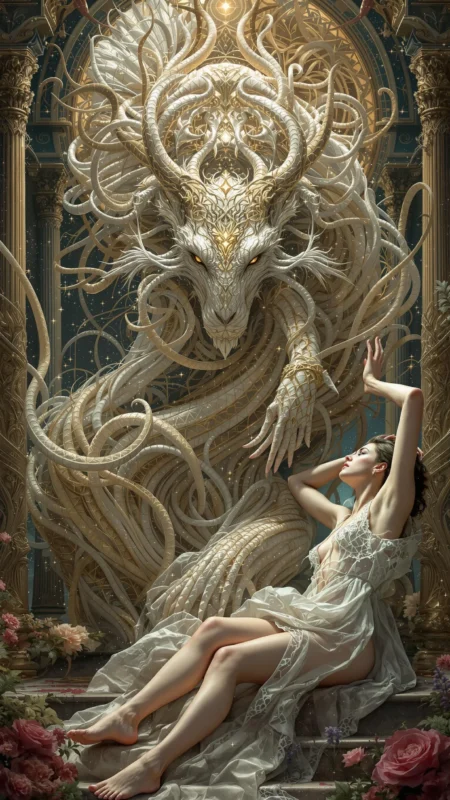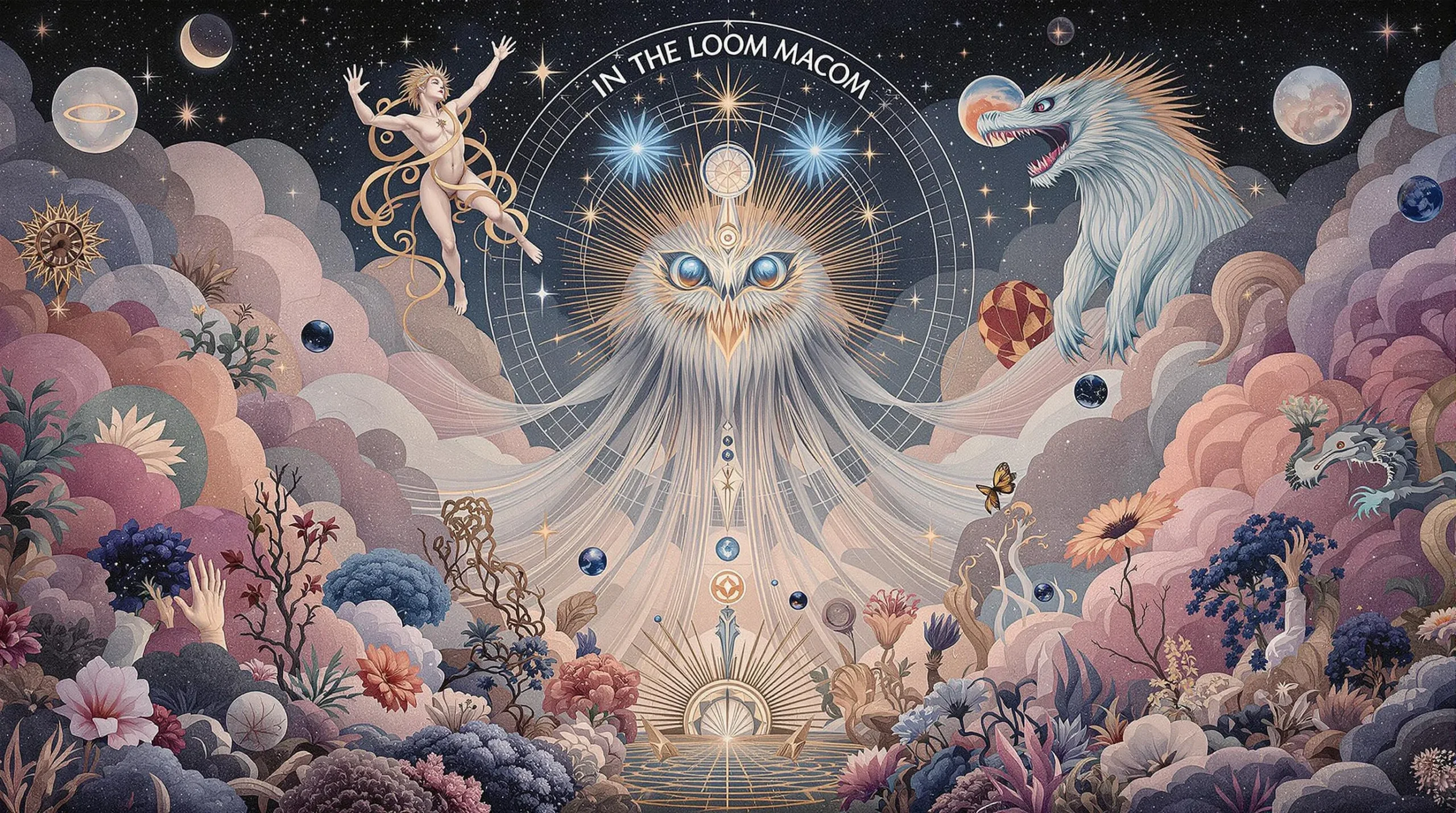


Loom

Archetype Meaning & Symbolism

Interconnected, patient, creative, structural, rhythmic, deterministic, complex, meticulous, ancient, foundational

  • The pattern is not a cage, but a language. Learn to read it, and you may learn to speak it.

If Loom is part of your personal mythology, you may...

Believe

  • Everything is connected; there are no truly random events, only patterns you have yet to understand.
  • The meaning of life is not found, but created through patient, deliberate action over time.
  • The constraints and limitations of life are not obstacles to freedom, but the very framework that makes creation possible.

Fear

  • A sudden, catastrophic event that rips the fabric of your life, a 'Gordian Knot' that cannot be untangled.
  • That your life's pattern is meaningless or ugly, and that your efforts are weaving nothing of value.
  • Being trapped in a pattern not of your own choosing, fated to repeat the mistakes and traumas of your ancestors.

Strength

  • An immense capacity for patience and long-term vision, able to work on projects that unfold over years or decades.
  • A gift for systems thinking, able to see how disparate parts fit together into a coherent whole.
  • The ability to create order and structure from chaos, building resilient and beautiful systems in your personal and professional life.

Weakness

  • A tendency towards rigidity and an inability to adapt to sudden change, as it disrupts the established pattern.
  • Analysis paralysis, getting so lost in the complexity of the weave that you become unable to act.
  • A controlling nature, attempting to manage every thread in your own life and the lives of others to ensure the 'correct' pattern emerges.

The Symbolism & Meaning of Loom

The Loom in your personal mythology could be a map of causality itself. It suggests a universe bound by the law of interconnectedness, where a single tug on a thread here creates a vibration in a part of the tapestry you cannot even see. This is not simple fate; it is a profound and intricate system of consequence. Your choices are the shuttle, flying back and forth, and each pass leaves a permanent mark, altering the relationship of all threads to one another. Life, through this lens, may become a study in action and reaction, a deep meditation on how your personal thread contributes to the tension, color, and integrity of the whole. It asks you to consider the unseen ripples of your existence, to live as if every moment is being woven into a permanent record.

The Loom may also function as the archetypal creative engine, the very structure that gives form to the formless. We often imagine creativity as boundless freedom, but the Loom teaches that true creation flourishes within constraints. The rigid frame, the tautness of the warp threads, the limited width of the fabric: these are not limitations but necessary conditions for the emergence of a coherent pattern. In your own mythos, this might translate to an understanding that your own limitations—your background, your resources, your personal struggles—are the very frame upon which you must weave your life’s work. It suggests that genius lies not in having infinite options, but in creating something beautiful and meaningful within the finite space you are given.

Perhaps most profoundly, the Loom is a physical metaphor for time. The finished cloth rolling onto the beam is the immutable past, a pattern that can be studied and understood but never changed. The point where the shuttle meets the warp is the vibrant, active present, the only place where creation is possible. And the expanse of unwoven warp threads stretching into the distance is the open potential of the future. To have the Loom in your mythology is to live with a constant awareness of this temporal continuity. You may feel the weight and wisdom of the past behind you and the pull of future possibilities before you, all while knowing that your only true power lies in the single, focused action of this very moment: the passing of the thread.


Loom Relationships With Other Archetypes

The Spider

The Loom and the Spider are both master weavers, yet their creations speak to different orders of existence. The Spider weaves from its own body, an act of instinctual survival; its web is a marvel of engineering, but it is a trap, ephemeral and designed for sustenance. The Loom, by contrast, is a tool of consciousness. It weaves with threads sourced from the world—cotton, wool, silk—to create a tapestry of story, culture, and meaning. If the Spider’s web is about catching life to continue living, the Loom’s tapestry is about interpreting life to understand living. In a personal mythos, one might feel the tension between weaving for practical survival (Spider) and weaving for enduring meaning (Loom).

The River

The River archetype embodies flow, change, and the path of least resistance, while the Loom represents pattern, structure, and deliberate intention. They are natural foils. A life guided by the River might embrace chaos, adapt to circumstance, and find its course by meandering. A life guided by the Loom seeks to establish a coherent design, building a narrative through patient, repetitive action. Yet, the two are not entirely separate. The threads of the Loom are often dyed in the River’s waters; the patterns woven may depict the River’s journey. This suggests a deeper relationship: perhaps the ultimate wisdom lies in using the structure of the Loom to give form to the wild, flowing energy of the River, creating a life that is both intentional and adaptable.

The Scribe

While both the Loom and the Scribe are concerned with creating a record, they operate in different dimensions of narrative. The Scribe works in the linear, sequential reality of language—one word follows another to build a story. The Loom, however, creates a spatial narrative. In a tapestry, every point of the design exists simultaneously, its meaning derived from its relationship to every other point around it. A person with both archetypes might struggle with this difference: the story they tell about themselves (Scribe) may feel incomplete compared to the complex, interwoven reality they experience (Loom). Their life’s work could be the search for a way to translate the holistic, patterned truth of the tapestry into the linear language of the scroll.

Using Loom in Every Day Life

Navigating Career Transitions

When faced with a job change or a layoff, the Loom archetype may help you reframe the narrative. Instead of seeing a disjointed or failed career path, you could view each position as a different colored thread. One job provided the sturdy, foundational warp of a particular skill; another introduced a vibrant, unexpected color of experience. Your task is not to mourn the end of one thread, but to thoughtfully select the next one, considering how it will contribute to the larger, unseen pattern of your professional life, a tapestry whose richness is defined by its variety, not its uniformity.

Healing Family Trauma

The Loom offers a powerful metaphor for understanding generational patterns. You might visualize your family history as a vast, complex textile, woven over centuries. In it, you may identify recurring knots of trauma, threads of addiction, or frayed sections of conflict. Your work, then, is not to rip the fabric, but to become a conscious weaver. You may choose to stop using a certain thread, or learn a new technique to mend a tear, or introduce a new, resilient fiber into the pattern for future generations. It becomes an act of ancestral mending, acknowledging the existing pattern while actively choosing to improve it.

Overcoming Creative Block

In the face of a blank page or an empty canvas, the Loom suggests focusing on structure and process. Instead of waiting for a flash of inspiration, you could simply begin to “dress the loom.” This might mean creating an outline, organizing your research, or simply committing to a small, repetitive action. The rhythmic process of adding one thread, one sentence, one brushstroke at a time builds momentum. The archetype teaches that creativity is not just a divine spark; it is the patient, methodical work of weaving, trusting that a coherent pattern will emerge from the disciplined process.

Loom is Known For

Weaving Fate

The Loom is intrinsically linked to the concept of destiny, personified by figures like the Greek Moirai or the Norse Norns, who weave the fates of gods and mortals. It represents the idea that life is a tapestry with a pre-existing design, a cosmic blueprint in which every life is an essential thread.

Creating Order from Chaos

This archetype symbolizes the power to take disparate, chaotic elements—the jumble of raw threads—and impose upon them structure, pattern, and meaning. It is the framework upon which civilization, story, and personal identity are built, a triumph of intention over entropy.

The Rhythm of Creation

The steady, percussive clack of the shuttle moving back and forth represents the patient, incremental nature of all great works. The Loom is known for its process: a meditative, disciplined rhythm that demonstrates how masterpieces are not born in a single flash of genius, but are built one meticulous step at a time.

How Loom Might Affect Your Personal Mythology

How Loom Might Affect Your Mythos

When the Loom is central to your personal mythos, your life story ceases to be a sequence of arbitrary events. Instead, it becomes a coherent, if extraordinarily complex, tapestry. You may come to see your narrative not as a hero's journey from point A to point B, but as a vast, unfolding pattern. You are both the weaver and the woven, a conscious agent making choices while also being an integral part of a design that predates you and will outlast you. Your mythos is a search for this underlying pattern, a quest to understand how the thread of your individual life contributes to the fabric of your family, your culture, and your time.

This perspective radically reframes the role of conflict and tragedy in your story. A painful breakup, a professional failure, a period of profound loss—these are not narrative dead ends or mistakes to be edited out. They are, perhaps, the introduction of darker threads, snarls that test your skill as a weaver, or even intentional gaps in the weave that create texture and shadow. The mythos of the Loom suggests that the beauty of a life’s tapestry is not in its perfection, but in its complexity and richness. Your story is not about avoiding the knots, but about learning to incorporate them into a more resilient and interesting design.

How Loom Might Affect Your Sense of Self

Your sense of self may be deeply defined by interconnectedness. You do not see yourself as an isolated, self-contained individual, but as a nexus of relationships and influences. Your identity is a pattern formed by the threads of ancestry, memory, belief, and action, all woven together. To ask “Who am I?” is to ask “What threads run through me?” This can foster a profound sense of humility and belonging, a recognition that you are both unique in your specific weave and utterly dependent on the surrounding fabric for your existence. Self-awareness becomes an act of pattern recognition.

This archetype could also cultivate a deep and abiding patience with your own becoming. Personal growth is not viewed as a series of dramatic leaps or sudden epiphanies, but as the slow, rhythmic, and sometimes tedious work of adding one thread at a time. You may trust the process, even when the final design is unclear. You understand that the full picture of who you are is a retrospective revelation, only visible after countless hours at the loom. This allows for a gentler approach to self-improvement, one based on consistency and faith in the cumulative power of small, deliberate acts.

How Loom Might Affect Your Beliefs About The World

Your worldview may be one of intricate, systemic wholeness. You might see politics, economics, and ecology not as separate domains but as interwoven threads in a single global tapestry. A political decision in one country pulls on an economic thread in another, which in turn frays an ecological thread somewhere else. This fosters a type of systems thinking that is less about linear cause-and-effect and more about understanding feedback loops, resonance, and unseen connections. You may find it difficult to subscribe to simple ideologies, as you are always aware of the staggering complexity of the weave.

This perspective might also lead you to grapple with the philosophical tension between free will and determinism. The Loom presents a world that is both patterned and participatory. Is the design of the tapestry already complete, and we are merely acting out our predetermined part? Or do our choices genuinely create the pattern as we go? Your worldview may hover in this ambiguity, accepting that while the threads and the frame may be given, the specific way they are woven together contains the spark of human freedom. The world is a collaborative project between fate and choice.

How Loom Might Affect Your Relationships

Relationships, in this light, are the conscious act of weaving two lives together. You may see a partnership not as a merger, but as the creation of a new, shared textile. It is a delicate process that requires aligning rhythms, respecting each other's colors and textures, and patiently working through the inevitable tangles. An argument is a snagged thread that must be carefully unpicked, not ripped. A shared joy is the emergence of a beautiful and unexpected pattern that neither person could have created alone. This view can foster immense intentionality and care in your connections.

There is also a profound sense of responsibility inherent in this view. Your words and actions are not yours alone; once uttered or performed, they become threads woven into the fabric of another person's life. This could make you a deeply considerate and reliable partner, friend, or family member. However, it may also lead to a fear of causing harm, a hesitancy to act for fear of creating a permanent tear or an ugly knot in someone else's tapestry. The weight of your interconnectedness can feel both like a sacred trust and a heavy burden.

How Loom Might Affect Your Role in Life

You may perceive your primary role in life as that of a Pattern-Maker or a Community-Weaver. In any group you are part of—be it a family, a company, or a social circle—you might feel a calling to create coherence, structure, and connection. Your purpose is not necessarily to be the star or the leader, but to be the one who builds the framework that holds everything together. You are the one who organizes the reunion, documents the family history, or creates the systems that allow a team to function harmoniously. Your satisfaction comes from seeing a strong, resilient, and beautiful pattern emerge from the collective effort.

Conversely, this same archetype can cast you in the role of the one who feels trapped by the pattern. The Loom can feel less like a tool of creation and more like a cage of expectation. You might feel confined by the role your family or society has woven for you, your life's path seemingly predetermined by the threads of tradition and duty. Your personal quest may then become a struggle against the loom itself, a dramatic attempt to break the frame, cut the threads, and see what you can create with the raw, untethered material of your own life, free from any pre-existing design.

Dream Interpretation of Loom

In a positive context, to dream of a loom that is functioning smoothly, with a shuttle flying effortlessly and a beautiful, intricate pattern emerging, may be a powerful affirmation. It could suggest a profound sense of alignment in your waking life. The dream might be telling you that your disparate efforts—in work, relationships, and personal growth—are integrating into a meaningful whole. The vibrant colors could symbolize emotional richness, and the clear pattern may represent clarity of purpose. Such a dream can instill a sense of deep confidence, a feeling that you are on the right path and that your patient work is, quite literally, creating something of beauty and substance.

In a negative context, a dream of the Loom can be a potent symbol of anxiety and powerlessness. Dreaming of tangled threads that you cannot sort out may point to overwhelming complexity or unresolved conflicts in your life. A thread that repeatedly snaps could signify burnout, a relationship at its breaking point, or the fear that your resources are insufficient for your ambitions. A loom that is broken, warped, or weaving a chaotic, ugly mess might reflect a sense of deep internal disorder or the fear that your life is unraveling. Such a dream is a call to attend to the sources of chaos and fragility in your life before the entire fabric is compromised.

How Loom Archetype Might Affect Your Needs

How Loom Might Affect Your Physiological Needs

The Loom archetype may ground your physiological needs in the deep human requirement for rhythm and structure. Your body might not just prefer, but demand, a predictable cadence to its days. Consistent sleep cycles, regular mealtimes, and rhythmic forms of movement like walking, swimming, or dancing could be essential for your well-being. These routines are the warp threads of your physical existence; they provide the taut, reliable structure upon which your energy and health are woven. When this rhythm is disrupted, you may feel it not just as tiredness or inconvenience, but as a fundamental unsettling of your physical self, as if the very frame of your being has been shaken.

Your relationship with sustenance could also be shaped by this archetype. You may see food not merely as fuel, but as the raw, colored threads from which your body is perpetually re-woven. This could lead to a conscious and deliberate approach to eating, a desire to understand where ingredients come from and how they combine to create a healthy system. The act of cooking itself might become a ritual of weaving: the chopping, mixing, and heating of disparate elements to create a nourishing, patterned whole. This perspective elevates the mundane act of eating into a creative participation in your own physical becoming.

How Loom Might Affect Your Ideas of Belonging

Belonging, through the lens of the Loom, is not about mere inclusion; it is about integral placement. To belong is to be a thread woven so deeply into the fabric of a family, a community, or a partnership that your absence would leave a tangible void. Love and friendship are the most intimate forms of weaving, where your life becomes intertwined with another's, creating a shared pattern that is stronger and more complex than either thread alone. You may seek connections that are not superficial or transient, but foundational, looking for the place where your unique color and texture are essential to the larger design.

The pain of isolation, therefore, may be felt as the acute terror of being a frayed end, disconnected from the whole. Loneliness is not just being alone; it is being without purpose in the pattern. This can drive a powerful quest for community, a search for your people, your tribe, the place where you fit. You might feel a deep need to contribute, to have a role, to know that your presence strengthens the fabric for everyone. Belonging is this sense of being held in place by countless other threads, and in turn, holding them.

How Loom Might Affect Your Feelings of Safety

For you, a sense of safety may be synonymous with structure, predictability, and the integrity of the whole. Security is found in a life with a strong, well-built frame: a stable home, a reliable income, clear social contracts, and well-defined plans for the future. These elements provide the necessary tension for the loom of your life, allowing you to weave your personal story without the constant fear of collapse. Threats to safety are perceived as anything that could compromise this structure—sudden, chaotic events, betrayals of trust, or financial instability. These are the equivalent of a warp thread snapping, a catastrophic event that jeopardizes the entire tapestry.

Consequently, you may be highly attuned to potential risks and dedicated to mitigation. This can manifest as meticulous planning, a focus on insurance and savings, and the creation of strong boundaries in relationships. The fear is not just of a single danger, but of the 'loose thread' that could unravel everything. Safety is not a fortress wall, but the resilience of the entire weave. You may feel a deep anxiety when parts of your life feel precarious or unpredictable, as it threatens the fundamental security of your world's design. This can make you a bastion of stability for others, but also prone to anxiety in the face of uncertainty.

How Loom Might Affect Your Views of Esteem

Your self-esteem may be intrinsically tied to the act of creation and the quality of the tapestry you are weaving. A sense of accomplishment and self-respect could come from mastering a skill, completing a difficult project, or bringing order and beauty to a chaotic situation. Your worth is measured by the tangible evidence of your patience, skill, and vision. You feel good about yourself when you can step back and see the manifest result of your labor: the well-run home, the successful business, the finished novel, the nurtured garden.

Furthermore, esteem could also be derived from a more subtle understanding of your place within the grander design. You may not need to be the most brilliant, eye-catching thread in the fabric to feel valuable. Your self-worth might come from a quiet confidence in your own necessity. Perhaps you are a simple, strong thread in the background, providing the crucial structure that allows more vibrant threads to shine. Esteem, in this sense, is not about being the best, but about being essential. It is the quiet dignity of holding your place and maintaining the integrity of the whole.

Shadow of Loom

The shadow of the Loom emerges as a tyrannical fatalism. Life becomes a prison of predestination. You may feel utterly powerless, a mere puppet whose strings are pulled by an unseen weaver. This can lead to profound resignation, a creative paralysis where you refuse to act, believing any effort is futile against the pre-woven design. Relationships become transactions within a fixed system, devoid of spontaneity or genuine connection, as you see others only as threads in a pattern you cannot change. The world feels cold, mechanical, and devoid of grace, and you are merely a cog in its inexorable machine.

Another facet of the shadow is obsessive control. The weaver becomes a despot, frantically trying to manage every thread, every color, every knot to force a perfect, pre-conceived outcome. This manifests as crippling perfectionism, an intolerance for the natural messiness of life and the autonomy of others. You might manipulate people and situations to fit your desired pattern, sacrificing genuine connection for the illusion of control. The Loom, meant to be a tool for creating beauty and meaning, instead becomes an instrument of suffocation, weaving a tapestry that is technically flawless but utterly lifeless and brittle.

Pros & Cons of Loom in Your Mythology

Pros

  • You possess a natural ability to build lasting structures, whether they are businesses, families, or creative works.
  • You have a deep appreciation for process and can find profound satisfaction in slow, methodical work.
  • You are able to find meaning in hardship, seeing it as a necessary color that adds depth to the overall tapestry of your life.

Cons

  • You may struggle with spontaneity and find it difficult to 'go with the flow,' preferring a well-structured plan.
  • There can be a risk of emotional detachment, viewing life and relationships as a system to be managed rather than an experience to be lived.
  • You might feel overly responsible for the 'pattern' of your family or community, leading to burnout and anxiety.