 Believe
 Fear
Fear Strength
 Weakness
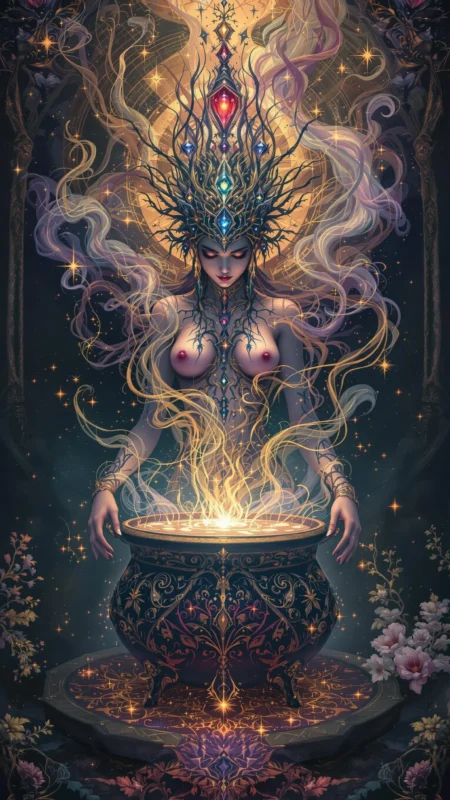
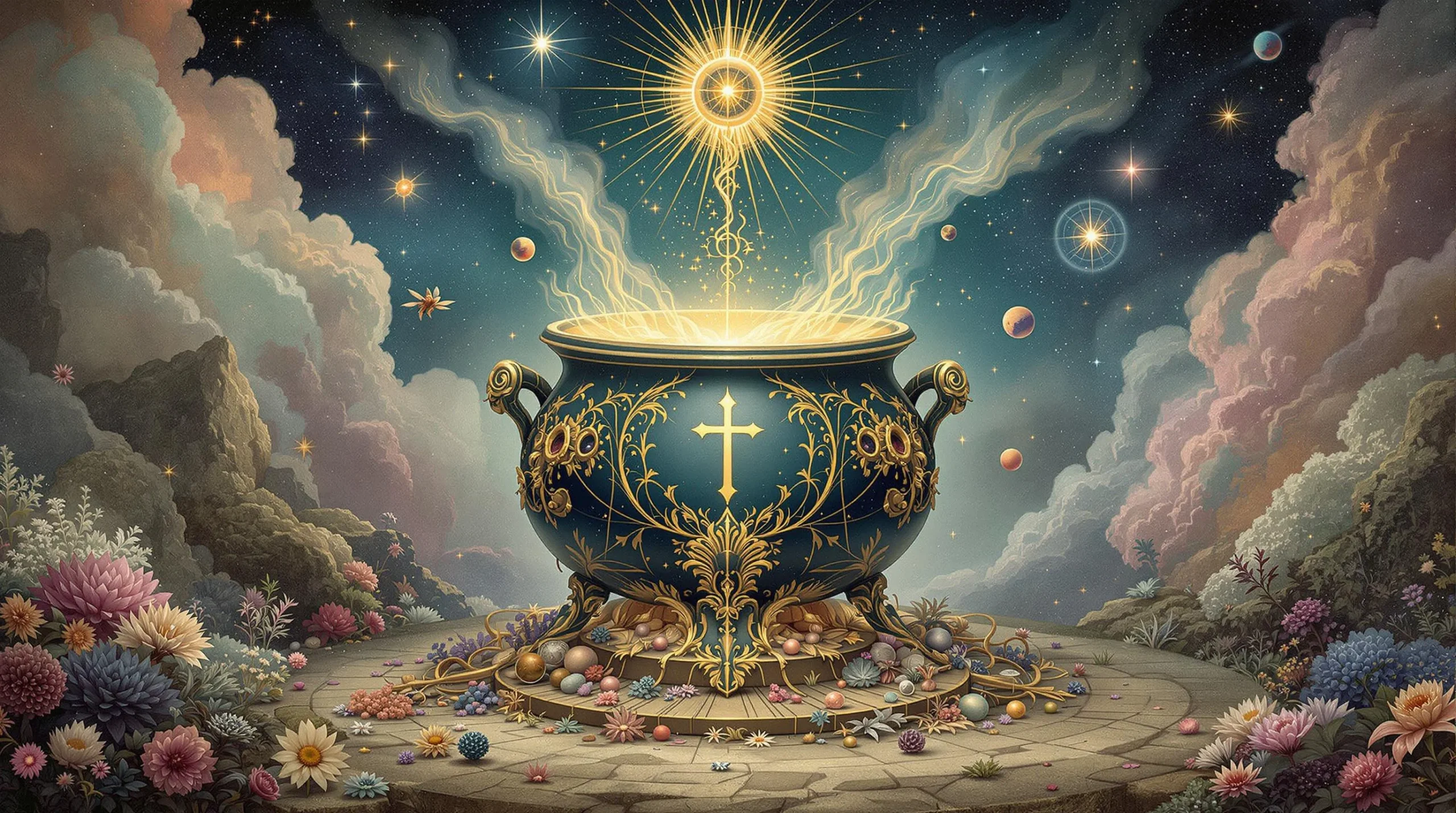
In personal mythology, the Witch's Cauldron may represent the psyche itself: the deep, dark, mysterious container of the self. It is the inner space where life’s disparate ingredients—joy and trauma, love and loss, success and failure—are tossed together. Unlike a simple container, the cauldron is an active agent of change. It is the seat of alchemy, suggesting that the contents of your life are not static artifacts but are constantly simmering, interacting, and transforming into something new. To have the cauldron in your mythos is to understand your inner life not as a tidy archive, but as a bubbling, magical, and sometimes volatile stew of becoming.
The archetype is also a powerful symbol of generative potential and the feminine principle of creation. It is the womb, the earth, the void from which all things emerge. It speaks to a trust in unseen processes, in the wisdom of gestation. You may not always know what is cooking or what the final result will be, but you have faith in the process itself. This symbolism fosters a deep comfort with the unknown and the “messy” periods of life, viewing them not as failures but as necessary phases of simmering before a new creation is ready to be born. It connects you to the cycles of birth, death, and rebirth, seeing endings as mere dissolutions that provide the raw material for the next beginning.
Furthermore, the cauldron signifies the point where the material and spiritual worlds meet. It is often cast iron—heavy, earthy, mundane—yet it is the site of magical processes. This could symbolize your ability to find the sacred in the ordinary, to perform alchemy in the kitchen of your daily life. The act of creating a meal, finishing a project, or resolving a conflict can be seen through this lens: taking the raw stuff of reality and, through intention and energy, transforming it into something nourishing, beautiful, or whole. It insists that magic is not an escape from the world, but a deeper engagement with its fundamental properties of change and potential.