 Believe
 Fear
Fear Strength
 Weakness
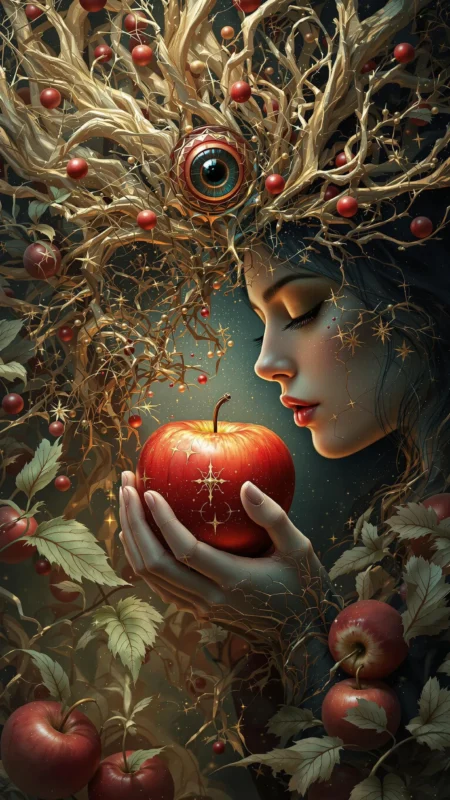
The Poisoned Apple, in our modern lexicon, is the venture capital deal with predatory terms, the flawless social media life that masks a quiet desperation, the political promise that glitters with ruin. It is the archetype of the beautiful, fatal shortcut. Its presence in one's personal mythology suggests a life story not about avoiding temptation, but about learning to recognize its many modern costumes. It symbolizes the critical juncture where intuition must override desire, where the soul’s quiet warning must shout down the ego’s clamoring want. The Apple represents a sophisticated danger: not a roaring monster, but a silent, smiling assassin.
Its meaning has deepened beyond simple malice. The apple may not be offered by an evil queen, but by a culture that prizes appearance over substance, by systems that offer comfort in exchange for complicity, or even by our own unexamined ambition. To contend with this archetype is to become a student of subtleties. It teaches that the most significant threats often arrive as gifts, and that wisdom is not the acquisition of knowledge, but the development of an instinct for what is holistically nourishing versus what is merely, beautifully, toxic.
Ultimately, the Poisoned Apple is a symbol of discernment. It asks: what do you truly hunger for? Is it the fleeting sweetness of validation, the easy comfort of illusion? Or is it the harder-won nourishment of truth? The apple on the branch is just fruit. It becomes the Poisoned Apple only when it is imbued with an agenda. Recognizing that agenda, whether it comes from the world or from within, is the central spiritual task presented by this potent, polished symbol.