 Believe
 Fear
Fear Strength
 Weakness
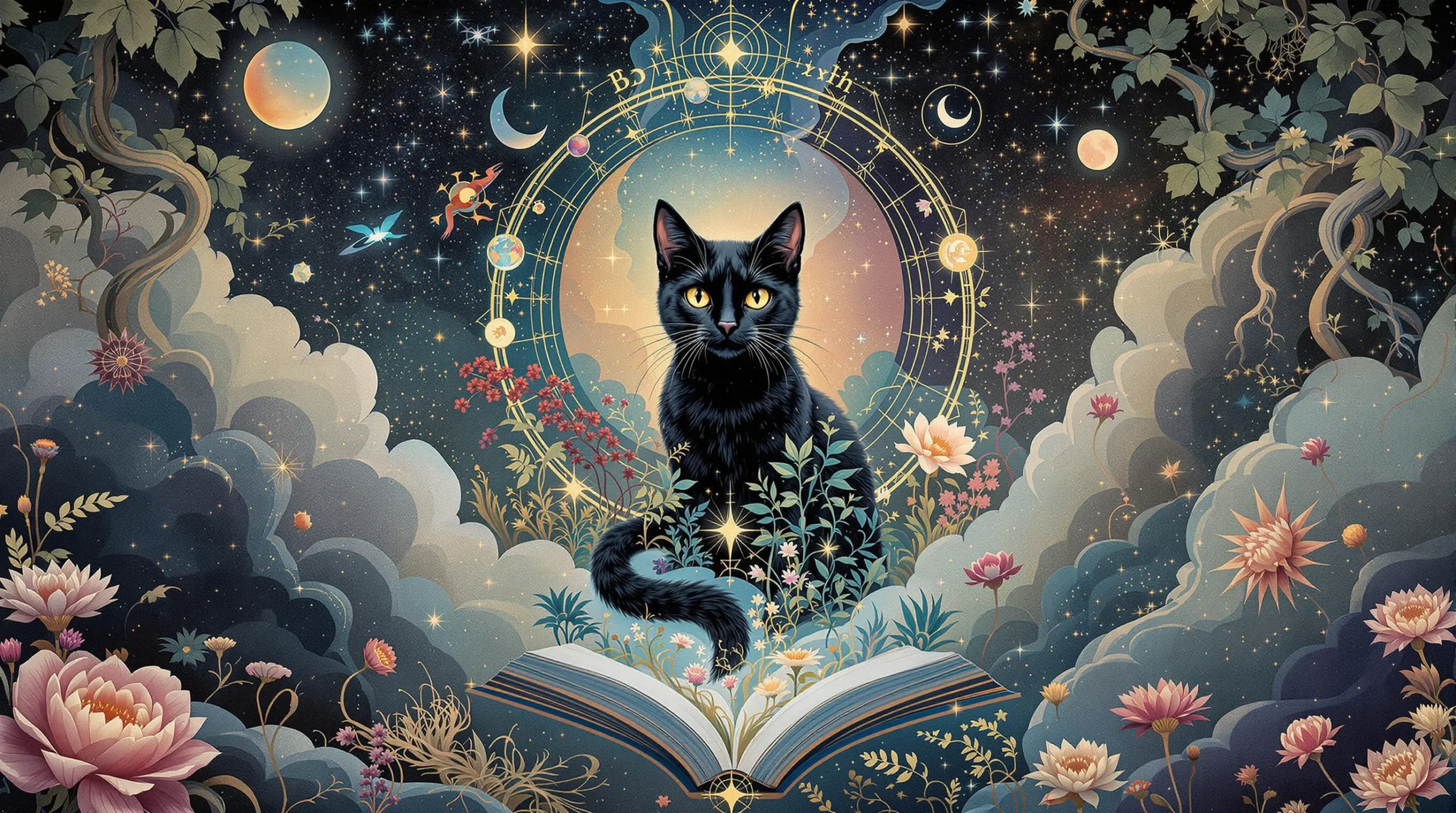
The Black Cat archetype is, first and foremost, an invitation to reconsider the nature of luck. It walks the razor’s edge between omen and fortune, its meaning entirely dependent on the mythos of the observer. To have the Black Cat as part of your personal narrative is perhaps to reject the notion of external luck altogether. Luck becomes an internal quality: a form of grace, an intuitive sense of timing, an ability to slip through the cracks of misfortune unscathed. The cat does not ask if it is lucky; it simply moves with the confidence that it will land on its feet. Its presence in your story may suggest that you are the creator of your own fortune, finding advantage in the shadows where others see only peril.
At its core, this archetype is a symbol of radical self-possession and a deep, sensual connection to the self. The black cat is beholden to no one. Its affections are given, not owed, and its comfort is self-contained. For the individual, this could manifest as a quiet refusal to perform for others, a comfort in solitude that borders on the sacred. It suggests a life lived from the inside out, where internal validation is the only kind that matters. It is the wisdom of the body: the pleasure of a sunbeam, the luxury of a long stretch, the deep peace of a nap in a safe place. It is an unapologetic embodiment of one’s own physical being.
To welcome the Black Cat is to welcome the shadow. It is a creature of the night, its form a walking void, a patch of midnight given legs and eyes. In personal mythology, it represents an integration of the unknown, the subconscious, and the parts of the self that society may deem unacceptable or frightening. It does not fear the dark; it wears it as a coat. This could signify a journey into one’s own hidden depths, a process of befriending one’s own mysteries. The goal is not to expose these secrets to the harsh light of day, but to learn to navigate by their subtle, lunar glow.