 Believe
 Fear
Fear Strength
 Weakness
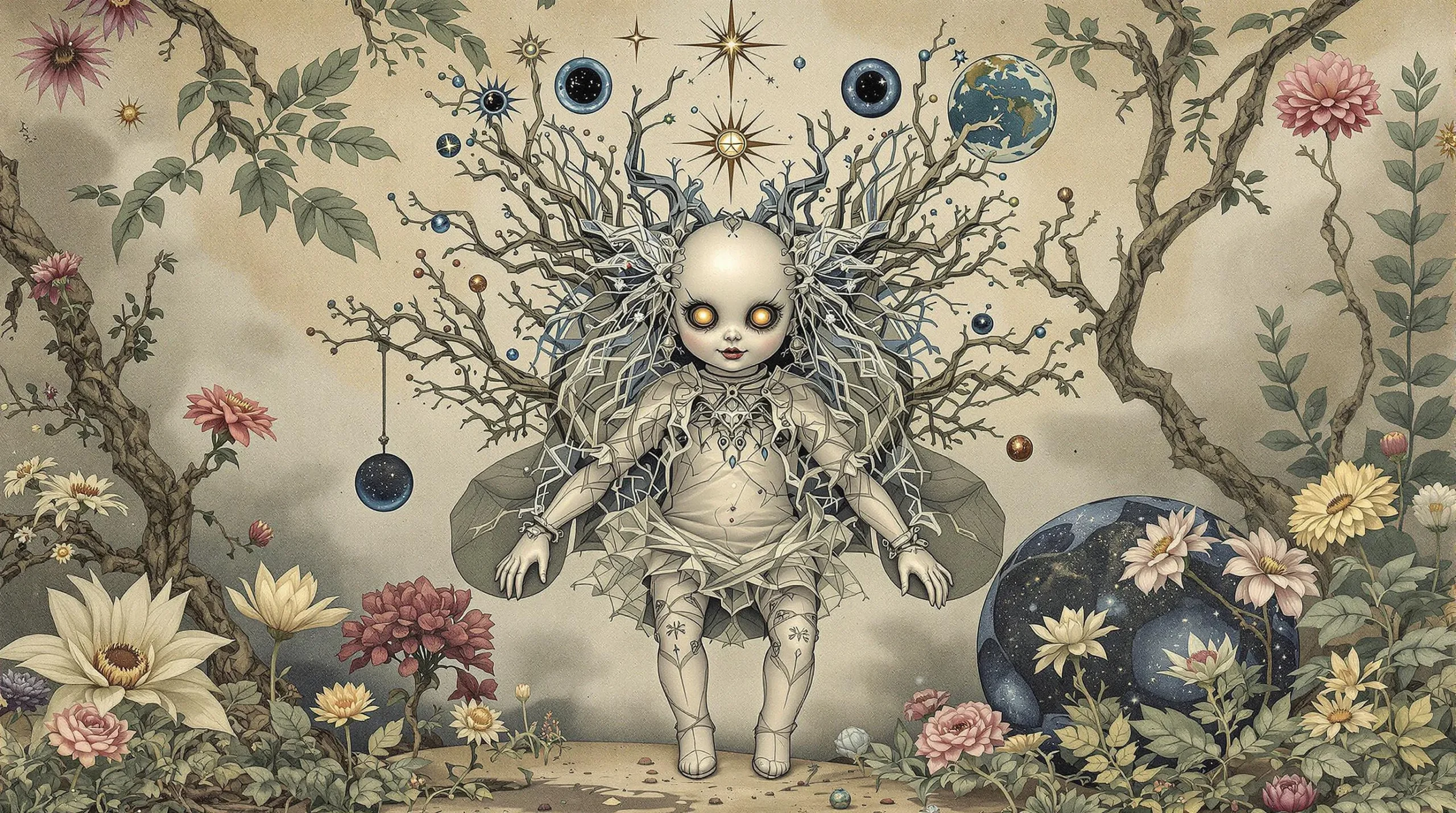
The Haunted Doll is a vessel, but not an empty one. It is a chalice for a specific vintage of time: a moment that refused to pass. In one’s personal mythology, this archetype could symbolize a state of arrested development, a part of the self that was objectified by trauma or circumstance and left behind. This inner doll is not dead, merely frozen, animate with the potent energy of its final, living moment. To feel its presence is to feel the uncanny pull of an unresolved past, a self who still waits in the nursery of the psyche for the life that was supposed to happen. It is the beautiful, sorrowful face of what could have been, staring back from the present.
The archetype may also speak to the weight of inheritance. Not the silver or the property, but the psychic residue of generations. The doll, passed from mother to daughter, from one owner to the next, accumulates stories. It carries the faint, invisible fingerprints of every hand that held it. For an individual, to have the Haunted Doll in their mythos could mean they feel themselves to be a carrier of ancestral emotion, unspoken griefs, or family secrets. They bear a history that is not their own but has been given to them to hold, a silent, heavy passenger in their own life story.
There is, too, a curious power in the Haunted Doll. It is the power of the passive object that shapes its environment through sheer presence. Its gaze, though glass, is never neutral. It can feel accusatory, sorrowful, or deeply knowing, forcing those around it to confront their own projections. The doll does nothing, yet it can change the feeling of a room entirely. This symbolizes a subtle and often overlooked form of influence: the power of the witness. It suggests that one can alter a dynamic not by acting, but by being a conscious, observant presence that makes others aware they are being seen.