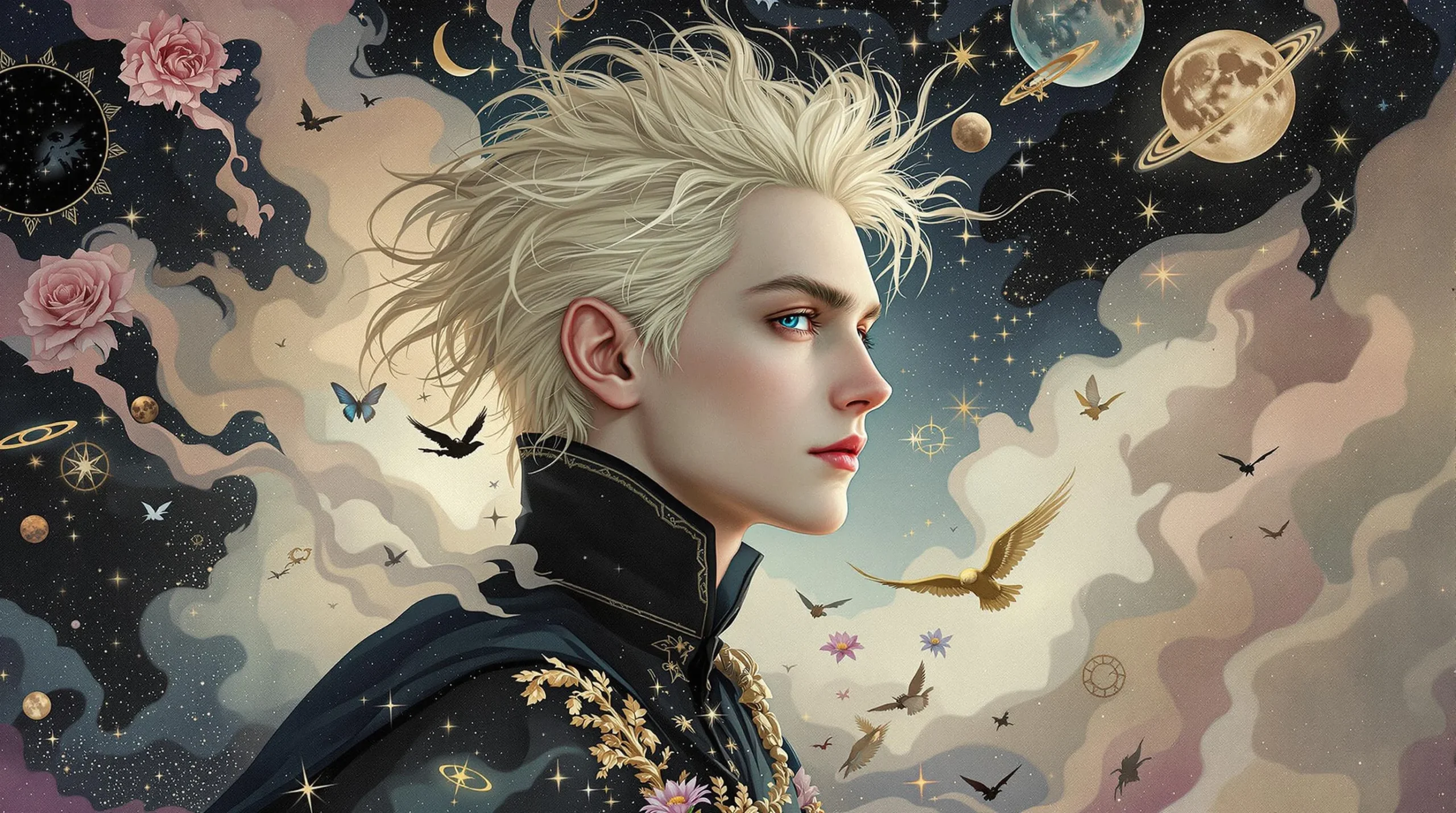


Draco Malfoy

Archetype Meaning & Symbolism

Privileged, conflicted, arrogant, vulnerable, ambitious, insecure, sharp, yearning, ostracized, seeking

  • I didn't have any choice! I was scared! I was scared for my family!

If Draco Malfoy is part of your personal mythology, you may...

Believe

  • One's lineage is a form of destiny, a powerful current that is easier to swim with than against.
  • Vulnerability is the most dangerous form of nakedness, and it must be armored with sarcasm, status, and scorn.
  • Most people who claim to be noble heroes are simply lucky they were never truly tested.

Fear

  • Failing to meet the impossibly high standards of a powerful authority figure.
  • Being exposed as a fraud, as someone who is not as powerful, clever, or cruel as they pretend to be.
  • Being cast out and stripped of the name and status that have, until now, been the entirety of your identity.

Strength

  • A sophisticated understanding of power dynamics and social structures, seeing the strings that move the puppets.
  • A hidden well of empathy for those who are trapped, born from a deep, personal understanding of what it means to be caged.
  • The potential for a profound and hard-won personal transformation, making your eventual integrity all the more resilient.

Weakness

  • A default to arrogance and prejudice as a defense mechanism, alienating potential allies.
  • An over-reliance on external validation, leading to a brittle sense of self that can be easily shattered by disapproval or failure.
  • A deep-seated cynicism that makes it difficult to trust in the genuine goodness of others or yourself.

The Symbolism & Meaning of Draco Malfoy

The Draco Malfoy archetype speaks to the exquisite tragedy of the gilded cage. It is the story of the person who has everything but freedom: the freedom to choose their own values, to dissent from the family creed, to be vulnerable without consequence. In personal mythology, this figure represents the part of us born into a script we did not write. This could be the legacy of a family business, an ideological inheritance, or the subtle but powerful expectations of a social class. Malfoy is a meditation on the nature of evil, suggesting it is not always a roaring fire of malice but often the creeping frost of conformity, fear, and a desperate desire for a patriarch's approval.

He is the shadow of the hero, a walking embodiment of the 'what if?' What if the protagonist had been given power instead of having to earn it? What if he had been taught that worth was an inheritance, not a quality of character? The Malfoy archetype forces a more compassionate and complicated understanding of antagonism. It challenges the simple binary of good and evil, suggesting that behind the sneer of a bully often lies the terror of a child afraid of failing a monstrous system. He is the patron saint of those who were taught the wrong lessons and must spend a lifetime unlearning them.

Ultimately, this archetype symbolizes the slow, painful genesis of an individual conscience within a collective identity. It’s about the moment the mask of inherited arrogance cracks to reveal the trembling face beneath. For one’s personal mythos, this is the recognition that our deepest struggle may not be against external monsters, but against the gilded, comfortable, and soul-crushing expectations that were passed down to us as a gift. It is the story of redemption, not through a grand, heroic act, but through a quiet, terrifying moment of refusal.


Draco Malfoy Relationships With Other Archetypes

The Golden Child

The relationship with The Golden Child is perhaps akin to that of a shadow to a flame. The Draco Malfoy archetype may define itself in opposition, a creature of borrowed light and resentful corners, forever measuring its own substance against a luminescence it secretly covets and publicly scorns. This is not simple rivalry; it is a kind of existential tether. The Golden Child could be seen as an unwilling mirror, reflecting not what The Draco Malfoy is, but everything he has been told he ought to be, yet feels he is not. Every triumph of this foil is a quiet indictment, every act of grace a subtle torment, forcing The Draco Malfoy into a performance of contempt that may only be a mask for a profound and corrosive envy. He is the cold moon to their effortless sun, trapped in an orbit of comparison from which he cannot escape.

The Imposing Patriarch

The Imposing Patriarch might be understood as the sculptor and The Draco Malfoy as the marble, chipped and shaped by a will that is not his own. This bond is less a nurturing root and more of a gilded chain, a legacy that feels like a debt payable only through perfect imitation. The love, if it can be called that, is conditional, a currency earned through adherence to a cold and unforgiving creed. Every choice, every posture, could be a desperate attempt to catch the light of approval in the patriarch’s steely gaze. The Draco Malfoy, in this dynamic, may become a living echo, a vessel for ambitions and prejudices poured into him like molten silver, which cools to become a beautiful but brittle prison of identity. He wears his name and station like an inherited suit of armor, impossibly heavy and cold to the touch.

The Ancestral Home

The Ancestral Home is perhaps not a sanctuary but a grand, echoing mausoleum of a name. Its polished halls and ancient portraits may serve as constant, silent adjudicators of the archetype’s worth. For The Draco Malfoy, this place could be the physical manifestation of the pressure he bears—a structure built from the bones of expectation. The opulence is a veneer over something hollow, the beauty a distraction from the drafts of history that whisper of obligation and decay. He may be the master of the house, yet he is also its most privileged prisoner, haunted by the ghosts of those who came before and shackled to the future they demand. The home, then, becomes a stage for a part he never auditioned for, its very architecture a reminder that he is less an individual and more a temporary custodian of a cold, demanding legacy.

Using Draco Malfoy in Every Day Life

Navigating Inherited Expectations:

When you feel the immense weight of your family’s or community’s history defining your future, the Malfoy archetype serves as a map. It illuminates the gilded cage of expectation, helping you to distinguish between the duties you cherish and the dogmas you must shed. It is a reminder that your name is only the prologue, not the entire story, and the most courageous act may be to disappoint those who believe they own your narrative.

Confronting a Rival:

In the face of a rival who seems to possess an effortless grace or moral clarity you lack, this archetype offers a complex mirror. It encourages you to look beyond the surface-level antagonism and question what this person represents about your own hidden insecurities or thwarted desires. Your envy or disdain may be a compass pointing toward a quality you secretly wish to cultivate in yourself, transforming a bitter rivalry into a catalyst for self-discovery.

Facing Moral Compromise:

When presented with a choice that feels like a betrayal of self, regardless of the path taken, the Malfoy mythos provides a space for the gray. It acknowledges that sometimes, survival or the protection of loved ones demands a terrible price. It allows you to hold the nuance of a decision made under duress, to forgive yourself for not being the uncomplicated hero, and to understand that a compromised choice does not have to be the final word on your character.

Draco Malfoy is Known For

Rivalry with the Hero

A persistent antagonism toward the central protagonist, Harry Potter, which serves to sharpen both characters and highlight their contrasting circumstances: inherited privilege versus earned renown.

A Heavy Legacy

Bearing the weight of the Malfoy name and a pure-blood lineage steeped in dark magic and social supremacy. This inheritance is both a source of power and a profound burden that dictates his choices.

The Crushing Turn

A pivotal, agonizing hesitation to commit a final, villainous act, revealing a core of fear and conscience beneath layers of indoctrination. This moment of indecision becomes his defining, humanizing feature.

How Draco Malfoy Might Affect Your Personal Mythology

How Draco Malfoy Might Affect Your Mythos

When the Malfoy archetype integrates into a personal mythos, the narrative of one’s life may shift from a simple hero’s journey to a more complex story of reformation. Your life story is perhaps not about slaying a dragon, but about refusing to become the dragon you were raised to be. It centers the internal conflict between legacy and identity, making the primary quest an introspective one. The central dramatic tension of your mythos becomes: can I disentangle my soul from the gilded threads of my inheritance? Your story is one of nuance, where villains are understood, heroes are flawed, and the greatest victory is a quiet choice made against the roar of expectation.

This archetype also introduces the theme of the 'unwilling antagonist.' You may see chapters of your life where you played a role—the cynic, the critic, the obstacle—not out of malice, but out of a programmed defense or a deep-seated fear. Your personal mythos becomes a chronicle of recognizing these roles and the slow, arduous process of stepping out of them. It is a story that finds profound meaning in subtlety: the averted gaze that signals dissent, the hand that hesitates before causing harm, the quiet alliance with an unexpected party. It’s a mythos that celebrates the difficult birth of empathy in a heart that was taught to be cold.

How Draco Malfoy Might Affect Your Sense of Self

To see oneself through the Malfoy lens is to acknowledge a fundamental schism within. It is to accept that you may possess a brittle, arrogant exterior that serves as exquisitely crafted armor for a deeply vulnerable and uncertain core. This perspective could foster a kind of radical self-compassion for your own 'unlikable' traits, reframing them not as innate failings but as sophisticated, albeit painful, survival strategies learned in a specific environment. You may feel perpetually misunderstood, aware that the person you present to the world is a carefully curated defense against a judgment you feel is inevitable.

This self-perception may also cultivate a powerful, private inner world. If the external self is a performance dictated by lineage or social pressure, the internal self becomes a secret garden where authentic thoughts and feelings can be cautiously nurtured. This can lead to a rich life of introspection, but also a profound sense of loneliness. The journey becomes about slowly, carefully allowing the inner self to breach the outer walls, to risk the vulnerability of being truly seen, not as a name or a role, but as a conflicted, striving individual.

How Draco Malfoy Might Affect Your Beliefs About The World

A worldview colored by the Malfoy archetype is one stripped of simple moral binaries. You may find it impossible to see people as purely good or evil, instead seeing everyone as a product of their intricate web of pressures, privileges, and inheritances. This perspective fosters a deep, almost sociological curiosity about the 'why' behind people's actions. You might look at a figure of authority not with simple deference or rebellion, but with a question: what system are they upholding, and what are they afraid of losing? This creates a world of tragic figures rather than simple villains.

This viewpoint may also engender a certain cynicism about systems of power, coupled with a quiet faith in individual conscience. You may believe that institutions—families, governments, traditions—are inherently corrupting forces that demand conformity as the price of admission. Yet, you may also hold a profound belief in the power of a single moment of individual defiance, the potential for a person to break their conditioning, even if only in a small, almost imperceptible way. The world is not a battlefield between light and dark, but a stage where shackled souls struggle for a moment of authentic choice.

How Draco Malfoy Might Affect Your Relationships

In relationships, the Malfoy archetype may manifest as an initial reliance on a transactional or hierarchical framework. You might, perhaps unconsciously, categorize people based on status, utility, or how they reflect upon you. Friendships can feel more like alliances, built on shared status or mutual defense, with an underlying fear of betrayal. There can be a guarded quality, a reluctance to reveal genuine weakness, as intimacy itself can feel like a strategic risk. The early stages of connection may be marked by testing, sarcasm, and a sharp wit used as a defensive perimeter.

However, the evolution of this archetype within a personal mythos points toward a profound yearning for authenticity. The defining relational journey is moving from having 'cronies' to finding true friends. This often involves forming an unlikely bond with someone who sees past the armor, someone who is unimpressed by the legacy and engages with the vulnerable person underneath. For you, a truly meaningful relationship might be one where you are allowed to fail, to be afraid, and to be loved not in spite of your complicated inheritance, but with a full understanding of it.

How Draco Malfoy Might Affect Your Role in Life

Adopting the Malfoy archetype can mean seeing your role in life as that of the 'Reluctant Heir.' You may feel you've been handed a script at birth—a career path, a social standing, a set of beliefs—that feels both like a privilege and a prison. Your life's work, then, is not to achieve something new, but to negotiate with something old. You are not the pioneer in the wilderness, but the reluctant prince in the castle, wondering if the kingdom is worth the cost to your soul. This can create a sense of being an actor in your own life, always aware of the audience's expectations.

This may also cast you in the role of the 'Necessary Shadow.' In any group or system, you might be the one who embodies the uncomfortable truths, the person whose presence forces the 'hero' to define themselves more clearly. You may be the skeptic who questions the group's simplistic morality, the cynic whose barbs contain a kernel of painful insight. It's a difficult and often lonely role, to be the catalyst for others' growth through opposition. The challenge of this role is to eventually turn that critical lens inward and become the catalyst for your own transformation.

Dream Interpretation of Draco Malfoy

In a positive context, dreaming of a figure like Draco Malfoy may symbolize an emerging awareness of your own complexities and a readiness to integrate your shadow self. The dream could be a psychic invitation to acknowledge the parts of you that are arrogant, fearful, or prejudiced, not to indulge them, but to understand their origins. Seeing this archetype might signify that you are beginning to have compassion for your own past actions or learned defenses, recognizing them as survival tools rather than character damnations. It could mark the beginning of a personal redemption arc, a willingness to face the uncomfortable truths of your own story in order to write a new ending.

In a negative context, this figure appearing in a dream could represent a feeling of being trapped and powerless within a system you despise. It may be an embodiment of your deepest fears about your own capacity for cruelty or conformity when under pressure. Dreaming of Malfoy could be your subconscious screaming that you are compromising your values for safety or approval, that you are becoming someone you don't respect. It may point to a situation in your waking life where you feel you have 'no choice,' and the dream serves as a stark warning against the moral corrosion of such helplessness.

How Draco Malfoy Archetype Might Affect Your Needs

How Draco Malfoy Might Affect Your Physiological Needs

The physiological needs of security and sustenance, for the Malfoy archetype, are almost always met, but this creates a unique inversion in the body's experience. Because the fight for survival is absent, the body may instead manifest the stress of psychological and moral combat. This could look like a perpetual, low-grade tension: a rigid posture, a clenched jaw, a shallow breath held in constant anticipation of a verbal attack or a test of loyalty. The body is not relaxed in its comfort; it is coiled, ready to perform, to defend its status. There is no ease, only a vigilant stillness.

This can also lead to a disconnect from the body's authentic signals. Hunger, fatigue, and other physical needs may be ignored or overridden in favor of maintaining a facade of sharp, invulnerable control. The body is treated less like a home and more like a uniform that must be kept pristine and orderly at all times. The personal journey may involve learning to inhabit the body not as a symbol of status, but as a source of grounding information, reconnecting with the simple, honest truths of physical existence that privilege often obscures.

How Draco Malfoy Might Affect Your Ideas of Belonging

Belonging, in the world of the Malfoy archetype, is an inheritance, not a choice. One is born into a tribe, and membership is non-negotiable. This provides a powerful, immediate sense of identity and place. You know who you are because you know who you are *with*. This form of belonging is built on shared symbols, shared enemies, and a rigid in-group/out-group mentality. It can be comforting, a bulwark against the chaos of the world, providing clear rules and a predictable social landscape.

Yet, this inherited belonging can be profoundly stifling to love and authentic connection. It demands that you love who you are told to love and hate who you are told to hate. The journey of this archetype is the slow, terrifying realization that this belonging is conditional upon betraying the self. The core conflict becomes a choice between the cold comfort of the tribe and the warm, risky, and authentic connection with an 'other'—someone outside the prescribed circle. It is the quest to find a belonging that is earned through mutual understanding, not decreed by blood.

How Draco Malfoy Might Affect Your Feelings of Safety

Within the Malfoy mythos, safety is a paradox. On one level, there is an immense fortification of safety: wealth, powerful connections, and a respected name create a bulwark against the world. Physical danger is a distant concept, something for other, lesser people. This safety, however, is entirely conditional. It is granted by, and contingent upon, allegiance to a powerful, often dangerous, ideology or patriarch. The price of this gilded safety is absolute conformity.

Consequently, the primary fear is not of external threat, but of internal dissent. The greatest danger is the risk of expulsion from the very group that guarantees one's protection. This creates a state of profound psychological insecurity. You may feel that your safety is a leash, and any tug toward individuality or a differing morality threatens to hang you. The life quest becomes a search for a different kind of safety: the internal safety of knowing your own mind and living by your own code, even if it means sacrificing the comfort of the fortress walls.

How Draco Malfoy Might Affect Your Views of Esteem

Esteem, for one who resonates with the Malfoy archetype, is almost entirely externally sourced. It is built upon a fragile scaffold of name, wealth, purity of lineage, and the reflected glory of a powerful family. Self-worth is not an internal state but a public valuation. This can lead to a desperate need for validation and a constant performance of superiority, because any crack in the facade threatens the entire structure of the self. The esteem is high, but brittle; it can be shattered by a single moment of humiliation or failure to meet an external standard.

The personal mythological journey is a forced pilgrimage from external validation to internal self-worth. This is often precipitated by a crisis: a moment when the family name becomes a mark of shame, or when the approval one craves demands an act that violates one's nascent conscience. It is in this crucible that the search for a new foundation for esteem begins. The quest is to find something to respect in oneself that has nothing to do with inheritance, but everything to do with character: the courage to hesitate, the empathy to connect, the resilience to rebuild a self from the rubble of a fallen legacy.

Shadow of Draco Malfoy

The shadow of the Malfoy archetype emerges when the conflict within ceases, and the indoctrination is fully embraced. This is the Malfoy who never hesitates, who feels no fear or flicker of conscience. He becomes a willing, enthusiastic agent of a cruel ideology, using his privilege not as a shield for his own vulnerability, but as a cudgel against others. In this shadow form, the wit curdles into pure cruelty, the ambition becomes a rapacious lust for power, and the yearning for approval solidifies into a fanatic's devotion. This is the person who doubles down on the family legacy, snuffing out any spark of individuality to become a perfect, monstrous vessel for the prejudices he was taught.

Conversely, a different shadow can appear in the utter rejection of the archetype's lessons. This is the individual who, in fleeing their past, denies its influence entirely. They might adopt a performative piety or an exaggerated humility that is just as inauthentic as their former arrogance. By refusing to grapple with the complex truths of their inheritance—both its privileges and its poisons—they become untethered, building a new identity on a foundation of denial. The true path is not to become the perfect monster or to pretend the monster never existed, but to acknowledge its presence and choose, every day, not to feed it.

Pros & Cons of Draco Malfoy in Your Mythology

Pros

  • You possess a profound capacity for empathy, especially for those who make mistakes under pressure.
  • You may develop a resilient, hard-won integrity that is more durable than one that has never been challenged.
  • Your journey of unlearning inherited biases can make you a powerful advocate for nuanced understanding and radical compassion.

Cons

  • You may be prone to elitism and unconsciously judging others based on superficial metrics like status or background.
  • Your defensive emotional armor can make it incredibly difficult to form deep, trusting, and vulnerable relationships.
  • There is a constant risk of being defined by your past, either by clinging to it or by being judged for it by others, regardless of your personal growth.