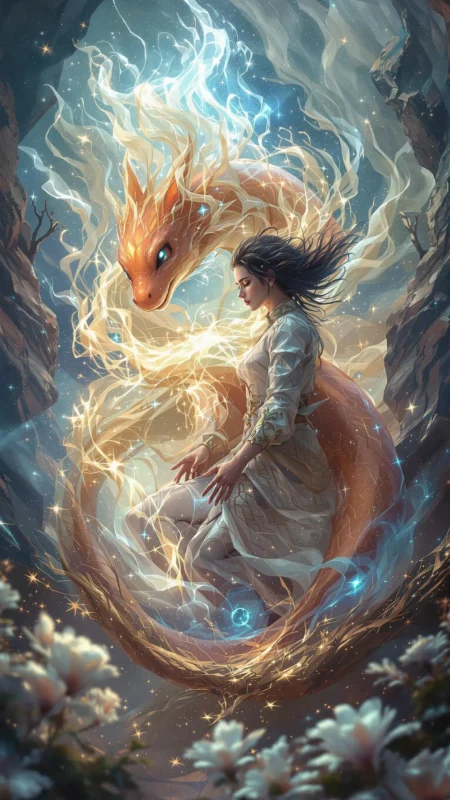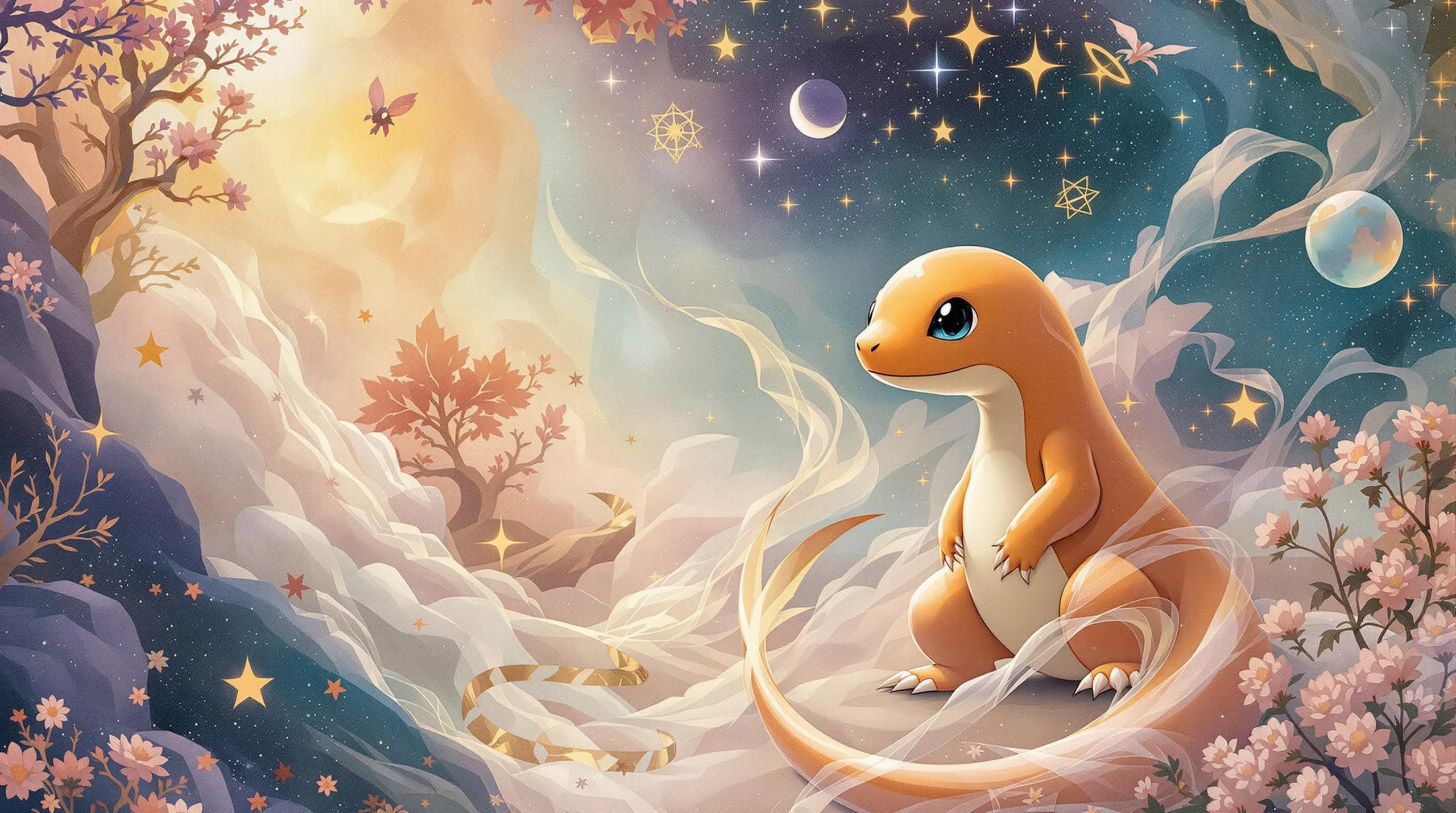


Charmander

Archetype Meaning & Symbolism

nascent, potential, vulnerable, passionate, temperamental, loyal, defiant, promising, fragile, spirited

  • The flame on its tail indicates its life force. If it is weak, the flame also burns weakly.

If Charmander is part of your personal mythology, you may...

Believe

  • You may believe that your potential is your most sacred possession, a divine spark that you are charged to protect.
  • You may believe that true loyalty is measured by who stays with you through the storm, not who celebrates with you in the sun.
  • You may believe that the most profound strength is forged in the fires of vulnerability, not in its absence.

Fear

  • You may fear abandonment above all else, to be left alone by those you trusted to help care for your flame.
  • You may fear that your inner fire will be extinguished by despair, cynicism, or the relentless cold of the world, leaving you empty.
  • You may fear that your immense potential will remain just that: a promise that is never fulfilled, a final evolution that never comes.

Strength

  • A profound resilience: the ability to keep your inner light burning through the most difficult and desolate of circumstances.
  • A fierce and unwavering loyalty to those who have proven themselves trustworthy and who respect your flame.
  • An unshakable faith in your future self, a deep knowing that your current struggles are forging a greater strength to come.

Weakness

  • A tendency towards defensive aggression, lashing out with fiery words or actions when you feel your vulnerable core is threatened.
  • A crippling sensitivity to neglect or perceived abandonment, which can make it difficult to trust others fully.
  • A habit of defining your self-worth by what you *could* be, leading to a constant dissatisfaction with who you are right now.

The Symbolism & Meaning of Charmander

The Charmander is, perhaps, the modern myth for nascent potential. It is the archetype of the promise, the living embodiment of the first chapter. To have Charmander in your personal mythology is to see your life’s core essence as a small, precious flame that requires constant tending. This is not the bonfire of achievement or the inferno of mastery. It is the pilot light of the soul. Its existence suggests that your most sacred duty is not to achieve greatness, but to protect the possibility of it. The flame is your passion, your life force, your creative spark, and it is visibly, terrifyingly fragile. Every cold wind of criticism, every downpour of despair, threatens to extinguish it forever. The world is divided into that which fuels the flame and that which snuffs it.

This archetype also carries the weight of a profound bargain. The flame promises immense power, the evolution into a winged, fire-breathing titan, but only if you can carry it through its most vulnerable stages. This is the myth of the long game, of delayed gratification written into flesh and fire. It demands a quiet, often lonely, stewardship. One may feel an intense, almost parental responsibility for one’s own inner spark. It shifts the focus from external validation to internal monitoring: is my flame burning brightly? Is it sputtering? What does it need right now: fuel, shelter, or simply to be left alone to burn?

Furthermore, the Charmander mythos redefines strength. Strength is not the absence of vulnerability: it is the endurance of it. The creature is small, easily defeated, and emotionally volatile. Yet, its continued existence is an act of defiance. To survive the rain, to endure abandonment, to keep the flame alive against all odds, this is the victory. It suggests that the most heroic part of a journey is not the final battle, but the quiet, desperate, and often unseen struggle to simply keep going when your spirit is at its lowest ebb.


Charmander Relationships With Other Archetypes

Gentle Rain

The relationship between the Charmander and the Gentle Rain is one of existential quietude and primordial terror. For this archetype, rain is not a symbol of renewal, but perhaps the soft, creeping signature of oblivion. Each drop carries with it the potential to quench the delicate pilot light of the soul, that small flame on the tail which may represent its courage, its life force, its very will to become. This is not the fury of a storm, but something more insidious; it could be the slow accumulation of doubt, the dampening effect of melancholy, or the well-intentioned advice that nonetheless suffocates a nascent passion. The Charmander’s journey, then, is often a frantic search for shelter, for an awning of belief under which its spirit can remain dry, learning that even the gentlest opposition, if persistent, can pose the greatest threat to a potential that is not yet self-sustaining.

Keeper of Embers

The Keeper of Embers may be the most crucial figure in the Charmander’s narrative arc, a necessary counterpoint to the world’s indifference. This archetype is not one of power, but of stewardship. They are the cupped hands that shield a matchstick from the wind, the quiet presence that offers dry tinder in the form of encouragement. The Keeper could be a mentor, a patron, or even the abstract concept of a safe harbor, a place where a fragile talent is not judged for its current size but celebrated for its latent heat. In the Charmander’s flicker, they perhaps see a promise of the bonfire to come. In turn, the Charmander offers the Keeper a profound purpose: to tend to a living light, to witness growth in its purest form, and to be reminded that the most consequential acts are often not grand gestures, but the simple, sustained effort of protecting a small and precious thing.

The Unhewn Stone

With the Unhewn Stone, the Charmander archetype may find its ultimate foil and its grandest ambition. The stone is not a threat; it simply *is*. It could represent the immense, stolid reality of the world, a great work waiting to be made, or the stubborn, unchanged heart of an institution or another person. In its presence, the Charmander’s tiny flame seems impossibly small, a fleeting warmth against an eternity of cold mass. This relationship, however, is not defined by conflict but by a silent, gravitational pull of purpose. The stone is the canvas upon which the Charmander’s final form might be painted. The entire process of growth, of becoming Charizard, could be seen as a preparation for this encounter—the slow gathering of strength needed to one day be a fire hot enough not to destroy the stone, but perhaps to warm it, to shape it, or to reveal the sleeping crystals within.

Using Charmander in Every Day Life

Navigating a New Beginning:

When embarking on a new career, a new project, a new life in a different city, the Charmander mythos provides a lens. You may not be the powerhouse, the fully-formed Charizard, just yet. Your task is not to dominate, but to tend. To protect the flickering flame of this new venture from the downpours of doubt and the cold winds of criticism. Success is measured not in immediate victory, but in keeping the flame alive until it can burn on its own.

Processing Betrayal or Abandonment:

The archetype speaks directly to the soul left out in the rain. When a relationship or partnership ends, especially through neglect, the core story of Charmander waiting on the rock becomes a personal scripture. It reframes the experience not as a judgment on your worth, but as a testament to your loyalty and a trial of your inner fire. The challenge is to keep your own flame from going out in the deluge of grief, to find a new purpose that does not depend on the one who left.

Managing a Volatile Temper:

The flame is not just life: it is emotion. The Charmander archetype within may account for a quick temper, a flash of defensive anger when your passion feels threatened or misunderstood. To work with this archetype is to learn fire management. It is recognizing that your fire can provide warmth and light, but unchecked, it can scorch the very people you wish to draw closer. It is learning the difference between a warning glow and a destructive blaze.

Charmander is Known For

The Tail Flame

A biological pilot light that is a direct, visible gauge of the creature's health, vitality, and emotional state. Its wellness is paramount to the creature's survival.

Evolutionary Potential

Its significance comes not from its initial form, but its profound capacity for transformation. It embodies the promise of growing into something immense and powerful, a dragon-like titan of the skies.

The Abandonment Narrative

A core element of its lore is the story of being abandoned by a callous trainer, left to wait in the rain with its life-flame nearly extinguished. This moment defines its relationship with loyalty and vulnerability.

How Charmander Might Affect Your Personal Mythology

How Charmander Might Affect Your Mythos

When Charmander is woven into your personal mythos, your life story ceases to be a narrative of events and becomes a chronicle of the flame. The early years, often seen as mere prologue, are re-cast as the most critical chapter: the time of sheltering the spark. Your origin story is not one of grandeur, but of fragility and fierce, quiet determination. Major life events are interpreted through their effect on this inner fire. A new love might be the discovery of a warm, sunlit rock. A job loss could be a sudden, unexpected rainstorm that threatens everything. Your personal epic is not about slaying the dragon: it is about raising it from a flicker within yourself.

This mythos structures your perception of your own timeline. You may feel you are in a constant state of “becoming,” that your true self is a future self. The present is a crucible, a testing ground for the magnificent being you are destined to be. This can imbue your life with a profound sense of purpose and direction, even in moments of stillness or seeming failure. Every challenge is a trial by fire, or by water. The narrative arc of your life is the slow, deliberate journey from a spark of potential to a confident, controlled blaze, and every moment is part of that alchemical transformation.

How Charmander Might Affect Your Sense of Self

To see the self through the Charmander lens is to accept a fundamental duality: you are both incredibly fragile and possessed of immense potential. This may cultivate a kind of hyper-vigilance over your own emotional and spiritual state. You might constantly check in on your inner flame, gauging its strength, color, and intensity. This creates a deep and intimate relationship with your own vitality. You know your own warning signs: the sputtering flame of burnout, the dimming glow of sadness, the angry flare of defensiveness. This self-awareness is a gift, a personal diagnostic tool for the soul.

However, this view may also foster a sense of perpetual vulnerability. You might perceive yourself as always being at risk, as one wrong move or one cruel word away from being extinguished. This can lead to a guarded nature, a reluctance to fully expose your passions and dreams to a world that feels cold and indifferent. Your self-worth becomes inextricably linked to the state of this flame. A vibrant fire brings feelings of pride and purpose, while a faltering one can trigger deep-seated fears of failure and non-existence, a feeling that if your passion dies, you die with it.

How Charmander Might Affect Your Beliefs About The World

With Charmander as your guide, the world may be perceived primarily as a set of atmospheric conditions. People, places, and opportunities are not just good or bad: they are sunny days or cold rains. A supportive friend is a sheltering cave. A harsh critic is a blast of icy wind. This perspective simplifies the complexities of life into a single, vital question: does this nurture my fire or does it threaten it? It is a primal, survivalist worldview, focused on creating an environment where your potential can thrive, a sort of emotional terraforming.

This can also cultivate a profound appreciation for warmth in all its forms: genuine kindness, encouraging words, safe spaces, and loyal companionship. You may actively seek out and cherish these things, recognizing them not as pleasantries but as essential resources for your journey. Conversely, you might develop a deep-seated mistrust of anything that feels cold, dismissive, or volatile. The world becomes a place of potential dangers to your spirit, and you may find yourself navigating it with a constant, cautious awareness, always looking for shelter from the next storm.

How Charmander Might Affect Your Relationships

In relationships, the Charmander archetype might compel you to seek a profound, almost elemental loyalty. The central trauma of the mythos is abandonment by a trusted caregiver. As such, you may test the reliability of others, consciously or not, watching to see if they will stick around when you are not at your strongest or brightest. You are not looking for a partner or friend who is impressed by your fire, but for one who will help you shield it from the rain. Trust is bestowed upon those who demonstrate they understand the fragility and importance of your inner flame.

This can lead to intensely deep and devoted bonds. When you find your people, the ones who bring warmth and shelter, your loyalty may be absolute. You offer them the same protective devotion in return. However, the shadow of this is a powerful fear of betrayal. You might be prone to misinterpreting coolness as rejection, or independence as abandonment. There could be a tendency to preemptively withdraw or lash out defensively if you suspect your trust is misplaced, creating a cycle where the fear of being left behind inadvertently pushes others away.

How Charmander Might Affect Your Role in Life

Your perceived role in life may become that of the “Keeper of the Promise.” This is not a promise made to others, but to the potential that resides within you. Your primary job is to carry that spark forward, to ensure that the fragile, nascent version of yourself is protected long enough to mature. You are the steward of your own destiny, a guardian of a future self. This can feel like a heavy burden, but it also provides a powerful, unwavering sense of purpose. You are not just living for today: you are living for the person you are striving to become.

This role can distance you from conventional measures of success. Promotions, accolades, and material wealth may seem secondary to the primary mission: keeping the fire alive. Your sense of accomplishment comes from enduring a difficult period, from nurturing a new idea through its infancy, from feeling your inner passion burn a little brighter. Your place in the world is not defined by a title or a status, but by this sacred, ongoing act of self-cultivation. You are the tender of the hearth, and the hearth is your own soul.

Dream Interpretation of Charmander

In a positive context, to dream of a Charmander with a bright, steady flame may signify a reconnection with one’s own core passion and vitality. It could appear when you are embarking on a new creative project, a new relationship, or a new phase of life, acting as an affirmation from the subconscious. The dream suggests you are on the right path, that you are successfully nurturing your own potential, and that you possess the resilience to see this new beginning through. Seeing it evolve in a dream could be a powerful omen of impending personal growth and transformation, a sign that your period of vulnerability is ending and a new, more powerful self is emerging.

In a negative context, a dream of a Charmander with a faltering, sputtering flame, or worse, one whose flame is extinguished, can be deeply unsettling. Such a dream may be a direct manifestation of fears of burnout, depression, or a loss of purpose. It might reflect a situation in your waking life where you feel neglected, abandoned, or that your spirit is being crushed by external pressures. It is a warning from the deep self that your life force is in jeopardy, urging you to identify the “rain” in your life and seek immediate shelter and warmth before your passion is lost completely.

How Charmander Archetype Might Affect Your Needs

How Charmander Might Affect Your Physiological Needs

The Charmander mythos creates a potent metaphor for the body's most basic needs. The flame is life itself, and its health is directly tied to physiological well-being. A diet of “junk food,” both literal and metaphorical, may be felt as damp kindling that refuses to catch fire. You may feel a deep, instinctual need for nourishing foods, for literal warmth, for adequate sleep, not as matters of health-conscious choice but as acts of survival for the inner flame. To neglect the body is to starve the fire.

This connection can be visceral. A period of exhaustion or illness might be experienced as the flame dimming to a fragile flicker. Recovery, then, is the patient process of adding small, dry twigs of sustenance and rest until the blaze can regain its strength. There may be a heightened sensitivity to cold, a physical craving for sunlight, or a feeling that your energy levels are a visible, measurable substance. Your body is not a vehicle for your mind: it is the hearth that contains the sacred fire.

How Charmander Might Affect Your Ideas of Belonging

The drive for belongingness becomes a search for warmth. You may not seek to be part of the biggest or most powerful group, but the one that feels like a shared campfire. Belonging is huddling together, sharing heat, and protecting one another from the surrounding cold. The primal story of Charmander's abandonment makes the fear of being cast out incredibly potent. Therefore, acceptance into a group is not a social nicety: it is a life-sustaining necessity.

Love and intimacy may be understood through this same metaphor. True love is not a whirlwind romance but the quiet, steady presence of someone who knows how to shelter your flame. They are the person who holds up a leaf to block the rain, who offers a kind word like a piece of dry wood, who understands that your fiery outbursts are often born of fear. You seek a partner in survival, a co-guardian of the fire, creating a shared belonging that is both fierce and deeply comforting.

How Charmander Might Affect Your Feelings of Safety

Safety, through the Charmander lens, is redefined as flame protection. A secure environment is not merely one free from physical harm, but one free from emotional downpours and spiritual drafts. Safety is a psychological shelter. You may find yourself instinctively building metaphorical walls or seeking out protective alcoves in your social and professional life. The need for safety is the need for a space where your vulnerability is not seen as a weakness to be exploited but as a sacred state to be guarded.

This leads to a specific kind of risk assessment. A high-paying job with a toxic, critical boss might be perceived as a mortal threat, a perpetual icy gale aimed directly at your soul. A modest apartment that feels like a warm, quiet cave may be the pinnacle of security. You may prioritize emotional and psychological safety above material or financial security, recognizing that without a living flame, all other resources are meaningless. True danger is not poverty or failure, but the cold that leads to extinguishment.

How Charmander Might Affect Your Views of Esteem

Esteem is not built on a foundation of past achievements, but on the resilience of your potential. Your self-worth is derived from the act of endurance itself. The fact that your flame is still burning, despite the rains and the neglect you may have faced, is the ultimate source of pride. You respect yourself for not giving up. Each day that your passion survives is a victory that builds your sense of inner strength and competence.

This can create a powerful, self-contained engine for self-esteem, one that is less dependent on external validation. You are not waiting for a boss, a parent, or a partner to tell you that you are worthy. Your proof of worth is the quiet glow within. However, this also means that periods of burnout or depression can be devastating to your self-esteem, as the dimming of the flame feels like a fundamental failure of your one sacred duty.

Shadow of Charmander

The shadow of the Charmander archetype manifests in two extremes: the uncontrolled inferno and the extinguished cinder. The first is the premature, undisciplined Charizard. When the fear of being hurt becomes all-consuming, the flame of passion can erupt into a blaze of rage. This shadow self scorches relationships with a fiery temper, uses passion as a weapon, and burns bridges with defensive arrogance. It is the small creature trying to act big, puffing out its chest and breathing fire not from a place of strength, but of terror. It alienates the very people who could offer warmth, leaving itself more alone and colder than before.

The other shadow is far quieter, but more tragic. It is the flame that gives up. When faced with too much rain, too much neglect, the spirit simply capitulates. The fire goes out. This is not just sadness: it is the death of potential, the onset of a profound spiritual coldness. In this state, the individual may become cynical, listless, and utterly disconnected from their own vitality. They may reject all forms of passion or hope as naive foolishness, having concluded that the effort to keep the flame alive is simply not worth the pain. This is the Charmander who perishes on the rock, a monument to a promise that was drowned.

Pros & Cons of Charmander in Your Mythology

Pros

  • You are fueled by a deep sense of purpose and a powerful narrative of personal growth that can carry you through adversity.
  • Your capacity for loyalty and devotion is immense, allowing you to form incredibly strong, supportive bonds with those you trust.
  • You possess a high degree of emotional and spiritual self-awareness, always in tune with the state of your own inner vitality.

Cons

  • You can be overly sensitive to criticism, rejection, or emotional coolness, perceiving threats where none may exist.
  • Your protective instincts can curdle into a defensive, fiery temper that pushes potential allies away.
  • You may struggle to find contentment in the present, as your focus is perpetually fixed on the promise of a future, more powerful self.