 Believe
 Fear
Fear Strength
 Weakness
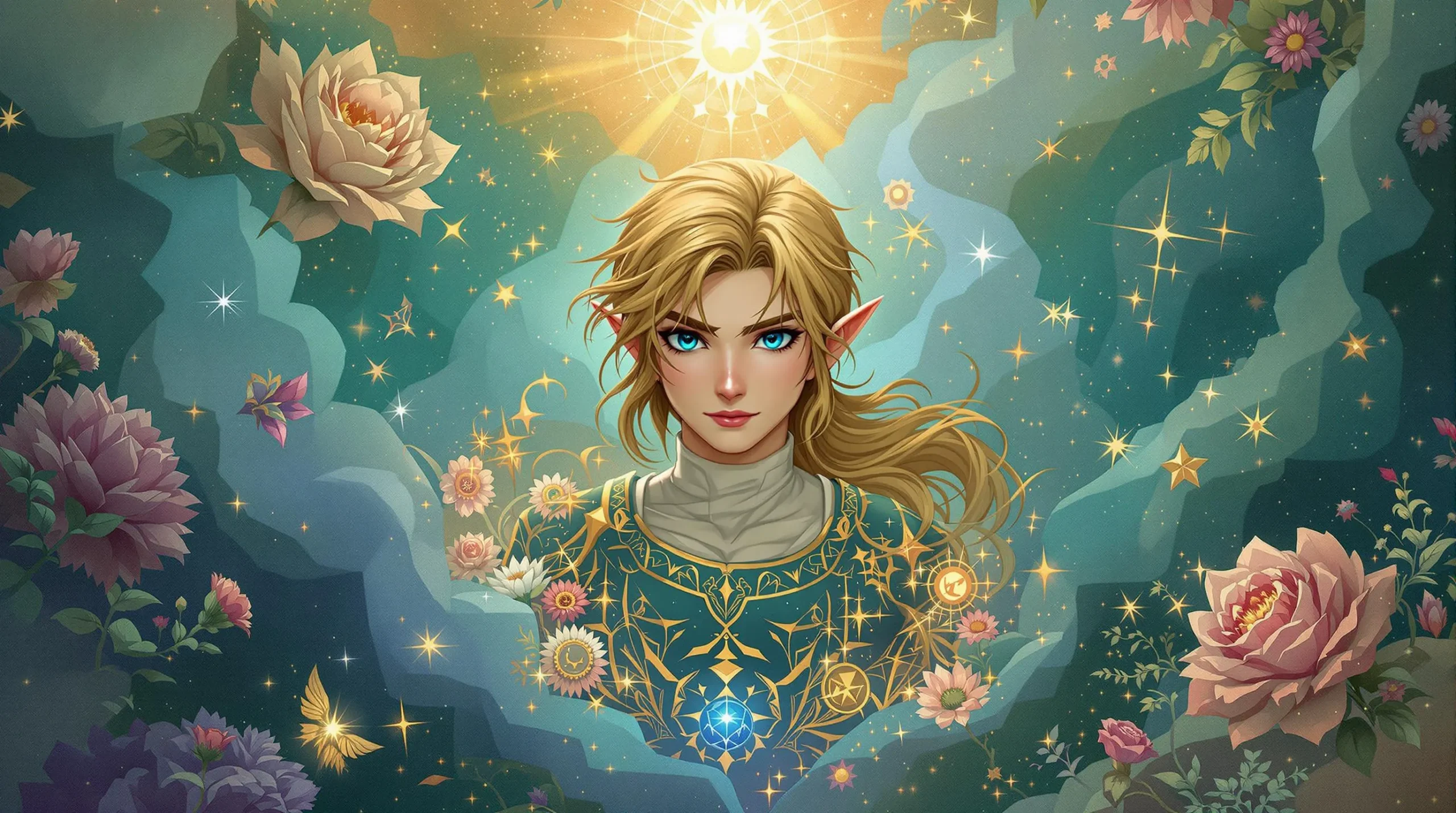
The Link archetype is a vessel for the quiet, unpraised courage that resides within us. He is often a blank slate, an amnesiac youth or a boy from a forgotten village, and in this emptiness, he becomes a perfect mirror. When Link is your mythic touchstone, you may see your own potential not in your history or your proclaimed identity, but in your capacity to answer a call. He symbolizes the self that exists prior to the story, the raw material of heroism. His journey is a testament to the idea that purpose is not found in introspection, but in action; meaning is not a thing you have, but a thing you do, one puzzle, one dungeon, one rescued kingdom at a time.
His connection to the wilderness, to the ruins of a fallen world, is central. He is not a king of a shining city, but a denizen of the liminal spaces: the forest, the forgotten temple, the post-apocalyptic field. For the individual whose mythos contains Link, this could translate to a deep comfort with the beautiful decay of things, an understanding that new life and great adventure are often found in what society has left behind. He represents a harmony with the natural and the forgotten, a belief that true strength is forged far from the centers of power, in the quiet, patient work of exploration and restoration.
Furthermore, Link embodies a specific kind of heroism: the reluctant, silent duty. He rarely seeks his quest; the quest finds him. This speaks to a personal narrative where greatness is a responsibility, not an ambition. It is the myth of the ordinary person who contains an extraordinary spirit, waiting for the right moment to awaken. This archetype suggests that your greatest role might not be one you choose, but one you are chosen for, and your acceptance of that role is the first, and most important, act of courage.