Believe
 Fear
Fear Strength
 Weakness
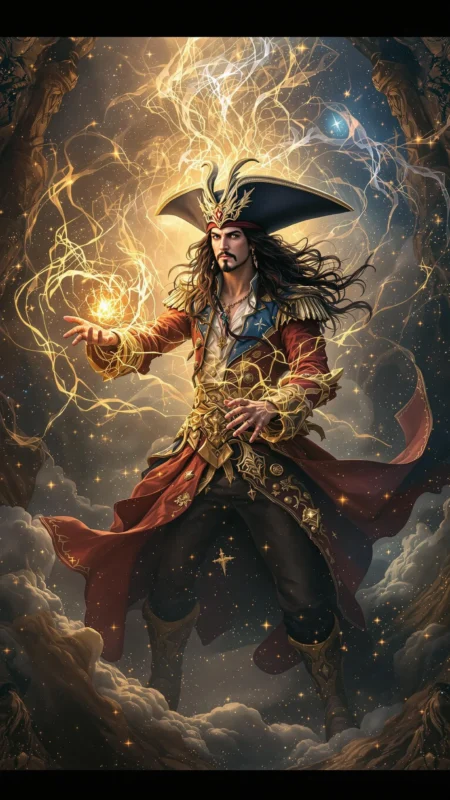
Captain Hook is the specter of sophisticated bitterness. He represents what happens when a wound is not healed but honed, polished into a weapon and a worldview. He is the aristocrat cast out of his proper time, clinging to a code of “good form” in a world that has forgotten the rules. His existence suggests that our deepest injuries can become our most defining features, the hook on which we hang our entire identity. He is a walking, talking memento mori, pursued not just by a boy, but by time itself, swallowed and digested by a creature that ticks with the promise of his own end. To see Hook in your mythology is to acknowledge the part of you that is forever at war with a past injustice.
He is also the archetype of the elegant antagonist. Unlike brutish villains, Hook possesses a certain melancholic charm and a fastidious, if theatrical, sense of style. This suggests that the shadows in our personal narratives need not be crude or simple. They can be articulate, intelligent, and bound by their own peculiar code of honor. Hook’s presence could point to a capacity for intellectualizing pain, for turning resentment into a philosophy. He is the tragedy of the man who is too self-aware to be a mere monster, yet too consumed by his obsession to ever be truly free.
Ultimately, Hook symbolizes the performance of power in the face of profound impotence. His authority over his pirate crew is a pantomime, his elaborate plots against Pan a distraction from his own gnawing fear of the crocodile. He is a king on a ship going nowhere, a commander whose greatest enemy is not a child, but a memory. His story may resonate with a feeling of being fundamentally maimed by life, and the subsequent, desperate need to construct a persona of unassailable control to hide the phantom pain.