

Fiona

Archetype Meaning & Symbolism

Dualistic, resilient, pragmatic, powerful, impatient, secretive, self-accepting, martial, loving, subversive

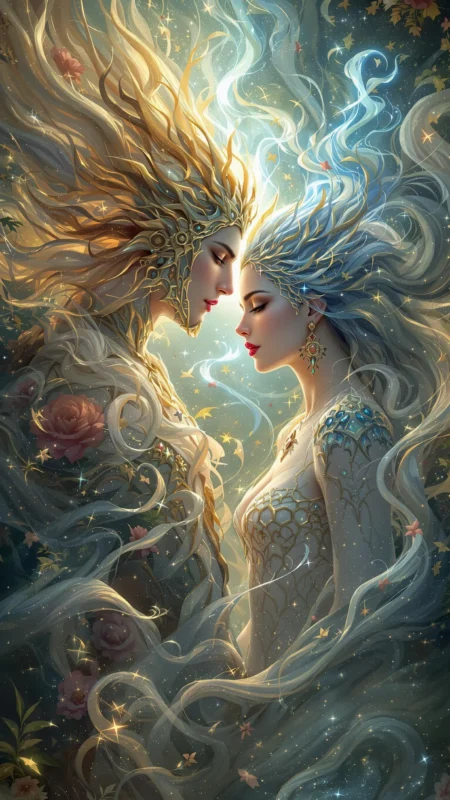
  • By day one way, by night another. This shall be the norm, until you find true love's first kiss and then take love's true form.

If Fiona is part of your personal mythology, you may...

Believe

  • You may believe that your most profound secret is also the key to your greatest liberation.
  • You may believe that 'happily ever after' is not a destination to be found, but a reality to be built, often with the most unconventional materials.
  • You may believe that true love does not change you into someone better, but gives you the courage to be who you already are.

Fear

  • You may fear being 'found out,' a constant, low-grade anxiety that your carefully constructed persona will crack and reveal the 'ogre' beneath.
  • You may fear that even in your most intimate relationships, you are only loved for your 'daylight' self, and that your true form would be cause for rejection.
  • You may fear being trapped between your two selves, belonging fully to neither world and doomed to a state of perpetual loneliness.

Strength

  • A radical capacity for self-acceptance, allowing you to integrate the light and shadow aspects of your personality with unusual grace.
  • A penetrating insight into others, an ability to see past their social masks and connect with their authentic selves.
  • A pragmatic resilience that allows you to face challenges with a surprising blend of elegance and brute force.

Weakness

  • A cynical or defensive shell, built to protect a vulnerable core that has been hurt by judgment in the past.
  • An impatience with superficiality that can sometimes translate into social awkwardness or an unintentionally abrasive honesty.
  • A deep-seated feeling of being an outsider, a 'monster,' that can persist even when you are surrounded by love and acceptance.

The Symbolism & Meaning of Fiona

The Fiona archetype is a powerful meditation on the beautiful monster that resides within us all. She is the keeper of the self we hide when the sun is out, the part we fear is unlovable, grotesque. Yet, her story insists this hidden self is not a curse to be broken but a truth to be integrated. Her duality is not a flaw; it is her completeness. To have Fiona in your personal mythology is to understand that your identity is perhaps a layered thing, a geological cross-section of societal expectation, personal history, and a primal, earthy core. She represents the courage to stop waiting for a magic kiss to 'fix' you and to instead seek a love that sees, and cherishes, both the princess and the ogress.

Her mythos is a rebellion against the tyranny of the fairy tale. It suggests that the tower of isolation is often built by our own hands, brick by brick, with fears of judgment. Fiona’s power is not just in her surprising left hook, but in her ultimate choice to demolish that tower from the inside. She teaches that true love’s form is not a singular, idealized state but the form you inhabit when you are most authentically yourself. Love, in this context, is not a force of transformation but of revelation. It holds up a mirror and says: this, this is the one. The green skin, the strange appetites, the unseemly strength. All of it.

Ultimately, Fiona symbolizes the painful, glorious process of self-reclamation. She spends years believing in a cure that lies outside of herself, only to discover the cure is acceptance. Her journey is a pilgrimage from shame to sovereignty. She suggests that our greatest secret may also be our greatest strength, and that true belonging is not found in a kingdom that demands conformity, but in a messy, unconventional space—a swamp, perhaps—where your whole, complicated, monstrously beautiful self can finally be at home.


Fiona Relationships With Other Archetypes

The Tower

The Fiona archetype may have its most formative, if most fraught, relationship with The Tower. The Tower is not merely a stone prison but a state of being—a high-walled garden of expectation where one is kept safe, but also kept static. It could be the pedestal of perceived perfection, the gilded cage of a prophecy, or the quiet, lonely room of a secret self. For The Fiona, The Tower is perhaps the very architecture of her conditional worth; a structure built by others that she, through her isolation, is forced to maintain. Theirs is a relationship of symbiotic confinement: she gives The Tower a purpose, a precious thing to guard, and it gives her a story, a defined, if desolate, identity. To leave The Tower, then, is not simply an escape, but an act of profound deconstruction, a dismantling of the very foundation upon which her old world, and her old self, was built.

The Mask

One could argue that The Fiona is perpetually in dialogue with The Mask. The Mask is more than mere disguise; it is the currency of acceptance, the polished veneer that allows passage through a world unprepared for the unvarnished truth. This relationship is not one of simple opposition—good versus bad, true versus false—but a far more complex negotiation. The Mask is a passport, but it is also a burden. Its smooth surface may deflect judgment, but it also suffocates the soul, threatening, over time, to fuse with the skin beneath. For The Fiona, the psychic cost of this performance is immense, a slow-burning exhaustion from the effort of holding a pose. The ultimate liberation, then, is not just removing The Mask, but enduring the terrifying, wind-bitten moment of standing revealed, and realizing that the air on one’s own face, however harsh, is the only air worth breathing.

The Crossroads

The relationship between The Fiona and The Crossroads is one of quiet, terrifying revelation. The Crossroads is not a physical intersection of dirt paths, but a singular, humming moment in time when the life one was *supposed* to live and the life one *must* live finally diverge. It represents the point where fate and free will have their reckoning. For The Fiona, who may have spent a lifetime walking a preordained path, The Crossroads appears as an affront to destiny itself. It demands a choice not between two good options, but between a legible, inherited future and an unwritten, authentic one. This moment could be laced with grief for the life that must be abandoned, for the legible map that must be set aside. Yet, in choosing the unpaved road, The Fiona transforms The Crossroads from a point of division into a point of origin—the first step taken not as a character in a story, but as its author.

Using Fiona in Every Day Life

Navigating Duality

When you feel a profound split in your identity: the polished professional self and the messy, private self; the serene diplomat and the inner brawler. The Fiona archetype offers a map not to vanquish one for the other, but to understand them as two sides of the same enchanted coin. You may learn that your most effective state is a fusion of both, a pragmatic princess who knows how to fight.

Revising the 'Happily Ever After'

When the life you were told to want feels like a beautiful, empty castle. Fiona's mythos is a powerful tool for deconstruction. It allows you to question the script: must the kiss transform you into what society deems beautiful? Or could it reveal what is most true? It invites you to find your 'happily ever after' in a swamp, in a partnership of equals, in a form you choose for yourself.

Embracing Unconventional Strength

When you feel your power is unseen or misunderstood because it doesn't fit a conventional mold. Fiona’s effortless takedown of an entire band of Merry Men is a testament to strength that hides in plain sight. This archetype could help you honor your own surprising competencies: the sharp wit hidden behind a quiet demeanor, the logistical genius in running a household, the emotional fortitude that has weathered silent storms.

Fiona is Known For

The Curse

A secret enchantment that transforms her from a human princess by day to an ogress by night, a potent metaphor for a hidden, 'monstrous' self that is revealed in moments of intimacy or isolation.

Martial Prowess

An unexpected and formidable fighting ability, subverting the 'damsel in distress' trope and demonstrating that gentility and power are not mutually exclusive qualities.

Choosing Her Ogre Form

The climactic decision to embrace her ogre self permanently, an act of radical self-acceptance and a redefinition of 'love's true form' as authenticity rather than conventional beauty.

How Fiona Might Affect Your Personal Mythology

How Fiona Might Affect Your Mythos

Incorporating Fiona into your personal mythos is to fundamentally revise the plot of your life. The narrative may shift from a passive waiting, a 'damsel' narrative where salvation comes from an external source, to an active quest for self-realization. The 'curse' you once lamented—be it social anxiety, a non-conforming body, a secret passion, or a 'difficult' personality—could be reframed. It is no longer the obstacle to your story's happy ending; it is the engine of the plot, the very thing that will lead you to a more authentic conclusion.

You might begin to see your life not as a linear progression toward a single, perfect form, but as a cyclical dance between day and night, between your public persona and your private truth. The central conflict of your mythos is no longer 'How do I get rid of this unwanted part of me?' but 'How do I build a life where all parts of me can coexist?' Fiona invites you to become the co-author of your own fairy tale, to scribble in the margins, to change the ending, and to perhaps discover that the 'beast' was the hero all along.

How Fiona Might Affect Your Sense of Self

When Fiona is a guiding archetype, your perception of self may undergo a quiet revolution. You might stop seeing your contradictions as hypocrisies and start viewing them as complexities. The parts of you that you once tried to sand down or hide away—the flashes of temper, the unconventional interests, the moments of inelegance—could be re-evaluated. They are not bugs in your system; they are features of your unique design. This archetype fosters a profound internal integration, a peace treaty signed between the warring states of your personality.

This may lead to a more rugged, resilient sense of self-worth. Your value is no longer tethered to how well you perform the role of the 'princess.' Instead, it is rooted in your wholeness. You might find a strange new confidence in your 'ogre' self: its strength, its honesty, its refusal to be managed. This is the bedrock of self-acceptance. It is the moment you look in the mirror, at the part of you the world told you to hate, and find not a monster, but a survivor. A queen in her own right.

How Fiona Might Affect Your Beliefs About The World

A Fiona-inflected worldview is one that consistently looks for the truth beneath the surface. You may become a connoisseur of authenticity, developing an almost allergic reaction to polished facades and disingenuous pleasantries. The world itself might seem like a place of hidden enchantments, where people, institutions, and ideas all have a day-form and a night-form. You might find yourself questioning prescribed notions of beauty, success, and happiness, seeing them as fairy tales that often imprison more than they liberate.

This perspective fosters a deep empathy for the 'monsters' of the world. You may look at those who are ostracized, misunderstood, or deemed 'difficult' and see not flaws, but untold stories. Your worldview could become less judgmental and more curious, predicated on the belief that everyone is hiding their own form of green skin. This is a lens that seeks the truth in the swamp, not the artifice in the castle, and finds more beauty and magic in the former.

How Fiona Might Affect Your Relationships

In relationships, the Fiona archetype acts as a powerful filter. It discourages connections based on superficiality or performance. You may find yourself drawn to people who are not afraid of your complexities, who don't flinch when the sun goes down and your 'ogre' emerges. You might seek a partnership that is less a romantic fantasy and more a pragmatic alliance of two sovereign beings, each with their own swamp and their own crown. Honesty becomes the primary currency of love: the ability to speak of the curse, to share the secret, is the foundation of intimacy.

This may mean you have fewer relationships, but the ones you have are forged in the fires of truth. You might inspire a radical authenticity in your partners and friends, creating a space where they, too, can reveal their hidden selves. A Fiona-style love is not about finding someone who 'completes' you, but about finding someone who is brave enough to see you completely. It is a love that says, 'I see your ogre, and I am not leaving.'

How Fiona Might Affect Your Role in Life

Fiona fundamentally challenges the notion of a static role in life. If she is part of your mythos, you may feel perpetually miscast in any singular box society tries to place you in. You are both the princess and the warrior, the diplomat and the iconoclast. In a professional setting, you might be the one who can charm the board of directors and then go fix the broken printer with brute force. In your family, you may be both the nurturer and the fierce protector, embodying a blend of grace and raw power.

This can be a source of great strength, allowing you to adapt and thrive in varied situations. However, it can also create a sense of not quite belonging to any single tribe. You are a liminal figure, comfortable in the castle and the swamp, but fully at home in neither. Your role, then, may not be a fixed position but a dynamic process: to be the bridge between worlds, to subvert expectations, and to demonstrate that a person can contain multitudes without being a contradiction.

Dream Interpretation of Fiona

To dream of Fiona in a positive light, perhaps seeing her comfortable in her ogre form or witnessing her joyful transformation, could signal a breakthrough in self-acceptance. It may be your subconscious celebrating the integration of a shadow self. Such a dream might suggest you are on the verge of finding or deepening a relationship where you feel truly seen, or that you are successfully rewriting an old, painful narrative about yourself. It is the psyche’s affirmation: the curse is lifting because you have chosen to call it a blessing.

Conversely, a nightmare involving Fiona—perhaps she is trapped in the tower, weeping as the sun sets, or being chased and reviled for her transformation—may point to a deep-seated fear of exposure. This could reflect an intense inner conflict, a feeling that your 'ogre' side is a dangerous liability that must be suppressed at all costs. Such a dream might arise when you feel your public mask is slipping, or when you are in a situation that threatens to reveal a vulnerability you are not ready to face. It is a distress signal from the imprisoned self.

How Fiona Archetype Might Affect Your Needs

How Fiona Might Affect Your Physiological Needs

From a mythological perspective, the Fiona archetype may ground you squarely in the reality of your own body, in all its un-airbrushed glory. The physiological need for sustenance, for rest, for the simple, creaturely comforts is not seen as a low-level requirement but as a source of power and truth. You may find a deep satisfaction in physical competence, in the feeling of your own strength, whether it's opening a stubborn jar or simply feeling the solidity of your own feet on the earth. It’s an embrace of the body’s 'ogre' aspects: its noises, its needs, its cycles, its inevitable aging.

You might reject diets that promise transformation into an idealized form, favoring instead a way of eating and moving that honors your body's actual needs and strengths. This archetype encourages a physiological honesty. Hunger is not an enemy to be disciplined, but a signal to be heeded. Sleep is not a waste of time, but a sacred retreat. In this mythos, the body is not a project to be perfected; it is a home to be inhabited, a swamp to be loved.

How Fiona Might Affect Your Ideas of Belonging

Fiona's story is a masterclass in the nuanced search for belonging. It posits that true belonging is impossible so long as you are hiding a fundamental part of who you are. The desperate need to be loved by the kingdom, to fit the princess mold, is what keeps her isolated. Therefore, having Fiona in your mythos may steer you away from seeking broad, superficial acceptance and toward the search for a deeper, more authentic connection.

You might find your true 'family' not in the place you were born, but with the people who have seen your 'night' self and decided to stay. Belonging ceases to be about fitting in and becomes about being seen. It is the profound relief of taking off the mask and realizing you are still loved. It is the discovery that your swamp, the place of your authentic, messy self, is precisely where your loved ones want to build their home.

How Fiona Might Affect Your Feelings of Safety

The need for safety, when viewed through the Fiona lens, undergoes a radical redefinition. The initial premise of her story is that safety is a well-guarded tower, a fortress of solitude that protects her from the judgment of the world. However, her personal mythos reveals this to be a gilded cage. True safety is not found in walls, but in capability. It is the deep, cellular knowledge that you can handle what comes your way.

For someone with this archetype, safety may mean cultivating self-reliance and practical skills. It is the security of knowing you can fight your own battles, literally or metaphorically. This doesn't necessarily negate the need for a safe home or community, but it shifts the locus of control inward. The ultimate safe harbor is a resilient self, one that has faced its own 'monster' and learned to wield its power. Safety becomes less about avoiding threats and more about trusting your capacity to meet them.

How Fiona Might Affect Your Views of Esteem

Esteem, in the world of Fiona, is forged in the crucible of self-revelation. Initially, her self-worth is entirely external, pinned to the hope that 'true love's kiss' will make her beautiful, and therefore worthy. Her journey charts a course from this borrowed esteem to a sovereign sense of self. To embody this archetype is to build your esteem on the bedrock of your own integrated character, not the shifting sands of public opinion.

Your self-respect may be derived from your resilience, your integrity, your courage to be different. The very thing that was once the source of your shame—the 'curse'—becomes a badge of honor. It is proof of your complexity and your strength. Esteem is the quiet confidence that comes from knowing you have walked through the fire of self-discovery and emerged not scorched, but whole. It is the ability to say, 'This is love's true form, because it is my true form.'

Shadow of Fiona

The shadow of Fiona manifests as a curdled bitterness. It is the Fiona who never leaves the tower, who allows her curse to define her entirely. In this shadow form, the duality is not a source of potential integration but a state of perpetual civil war. She may despise her 'princess' side for its weakness and naivete, while simultaneously loathing her 'ogre' side for its ugliness. This person might become a master of disguise, using her polished daylight self to manipulate others, while her resentful night self sabotages any chance at genuine connection. She neither accepts her fate nor changes it; she simply festers in it.

Alternatively, the shadow can emerge as an over-identification with the 'ogre.' This is the Fiona who uses her perceived monstrosity as a weapon and a shield. She may become needlessly aggressive, pushing everyone away to pre-emptively avoid rejection. Her pragmatism sours into brutalism, her honesty into cruelty. Here, the vulnerability of the princess is completely buried, seen as a fatal flaw. This shadow archetype refuses the kiss, not out of self-love, but out of fear. It is a profound rejection of softness, intimacy, and the possibility of a world that might, against all odds, accept her as she is.

Pros & Cons of Fiona in Your Mythology

Pros

  • You possess a formidable self-reliance and are rarely caught waiting for someone else to solve your problems.
  • Your relationships, though perhaps few, are likely to be exceptionally deep and authentic, built on a foundation of mutual vulnerability.
  • You have a unique adaptability, able to navigate disparate social environments with an understanding of both their spoken and unspoken rules.

Cons

  • You may be plagued by a feeling of liminality, of not truly belonging anywhere: too monstrous for polite society, too polished for the counter-culture.
  • Your directness and pragmatism can be misinterpreted as a lack of refinement or sensitivity, causing friction with others.
  • The constant internal negotiation between your different selves can be emotionally taxing and lead to periods of isolation.