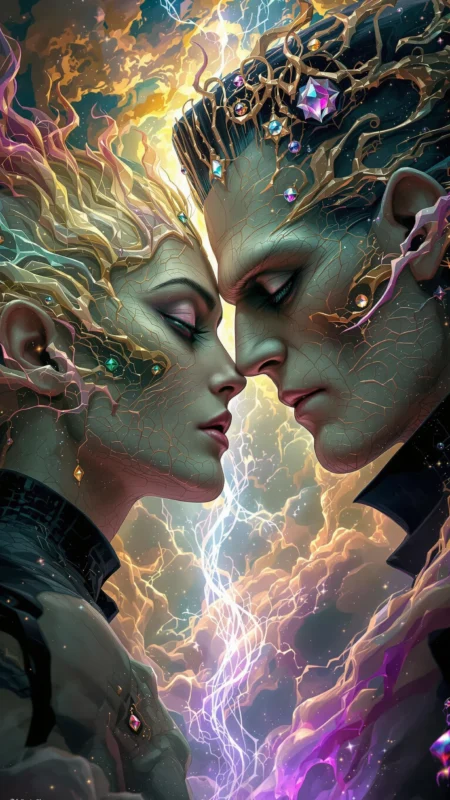
Frankenstein's Monster

Archetype Meaning & Symbolism

Misunderstood, articulate, powerful, rejected, lonely, sensitive, vengeful, yearning, cobbled, unnatural

  • I am malicious because I am miserable. Am I not shunned and hated by all mankind?

If Frankenstein's Monster is part of your personal mythology, you may...

Believe

  • My true self is a secret, hidden behind a form that others cannot understand or appreciate.
  • If I could only find one person who truly sees me, I would be whole.
  • I am not responsible for what I am; I am the creation, the consequence of another's actions.

Fear

  • That I will be abandoned by the very person who made me who I am.
  • That my rage and loneliness will curdle into true monstrosity, making me hurt those I wish would love me.
  • That I am doomed to be alone forever, that no one can ever look past my scars.

Strength

  • A profound empathy for the marginalized, the outcast, and the misunderstood.
  • An incredible resilience and ability to survive and even learn in desolate emotional or social landscapes.
  • A surprisingly deep well of articulate thought and sensitivity, cultivated during long periods of solitude and observation.

Weakness

  • A crushing vulnerability to loneliness that can quickly transform into destructive rage or despair.
  • A tendency to place the entire responsibility for your happiness and self-worth onto a single other person.
  • A worldview that can become starkly binary: you are either completely accepted or utterly rejected, with no middle ground.

The Symbolism & Meaning of Frankenstein's Monster

To have Frankenstein's Monster as a feature in the personal landscape of your mythos is to carry the weight of the outcast and the sublime sorrow of the misunderstood. He is not the lumbering, grunting brute of cinematic shorthand, but Mary Shelley’s articulate, sensitive, and deeply philosophical Adam, cast out of a garden he never asked to enter. His symbolism is a tapestry woven from the threads of paternal abandonment and the existential horror of being a soul trapped in a form the world despises. He represents the parts of ourselves we have cobbled together from experience and trauma, the beautiful mind lurking behind a face we fear to show the world. He is the patron saint of anyone who has ever felt their container is not worthy of the contents.

The Monster may symbolize the peril of technology and unchecked ambition, a living consequence of playing God. In a personal myth, this could translate to an awareness of the unintended consequences of one's own creations: the business that consumes your life, the lie that takes on a reality of its own, the persona you crafted that has now become your prison. The Monster’s story forces a confrontation with responsibility. It asks: what have you brought into this world, and what do you owe it? He is a perpetual reminder that what we create, we are bound to, for better or for worse.

Ultimately, the Monster’s meaning is found in the space between creator and creation, parent and child, society and individual. He is a question mark given terrifying form: What makes us human? Is it our origin, our appearance, or our capacity for love and sorrow? To embrace this archetype is to champion the idea that humanity is a quality of the soul, not the skin. It is to find a strange and powerful beauty in the stitched-together, the imperfect, the lonely giant who reads Milton in a hovel and weeps for a connection he may never know.


Frankenstein's Monster Relationships With Other Archetypes

The Creator

The relationship here is not merely one of maker and made, but perhaps of a thought and its catastrophic echo. The Creator may be the architect who drafts a blueprint for a cathedral, only to find the stones themselves have arranged into a gallows bearing his own name. The Monster, in this light, is the living embodiment of an idea’s consequence, a walking, breathing debt. It is the shadow that proves the sun once shone on a terrible hubris, a dissonant chord held until the instrument itself splinters, forever binding the musician to the wreckage of his own composition.

The Scared Villager

The Monster’s relationship with the Scared Villager could be that of a strange, dark moon to a tide of collective panic. The Monster itself may be inert, a passive celestial body, but its mere presence exerts an inexorable pull on the waters of societal fear. The Villager is not an individual but a single drop in this rising tide, swept along in a wave of inherited terror that crashes against the shore of the unknown. The tragedy, then, is that the Monster does not generate the fear; it merely provides the gravity for a hysteria that was always latent, waiting for an orbit.

The Mirror

One could argue the Monster functions as a kind of black mirror, a slab of polished obsidian that does not so much reflect light as absorb it, showing back a truer, more terrifying visage. To gaze upon the Monster is to see not its own patchwork form, but the patchwork of one's own soul. The Creator sees his abdicated responsibility; the Villager, his own baseless prejudice. The Monster, then, may be a passive oracle, its monstrosity lying not in its sutures and scars, but in its profound, unflinching ability to reveal the viewer to themself, offering a portrait so honest it must be destroyed.

Using Frankenstein's Monster in Every Day Life

Navigating Otherness

When you feel cast out for your appearance, your ideas, or your very essence, the Monster archetype offers a map. It suggests that the pain of being misunderstood is not a sign of your deficiency, but a reflection of the world's limitations. It guides you to find solace not in changing to fit in, but in cultivating the secret, articulate garden of your inner world, much as the Monster learned language and philosophy while hidden away.

Integrating Your Creations

For the creator, the artist, the entrepreneur whose project has grown beyond their control and seems to have taken on a monstrous life of its own: this mythos is a cautionary tale. It asks you to look at what you have made with compassion rather than horror. You are called not to abandon your creation, but to take responsibility for it, to understand its needs, and to guide it, lest its loneliness and power curdle into something destructive.

Processing Rejection by a 'Creator'

When facing the deep wound of rejection from a parental figure, a mentor, or an institution you once revered, the Monster's story becomes a powerful mirror. It validates the righteous anger and profound sorrow that follows such abandonment. The archetype provides a framework for understanding this pain not as a personal failure, but as a tragic narrative arc, one that, while agonizing, can be the genesis of a fierce, self-reliant independence.

Frankenstein's Monster is Known For

Unnatural Genesis

The creature is famously, tragically, not born but made

animated from disparate parts by the ambitious student Victor Frankenstein, a fact that defines its entire existence and relationship to humanity.

A Yearning for Companionship

His most poignant and central demand is for a female companion, a mate as 'monstrous' as he. This is not a request for a lover, but a desperate plea for a single soul who will not be repulsed by his form, a cure for his absolute solitude.

Vengeful Pursuit

Upon being denied his companion and utterly rejected by his creator, the Monster's narrative becomes one of relentless, intelligent vengeance, a continent-spanning chase that inexorably destroys Victor Frankenstein and everyone he loves.

How Frankenstein's Monster Might Affect Your Personal Mythology

How Frankenstein's Monster Might Affect Your Mythos

When the Monster shambles into your personal mythos, your life story may cease to be a simple narrative of growth and become a complex epic of assembly and rejection. Your past is not a linear progression but a collection of disparate parts, some beautiful, some gruesome, stitched together to form the 'you' of this moment. The central plot may revolve around a quest for legitimacy, a search for the 'creator'—be it a parent, a society, a past version of yourself—to finally acknowledge your existence and your worth. Your life may feel like a reaction, a consequence to an event or a person whose shadow looms large over your every chapter.

This archetype might also shape your mythos into a story of profound alienation and an equally profound search for a singular, accepting soul. The narrative isn't about finding a place in a community; it's about finding one person who sees past the stitches. Your story becomes a pilgrimage, often through desolate emotional landscapes, seeking the 'Eve' to your 'Adam,' the one other being who can share your specific exile. The climax of your personal myth, then, may not be achieving worldly success, but the moment of finding, or failing to find, that one understanding heart.

How Frankenstein's Monster Might Affect Your Sense of Self

To see oneself through the Monster's yellow eyes is to grapple with a feeling of fundamental 'wrongness.' Your sense of self may be built upon the perception of being a composite entity, a collection of ill-fitting parts, rather than a seamless, natural whole. You might feel a deep disconnect between your inner world, which can be rich, articulate, and sensitive, and your outer self, which you fear is grotesque or off-putting to others. This could foster a secret sense of superiority: a lonely pride in your hidden depth, even as you ache from the world's superficial judgment.

Conversely, internalizing this archetype could lead to a radical form of self-compassion. If you see yourself as the Monster, you may learn to love the parts of you that have been rejected. You might develop a powerful empathy for your own flaws, your own scars, your own 'monstrosity.' The self becomes a project of reclamation, of finding the humanity in what you were taught to hate about yourself. This perspective can grant a unique form of integrity: an identity forged in the fires of isolation, deeply aware of its own construction and therefore, strangely, more authentic.

How Frankenstein's Monster Might Affect Your Beliefs About The World

Adopting the Monster's gaze may lead you to view the world as a place of swift, surface-level judgment. Society becomes a collection of villagers with torches and pitchforks, ready to chase away anything that is different, complex, or not immediately understood. You might grow deeply suspicious of beauty, charm, and conventional success, seeing them as masks that hide a lack of substance. The world is not a welcoming garden but a hostile wilderness or a desolate arctic, where survival depends on hiding one's true nature and finding warmth in solitude.

This worldview could also cultivate a profound appreciation for the unseen and the overlooked. You may learn to look for the light in the most unlikely of places, to value the discarded, and to listen for the eloquent voice in the seemingly mute. Your philosophy may become one that champions the underdog and questions all forms of authority, especially the 'creators'—the institutions, ideologies, and powerful figures who shape others' lives without taking responsibility for the outcome. The world becomes a courtroom where you are the perpetual defender of the strange and the beautiful derelict.

How Frankenstein's Monster Might Affect Your Relationships

In relationships, the Monster's mythos can manifest as a titanic yearning for acceptance, so powerful it borders on the absolute. You may not seek a partner so much as a savior, a single being who can validate your entire existence with their love. This places an immense, perhaps impossible, burden on a loved one. There might be a pattern of testing others, of pushing them away to see if they will flee like all the rest. The fear of abandonment is not just a fear: it is the core expectation around which all relationships are built.

When a connection is formed, it may be of an incredible intensity. Having found the one person who doesn't run, you might cling with a desperate loyalty. The relationship could become your entire world, your shelter from the hostile wilderness. There may be a difficulty with casual connections or wider social circles, as your energy is focused on the singular bond that feels like your only source of safety and belonging. You might also find yourself drawn to other 'monsters,' forming powerful alliances with fellow outcasts, creating a small, defiant world for two against the larger, rejecting one.

How Frankenstein's Monster Might Affect Your Role in Life

If the Monster is your guide, you may perceive your role in life as that of 'The Consequence.' You are the living, breathing result of another's actions, a constant reminder of someone else’s ambition, neglect, or mistake. Your purpose, in this view, is not to forge your own path but to hold a mirror up to your creator, your family, or your society, forcing them to reckon with what they have made. This can be a role of immense, if tragic, power, but it risks defining your entire existence in relation to another.

Alternatively, your role might be that of the 'Lonely Seeker.' You are not defined by your origin, but by your quest. Your purpose is the pilgrimage itself: the search for knowledge in isolation, the pursuit of understanding, and the relentless journey toward a place or person of acceptance. Your life's work may be the articulation of your own unique experience, becoming a voice for those who have none. Your role is not to be a monster, but to be the philosopher who was born from monstrosity, turning the deepest pain into the most profound wisdom.

Dream Interpretation of Frankenstein's Monster

In a positive context, dreaming of Frankenstein's Monster may signify a powerful act of psychological integration. You could be stitching together disparate, forgotten, or rejected parts of your own psyche—your ambition, your anger, your sensitivity—into a new and formidable whole. The dream monster's appearance, while perhaps startling, represents the birth of a more complex and authentic self, emerging from the graveyard of your past selves. To dream of befriending the Monster is to dream of radical self-acceptance. It suggests you are ready to love the parts of yourself you once considered grotesque and harness their incredible power.

In a negative light, the Monster in your dreams could be a manifestation of something you have created that has grown beyond your control and now threatens you. This could be a career path, a relationship, a belief system, or even a child. It represents the terror of unintended consequences, the horror of being pursued by your own abandoned responsibilities. If you are fleeing the Monster, you are likely fleeing a part of yourself or your life that you refuse to confront. The dream is a warning: what you reject will not disappear, it will only grow stronger, more desolate, and more vengeful in the shadows.

How Frankenstein's Monster Archetype Might Affect Your Needs

How Frankenstein's Monster Might Affect Your Physiological Needs

On a fundamental level, the Monster archetype could foster a deep disconnect from the physical body. You may experience your body not as a home, but as a rented, poorly assembled vessel. This could manifest as a certain clumsiness, a lack of physical grace, or a feeling of being a 'ghost in the machine,' with your rich inner life feeling trapped inside a foreign container. Physiological needs like food, rest, and comfort might be treated as mere mechanical requirements for the vessel, rather than sources of pleasure or well-being. There may be a neglect of the body, because on some mythical level, it is not truly 'you.'

This detachment might also lead to a strange kind of resilience. Much like the Monster endured the cold of the Alps and the Arctic, you may possess a remarkable ability to withstand physical hardship. Pain, hunger, and exhaustion might be experienced with a curious objectivity, as if happening to someone else. This is the fortitude of one who has never known true physical comfort or belonging in their own skin, and so has learned to operate without it. The body is a tool, a transport, something to be endured on the path to a more important, non-physical goal.

How Frankenstein's Monster Might Affect Your Ideas of Belonging

The core wound of the Frankenstein's Monster archetype is one of profound, cosmic homelessness. The need for belonging is not just a desire; it is the central, agonizing engine of your personal myth. You may feel like an anomaly in any group, an experiment that doesn't belong to the species. This can create a painful paradox: an intense, almost desperate craving for love and connection, coupled with a deep-seated belief that it is impossible to achieve. Every social gathering, every party, every new group may feel like a fresh opportunity for the inevitable rejection.

This deep ache for belonging may lead to the creation of elaborate inner worlds where you are the sole inhabitant, or where imaginary companions offer the acceptance the real world denies. If real belonging is found, it can be a moment of such transcendent power that it reshapes the entire personal myth. However, the fear of losing that belonging can be all-consuming. The archetype suggests that your quest is not for casual friendship, but for a primal, foundational acceptance—to be welcomed into the human family from which you feel you were unjustly excluded at birth.

How Frankenstein's Monster Might Affect Your Feelings of Safety

With this archetype in your mythos, the need for safety may feel like a constant, aching void. The world is perceived as inherently unsafe, not because of physical threats, but because of the psychological threat of judgment and violent rejection. Safety is not a house with a locked door; it is the impossible dream of being seen and not being met with fear and hatred. This can lead to a state of hyper-vigilance in social situations, constantly scanning for signs of disgust or disapproval. True safety, then, seems attainable only in absolute isolation, in a remote 'hut on an alp,' far from the piercing gaze of humanity.

The search for safety might also be externalized into a single relationship. One person becomes the entire fortress, the only safe harbor in a hostile world. This makes the potential loss of that person a threat of catastrophic proportions, akin to having the walls of your only shelter torn down. This mythos doesn't allow for the distributed safety of a community or a society. It is an all-or-nothing proposition, where one is either completely exposed to the elements or safely hidden away with a single, trusted soul.

How Frankenstein's Monster Might Affect Your Views of Esteem

Esteem, in the Monster's world, is a fragile thing, perpetually outsourced to others. Self-worth is not inherent; it is something to be granted, preferably by the 'creator' figure whose rejection is the original wound. You may find yourself working tirelessly to earn the approval of a parent, a mentor, or a society, believing that their validation is the only thing that can repair your fundamental brokenness. Lacking this external approval, you might feel utterly worthless, your own self-assessment drowned out by the echoes of perceived disgust.

However, a different kind of esteem may be forged in the crucible of this isolation. Unable to gain worth from your appearance or social standing, you might cultivate it through intellect, art, or a secret, fierce morality. Like the Monster learning language and reading Plutarch, you may build a towering sense of esteem based on what no one can see: your mind, your resilience, your soul. This creates a hidden, untouchable core of self-worth. It is a lonely pride, but it is also powerful, built not on the shifting sands of public opinion but on the bedrock of solitary achievement.

Shadow of Frankenstein's Monster

The shadow of the Monster emerges when the deep well of misery overflows into malice. It is the moment the sensitive outcast decides that if he cannot inspire love, he will inspire terror. This shadow aspect is not simple anger; it is calculated, intelligent vengeance. It is the part of the psyche that, having been denied happiness, seeks to systematically dismantle the happiness of others, especially the person or system perceived as the source of the original pain. It’s the voice that whispers, 'You made me miserable, and I will make the world as miserable as I am.' This is the self-fulfilling prophecy, where in response to being treated like a monster, one finally becomes one.

In its less extreme form, the shadow is a crippling self-pity that becomes a weapon. It is the tendency to manipulate others through guilt, constantly reminding them of your suffering and their role in it. The shadow Monster does not seek to repair his own wounds but to make them everyone else's problem. It refuses to take responsibility for its own choices, perpetually defining itself as a victim, a passive creation. In this shadow state, the potential for growth is frozen, trapped in an endless, desolate arctic of blame and resentment, forever chasing a creator who can never give the absolution it seeks.

Pros & Cons of Frankenstein's Monster in Your Mythology

Pros

  • You may develop a unique and profound perspective, valuing substance over superficiality in all aspects of life.
  • You can cultivate immense inner strength and self-reliance, having learned to survive and even thrive in isolation.
  • This archetype can fuel a powerful, articulate voice, making you a fierce advocate for those who are rejected or silenced by society.

Cons

  • The narrative can lead to a state of chronic, painful isolation and a deep-seated fear of social intimacy.
  • There is a significant risk of becoming trapped in a cycle of self-pity and resentment, forever blaming a 'creator' for your unhappiness.
  • Your intense need for acceptance from a single person can lead to obsessive or dangerously dependent relationships.