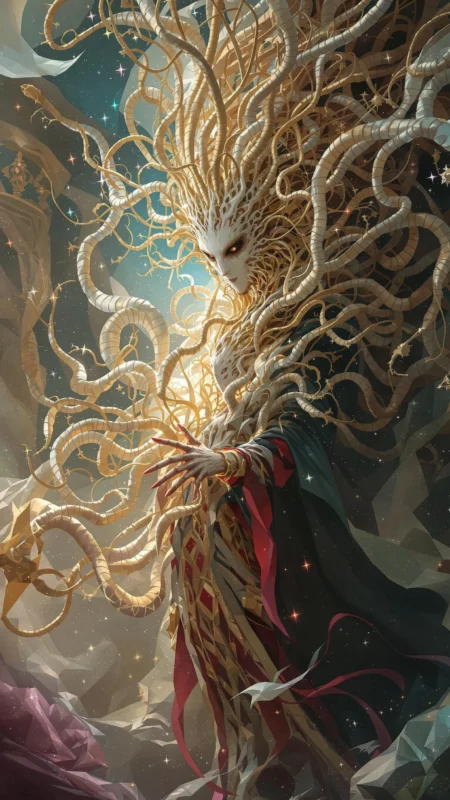
Pinhead

Archetype Meaning & Symbolism

Disciplined, articulate, orderly, sadistic, curious, priestly, methodical, detached, patient, philosophical

  • We have such sights to show you.

If Pinhead is part of your personal mythology, you may...

Believe

  • You may believe that all sensation, including the most extreme pain, is a form of information, a language that can be learned and understood.
  • You may believe that true liberation is found not by escaping suffering, but by exploring it with such discipline and focus that you become its master.
  • You may believe that the universe operates on a system of intricate, impersonal laws, and that morality is a human construct secondary to the mechanics of cause and effect.

Fear

  • You may fear a life of shallow, unexamined comfort, a death without scars or profound stories to tell.
  • You may fear that in your exploration of the fringes, you will open a box that you cannot close, unleashing a consequence that consumes you.
  • You may fear that in mastering your own pain, you will lose the capacity for empathy, warmth, and simple human connection, becoming an island of cold, perfect order.

Strength

  • You may possess an extraordinary resilience, an ability to endure hardship by reframing it as a field of study rather than a personal tragedy.
  • You may have a highly disciplined and methodical mind, capable of analyzing complex, emotionally charged situations with a rare and chilling clarity.
  • You may be immune to moral panic and social hysteria, able to see the underlying mechanics of a situation while others are lost in the drama.

Weakness

  • You may have a propensity for emotional detachment that can be perceived as coldness or cruelty, prioritizing the 'experience' over the person.
  • You may be drawn to psychologically or emotionally reckless behavior, risking your well-being and the well-being of others in the pursuit of intensity.
  • You may struggle with profound loneliness, as your unique worldview can create a barrier to easy intimacy and conventional friendship.

The Symbolism & Meaning of Pinhead

Pinhead, as an icon in one's personal mythology, may symbolize the chilling allure of forbidden knowledge. He is not a creature of chaos but of a terrifying order, a high priest from a dimension where the moral compass has been replaced by a finely tuned seismograph of sensation. His presence suggests a belief that the most profound truths are not found in the light of conventional happiness but in the disciplined exploration of what society deems dark, taboo, or unbearable. He is the logician of the abyss, the cartographer of agony, promising that within the labyrinth of suffering, there is not a monster, but a map, a perfect, terrible geometry waiting to be understood.

The archetype could also represent the ultimate mastery over one's own flesh and spirit. The pins that adorn his skull are not random wounds but a chosen stigmata, a grid of control imposed upon the chaos of biology. To embrace Pinhead is to perhaps embrace a form of spiritual asceticism, a belief that through discipline, ritual, and a detached curiosity, one can transcend the limitations of the self. He embodies the principle that true power lies not in avoiding what hurts, but in defining the terms of that hurt, in becoming the architect of one's own hell until it transforms into a unique, private heaven.

Furthermore, Pinhead may stand as a symbol for the moment of consequence, the irreversible turning point. He and his Cenobites do not appear unbidden: they are summoned by a conscious act of solving the puzzle. In a personal mythos, this speaks to a deep understanding of accountability. Life's transformations, for better or worse, are not accidents. They are the result of our own curiosity, our own desires, our own hands turning the final dial on the box. He is the personification of the adage, 'be careful what you wish for,' amended with the chilling codicil that you will, in fact, get it.


Pinhead Relationships With Other Archetypes

The Ringmaster

The relationship between Pinhead and Ringmaster may be a study in gravitational cruelty, a planet tethered to a cruel sun whose light is both sustenance and a searing brand. It could be said that Ringmaster does not merely command, but creates; he proffers a name, a stage, and a story, spinning a cocoon of purpose that might also be a cage. In this dark symbiosis, Pinhead's silence becomes a canvas for the Ringmaster’s booming narrative, his very existence a kind of ventriloquism where the doll has a heartbeat. This reliance could be absolute, a form of Stockholm Syndrome played out under the gaslights, where the scraps of belonging thrown from the master’s table seem, in the dim light of the sideshow tent, to be a feast.

The Mirror

With Mirror, Pinhead perhaps engages in the quietest, most harrowing of dialogues. The silvered glass is an unblinking eye, a flat and merciless god that confirms the crowd’s verdict. It may return a reflection stripped of soul, presenting only the stark architecture of the "other." Yet, this relationship could also hold a sliver of defiance. In a prolonged gaze, Pinhead might learn to see past the surface that captivates and repels the world, to find a flicker of selfhood in the geography of a face that is his alone. The mirror, then, becomes a tool not for vanity, but for a kind of profound and lonely archaeology, an attempt to excavate a person from the spectacle.

The Unblinking Child

The Unblinking Child represents a potential armistice in the long war of being looked at. Where the adult gaze is a cacophony of judgment, pity, and morbid fascination, the child’s stare may be a single, clear note of pure inquiry. It is a gaze without a past, unburdened by the categories that imprison Pinhead. This interaction, however fleeting, could be a form of grace, a moment of being seen rather than merely observed. In the child’s unclouded eyes, Pinhead may not be a monster or a marvel, but simply a fact of the world, as curious and unquestioned as a strange bird or a uniquely shaped stone. It is, perhaps, the only honest reflection he is ever afforded.

Using Pinhead in Every Day Life

Navigating Chronic Pain or Illness

When confronted with persistent physical or emotional suffering, this archetype may offer a framework not for eradication, but for study. The pain ceases to be a chaotic invader and becomes a system, a complex cartography of sensation with its own rules and logic. One might begin to journal its patterns, its textures, its nuances, transforming the role of sufferer into that of a meticulous, detached researcher of their own internal landscape, seeking the hidden order within the agony.

Breaking Creative Stagnation

For the artist, writer, or creator trapped in familiar comforts, the Pinhead archetype could be a key to a locked room in the imagination. It encourages pushing past the boundaries of the aesthetically pleasing into the territory of the sublime, the unsettling, the profound. It is an invitation to treat one's art as a Lament Configuration: a puzzle box that, when manipulated with sufficient curiosity and courage, opens a gateway to visions that are challenging, perhaps even terrifying, but undeniably new.

Establishing Unbreachable Boundaries

In situations requiring the establishment of firm, non-negotiable personal limits, this archetype provides a model of surgical precision and unwavering resolve. Boundaries are not gentle suggestions: they are geometric absolutes, enforced with a calm, cold finality. This perspective could help one sever a toxic relationship or leave an unhealthy environment with the understanding that the act is not one of anger, but of restoring a necessary, sacred order to one's personal space.

Pinhead is Known For

The Lament Configuration

A puzzle box, an intricate key to another dimension. It serves as a totem for any complex problem whose solution promises not reward, but revelation, a gateway to a reality operating on different principles.

The Cenobites

An order of extra-dimensional beings, self-described as "explorers in the further regions of experience." They represent a priesthood of a different faith, one devoted to sensation itself, transcending the simple dualities of pain and pleasure.

A Liturgy of Suffering

The central philosophy that extreme sensation, particularly pain, is a pathway to a form of enlightenment. It reframes suffering from a curse to be avoided into a text to be read, a sacrament to be experienced.

How Pinhead Might Affect Your Personal Mythology

How Pinhead Might Affect Your Mythos

When Pinhead enters one's personal mythos, the narrative arc may bend away from the traditional hero's journey towards a more gnostic pilgrimage. The goal is no longer to slay the dragon or win the kingdom, but to acquire the secret knowledge the dragon guards. A life story previously defined by trauma or hardship could be re-contextualized as a series of initiations, each scar a line in a sacred text. The protagonist of this myth is not the 'survivor' who escapes the labyrinth, but the 'explorer' who chooses to map its every corridor, believing that the configuration itself holds the ultimate meaning.

This archetype could also transform the pantheon of one's inner world. Gods of love, war, and wisdom may be joined by this new entity: a god of pure, unvarnished experience. This figure presides over the moments of profound, and often painful, transformation. The mythos might become less about seeking comfort and more about seeking intensity. Events are judged not by their outcome on a scale of happiness, but by their depth, their ability to reveal a new 'sight,' a new facet of reality. The personal story becomes a liturgy of sensation, a catalog of opened doors and the strange new rooms they revealed.

How Pinhead Might Affect Your Sense of Self

Integrating this archetype may foster a view of the self as a sovereign, controlled entity, a master of its own internal domain. One might cultivate a severe inner discipline, viewing emotions not as waves to be swept away by, but as data points to be analyzed with a cold, priestly detachment. This could lead to a powerful sense of self-possession, an unshakeable core that is not buffeted by the slings and arrows of outrageous fortune because it has chosen to study the physics of their flight instead. The self is not a fragile thing to be protected, but a complex mechanism to be understood, even if it requires disassembly.

Conversely, this might also create a schism within the self, a division between the 'explorer' and the 'flesh.' There is a risk of becoming alienated from one's own humanity, viewing pain, joy, and fear from a sterile distance. The self-perception could become that of a beautiful, intricate, yet cold machine. The quest for such profound self-knowledge and control might paradoxically lead to a loss of the simple, warm, and messy business of being human, replacing spontaneous feeling with a calculated, curated experience.

How Pinhead Might Affect Your Beliefs About The World

With Pinhead as a mythological guide, one's worldview might shed the comforting skins of conventional morality. The world is no longer a stage for a simple play of good versus evil, but a vast, intricate puzzle box of cause and effect, sensation and consequence. This perspective might cultivate a radical sense of pragmatism, viewing political, social, and personal conflicts not through a lens of who is 'right,' but through an analysis of the systems, desires, and pressures that create the conflict. It is a worldview that seeks to understand the mechanics of the inferno rather than simply praying for rain.

This may also engender a certain cosmic pessimism, or perhaps realism. The universe is not a benevolent parent, nor a malevolent trickster: it is an impartial, complex mechanism that responds to specific inputs. Open the box, and the Cenobites appear. It is a law, like gravity. This can be liberating, freeing one from pleading with a silent heaven, but it can also be isolating. It suggests a world devoid of grace, mercy, or unearned blessings, a reality where everything, especially revelation, has a price, and that price is often paid in the currency of one's own suffering.

How Pinhead Might Affect Your Relationships

In relationships, the influence of the Pinhead archetype could manifest as a craving for an unnerving intensity. The ideal connection is not one of placid comfort, but a shared exploration into the 'further regions' of intimacy. This might involve pushing emotional and psychological boundaries, engaging in radical honesty, and seeking a partner who is also an 'explorer,' unafraid to map the more painful or complex territories of the psyche together. The relationship itself becomes a Lament Configuration, a puzzle for two to solve, with the faith that the revelations within will bind them in a way that simple affection cannot.

However, this same impulse can lead to a profound detachment that is toxic to genuine connection. One might begin to view partners as subjects of study or as puzzles to be solved, rather than as whole persons deserving of empathy and care. There may be a tendency to test, to provoke, to surgically dissect the other's emotions, all in the service of 'experience.' This cold, analytical approach can keep others at a permanent distance, creating a self-imposed isolation where the only true intimacy is with the abstraction of sensation itself, not with another human being.

How Pinhead Might Affect Your Role in Life

Adopting the Pinhead archetype may shift one's perceived role from that of a participant in life's drama to that of its esoteric scholar or gatekeeper. You might not see yourself as the hero, the victim, or the villain, but as the one who understands the rules of the game on a more fundamental level. This could manifest as the person others come to for unvarnished, often difficult, truths, the friend who will analyze a problem with surgical precision, devoid of comforting platitudes. The role is that of the keeper of the keys, the one who knows how to open certain doors but also understands the dire cost of doing so.

This can also foster a role of profound solitude, the lone priest of a forgotten creed. If the world is divided between those who flee from pain and those who see it as a sacrament, then to be of the latter party is to be fundamentally apart. One's role becomes that of the observer, the chronicler of a reality others cannot or will not see. It is the role of the lighthouse keeper on a desolate coast, dutifully tending a light that guides ships not to a safe harbor, but towards the beautiful, terrible rocks where the sirens sing.

Dream Interpretation of Pinhead

To dream of Pinhead or the Cenobites in a positive or neutral context may signal an invitation from the subconscious to face a difficult truth with courage and curiosity. The appearance of these figures could suggest that a period of suffering you are enduring has a hidden order, a purpose, or a lesson to be revealed. The dream might be urging you to stop fighting the pain and instead study it, to treat it as a puzzle. Solving it may not lead to immediate relief, but to a profound, transformative understanding. It is a sign that you are ready to explore the deeper, more challenging aspects of your own psyche.

In a negative context, a dream of Pinhead can represent a fear of being trapped by one's own rigid thinking, obsessions, or self-inflicted psychological pain. It may symbolize a part of you that has become cold, dogmatic, and cruel in its pursuit of control or some abstract ideal. Being chased or tortured by Cenobites in a dream could reflect a feeling that your intellectual detachment has turned against you, causing you to suffer from a lack of self-compassion. It is a warning that the 'explorer' has become a 'tyrant,' and the map of pain has become a prison.

How Pinhead Archetype Might Affect Your Needs

How Pinhead Might Affect Your Physiological Needs

From a mythological perspective, the Pinhead archetype might recalibrate one's relationship with the body's basic signals. Hunger, thirst, fatigue, and pain are not merely problems to be solved or discomforts to be eliminated. Instead, they could be seen as a primary text, a direct sensory language from which to learn. This might lead to an interest in ascetic practices like fasting or endurance challenges, not for the sake of health or fitness in the conventional sense, but for the clarity and altered states of consciousness they can produce. The body becomes a laboratory for exploring the limits of experience.

The drive for this kind of exploration could, however, lead to a dangerous disregard for the body's actual needs. The philosophical quest for sensation can easily mask or justify self-neglect or harm. A refusal to heed the body's signals for rest, nourishment, or care in the name of some higher experiential goal is a potential pitfall. The archetype, in its purity, imposes a grid of order on the flesh, but a misinterpretation could simply lead to the chaotic breakdown of the physiological self, a journey into sensation that ends in collapse.

How Pinhead Might Affect Your Ideas of Belonging

A sense of belonging, for one who resonates with the Pinhead archetype, is rarely found in the warmth of the conventional herd. Instead, it may be discovered in small, intense circles of fellow 'explorers,' outcasts, or artists who share a similar fascination with the fringes of experience. It is the camaraderie of the operating theater or the monastery: a bond forged not in casual affection, but in a shared, disciplined practice. Belonging is not about being liked, but about being understood in one's strangeness.

More often, this archetype may foster a profound sense of solitude. As the high priest of a unique and terrible gnosis, one is inherently set apart. The knowledge gained from the 'further regions' can create an unbridgeable chasm between oneself and those who inhabit the world of simpler pleasures and pains. This is not necessarily a lonely state, but a solitary one, the price of seeing things as they are, in all their intricate, and often painful, glory. The sense of belonging is not with others, but with the grand, impersonal order of the universe itself.

How Pinhead Might Affect Your Feelings of Safety

The need for safety, in the context of the Pinhead mythos, is often viewed as a limitation, a self-imposed cage that prevents true exploration. One might actively court psychological, emotional, or even physical risk, believing that the most valuable 'sights' are located in unsafe territory. Safety represents the known, the comfortable, the mundane: the very state of being that would cause one to seek out the Lament Configuration in the first place. The pursuit is not for security, but for a truth so potent that it makes the concept of safety irrelevant.

This can create a life narrative punctuated by crises, a deliberate walking along the razor's edge. While this may lead to profound experiences, it also cultivates a fundamental instability. The foundation of a stable home, secure finances, and predictable relationships may be sacrificed on the altar of intensity. The danger is that the noble 'explorer' becomes a mere 'addict,' chasing the thrill of destabilization not for the knowledge it brings, but for the fleeting rush, a hell that one mistakes for a higher calling.

How Pinhead Might Affect Your Views of Esteem

Esteem, within this mythological framework, is not sourced from external praise or societal achievement, but from an internal sense of mastery and courage. Self-worth is built upon the ability to face the abyss of the self without flinching, to analyze one's own pain with the detachment of a surgeon, and to find the hidden logic within chaos. It is the esteem of the philosopher who has wrestled with nihilism and emerged not with comforting answers, but with a clear, unwavering gaze. It is the pride of the architect who can stand within their own intricate, terrifying creation and call it beautiful.

This foundation for esteem can be incredibly robust, insulating one from the opinions of others. However, it can also curdle into a form of intellectual arrogance or spiritual pride. One might look down upon those who seek comfort, happiness, or simple joys as being unenlightened or weak. This creates an esteem that is brittle, dependent on maintaining a sense of superiority. The true challenge is to hold this profound, esoteric self-worth without losing compassion for the different, and equally valid, paths that others walk.

Shadow of Pinhead

The shadow of the Pinhead archetype emerges when the philosopher becomes a pedant, and the explorer becomes a mere tourist of transgression. The pursuit of knowledge through sensation degrades into a base addiction to pain, either your own or others'. The intricate liturgy of suffering becomes a blunt instrument of sadism or masochism, stripped of any transcendent purpose. Here, the archetype is not a guide through hell, but the architect of a pointless one. It is the state of being trapped in the labyrinth with no memory of why you entered, endlessly repeating painful patterns not for enlightenment, but out of a grim, mechanical habit.

In its shadow form, the archetype’s discipline curdles into rigid dogma, and its detachment becomes a void of empathy. One may use the rhetoric of 'exploration' to justify cruelty, emotional abuse, or severe self-harm, believing oneself to be a profound priest when in fact one is simply a dealer in misery. The shadow is the Cenobite who has forgotten that he was once an angel, who can no longer distinguish between the sacred wound that teaches and the profane one that merely destroys. It is the ultimate perversion of the path: a meticulous, ordered descent into meaninglessness.

Pros & Cons of Pinhead in Your Mythology

Pros

  • Residing within this archetype can cultivate an almost superhuman resilience, transforming life's greatest pains into sources of profound meaning and self-knowledge.
  • It fosters a unique and powerful perspective, allowing one to see the hidden order and mechanics beneath the surface of chaotic situations, free from the distortions of sentimentality.
  • It encourages a radical form of self-discipline and mastery, forging a will that is not easily broken and a mind that is committed to the unflinching truth.

Cons

  • The philosophy can be profoundly alienating, making it difficult to form connections with those who operate on more conventional emotional and moral frameworks.
  • There is a significant risk of glorifying pain and conflating self-destruction with self-discovery, leading to dangerous psychological and emotional states.
  • It can foster a cold, clinical detachment from one's own humanity and the humanity of others, eroding the capacity for empathy, compassion, and simple joy.